
Engineering decisions, organised
CNC Applications & Precision Components
Use application-specific guides for housings, manifolds, thermal parts, fixtures and components whose performance depends on machined features.
Updated October 11, 2026 · 33 focused articles
The application decides the finishing and the paperwork
The same machined aluminium part is a different product in an aircraft, a surgical instrument and a robot arm. Aerospace adds material certification, traceability and often five-axis work to reduce joints. Medical adds passivation, cleanliness and validation. Robotics adds stiffness, weight and a cost target. None of those change the milling strategy much; all of them change the material, the finish and the evidence.
That is why application guides sit next to process guides rather than replacing them. The process answers how the geometry is cut; the application answers what the part must prove afterwards.
Geometry that appears across applications
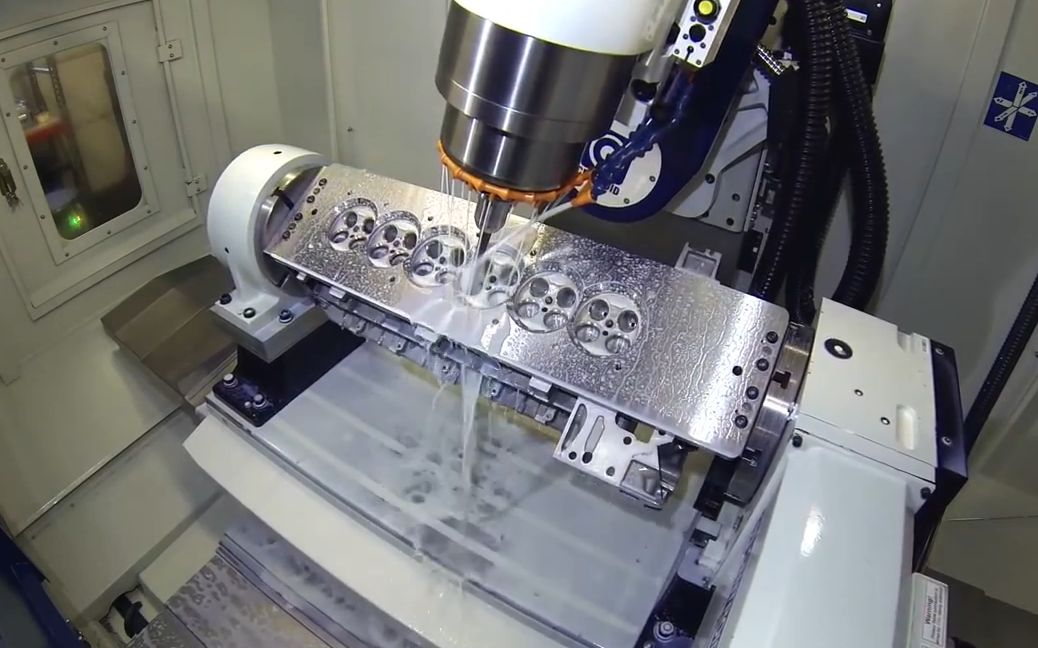
Thin walls, deep pockets, hard materials and sealing faces recur in every sector. A thin wall deflects under cutting force whatever the industry; a deep pocket needs a long-reach cutter whatever the material; a hardened insert needs EDM or grinding whatever the part does. The application articles point at where those features cluster and what has worked there.
Where applications genuinely differ is in the tolerance conversation. A sealing face in a medical device may need a flatness and a surface finish that a structural bracket never sees, and that requirement changes the machine, the fixture and the inspection method.
Keeping the prototype and the production part on one route
Where the production part will be machined, the prototype should be machined too — same material, same tolerances, same finish. That continuity is one of the quiet advantages of CNC over tooling-based processes: the first article and the ten-thousandth part come off the same kind of machine, and the design does not have to be re-proven when production starts.
Application experience also shows where a design will be inspected. Aerospace and medical customers measure the features that carry certification, which pushes the design towards defined datums and accessible surfaces. Industrial customers measure the features that stop the line, which is usually a mounting pattern rather than a cosmetic face. Designing for the inspection the customer will actually perform is part of designing for the industry.
Where a part moves from one sector to another — a robot arm sold into a medical application, an automotive bracket reused in aerospace — the geometry rarely changes and the evidence always does. Budget for that before the first article, not after.
None of that changes the machining strategy much. It changes the finish, the documentation and the inspection plan, which is why the application questions belong at the start of the project rather than at the end of it.
Find the guide for your next decision
Follow the guide that matches the feature, failure mode or project decision you are working on.
Heat Sink Design: Fin Geometry, Base Flatness and Thermal Contact
Hydraulic Valve Blocks: Aluminum vs Steel and the Machining Consequences
Manifold Testing and Cleanliness: Pressure Tests, Flushing and Contamination Control
How Does Precision Optical Grinding Achieve Flat Surfaces?
What Is Medical Grade Machining for Medical Device Parts?
How Do CNC Heat Sinks Improve Enclosure Cooling?
How can CNC milling acrylic achieve true optical clarity?
Machining Process Design for a 316 Stainless Steel Water Manifold
How Is Aerospace Impeller Machining Done?
Aerospace CNC Machining: What to Know Before Ordering Precision Parts
CNC Machining for Medical Devices: Classification, Cleanliness, and Validation
CNC Machining for Robot Joints: Bearing Fits, Concentricity, and Position Accuracy
CNC Machining for Consumer Electronics Enclosures: Thin Walls, Cosmetic Finishes, and Assembly Fit
CNC Machining Drone Parts: Weight, Vibration, and Motor-Mount Accuracy
CNC Machining for Battery Cooling Plates and Bus Bars: Sealing, Flow, and Contact
CNC Machining for Vacuum and Cleanroom Hardware: Materials, Outgassing, and Particle Control
Machined Fixtures for Production: Locating, Clamping, and Repeatability
CNC Machining in Automotive Development: Prototype Validation Before APQP
CNC Machining for Furniture and Architectural Hardware
CNC Milling for Enclosures and Housings: Machining Metal Cases with Precision
Milling Heat Sinks: Fins, Microchannels, and Thermal Performance
Turned Parts for Fluid Systems: Fittings, Valves, and Manifolds
CNC Turning for Automotive Powertrain Parts: Hubs, Housings, and Fittings
CNC Machining for Semiconductor Equipment: Materials, Cleanliness, and Precision
CNC Machining for Optical and Photonics Mounts: Alignment, Materials, and Stability
CNC Machining for EV Charging and Power Electronics Housings
CNC Machining for Laboratory and Analytical Instruments
CNC Machining for Packaging and Food Machinery Parts
Precision Machining for Surgical Robotics: Instruments, Materials, and Sterilization
Machined Parts for Agricultural and Off-Highway Equipment
Hydraulic Manifold Machining: Passage Layout, Ports and Sealing
Aerospace Machining & 5-Axis CNC Services: What Buyers Should Specify
Automotive Prototype Machining: Cutting Parts That Will Change Again Next Month
Before you release the project
- Define the function, environment and the question this batch must answer.
- Specify material grade, geometry, quantity, finish and the dimensions that control fit.
- Agree the inspection method and the evidence required to accept the parts.
- Record the drawing revision and approval before production begins.
Common planning questions
Which CNC process should I consider first?
Start with the geometry. Rotational parts are usually candidates for turning; pockets and planar faces suggest milling. Tool access, setups and hardened features decide whether multi-axis machining or EDM adds value.
Should every dimension have a tight tolerance?
Specify tight limits only where fit or function requires them, and define how those features will be measured. Broad tight-tolerance notes can add cost without improving the part.
What should accompany the CAD model?
Provide a controlled drawing, material grade, quantity, critical dimensions, finish and inspection requirements. Identify cosmetic and sealing surfaces before the quote.
Move from guidance to a reviewed project
Send the CAD model and drawing with material, quantity, finish and inspection requirements. Use the relevant service page to review the available manufacturing route.