

A surgical robotics startup receives its first prototype end effector: the geometry is perfect, the motion is smooth, and the material certificate is in the folder. Then the sterilization lab autoclaves the assembly, and the sliding joint binds because the housing grew from moisture absorption and the anodized aluminum surface changed dimensions. The machining was flawless; the specification was incomplete. Surgical robotics hardware sits at the intersection of precision mechanics, biocompatible materials, and repeated sterilization, and the components that reach the sterile field are machined to tight tolerances — but the specification that matters most is often not the tightest dimension. It is the material, surface, and documentation chain that proves the part can be used safely and repeatedly across the product’s real life.
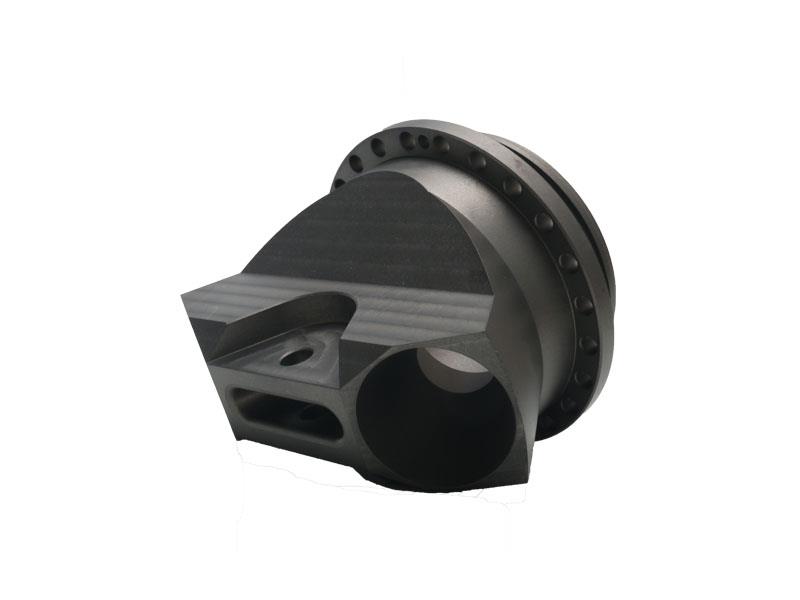
Machined components span instruments, drives, and housings
The hardware list goes beyond the visible robot arm. Instruments and end effectors carry fine features at the tip; drive shafts and couplings transmit motion through the sterile boundary; housings protect electronics and motors; and surgical instruments are machined as small, precise assemblies. Each group has a different risk profile: a housing may have cosmetic and EMC requirements, while an end effector must survive sterilization and contact with tissue. The drawing should identify which class the part belongs to, because the material and documentation burden follows the class.
Prototype quantities also differ from production intent. A development team may machine five end effectors for bench testing and later need hundreds for clinical evaluation; the machining process that produced five perfect parts may not hold the same consistency at a hundred. Planning the process and documentation controls early — datum strategy, inspection points, material traceability — makes the later scale-up a continuation instead of a restart.
Materials are chosen for the sterilized condition
Material selection starts from the biological and process environment. Austenitic stainless steels appear throughout instruments and reusable hardware because they resist corrosion and sterilize well; titanium offers a strength-to-weight advantage and is common where mass at the end of a moving arm matters; medical polymers appear where electrical insulation, disposability, or cost is the driver. The specific grade must be traceable to the material certificate, because “stainless” is not a specification in a regulated environment.
Material choices interact with the machining process. Titanium requires rigid setups and controlled toolpaths to avoid work hardening; hardened stainless grades need tooling designed for them; polymers used in sterile instruments can be affected by the sterilization method, so the material data should cover the sterilized condition, not just the as-machined condition. Any material change during development should be treated as a design change, not a sourcing convenience — the machining, the surface finish, and the sterilization behavior all follow the grade.
Surface and tolerance callouts follow the feature class
Machining features in surgical robotics combine tight geometry with surface demands. Bores, bearing seats, and mating faces carry dimensional tolerances that keep motion smooth and backlash low; surfaces that contact tissue or seals need controlled finish and edge condition, because burrs and sharp edges are both mechanical and biological risks. The drawing should separate functional tolerances from cleanability requirements, and inspection should cover the finish and edge state that visual checks can miss.
| Feature class | Typical concern | What the drawing should state |
|---|---|---|
| Bearing seats and bores | Motion smoothness, fit over sterilization cycles | Tolerance, finish, and measurement location |
| Tissue-contact surfaces | Edge condition, cleanability, biocompatibility | Finish class, edge break, material grade |
| Seals and sliding interfaces | Leakage and wear after repeated sterilization | Roughness envelope, coating allowance |
| Housings and covers | EMC, cosmetic, and cleaning access | Material, finish, and assembly datums |
The table is a checklist for the drawing review: every feature class should have a stated requirement, and the requirement should be measurable. A feature with no callout will be machined to the shop’s default, which is not a design decision.
Sterilization is a design input, not an end-of-line test
Sterilization is a design input because it changes materials, surfaces, and dimensions over repeated cycles. Autoclaving exposes parts to repeated heat and moisture; chemical sterilization and radiation suit different materials; and a machined part that is dimensionally perfect after machining can distort, discolor, or corrode after repeated cycles if the material and finish were not chosen for them. Reusable instruments should be validated over multiple cycles, and the test method, cycle count, and acceptance criteria should be documented rather than assumed from a single sterilization pass.
The sterilization method should be chosen before the material and finish are locked, because the three are coupled: an autoclave-compatible polymer differs from a radiation-compatible one, and an anodized aluminum housing that survives one autoclave cycle may not survive a hundred. Document the sterilization conditions in the part specification so the machining supplier and the finisher design for the real environment.
What documentation do medical hardware buyers need from a machine shop?
Buyers of surgical robotics components need more than a part that measures correctly on arrival. Expect a defined documentation chain: material certificates traceable to the lot, inspection reports tied to the drawing revision, and a clear change-notification process so any process or material change reaches engineering before it reaches the part. First-article documentation is where most programs succeed or stall, so define the required documents with the supplier before quoting rather than discovering the gaps at qualification.
Documentation requirements scale with the program stage. A bench prototype may need a material certificate and an inspection report; a clinical-evaluation build may need full first-article reports, process validation evidence, and lot traceability. Ask the supplier what documentation it can provide at each stage and what it costs, because the price difference between a part with a certificate and a part with a complete quality file is real — and it should be in the budget from the start.
Frameworks that govern this work include ISO 13485 for medical-device quality management systems, ISO 14971 for risk management, and ISO 10993-1 for biological evaluation planning, alongside cleaning and reprocessing validation tied to the manufacturer’s instructions for use. The device manufacturer owns those frameworks and the decisions they drive; a machining or finishing supplier contributes process control, material traceability, and inspection evidence that support them. Material and process changes therefore need change control that reaches the supplier, because a steel grade, anodizing bath, or surface finish change can affect a validated device. This article is a general design and procurement guide for manufacturers, not a compliance manual, and it does not replace review by the manufacturer’s regulatory and quality team.
The prototype-to-production transition runs on the same discipline
The transition succeeds when the prototype and production processes share the same discipline. Use the prototype builds to lock the datum strategy, the critical dimensions, and the material lot traceability; then verify that the production process holds the same results at higher quantity. Watch for the differences that scale introduces: fixture wear, tool-life variation, batch-to-batch material differences, and inspection capacity. If the prototype was machined with extra care that production cannot repeat, that care was a hidden process requirement, and it belongs in the production specification.
Work with a machining partner that can show the process controls and documentation for the low-volume stage, not just the capability page. The medical industry section of this site describes the regulated environment the parts support, and the CNC machining team can review the drawing, the material, and the documentation list before you commit to a supplier. The conversation is cheaper before qualification than after a failed audit.
Cleanability is a design requirement that appears only at the boundary between machining and use. Crevices, blind holes, and internal threads trap debris and biological material, and a part that cannot be cleaned reproducibly fails its sterilization validation regardless of how precisely it was machined. The drawing should review features for cleanability: minimize dead-end passages, open up corners where practical, specify surface finish that does not harbor material, and confirm that cleaning agents reach every internal surface. This is where machining and design verification meet: a feature that is easy to machine is not automatically easy to clean, and a design that is cleanable may need a different toolpath or a split-part construction. If a part is validated for cleaning, the validation is tied to the geometry and the finish; any machining change that alters a crevice or a surface finish can invalidate it, so process changes deserve the same change control as material changes. Early prototypes should include the cleaning and sterilization steps in the test plan so the geometry is proven cleanable before the design is frozen. This is the point where the machining supplier’s experience with similar instruments becomes valuable, because it can flag cleanability risks during the DFM review.
Where this article stops: 6CProto provides machining, finishing, and quality-documentation support; it does not replace the device manufacturer’s regulatory judgment. Whether a material or finish is acceptable for a given device is decided through the manufacturer’s risk management, contact and fluid-pathway analysis, and the applicable regulatory requirements — “medical-grade” is not a single material category, and a part that never contacts tissue can still face system-level requirements. Material, cleaning, sterilization, surface treatment, and packaging must be validated in the context of the finished device, and single-use parts still need validation of their specified sterilization or processing method even though they are not cycled for reuse.
Frequently asked questions
Is a medical-grade material required for every surgical robotics part?
No — the requirement is set by the manufacturer’s risk management and the part’s contact and fluid pathway, not by a simple tissue-contact test, and a no-contact housing can still face system-level requirements. Classify each part under the applicable regulatory framework and let that classification drive the material and documentation requirement. Treat “medical-grade” as a shorthand to be defined for the device, not as a material category.
Can the same machining supplier handle both prototypes and production?
Often yes, if the process and documentation controls scale with the quantity. Confirm that the supplier can hold the same tolerances, provide the same inspection depth, and trace material lots at production volume. The risk is not capability but consistency: a shop that treats production like a series of prototypes will produce batch-to-batch variation.
How many sterilization cycles should a part be validated for?
The cycle count should match the product’s intended life, which the manufacturer defines from the use case and the reprocessing instructions. Common reusable instruments are validated for dozens to hundreds of cycles depending on the design and standard; single-use parts do not need repeated-cycle validation, but their specified sterilization or processing method still must be validated. State the intended cycle count and sterilization method in the specification so material and finish selection can be validated against them.
Conclusion
Surgical robotics machining is precision mechanics governed by materials, sterilization, and documentation. Classify each part, choose the material and finish for the sterilized condition, write measurable surface and tolerance callouts, and build the documentation chain from the first prototype. The parts that qualify fastest are not the ones with the tightest tolerances; they are the ones whose full requirement set was specified before machining began.
If you are developing a surgical robotics component and want the material, tolerance, and documentation plan reviewed before your next build, send the drawing and the sterilization conditions to the 6CProto CNC team. Defining the quality file early costs nothing; reconstructing it after qualification costs a program delay.