

Medical device manufacturing is different from making a bracket for an industrial product because the parts carry regulatory weight. A machined medical part is not just a piece of metal or plastic; it is evidence in a submission, subject to classification, cleanliness, and validation requirements that a standard job shop may not understand. The difficulty is that a competent machine shop can cut the geometry, while the medical requirements live in classification, material traceability, cleanliness, and the documentation that ties them together. This article explains what makes medical CNC machining distinct, what classification means for a machined part, how cleanliness is specified, and what validation and documentation a medical program needs.
Classification Drives the Requirements
The first question is not ‘what material’ but ‘what class.’ Medical devices are classified by the level of patient contact and the risk it carries, and the classification drives the standards, the material requirements, the cleanliness, and the validation burden. A machined part for a non-contact surgical instrument is treated differently from one that touches tissue or is implanted. The device manufacturer owns the classification and the regulatory responsibility; a machining partner supports it with controlled parts and records, but does not replace the manufacturer’s regulatory decision. Confirm which class the part serves before you specify material and cleanliness, because the class is the master input.
Material: Traceable and Suitable for Contact
The material for a medical part has to be traceable to its lot and suitable for its contact. ‘Medical-grade’ is not one material; it is a property category that must be verified against the specific application and the relevant standard. Stainless steels, titanium alloys, PEEK, and other engineering materials serve different roles, and the certificate ties the lot to the grade. The drawing should name the material and its condition, and the order should carry the material certificate so the part can be traced. Confirm the certificate at RFQ, because traceability is part of the deliverable, not an option.
Cleanliness Is a Specified State, Not a Default
Medical parts often need a controlled cleanliness level, set by the intended contact and the standard. The cleanliness is a process deliverable: the cleaning, handling, and packaging are controlled to a stated requirement, and the part is verified against it. If the buyer does not specify the cleanliness standard with the order, there is no standard to meet. State the cleanliness requirement, the cleaning and packaging process, and how it is verified, so the part is delivered in the condition the application expects.
Surface Finish and Geometry for the Application
Surface finish on a medical part is often functional, not cosmetic. A sealing surface, a tissue-contact surface, or a surface that must be easy to clean carries a finish requirement that the geometry has to achieve and the process has to verify. Sharp edges, burrs, and rough surfaces are unacceptable on parts that touch the body or must be cleaned, so edge and finish control is a requirement. Specify the finish with a standard and the measurement basis, and confirm the geometry can reach it.
Validation and Documentation
The validation burden follows the class. First article inspection, process validation, and documentation such as material certificates, inspection reports, and batch records support the device manufacturer’s submission. The scope is defined at RFQ: which records, what traceability, what format. A machining partner provides the controlled parts and the records it is asked to produce; the device manufacturer remains responsible for the regulatory decisions and the overall validation. Confirm the documentation scope before quoting, and keep the records tied to the drawing revision.
Sterilization and Reuse Considerations
If the part will be sterilized or reused, the material and finish have to survive the process. Sterilization methods, such as autoclaving or chemical exposure, challenge the material and the finish, and reuse adds a fatigue and wear requirement. Confirm the sterilization and reuse path, because it changes material selection and the surface requirements. A part that must survive repeated sterilization cannot be specified like a disposable.
What to Confirm Before Ordering
- The device class and the standard it references.
- Material grade, condition, and certificate requirement.
- Cleanliness level and how it is verified.
- Surface finish on the functional faces, with a basis.
- Validation and documentation scope, tied to the drawing revision.
- Sterilization and reuse path, if the part will see them.
The Boundary Between Shop and Manufacturer
The honest boundary is this: the machining partner controls the geometry, the material traceability, the cleanliness it is asked to meet, and the inspection records. The device manufacturer owns the classification, the regulatory decisions, the overall validation, and the submission. A shop that claims to make a ‘medical-grade’ part without the class and the process is overstating; one that asks for the class and the standard is doing the job right. Choose the partner that treats the medical requirements as the contract, not the brochure.
Bottom Line
CNC machining for medical devices is distinct because the parts carry classification, cleanliness, and validation weight. Start from the device class, specify traceable material and a defined cleanliness level, control the functional surface finish, and agree the validation and documentation scope at RFQ. Keep the boundary clear: the shop provides the controlled parts and records, and the manufacturer owns the regulatory responsibility. A machined medical part is judged by the evidence it carries as much as the geometry it has.
The Documentation Set Is Part of the Part
In medical machining, the documentation is not an add-on, it is part of the deliverable. The material certificate, the inspection report, the process record, and the revision of the drawing travel with the part, and a submission needs them tied to the same drawing revision. The documentation scope should be agreed at RFQ: which certificates, what format, what traceability, who signs the report. A shop that treats the paperwork as an extra is not ready for medical work; one that prices and plans it is.
First Article Inspection in the Medical Context
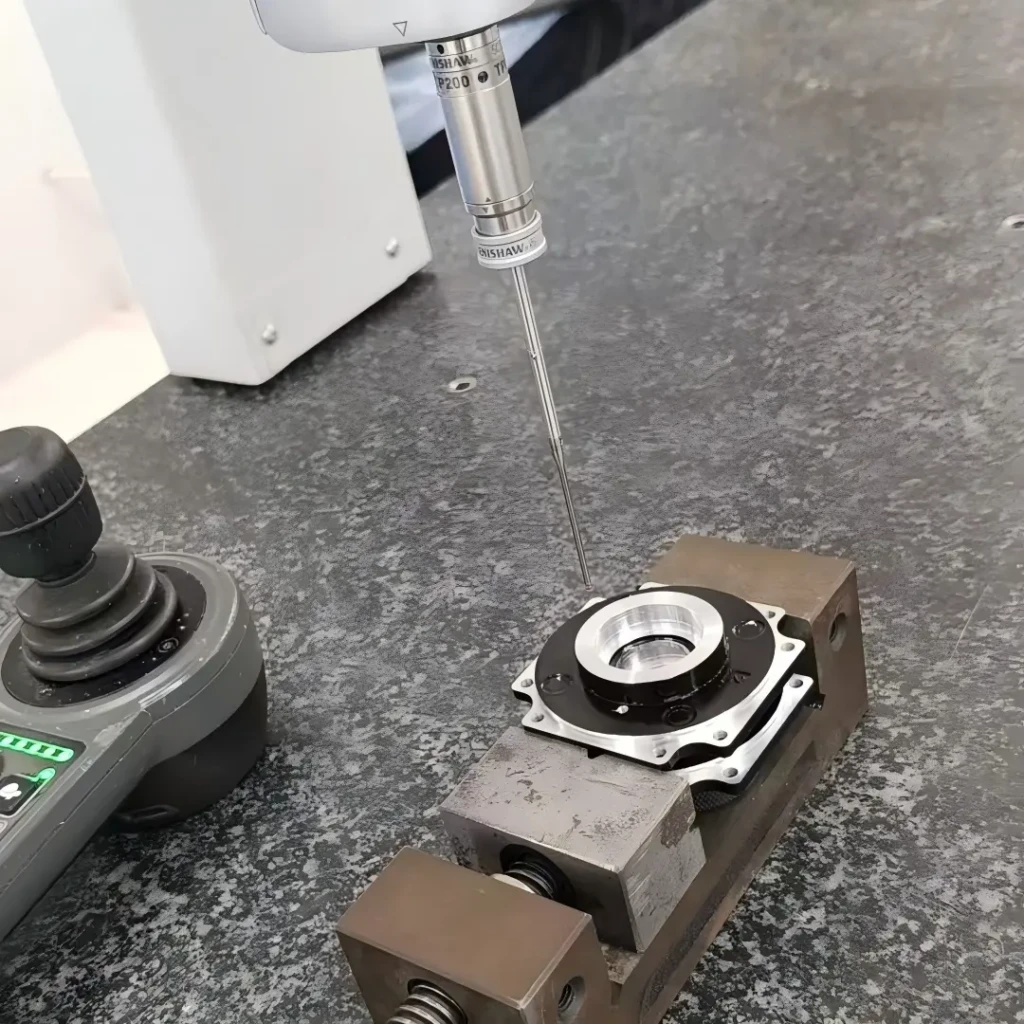
The first article on a medical part verifies the geometry, the finish, the material, and the cleanliness against the drawing and the standard. It is the gate that makes the rest of the run meaningful, and on a small or pilot run it is a large part of the order. The values, not checkmarks, are the evidence: the measured dimensions, the finish reading, the material identity, the cleanliness result. Confirm the FAI plan and the report format at RFQ, because the report is part of the submission, not a formality.
Process Validation and the Repeatable Run
Medical parts need a process that repeats. Process validation shows that the route produces parts within the required criteria repeatedly, under controlled conditions, and the pilot run is where it is demonstrated. The process parameters, the material lots, and the inspection results are recorded, and change control keeps the records valid when the process changes. A shop that can show a validated, controlled process and change control is a shop a medical buyer can use; one that runs on luck is a risk the process validation was meant to remove.
Cleanliness and Packaging: Where Devices Are Assessed
Cleanliness and packaging are where a medical part is assessed long before it is used. The part is cleaned, handled, and packaged to a stated standard, and the package protects it in transit. The cleanliness requirement, the handling gloves and environment, the packaging that keeps the part clean: each is a spec, and each has to be verified. A machined part that is dimensionally perfect and contaminated at assembly fails the use case. State the cleanliness level and the packaging, and confirm how the delivered state is proven.
Sterilization and Reuse: The Hidden Design Input
If the part will be sterilized or reused, that is a design input, not an afterthought. Autoclaving, radiation, or chemical sterilization challenges the material and the finish, and reuse adds a fatigue and wear requirement. A material that is right for the part in its first use may not survive the sterilization cycles. Confirm the sterilization and reuse path before the material is frozen, because changing it after validation is expensive. The part that survives its service and its cleaning is the one that was specified for both.
Cleanliness Classes and the Verification
Cleanliness is usually specified as a class or a maximum level of particulate and bioburden, set by the part’s contact and the standard. The verification method, the sampling, and the test report are part of the order, and the cleanliness state has to survive packaging and transit. A part that is clean at the station and contaminated at unboxing has not met the spec. Confirm the class, the verification, and the packaging that preserves it, because the delivered state is what the application receives.
Regulatory Responsibility Lives With the Device Maker
It is worth repeating, because the boundary is where the risk hides: the machine shop controls the part and the records it produces, and the device manufacturer owns the classification, the regulatory decisions, and the submission. A shop that claims to make a part compliant without the class and the standard is overstating its role. The practical consequence is that the buyer should never outsource the regulatory judgment to the machine shop, and the shop should never claim it. The collaboration works when each side owns its part of the evidence and the decision.