

A packaging-line roller that ran for years is suddenly unavailable from the OEM, and the line stops for a part that is a cylinder with two bearing bores and a seal surface. Packaging and food machinery live on custom and replacement machined parts: rollers, guides, wear strips, star wheels, and sealing surfaces that see washdown, wear, and food contact. Machining these parts is not exotic — but specifying them correctly is, because the environment adds requirements that a standard machine-shop drawing often misses. The roller must be the right material for the washdown chemistry, the bearing bores must be concentric, and the food-contact surface must meet the standard that applies to it.
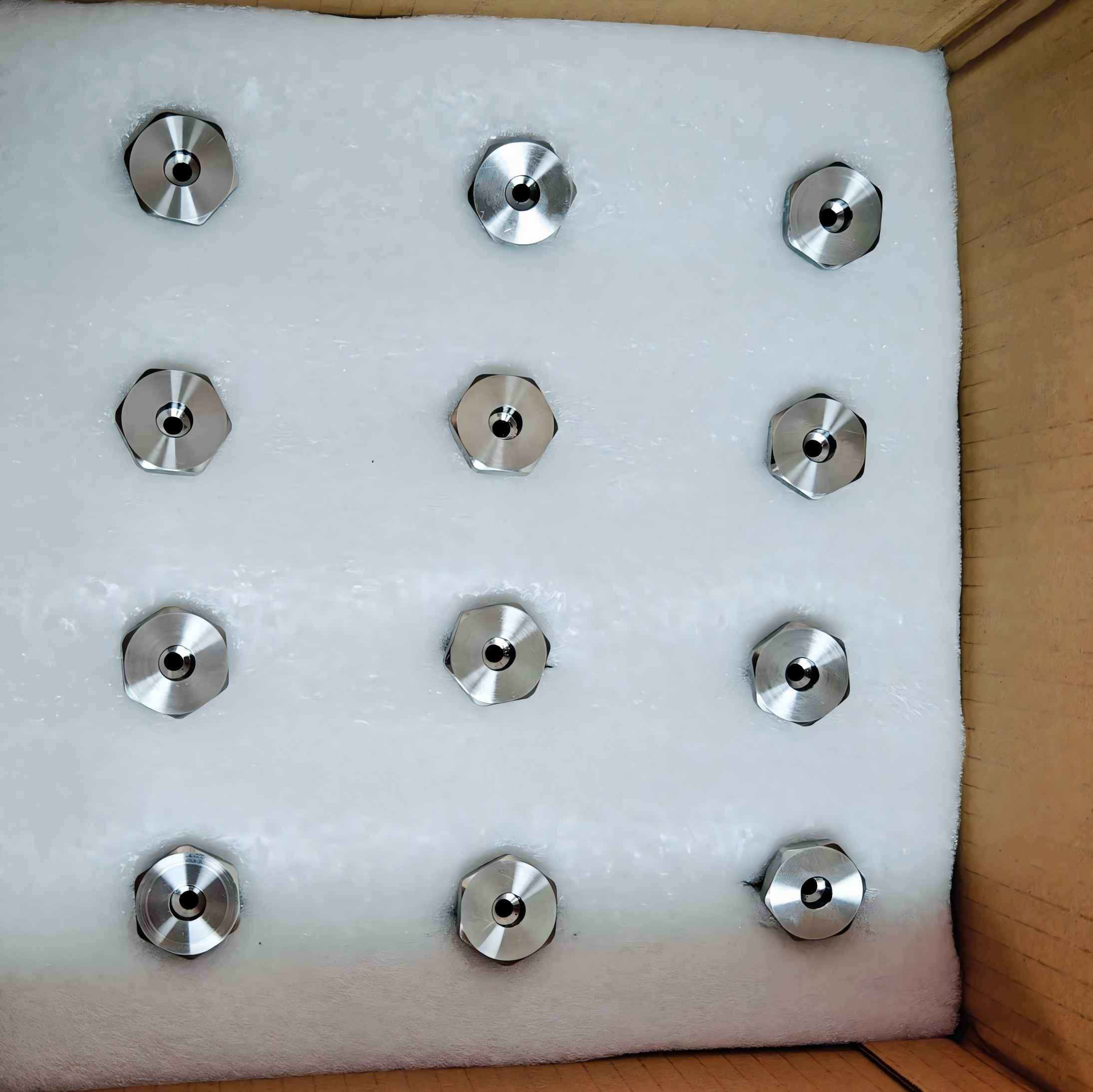
Wear, washdown, and food-contact realities for machinery parts
Packaging machinery parts live in a demanding environment. Washdown with chemicals and hot water attacks materials and finishes; abrasive product and packaging materials wear rollers and guides; and food-contact surfaces carry regulatory requirements that depend on the application. A part that machines well but corrodes in the washdown chemistry, or that wears in a month because the wrong material was chosen, is a part that stops the line twice — once when it fails and once when it is replaced. The specification should start from the service reality: the washdown chemistry, the abrasion, the temperature, and the contact requirement. The machining is the last step of that specification, and the material and finish are chosen before the drawing is cut.
Food-contact requirements are application-specific: a roller that touches the product directly has different requirements from a guide that never contacts it, and the standard that applies depends on the food type and the contact duration. The material certificate and the compliance documentation belong in the specification when the part is food-contact.
Stainless and coating selection for packaging lines
Stainless steel dominates washdown machinery because it resists the cleaning chemistry, with 304 and 316 chosen by the environment and the contact. Plastics appear in rollers, guides, and wear parts where low friction, light weight, or food-contact properties matter; and aluminum appears where weight and cost drive the design, with a finish that survives the washdown. Coatings are used selectively — a coated steel part can serve where the base material would corrode, but the coating must survive the chemicals and the wear. The material and finish choice is a compatibility decision with the washdown chemistry, and the supplier should confirm the grade and the finish against the cleaning agents the line uses.
The material decision also affects the machining: stainless machines differently from plastic, and a wear part in a filled plastic needs the tooling and the process matched to it. The drawing should name the exact grade and finish, not “stainless” or “plastic,” because the service behavior is grade-specific.
Replacement-part strategy when OEM parts are unavailable
When an OEM part is unavailable, the machined replacement must be reverse-engineered from the worn part and the machine’s requirements. The process starts with the measurements: the critical dimensions, the bearing fits, the seal surfaces, and the mounting geometry are measured on the worn part or the machine itself, and the design is checked against the machine’s constraints. The reverse-engineering should capture the function, not just the geometry — the roller’s bearing spacing, the guide’s wear surface, and the seal’s interface are the requirements, and the replacement is designed to them. A replacement that matches the worn part’s geometry but not its function is a replacement that fails the same way.
The replacement strategy should include the documentation: the material, the finish, and the inspection record that prove the part will serve. A line that stocks a few documented replacements for its critical wear parts is a line that avoids the emergency machine-shop call at 2 a.m.
Tolerances for rollers, guides, and sealing surfaces
The tolerances on packaging parts follow the function. Rollers need concentric bearing bores and a controlled outside diameter so the product runs true; guides need the wear surface and the mounting relationship controlled; and sealing surfaces need the flatness and finish that the seal requires. The tolerance should be applied where the function needs it, and the inspection should verify the relationships — the bore-to-OD concentricity, the face squareness, and the seal-surface finish — rather than every dimension. A roller that is perfectly round but off-center in its bores is a roller that wobbles on the line, and the drawing should carry the relationship callouts that catch it.
The measurement method belongs with the tolerance: a roller’s concentricity is verified on centers or with a gauge that references the bores, and the report should state the method so the shop and the line agree on the result.
RFQ notes for packaging machinery components
The RFQ for a packaging part should state the service environment, the material and finish, the food-contact requirement if any, the critical dimensions and relationships, and the documentation needed. The supplier that receives the environment and the contact information can recommend the material and flag the finish risk; the supplier that receives only a drawing quotes geometry without context, and the part fails in service. The RFQ notes are the specification’s first line, and they are what turn a machined roller into a packaging-line component that survives the washdown and the wear.
The industrial-equipment industry page covers the general context; this page adds the packaging and food-machinery application angle. When the service reality is on the RFQ, the machined replacement or custom part is specified for the line it serves.
Qualifying replacement parts and managing the line risk
The qualification of a replacement part follows a clear sequence. Measure the worn part and the machine to capture the function; design the replacement to the machine’s requirements; confirm the material and the finish against the washdown and the contact; machine the first article; and trial it on the line under the real operating condition. The trial is the gate that matters: a roller that measures perfectly but runs hot, a guide that wears in the first week, or a seal surface that leaks under the line pressure are failures that only the trial reveals. The qualification record should include the trial result and the inspection data, so the replacement is proven before it is stocked. A line that qualifies its critical replacements once and stocks the documented part is a line that avoids the emergency call — and the emergency call is where the mistakes happen.
The line risk is managed by identifying the wear parts that stop production and stocking qualified replacements for them. The critical list includes the rollers, guides, seals, and wear strips that fail predictably, and each stocked part carries the material, the finish, and the inspection record. The stocking strategy should be reviewed with the maintenance schedule, because a part that fails every six months is a part that should be replaced on schedule before it fails, not after the line stops. The machined replacement program is not just making parts; it is managing the line’s uptime with documented, qualified spares. When the wear history drives the stocking and the qualification, the line runs and the parts are ready when the machine needs them.
The documentation that completes a packaging part includes the material certificate, the finish or coating record, the inspection report on the functional dimensions, and, where the part is food-contact, the compliance documentation that the application requires. The report should be tied to the drawing revision and the lot, so a field failure or a compliance question can be traced. The supplier should confirm which documents it can provide and at what cost, because the documentation is part of the part’s price and schedule. The packaging line that keeps its critical parts documented is the line that can prove its materials, resolve its disputes, and maintain its compliance — and the machined part that ships with its documentation is the part the line can trust without re-qualifying it.
The wear part review should also include the failure history. A roller that fails every six months at the same spot is telling the maintenance team something about the load, the alignment, or the material; the replacement design should address the cause, not just the symptom. The history should be recorded with the part, so the replacement is improved where the old one failed. A packaging line that learns from its wear parts is a line that extends its intervals and cuts its downtime; the machined replacement is the vehicle for that improvement.
Keep the line’s part library organized by machine and function, so the maintenance team can find the qualified replacement and its documentation without a search. The library turns the replacement strategy into a working system: the part number, the drawing, the material, and the inspection record are together, and the reorder is a repeat of a known part. The library also shows the wear history across the line, which is the data for the next improvement. The packaging line that keeps its library current is the line that turns downtime into a scheduled event.
If you are sourcing machined parts for a packaging or food line and want the material, washdown, and tolerance plan reviewed, the 6CProto CNC team can work from your line conditions to the part and its documentation.