

Explore CNC Applications & Precision Components
A prototype component is ordered knowing it will be superseded. That single fact changes what the machining is optimised for: not the lowest unit cost, but the shortest path from a changed model to a part that can be fitted and tested.
What prototype machining is
Prototype machining is the production of development components by removing material from stock, usually in small quantities and frequently under revision. It is chosen when the geometry is too complex or the tolerance too tight for a quick alternative, when the material properties matter to the test, or when the part must interface with existing hardware and has to be dimensionally correct.
| Component type | Why machining suits it | What matters most |
|---|---|---|
| Brackets and mounting hardware | Must match existing mounting points exactly | Interface dimensions and hole positions |
| Powertrain and driveline parts | Need production material for load testing | Material grade and heat treatment |
| Thermal and fluid components | Sealing faces and wall thickness matter | Surface finish on sealing faces |
| Suspension and chassis prototypes | Load-carrying, revised frequently | Material and section integrity |
| Development fixtures and jigs | Needed to support the build itself | Function, not appearance |
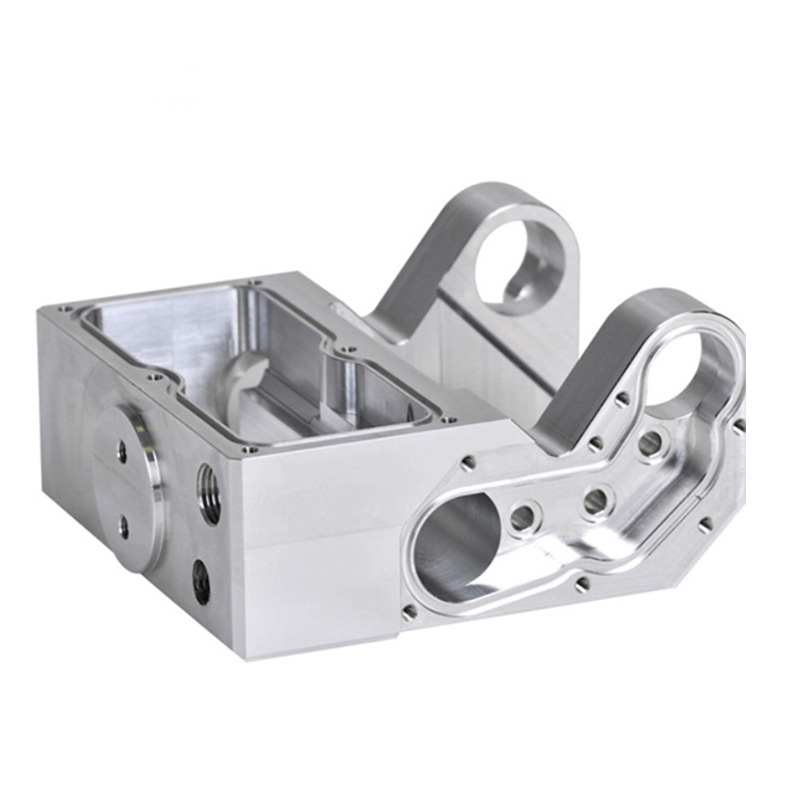
How prototype machining differs from production machining
Four differences matter. Setup dominates the price, because at single-figure quantities the fixturing and programming are charged across very few parts, so a design that reduces setups is worth more than a small material saving. Revisions are expected, so the shop is chosen for how quickly it can absorb a new model rather than only for its rate. Inspection is usually focused rather than comprehensive, since the purpose is to fit and test the part rather than to release a production batch. And the production process is often not final, so the prototype does not have to represent a manufacturing route — only the material and the function.
The practical consequence is that a prototype machining enquiry should state what the part will be used for. A bracket needed for fit-up can be machined quickly with the mounting features controlled and everything else relaxed. The same bracket needed for a durability programme has to be in the production material with a representative surface condition, and that changes the routing rather than only the price.
Materials suited to automotive prototype work
Aluminium alloys dominate, because they machine quickly, are available in stock sizes and are commonly the production material for brackets, housings and structural components. Steels appear where load or fatigue behaviour matters, including medium-carbon and alloy grades and, in some driveline applications, case-hardening grades. Engineering plastics suit interior components, clips and housings where weight and cost matter and the loads are modest. And specific high-performance materials appear where temperature or chemical exposure demands them, though their cost and machining behaviour make them a deliberate choice rather than a default.
Material selection follows the test. A component that will be subjected to a durability programme must be in the material the production part will use, with the same heat treatment, or the results predict nothing. A component being photographed or fitted for clearance can use whatever machines fastest. Material property references are published by ASM International.
Design choices that speed up iteration
Four habits reduce the time between revisions. Keep the number of setups low, because setups are the largest cost at prototype quantity and every re-clamping adds a datum to verify. Consolidate features onto accessible faces, so that a change can be re-machined rather than requiring the part to be remade. Avoid specifying tight tolerances on features that do not affect the fit, since inspection of those features adds time without adding information. And keep a machining allowance on features likely to change, so a revision can be cut into the existing part where geometry permits.
Two further practices help programmes that iterate quickly. Order a small number of parts per revision rather than a large batch, since a superseded batch is scrap. And keep the model under revision control with the shop, so a re-order is unambiguously produced to the current design rather than to whatever file was last sent. Related options for rapid iteration are described under rapid prototyping, which also covers 3D printing routes for development parts.
How to brief a prototype machining job
State the function so that tolerance can be concentrated where it matters, name the interface dimensions that must match existing hardware, state the material and any heat treatment, and say whether the part is for fit, function or appearance. Adding the quantity and the likelihood of further revisions lets the shop plan the setup accordingly rather than treating each order as a one-off.
Two notes improve the outcome. Mention any existing hardware the part must interface with, because the correct dimensions usually come from a measurement rather than a drawing, and supplying them removes an iteration. And say whether the part may be modified in place if a revision lands, since that decision affects how much material is left on the surfaces likely to change. Drawing conventions follow ASME standards, surface terminology follows ASTM Committee B08, measurement practice is described by the NIST Manufacturing Extension Partnership, and process obligations are set out by the US EPA.
Where machining is the wrong choice for a prototype
Machining loses to other processes in three situations. Where the part is large and mostly flat, sheet metal fabrication is faster and cheaper. Where the geometry is organic or internally complex, additive manufacturing produces it without the fixturing a machined version would need. And where a small batch must look like a production molded part, casting in a silicone tool gives a better appearance at lower cost.
The useful comparison is against the question the part has to answer. For fit and function, machining and printing compete on speed and material. For appearance in a small batch, casting usually wins. For anything that will be produced in quantity later, machining a prototype in the production material is often the surest way to predict how the production part will behave. Related routes are described under sheet metal fabrication and urethane casting.
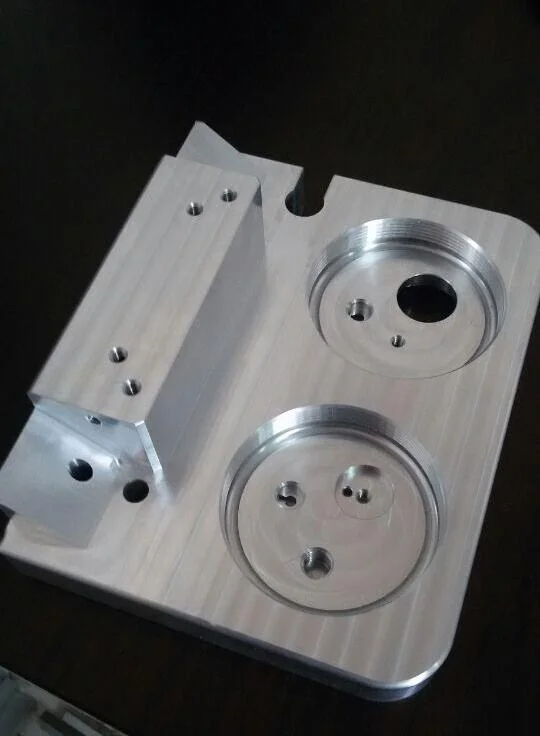
Send the component with the function, the interfaces and the material, and request a prototype machining quote with the setup approach stated.
FAQ
What is prototype machining?
The production of development components by removing material from stock, usually in small quantities and often under revision. It is chosen when geometry is complex, tolerances are tight, the material matters to a test, or the part must dimensionally match existing hardware.
How does machining a prototype differ from a production part?
Setup dominates the cost at low quantity, revisions are expected rather than exceptional, inspection tends to be focused rather than comprehensive, and the prototype does not have to represent a final manufacturing route, only the material and function.
What materials are used for automotive prototype machining?
Aluminium alloys dominate for brackets, housings and structural parts, with steels where load or fatigue matters and engineering plastics for interior and low-load components. The test the part supports should determine the material rather than convenience.