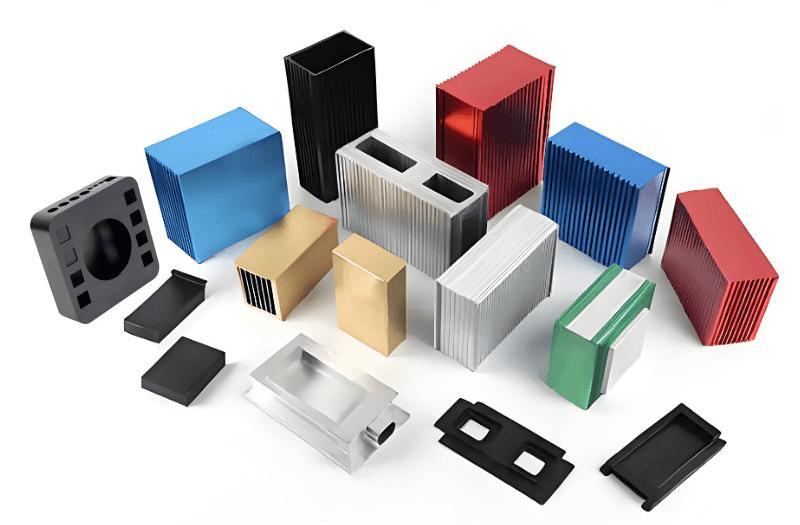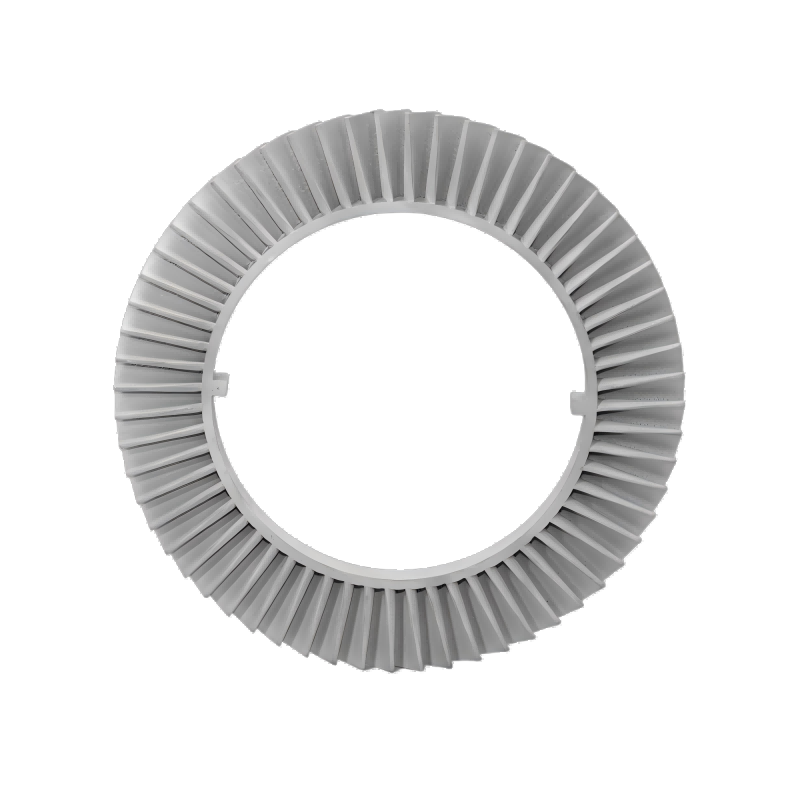
A custom CNC heat sink improves enclosure cooling by adding precisely controlled surface area, better airflow paths, and a direct thermal path from hot components into the housing. In practice, the best designs balance fin height, fin spacing, material choice, and thermal interface quality so heat leaves the system fast without creating airflow blockage, vibration issues, or unnecessary machining cost.
What Makes CNC Heat Sinks Effective?
CNC heat sinks are effective because they let you control fin geometry, mass, and contact surfaces much more tightly than off-the-shelf parts. That precision matters when a smart home enclosure has limited volume, weak natural convection, or hotspots around regulators, processors, or power supplies. In our experience at 6CProto, the thermal win usually comes from the interface details, not just from “more fins.”
A machined heat sink also integrates better with the enclosure itself. You can add mounting bosses, gasket lands, cable cutouts, and board standoffs in one part, which reduces thermal resistance at assembly. That is why custom CNC heat sink design is often chosen when a stamped plate is not enough and an extrusion profile cannot match the layout.
How Should Fin Geometry Be Designed?
Fin geometry should be designed around airflow, not just maximum surface area. Tall, narrow fins increase area, but if spacing is too tight, air stalls and the sink performs worse than a lower-density design. For forced convection, I usually favor a fin pitch that keeps pressure drop under control, because a dense fin field can trap hot air instead of shedding it.
The most useful rule is this: increase surface area only as long as the air can still move through the fin array. High-aspect-ratio cooling fins are valuable when the fan, duct, or chimney path is already defined. In open enclosures, slightly wider spacing and smoother leading edges often outperform aggressive “blade-like” fins.
Common fin trade-offs
A factory-floor detail that matters: when fins get very slender, the top section is often the first place to chatter during milling. That is why 6CProto usually treats fin aspect ratio and cutter reach as a single decision, not two separate ones.
Why Does Surface Area Matter So Much?
Surface area matters because convection happens at the outer boundary of the metal, not inside the bulk aluminum. More exposed area gives heat more paths to leave the part, especially when airflow is steady and directed across the fin pack. This is why a solid CNC-machined multi-fin sink can outperform a simple sheet plate even if both weigh about the same.
The catch is that surface area only helps if the heat can spread into it efficiently. If the base is too thin, the first fins near the source do all the work while outer fins stay underused. The best designs keep the base thick enough to spread heat laterally before it enters the fins.
Which Materials Work Best?
Aluminum is usually the best balance of conductivity, machinability, weight, and cost for enclosure heat sinks. Copper moves heat faster, but it is heavier, more expensive, and often unnecessary unless the hotspot density is extreme. For most machined aluminum enclosures, 6061-T6 or similar alloys are practical choices because they machine cleanly and hold tolerances well.
Material selection should also consider the final finish. Anodizing can improve corrosion resistance and appearance, but it may slightly change surface behavior at the interface depending on how the sink is assembled. If the part must double as a structural enclosure and a thermal path, the alloy choice should support both stiffness and thermal spread.
How Do TIMs Change Performance?
Thermal interface materials matter because even polished metal surfaces have microscopic gaps that trap air. Those voids add resistance, and air is a poor conductor of heat. A good TIM fills the gap, improves real contact area, and prevents the thermal path from being limited by surface roughness or minor flatness errors.
For enclosure cooling, I typically match the TIM to the assembly method. Thermal pads are good for repeatable compression and simple mounting. Greases and phase-change materials can reduce interface resistance further, but they need tighter process control. Gap fillers are useful when the PCB and enclosure are not perfectly coplanar or when tolerances stack up across multiple parts.
How Do Enclosures Use Heat Sinks?
An enclosure can act as a heat sink when the component is mounted directly to the housing with a strong thermal bridge. This works especially well in smart home devices, industrial controllers, and compact power electronics where the case itself is the main heat rejection surface. The key is to move heat from the board into the metal enclosure before it builds up around the component.
This approach works best when the enclosure has external fins, internal spreaders, or a thick wall section at the heat source. If the housing is too thin or the contact patch is too small, the enclosure becomes a bottleneck instead of a cooling asset. A practical design often combines a machined base pad, a TIM layer, and an external fin field.
Does CNC Beat Stamped Sheet Metal?
Yes, CNC machining can outperform stamped sheet metal when the thermal target needs deeper fins, tighter tolerances, or integrated structural features. Stamped or formed plates are cheap and fast, but they usually cannot deliver the same fin precision, contact flatness, or part-to-part consistency. That is why a thermal imaging comparison often shows stamped plates heating up more evenly but cooling less aggressively at the hotspot.
A solid CNC machined sink has more freedom in geometry. You can tune fin height, slot width, base thickness, and mounting interface in one design rather than accepting a commodity profile. For low-volume, high-mix, or enclosure-integrated cooling, that flexibility often outweighs the extra machining cost.
What Does Thermal Imaging Reveal?
Thermal imaging shows where the real bottlenecks are, and it often surprises people. The hot area is not always under the component; it may sit at the edge of the TIM bond line, around screw bosses, or near a thin wall that cannot spread heat fast enough. Comparing a stamped plate to a CNC multi-fin sink usually reveals whether the design is limited by conduction, spreading resistance, or airflow.
In practice, the most useful thermal image is the one taken after steady-state soak, not just at startup. Early images can make two designs look similar even when one saturates badly after 20 minutes. That is why we recommend measuring both hotspot peak temperature and temperature uniformity across the enclosure surface.
How Can You Optimize Machining?
Machining should be optimized around tool reach, chip evacuation, and fin stability. Very thin fins with deep slots can be beautiful on CAD and troublesome on the machine if the cutter length is excessive or the part vibrates under load. Good DFM usually means choosing a fin pattern that can be cut cleanly with standard tooling and a realistic cycle time.
A helpful rule is to design for repeatable cutting passes, not just for visual symmetry. If the tool cannot clear chips, heat builds up, burrs increase, and fin quality drops. At 6CProto, free DFM review is especially useful for thermal parts because small geometry edits can improve both machinability and heat dissipation at the same time.
Which Applications Benefit Most?
High-power smart home controllers, LED drivers, telecom modules, power converters, and compact industrial enclosures benefit most from custom CNC heat sink design. These products often have mixed requirements: EMI shielding, small footprint, low noise, and high reliability. A machined thermal enclosure can satisfy several of those needs at once.
This is also where 6CProto adds real value. When a customer brings us a CAD model, we can evaluate the enclosure as a thermal system, not just a geometry file. That means checking whether the wall thickness, mounting strategy, and fin layout actually support the intended heat load.
6CProto Expert Views
“The biggest thermal mistake we see is treating the heat sink as an add-on instead of part of the enclosure architecture. When we redesign the base thickness, contact patch, and fin spacing together, the result is often a larger temperature drop than simply making the fins taller. For 6CProto, the goal is always the same: create a part that is easy to assemble, realistic to machine, and genuinely better in the thermal image.”
What Should You Ask Before Production?
Before production, ask four questions: what is the true heat load, how will air move, where is the interface, and what tolerance can the assembly hold? Those answers determine whether you need more fin area, better contact pressure, a different alloy, or a stronger fan path. If any one of those variables is unknown, the thermal design is still provisional.
You should also confirm the manufacturing route early. A sink that looks ideal in CAD may be too expensive or too risky to machine without changing fin thickness or slot depth. This is where rapid prototype validation saves time, because one short prototype run can reveal what simulation missed.
Why Choose 6CProto?
6CProto is a strong fit when you need custom thermal parts that move quickly from CAD to hardware. Because the team handles CNC machining, enclosure work, and prototyping under one roof, you can iterate the thermal concept without bouncing between vendors. That reduces both lead time and the risk of design drift between revisions.
For projects where heat dissipation is tied to product launch timing, 6CProto helps balance speed with engineering discipline. The best results come from designing the thermal path, the machining strategy, and the assembly method together. That is the difference between a part that simply looks like a heat sink and one that actually cools reliably.
Conclusion
Custom CNC heat sink design delivers its best results when fin geometry, airflow, material, and interface quality are engineered as one system. If you are building a compact enclosure, focus on how heat enters the metal, how it spreads through the base, and how it leaves through the fins. A well-designed CNC machined sink can outperform stamped sheet metal by giving you more control over thermal performance, assembly accuracy, and enclosure integration.
For smart home enclosure design and other compact electronics, the winning approach is usually not maximum fin count. It is the right balance of surface area, stiffness, manufacturability, and TIM selection. That is where 6CProto can turn a good concept into a reliable production-ready thermal part.
FAQs
How do I know if my enclosure needs a custom heat sink?If your hotspot exceeds the component’s safe operating range or the housing gets too hot to touch during steady-state use, a custom heat sink is usually worth considering.
Which TIM is best for a machined aluminum enclosure?Thermal pads are the easiest to assemble, while grease or phase-change materials can offer lower resistance when flatness and compression are well controlled.
Can CNC-machined fins be too thin?Yes. If the fins are too thin, they may chatter during machining, bend during handling, or create too much airflow resistance for the fan to overcome.
Does anodizing hurt thermal performance?It can slightly affect surface behavior, but in most enclosure designs the bigger performance drivers are geometry, contact quality, and airflow.
What is the fastest way to improve heat dissipation?Improve the thermal interface first, then optimize fin spacing and airflow path before increasing part size or material cost.