

Through this article, you will gain a clear understanding of the most widely used sheet metal materials and how to evaluate them for your specific needs. Instead of getting lost in technical jargon, you’ll discover which properties really matter—strength, corrosion resistance, weight, cost, and appearance—and how they influence your project outcomes. By the end, you’ll have practical guidelines you can apply immediately, helping you choose the right material with confidence and avoid costly mistakes in production.
Last updated:
Understanding Sheet Metal Materials
Sheet metal refers to thin, flat pieces of metal that are manufactured through industrial processes such as rolling, pressing, or extrusion. Typically ranging from 0.5 mm to 6 mm in thickness, sheet metal can be easily cut, bent, stamped, or welded into a wide variety of shapes.
The main reason sheet metal is so widely used is its versatility. With the right choice of material, it can offer a balance of strength, weight, and formability. Some materials excel in structural strength, while others are chosen for corrosion resistance, appearance, or conductivity. Key performance metrics that engineers often evaluate include:
- Strength and hardness: Determines how well the material withstands mechanical stress.
- Ductility and formability: Affects how easily the sheet can be bent or shaped without cracking.
- Corrosion resistance: Critical for outdoor or harsh environments.
- Weldability and machinability: Influences the ease of fabrication.
- Aesthetics and surface finish: Important for visible consumer products.
- Cost and availability: A practical factor that affects large-scale production.
By understanding these fundamental characteristics, it becomes easier to compare sheet metal materials and choose the best fit for a specific application.
Common Types of Sheet Metal Materials
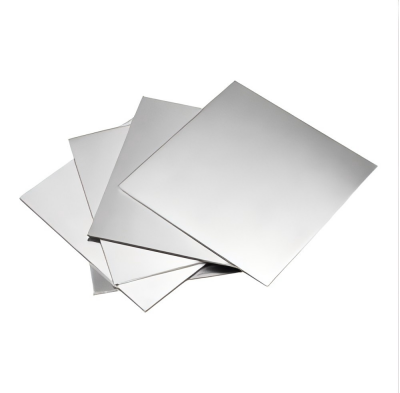
Steel
Carbon Steel
Carbon steel contains a relatively low percentage of carbon, which gives it a good balance between strength and ductility. It is cost-effective and easy to machine, making it a popular choice for structural parts, machinery components, and automotive frames. However, carbon steel is prone to rusting if not coated or treated.
Stainless Steel
Stainless steel is alloyed with chromium (and sometimes nickel), which makes it highly resistant to rust and corrosion. It also provides a clean, modern appearance, which is why it is often chosen for kitchen appliances, medical devices, and architectural panels. Although stainless steel is more expensive than carbon steel, its durability and hygiene benefits make it the preferred option in industries that require long-lasting, corrosion-resistant materials.
Galvanized Steel
Galvanized steel is carbon steel coated with a protective layer of zinc. This zinc coating offers excellent resistance to rust and corrosion at a lower cost than stainless steel. Galvanized sheet metal is widely used in roofing, ductwork, automotive parts, and outdoor structures. It is a cost-efficient solution for projects that require durability in moist environments without the higher expense of stainless steel.
Quick Comparison:
| Type | Strength | Corrosion Resistance | Cost | Common Applications | |
|---|---|---|---|---|---|
| Carbon Steel | High | Low (without coating) | Low | Structural parts, machinery | |
| Stainless Steel | High | Excellent | High | Medical, food, appliances | |
| Galvanized Steel | Moderate | Good | Medium | Roofing, ducts, automotive | |
*Strength levels are relative: High = suitable for heavy-duty or structural applications, Moderate = sufficient for general use, Low = limited load-bearing capacity.
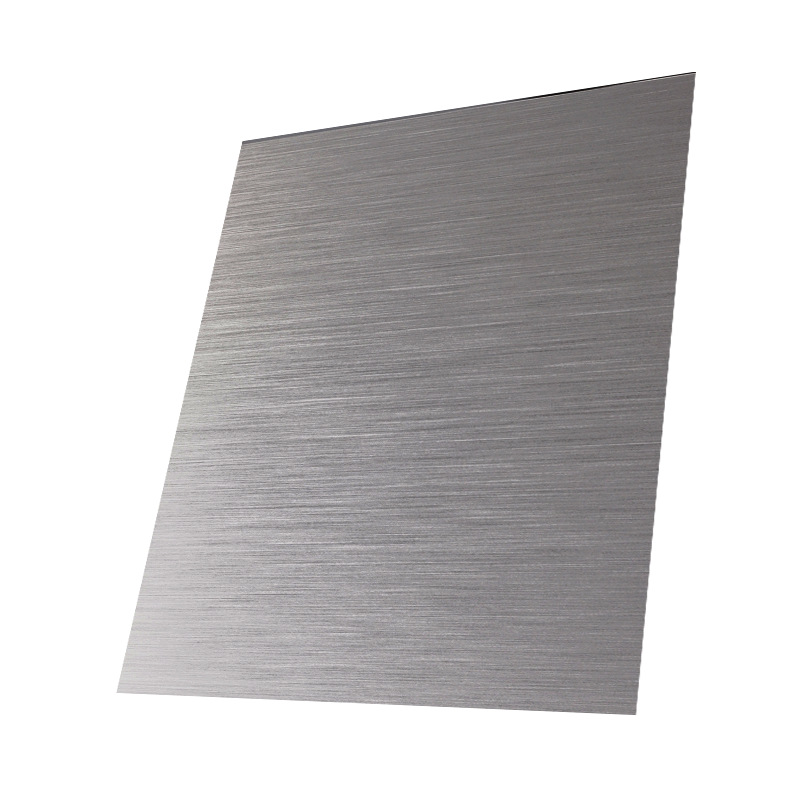
Aluminum
- 5052 aluminum is highly resistant to corrosion and often used in marine environments.
- 6061 aluminum provides excellent machinability and is commonly used in aerospace and automotive industries.
- 7075 aluminum is one of the strongest aluminum alloys, frequently used in aerospace and defense applications.
Applications of aluminum sheet metal include consumer electronics (laptops, smartphones), transportation (aircraft panels, automotive parts), and household appliances. Its light weight makes it ideal for products that need strength without excessive mass.
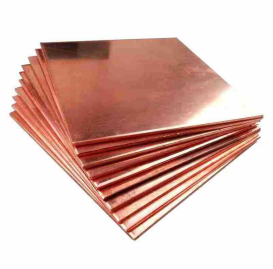
Copper
Copper is prized for its exceptional electrical and thermal conductivity. It is softer and more malleable than steel or aluminum, making it easy to work with, though it is generally more expensive.
Copper sheet metal is often used in electrical components, roofing, decorative panels, and HVAC systems. Its ability to conduct electricity efficiently makes it indispensable in the electronics and telecommunications industries.
Additionally, copper alloys such as brass (copper and zinc) and bronze (copper and tin) are commonly used in architectural, mechanical, and decorative applications due to their combination of strength, corrosion resistance, and attractive appearance.
Factors to Consider When Choosing Sheet Metal Materials
When you’re deciding which sheet metal to use, it’s not just about picking the strongest or cheapest option. The best choice depends on how your product will be used and what it needs to achieve. Here are the key questions to guide your decision:
- Mechanical Properties: Does the material provide enough strength to handle the stresses your product will face?
- Corrosion Resistance: Will it be exposed to moisture, chemicals, or outdoor conditions? If so, you’ll need a material that won’t degrade quickly.
- Formability and Ductility: Can it be bent, stamped, or stretched into your desired shape without cracking?
- Weldability and Joinability: Will your design require welding, bolting, or adhesive bonding? Not all metals behave the same during these processes.
- Surface Finish and Aesthetics: Is appearance important? For consumer-facing products, a material’s look and feel can influence customer perception.
- Cost and Availability: Can you source the material reliably at a price that keeps your project profitable?
- Sustainability: Does your client or end user care about recyclability or environmental impact?
By asking these questions early, you’ll avoid mismatches between material properties and project requirements—saving time, money, and effort down the road.
Comparing Sheet Metal Materials
| Material | Strength | Weight | Corrosion Resistance | Cost | Applications |
|---|---|---|---|---|---|
| Carbon Steel | High | Heavy | Low | Low | Structures, machinery |
| Stainless Steel | High | Heavy | Excellent | High | Food equipment, medical, appliances |
| Galvanized Steel | Moderate | Heavy | Good | Medium | Roofing, ducts, auto parts |
| Aluminum | Moderate | Light | Excellent | Medium | Aerospace, electronics, transport |
| Copper | Moderate | Heavy | Good | High | Electrical, HVAC, decorative |
*Strength levels are relative: High = suitable for heavy-duty or structural applications, Moderate = sufficient for general use, Low = limited load-bearing capacity.
Practical Tips for Material Selection
Choosing the right sheet metal can feel overwhelming, but a few simple steps can help you make the decision more straightforward:
- Start with the product requirements: Clearly define what the material needs to do—carry weight, resist rust, look premium, or reduce cost.
- Match material to environment: For example, choose stainless steel if the product will face constant exposure to moisture, or aluminum if weight reduction is a priority.
- Factor in manufacturing: Ask yourself whether the material can be easily bent, welded, or machined with the tools you have available.
- Balance cost with performance: Don’t overspend on properties you don’t actually need. Instead, choose the most cost-effective option that meets all critical requirements.
- Test before scaling: Always prototype with the chosen material before committing to large orders. This helps you catch potential issues early.
By following these steps, you’ll not only make smarter material choices but also increase the chances of your design succeeding in the real world.
The Material Choice You Cannot See: K-Factor and Bend Allowance
Two parts bent from the same 2 mm sheet — one 5052 aluminium, one 304 stainless — do not unfold to the same blank, and the difference is not the thickness. It is where the neutral axis sits inside the bend. The K-factor is the ratio of the neutral-axis offset to the material thickness, it moves with the alloy and the bend radius, and it is the reason a flat pattern that is right in aluminium comes out short in stainless.
The relationship is written into the bend allowance, the arc length of the neutral axis through the bend:
BA = π × A × (R + K × T) / 180, where A is the bend angle in degrees, R the inside bend radius, T the material thickness and K the K-factor.
| Forming method | Material group | R/T ratio | Recommended K |
|---|---|---|---|
| Air bending | Soft / ductile: 1100-H14, 3003-H14, copper | 0 – 1.0 | 0.33 – 0.38 |
| Air bending | Medium: A36 carbon steel, SPCC, CRCA | 0 – 3.0 | 0.38 – 0.43 |
| Air bending | Hard: 304/316 stainless, structural steel | 0 – 3.0 | 0.40 – 0.48 |
| Bottoming | Soft / ductile: 5052-H32, 6061-T4 | 0 – 3.0 | 0.40 – 0.45 |
| Bottoming | Medium: A36 and HSLA steel | 0 – 3.0 | 0.43 – 0.47 |
| Coining | All metals | 0 – 1.0 | 0.48 – 0.50 |
Those ranges, and the formula, come from the shop’s guide to how K-factor calculation affects sheet metal bending, which puts the working range at 0.30–0.50 and suggests starting between 0.38 and 0.45 for common air-bent carbon steel, stainless and aluminium.
What a Tenth of K Does to a Blank
Assume a 90° air bend in 2 mm sheet with a 2 mm inside radius, which is an ordinary R/T of 1.0. Substituting into the formula:
| Assumption | Calculation | Bend allowance |
|---|---|---|
| K = 0.40 — mid-range for air-bent 5052 | π × 90 × (2 + 0.40 × 2) / 180 | 4.40 mm |
| K = 0.45 — bottoming end of the range | π × 90 × (2 + 0.45 × 2) / 180 | 4.56 mm |
| K = 0.38 — soft, ductile end of the range | π × 90 × (2 + 0.38 × 2) / 180 | 4.34 mm |
On a single bend the spread is 0.22 mm, which most drawings would never notice. On a bracket with four bends it is 0.88 mm of accumulated error, and on a pan with holes that must line up with a mating panel it is enough to move every hole and force a rework. The lesson is not to memorise a K-factor: it is to derive the value for the alloy and tooling actually in use, lock it into the flat-pattern library, and validate it with one coupon before the first batch is cut.
What the Shop Can Hold Once the Bend Is Right
The blank is one tolerance and the formed part is another, and they are not the same number. Practical bands for a well-run shop put CNC machining near ±0.13 mm standard and ±0.025 mm precision, laser cutting at ±0.13–0.25 mm standard and ±0.05 mm precision, punching and stamping near ±0.25 mm standard and ±0.10 mm precision, and sheet metal bending at ±0.25–0.50 mm standard and ±0.10–0.20 mm precision, where springback dominates and varies with grain orientation. Plasma cutting, at ±0.76–1.50 mm, is not a precision process. The bands are published in the shop’s guide to specifying sheet metal tolerances, which makes the same point this section does from the other direction: tolerances that are not needed should not be drawn, because every one of them is paid for twice, once in the process and once in the inspection.
Case Studies / Real-World Examples
- Smartphone Cases: Aluminum is commonly used for its premium look, lightweight nature, and corrosion resistance, while stainless steel offers strength but adds weight.
- Automotive Panels: Traditional cars rely on steel for durability, while modern lightweight vehicles increasingly use aluminum for fuel efficiency.
- Appliance Panels: Stainless steel offers a sleek appearance and corrosion resistance, making it the standard for kitchen appliances, while galvanized steel provides a lower-cost alternative for hidden structural parts.
These examples show how material choice impacts not only product performance but also consumer perception and market competitiveness.
- Smartphone Cases: Aluminum is commonly used for its premium look, lightweight nature, and corrosion resistance, while stainless steel offers strength but adds weight.
- Automotive Panels: Traditional cars rely on steel for durability, while modern lightweight vehicles increasingly use aluminum for fuel efficiency.
- Appliance Panels: Stainless steel offers a sleek appearance and corrosion resistance, making it the standard for kitchen appliances, while galvanized steel provides a lower-cost alternative for hidden structural parts.
Conclusion and Recommendations
By now, you’ve learned how different sheet metal materials—steel, aluminum, and copper—each bring unique strengths to the table. More importantly, you’ve seen how to match those strengths with your project’s needs, ensuring you don’t overspend or underperform.
- Smartphone Cases: Aluminum is commonly used for its premium look, lightweight nature, and corrosion resistance, while stainless steel offers strength but adds weight.
- Automotive Panels: Traditional cars rely on steel for durability, while modern lightweight vehicles increasingly use aluminum for fuel efficiency.
- Appliance Panels: Stainless steel offers a sleek appearance and corrosion resistance, making it the standard for kitchen appliances, while galvanized steel provides a lower-cost alternative for hidden structural parts.
When you apply these guidelines, you’ll be able to:
- Select materials that extend product life and reliability.
- Reduce production costs by avoiding unnecessary overengineering.
- Build products that not only meet functional requirements but also win customer approval.
- Smartphone Cases: Aluminum is commonly used for its premium look, lightweight nature, and corrosion resistance, while stainless steel offers strength but adds weight.
- Automotive Panels: Traditional cars rely on steel for durability, while modern lightweight vehicles increasingly use aluminum for fuel efficiency.
- Appliance Panels: Stainless steel offers a sleek appearance and corrosion resistance, making it the standard for kitchen appliances, while galvanized steel provides a lower-cost alternative for hidden structural parts.
At 6CProto, we help companies make these material decisions every day. If you’re looking for guidance or reliable sheet metal solutions, our team can provide both expertise and high-quality supply. With the right partner, you’ll gain not just materials, but also peace of mind that your project is built to succeed.
FAQ
What K-factor should I start with for sheet metal bending?
Between 0.38 and 0.45 for common air-bent carbon steel, stainless steel and aluminium. The working range across forming methods runs from about 0.30 to 0.50: soft ductile alloys sit near 0.33–0.38, medium steels near 0.38–0.43, hard stainless near 0.40–0.48, and coining pushes the value toward 0.50.
How do I choose between aluminium and steel for sheet metal parts?
Match the alloy to the environment and the forming. 5052 aluminium resists corrosion well enough for marine duty, 6061 machines and forms predictably for brackets and housings, and 7075 is one of the strongest aluminium alloys where weight and strength matter together. Steels bring higher stiffness and weldability at higher weight, and stainless adds corrosion resistance at a cost in forming behaviour and tool wear.
What tolerance can sheet metal bending hold?
About ±0.25–0.50 mm on a standard press-brake bend, tightening to roughly ±0.10–0.20 mm on a controlled precision setup. Springback is the dominant variable and it changes with grain orientation, so the achievable band depends on the alloy and the tooling as much as on the machine.
Why does my bent part not fit after fabrication?
The flat pattern is usually the cause, not the bend. If the K-factor used to unfold the part does not match the alloy, the tooling and the forming method, every bend contributes a small error that accumulates across the part. Validate one coupon and update the flat-pattern library before blaming the press brake.
Which sheet metal process holds the tightest tolerance?
CNC machining at roughly ±0.025 mm precision or ±0.13 mm standard, followed by laser cutting at ±0.05 mm precision and ±0.13–0.25 mm standard, then punching and stamping at about ±0.10 mm precision. Bending is the loosest of the common operations, and plasma cutting at ±0.76–1.50 mm is not a precision process at all.
Latest Post
Vacuum Casting VS Injection Molding: How to Choose the Right Manufacturing Process from Prototype to Production
History of CNC Machining: The Origins and Development of Computer Numerical Control
The Ultimate Guide to Injection Molding: Process, Types, Advantages & Applications

How to Choose the Right 3D Printing Process: An Analysis of Pros and Cons
What is CNC Machining?A Complete Guide to Processes,Advantages,and Applications
Sheet Metal Enclosure Design: Corners, Sealing and Service Access
K Factor Sheet Metal Bending: Why the Same Model Gives Two Different Blanks
Custom Metal Fabricated Assemblies: Buying the Finished Item, Not the Parts
Laser Cut Prototypes: Flat Part Design and What the Cut Edge Gives You