

A cast housing can still need CNC work, so removing most billet machining does not remove the machining question. At mid volume, compare a CNC route with a casting-plus-finishing route for the same accepted enclosure. Tooling, revisions, leak requirements and remaining precision interfaces determine which proposal makes sense.
Tooling investment vs piece price logic
Compare die casting and CNC aluminum housings using total accepted-output cost, tooling commitment, design stability, alloy requirements, secondary machining, finishing, inspection, and demand risk. Request complete routes for the same functional deliverable. Mid volume alone does not establish a crossover, and a lower modeled casting piece cost does not automatically recover tooling or revision exposure.
Define the quantity over a realistic demand period and distinguish a firm order from a forecast. A tool investment justified only by uncertain future releases carries a different risk from one supported by committed repeat demand.
Ask what each quotation includes: tooling development, samples, modifications, production, trimming, machining, finish, testing and packaging. Separate one-time work from recurring work without assuming any supplier’s actual prices or rates.
NADCA’s design introduction recommends starting from function when developing or converting a die-cast product. Do not copy a billet design into a tool quotation unchanged and assume it is already optimized for casting.
Begin with the functional housing requirements, review route-specific geometry, obtain comparable quotations, examine demand and revision assumptions, and only then select a route. This sequence makes the commercial comparison reflect a manufacturable product.
Secondary machining still required
Identify bearing seats, sealing lands, threaded holes, locating faces and other controlled interfaces. Determine which can meet the approved requirement as cast and which need machining or another finishing operation.
A casting proposal needs access for locating, clamping and cutting those features. Review the relationship between cast surfaces and final machined datums, including the stock needed for cleanup. An apparently near-net feature can still be misplaced relative to the functional reference.
For a CNC-from-stock proposal, review material removal, setups, tool access and the final surface condition. Compare both routes using the same required interfaces, not the same unreviewed manufacturing geometry.
Material selection also changes. NADCA’s aluminum-alloy discussion describes casting-specific material choices and properties. Do not assume a wrought grade designation or its condition transfers unchanged to a die-cast housing. Approve the actual alloy and relevant property evidence.
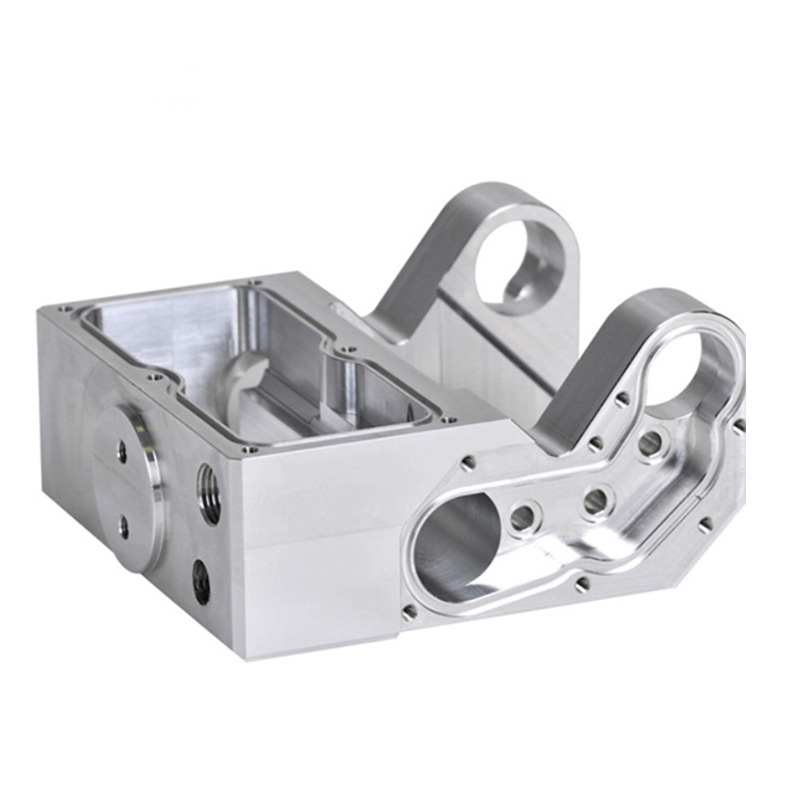
Table: volume and revision risk
| Order situation | CNC route to review | Die-casting route to review |
|---|---|---|
| Frequent revisions | Stock, programs and fixture changes | Die modification and renewed approval |
| Uncertain demand | Lot and capacity assumptions | Tool commitment against realistic releases |
| Stable repeat geometry | Repeat setup and machining scope | Supported tool and recurring production scope |
| Precision interfaces | Required final machining and inspection | Cast blank plus final machining and inspection |
| Leak requirement | Actual material, geometry and assembly evidence | Internal quality, machining and leak evidence |
The entries identify comparison questions, not price or lead-time rankings. A supplier’s actual route, exceptions and accepted-output basis are necessary before making a purchasing decision.
Include the consequences of a revision after tooling release. Define who approves changes, which samples must be repeated and whether obsolete inventory or tooling work remains committed.
Porosity and leak notes
Machining can expose internal casting discontinuities at a pressure boundary or sealing interface. Review wall transitions, stock removal and the required final condition before assuming a satisfactory as-cast appearance establishes leak performance.
The Metal Casting Institute’s post-casting discussion addresses porosity exposed by machining and the need to evaluate leak requirements after relevant processing. Its example test values are application context, not universal acceptance limits for your housing.
Specify the test medium, conditions, relevant state and acceptable result through the approved product requirement. Determine whether the question concerns a bare housing or a complete assembly with seals, connectors and fasteners. Do not silently substitute one for the other.
ASTM E505’s public scope concerns reference radiographs for recognizing and classifying discontinuities in aluminum and magnesium die castings. A radiographic requirement needs agreed criteria and does not independently prove a specified leak result.
If impregnation, repair or another recovery route is proposed, obtain the required engineering approval and define subsequent acceptance. Do not treat an unapproved corrective process as equivalent to the original ordered condition.
RFQ differences
Provide the final CAD and controlled drawing, service environment, critical interfaces, required alloy properties, order profile, finish and inspection package. Distinguish functional requirements from geometry that may change after route review.
For casting, request the proposed parting, draft, trimming, tooling, stock and machining strategy. Ask how samples demonstrate the complete finished requirement. For CNC, request the supported stock, setup and finishing route with equivalent acceptance scope.
In both proposals, identify required material records, lot linkage, dimensional reports and functional tests. Include tooling ownership and maintenance assumptions where relevant. A quotation for an unfinished casting should not be compared directly with a finished inspected CNC housing.
Request exceptions in writing. If one route cannot meet a critical feature without a redesign, engineering must resolve that change before purchasing treats its price as an equivalent alternative.
FAQ
These questions address specification details that should be settled before sample approval.
Is there a universal volume where die casting beats CNC?
No. The crossover depends on actual tooling, accepted output, machining, finishing, inspection, demand and revision assumptions. Compare supported proposals for the same deliverable.
Does die casting eliminate machining?
No. Some interfaces may still require machining or other finishing. Identify the critical features and quote the complete accepted route.
Does radiographic acceptance prove leak tightness?
No. Radiography and leak testing answer different questions. Specify the required internal-quality evidence and actual leak acceptance separately.
Does this comparison confirm 6CProto supplies die casting?
No. Confirm any proposed manufacturing scope directly. The linked CNC and housing pages support discussion of those routes; this article does not establish a die-casting capability.
When sand/perm mold appear
Sand casting or permanent-mold casting may enter the discussion when the geometry, alloy, order pattern or tooling proposal supports a different route. These are distinct processes with their own material, allowance, surface and inspection considerations.
The Aluminum Association’s standards overview separates engineering and metallurgical considerations for sand and permanent-mold castings. It is a guide to the relevant requirement categories, not evidence that either process suits every mid-volume enclosure.
Compare any added route against the same final housing definition. Keep route-specific design changes visible and assess their effect on function, testing, tooling and revision risk.
CTA
Review CNC machining and the machined enclosure and housing route for the required aluminum material. This comparison does not establish a 6CProto die-casting service or casting qualification; confirm any requested scope directly.
Submit the housing files, demand assumptions and acceptance requirements for quote review. Ask for the proposed complete route and explicit exceptions so the decision rests on comparable finished parts.