

The Material Is a Requirement, Not a Printer Setting
The same geometry printed in PLA, nylon, resin, titanium, or stainless steel behaves like a different part, because the material carries the load, the temperature, and the chemical exposure. That is why 3D printing material selection should start with the service requirement rather than the printer. A part that carries load belongs in a different family than a part that only proves fit, and the cheapest material that survives the environment is usually the right one. This guide organizes the additive material families, maps each to the applications it serves, and gives a selection process that works from the requirement down.
Families narrow the candidates, but the specific grade and the process set the final properties. A glass-filled nylon and an unfilled nylon are both “nylon,” yet they machine, print, and behave differently. Confirm the grade and the process against the application before committing to a quote.
Standard Polymers: The Iteration Materials
Standard polymers prove the shape, not the production material. They are inexpensive, easy to print, and perfectly adequate for a form-and-fit review, which is exactly their role.
- PLA is the easiest material to print and the weakest in service. Use it for geometry checks that carry no load and see no significant heat. It is the cheapest way to validate an interface.
- ABS adds toughness and temperature resistance over PLA, making it useful for slightly more demanding housings and rough-handling prototypes.
- PETG sits between PLA and ABS, with better chemical resistance and less warpage than ABS. It is a common choice for clear or semi-clear cosmetic parts.
The limits are the reason these materials are cheap. Standard polymers soften well below the service temperatures of engineering plastics, degrade under UV over time, and have limited fatigue life. A part that carries load or sees an engine bay belongs in an engineering material. The discipline is to match the material to the validation question: prove the geometry in the cheap material, then validate performance in the real one.
Engineering Polymers: Nylon, PC, and PEEK
Engineering polymers exist for functional parts, and the three that dominate additive work cover distinct service bands.
Nylon is the workhorse of functional 3D printing. It is tough, wear-resistant, and durable, with strong layer adhesion in SLS, so nylon parts survive hinges, clips, and housings that standard polymers cannot. Glass-filled nylon trades surface finish for stiffness and is a legitimate structural choice, though the fill material wears tools in post-processing. One caveat belongs in every nylon selection: the material absorbs moisture, which changes dimensions and properties, so dried and conditioned nylon parts measure differently. The grade and the expected humidity environment belong in the decision, and tolerances should be set against a defined material state.
Polycarbonate is strong and impact-resistant, suited to structural housings and parts that take abuse, though its print window is narrower than nylon’s and grade selection matters more than the process name.
PEEK is the high-end option: high temperature resistance, chemical resistance, and strength, printed for aerospace, medical, and demanding industrial parts. The cost curve follows the performance, so confirm the material data against the service temperature before the price is committed. The thermal history of the build also changes crystallinity and therefore the mechanical result, so a PEEK part deserves a dedicated check, not a datasheet assumption.
Photopolymers: The Fine-Detail Family
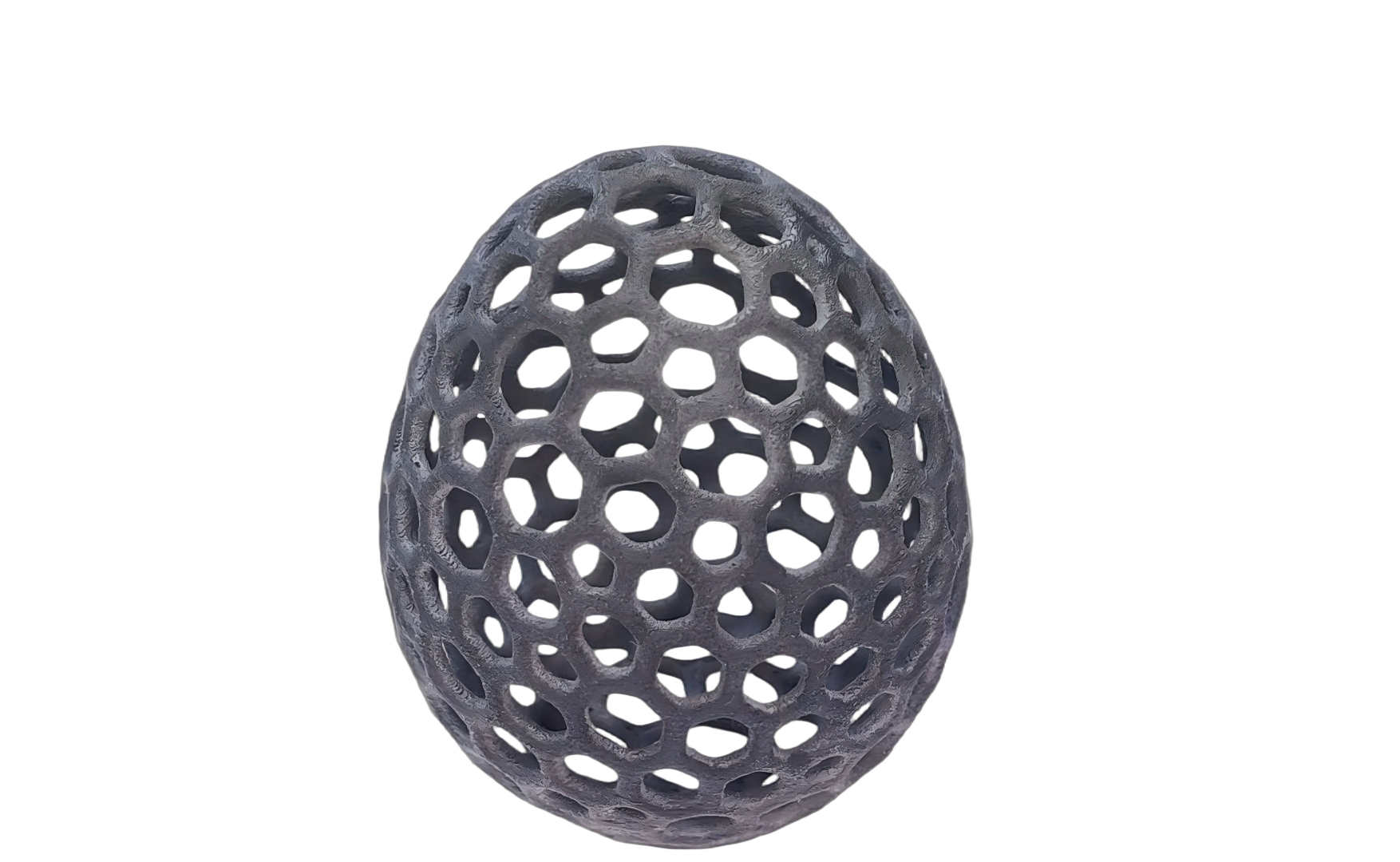
SLA resins print the finest detail and smoothest surfaces of the polymer processes, which makes them the choice for cosmetic prototypes, masters for casting, and parts with small features. The trade is mechanical: standard resins are brittle and creep under load, so a photopolymer part is a form-and-appearance part unless an engineering resin is specified.
The resin family has expanded well beyond the brittle standard. Tough and durable resins approach ABS-like behavior, high-temperature resins survive elevated service, and castable resins burn out cleanly for investment casting. The grade’s data sheet sets the story, and the part should be selected against the resin’s actual properties rather than the process’s reputation. If the requirement is real toughness, an SLS nylon part is often a better engineering answer than an SLA resin with a similar name.
Metals: Production Materials With a Process Cost
Metal additive materials are production-grade alloys: titanium for aerospace and medical, stainless steel for corrosion-resistant parts, aluminum for lightweight structures, and Inconel for high-temperature service. Printed metals approach wrought properties with a fine, directional microstructure, and the as-built surface is rough, so critical faces are machined after the build.
The economics are the gate. Metal powder, machine time, and post-processing make printed metal expensive per part, and the process earns its cost on geometry that machining cannot reach: internal channels, lattices, and consolidated assemblies. For simple geometry, machining or casting is cheaper, so the material decision is also a process decision. A bracket that is easy to machine should probably be machined; a fuel manifold with internal passages is where metal printing justifies itself.
Material family cheat sheet
Standard polymers: form, fit, low-cost iteration; limits are strength and temperature
Engineering polymers: functional parts, wear, heat; cost and print difficulty rise
Photopolymers: fine detail and cosmetic parts; standard grades are brittle
Composites: glass- or carbon-filled; gains stiffness, pays in anisotropy and tool wear
Metals: production parts under heat and load; cost, build size, and finishing are the limits
The Selection Process: Requirements First
A practical selection sequence removes materials in the order the environment attacks them. Write the service requirements first, load, temperature, chemical exposure, and appearance, then eliminate families that cannot meet them, and choose the cheapest survivor.
- Load. If the part carries sustained load, standard polymers leave the table immediately. Compare engineering polymers against metals on the actual stress state, and remember that printed parts are weaker across build layers, so the load case should include direction.
- Temperature. Check the continuous and peak service temperature against the material data sheet, not the printer’s spec sheet. PEEK and metals survive temperature ranges that standard polymers cannot.
- Chemical exposure. Solvents, fuels, and cleaning agents attack different families differently. Nylon absorbs moisture, standard polymers degrade under UV, and metal grades differ in corrosion resistance.
- Appearance. Cosmetic surfaces favor SLA resins; surface finish on printed engineering parts can be improved by media blasting, vapor smoothing, or machining if the application needs it.
- Certification. Medical, food-contact, and aerospace applications can require validated material grades and documented traceability. The grade certificate should be part of the quotation, not discovered at delivery.
Work through the list once against the datasheet and the candidates collapse to one or two families. From there, confirm the grade and process with the supplier, because the same family printed on different machines behaves differently.
Datasheets vs. Printed Properties
The datasheet states the nominal properties of the material. The printed part’s properties depend on the machine, the parameters, the build orientation, and the quality of the layer bonds, so the datasheet overstates the result for an uninspected build. For a functional part, the printed behavior should be confirmed against the application, ideally with test specimens built in the same orientation and process as the production part.
Two properties deserve special skepticism. First, strength across the build layers is lower than the datasheet’s bulk value, and the difference varies by process and orientation. Second, surface roughness and dimensional tolerance on raw builds are process artifacts, not material properties, so critical features need post-processing. Specify the post-process with the material: support removal for FDM and SLA, powder cleaning for SLS and metal, and surface smoothing or machining for functional faces. Plan the post-process into the quote instead of discovering it at delivery.
Choosing a Process and a Partner Together
The material decision is only half of the equation, because the process determines what the material can deliver. 6CProto’s 3D printing materials page documents the stocked grades, and the 3D printing services cover the polymer and metal families described here. For parts that graduate from printed prototypes to production, CNC machining and injection molding are the natural next steps, and the transition is cheaper when the material was selected with the end process in mind.
The material families and grading framework in this guide align with the terminology defined in industrial additive standards such as ISO/ASTM 52900, which establishes the general principles of additive manufacturing (NIST measurement and standards guidance). For a direct comparison of the process families, the article “FDM vs. SLA vs. SLS: Which 3D Printing Process Fits Your Part?” walks through the tradeoffs in detail.
FAQ
What is the strongest 3D printing material?
Among metals, titanium and Inconel lead for structural and high-temperature use; among polymers, PEEK leads on temperature and chemical resistance, and glass-filled nylon leads on stiffness for functional parts. Strength is not a single ranking, so the best material depends on the load case and the environment.
Which materials need post-processing?
Most do. FDM and SLA parts need support removal, SLS and metal parts need powder cleaning, and functional faces generally need surface smoothing or machining before they meet a tolerance or a finish class. The post-process is part of the material story and belongs in the quotation.
When should I choose a metal over a polymer?
When the part must carry load at temperature, resist wear or chemicals, or meet a regulated material requirement. For lower-demand parts, the cost and build rate favor polymers, so the metal is justified by the service requirement, not by the material’s reputation.