

CNC machining looks like a modern technology, and in many ways it is, but its roots are old and its turning point is specific. The idea is not new; humans have guided cutting tools for centuries, and automating them is a century-old ambition. What changed in the 1940s and 1950s was the marriage of a machine, a punched tape, and a clear purpose: making parts that a skilled machinist could not make reliably by hand. The story of CNC is the story of that translation between design, numbers, and metal, and of how the machine shop became a place where a file, not a hand, directs the tool. This article traces the origins and development of computer numerical control, from early automation to the connected machining centers of today.
Before the Computer: Early Automation
Long before numerical control, machine tools were automated by cams and templates. A cam carries shape in its profile; a tracer follows it and transmits the motion to the cutter. Copying lathes and profile millers used this principle for centuries, following a pattern instead of a human hand. The limits were obvious: a cam is one shape, one pattern, and every change means a new cam. What was missing was not the idea of automation, but a way to change the pattern without making a new piece of hardware. The answer, it turned out, was numbers on a tape.
Numerical Control Is Born: The MIT Servomechanisms Story
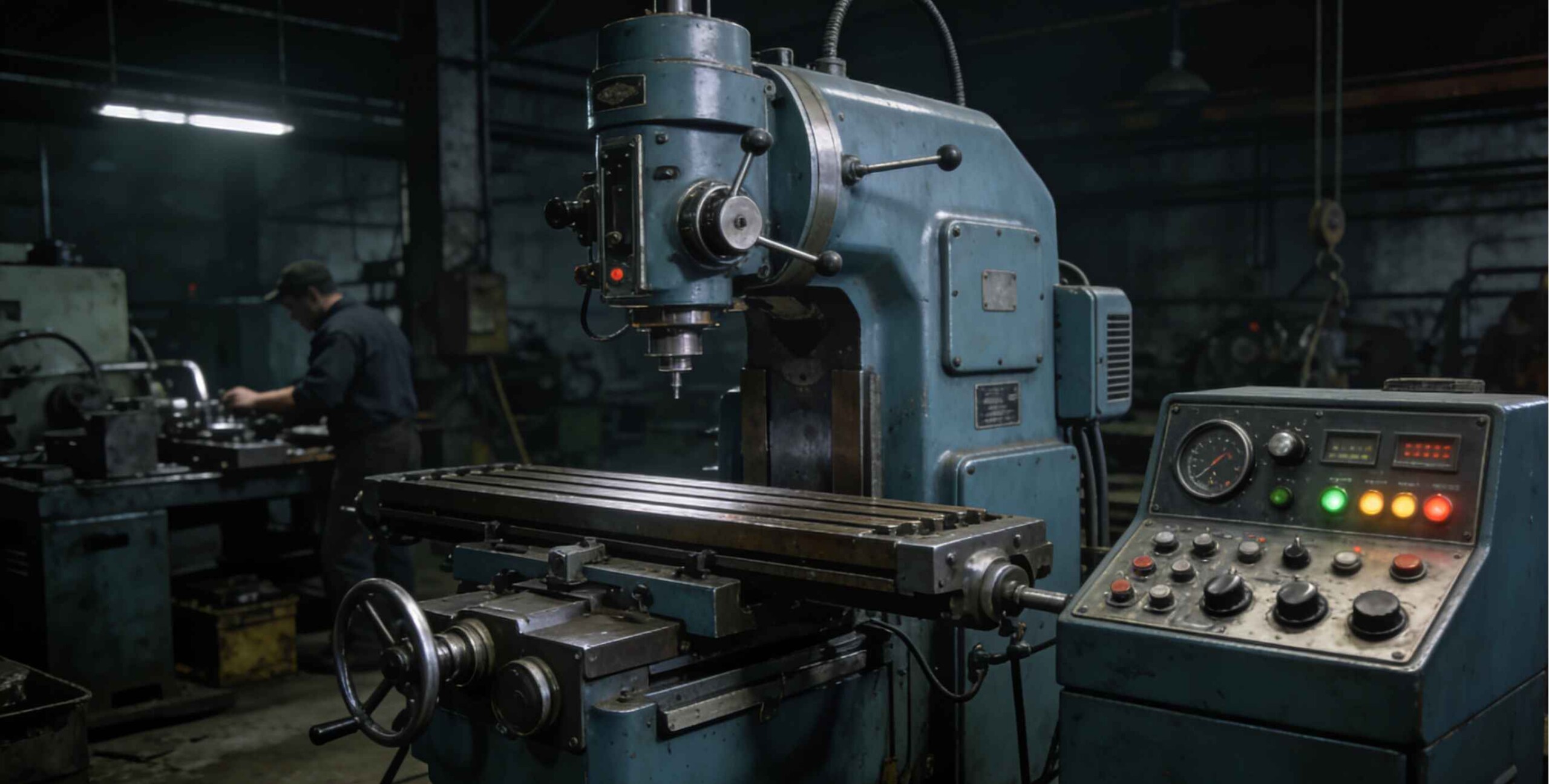
The word ‘numerical control’ appears in the 1940s research at MIT, driven by a practical problem in postwar aerospace: machining complex, precise contours that were too difficult for a machinist and too costly as cams. The team, working with data from punched cards and then punched tape, demonstrated a milling machine that followed a numerical program. Work led by Parsons and the MIT laboratory in collaboration with the U.S. Air Force produced the early prototypes of what became numerically controlled machining. The tape carried the coordinates; the machine read them and moved the axes. It was the first machine shop’s translator between engineering numbers and cutting motion.
The Classic Step: Punched Tape and Controllers
For decades, punched tape defined the technology. A tape held a long program of coordinates and commands, the controller read it, and the machine drove the axes step by step. The system was slow to program and unforgiving of errors, but it was repeatable: once the tape ran, the machine made the same part, the same way, against the same numbers, on demand. That repeatability, more than speed, was the leap. A machinist could hold a tolerance by skill; a tape held it by sequence, and the skilled machinist was freed to set up and inspect instead of cutting every pass by hand.
The Digital Shift: From Tapes to Microprocessors
The 1970s and 1980s replaced tapes with microprocessors and digital controls. The controller became a computer in the cabinet, the program moved from tape to memory, and the operator talked to the machine through a screen instead of a reader. This made reprogramming fast and diagnostics visible. The same controller could run different programs, store setups, and monitor the machine. It was the transition from numerical control as a tape to computer numerical control as we mean it: a computer in the loop, not just numbers on a medium.
The CAD/CAM Bridge: The Design Becomes the Program
The transformative step for everyday manufacturing was the software bridge. CAD creates the geometry, CAM turns it into toolpaths, and the controller runs them. The shop stopped programming by typing coordinates and started importing geometry, machining a model instead of describing it line by line. That is when CNC went from a specialist technology to the default for custom parts: the same file that defined the part defined the cuts, and revisions became a model update instead of a reprogramming effort.
Multiaxis Machines and Hard Material
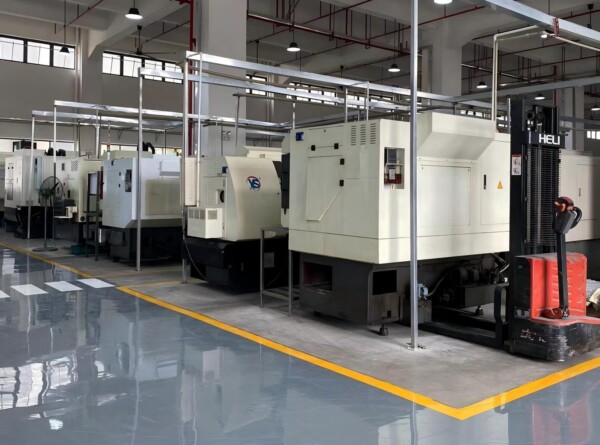
As control got faster, the machines got more axes: 3-axis, then 4, then 5 and beyond, adding tilt and rotation to the tool. Multiaxis machining made impellers, turbines, sculpted molds, and complex medical parts possible, while new tooling and spindle technology pushed the same control into tough alloys and engineering materials. CAM and simulation made the complex toolpaths safe to run, checking collisions before metal was cut. The history is one of control enabling capability: each step in control opened a step in geometry and material.
Automation and the Connected Shop
Today CNC connects to the rest of the shop: automated loaders, robots, in-process measurement, and systems that feed programs from the office to the machine. The technology has come full circle to solve the original problem, automation, but now the automation is about the whole workflow, not just the cut path: design, prove, program, machine, measure. What began as a punched-tape answer to a contour problem is now the backbone of a job shop, and the machinist’s role moved from turning handles to running and inspecting the process.
What the History Teaches the Modern Buyer
The history explains the two promises of CNC that still matter today. The first is repeatability: a program machines the same part the same way, and the tolerance lives in the process, not the mood of a single pass. The second is the file as the part: the geometry that defines the design is the geometry that drives the cut, so revisions are fast and the drawing and the part stay linked. When buying CNC parts, the promise is delivered by how well the shop manages the program, the fixture, and the inspection – the elements that make the machine’s repeatability real.
Bottom Line
CNC machining grew from a century-old drive to automate cutting, through MIT’s wartime contour problem, punched tape, microprocessors, and the CAD/CAM bridge that made the design the program. Each step replaced skill with repeatability and opened new geometry and materials. The modern shop runs the whole workflow as an automated process, and the buyer’s part inherits the fidelity of the file, the control of the program, and the discipline of the fixture and the inspection. That history is why today’s machined part is a file made real.
The War Effort and the First Programs
Numerical control did not emerge from a quiet lab; it was pressed by wartime production. The need to machine complex, precise contours quickly, and to repeat them across many parts, motivated research that turned a machinist’s problem into an engineer’s numbers problem. The early programs were tied to aerospace: shapes a skilled hand could describe but not reproduce, and schedules a single machinist could not keep. The punch card and the tape were the mediums of the day, and the demonstration that a machine could follow a program set the course for the industry.
The Role of Parsons and the Three-Year Push
The early history is often told around the work of John T. Parsons and the MIT laboratory, with sponsorship from the U.S. Air Force in the late 1940s and early 1950s. Parsons’s shop had tackled difficult contour machining, and the MIT research demonstrated a numerically controlled milling concept that carried the field forward. The three-year development effort is widely cited as the turning point after which numerical control moved from an idea to a machine-shop reality. It is a reminder that CNC was born from a customer problem with a deadline, not from a laboratory curiosity.
From the Air Force Project to the Shop Floor
After the demonstration, numerical control did not spread overnight. The early systems were expensive, the programming was slow, and the market was small. What carried the technology was the value of its repeatability on hard parts: once a program ran, a shop could make the same contour repeatedly, in series, without a skilled operator guarding every pass. That repeatability earned the investment, and by the time punched tape gave way to microprocessors, CNC was the standard for precision work rather than an experiment.
What the Language of CNC Still Carries
The vocabulary of CNC carries the history. A shop still talks about fixturing, datums, and first articles, the same words a machinist used to describe holding and trusting a part. The controller evolved from tape to computer, but the discipline of the process, the measurement, and the inspection remained the real source of accuracy. The history is a useful reminder for buyers today: the machine repeats what the program says, and the program is only as good as the design, the fixture, and the inspection behind it.
The Footprint CNC Left on the Job Shop
CNC shaped the modern job shop in a way that is easy to overlook: it made the file the production plan. A shop today can take a design model, generate the toolpath, and produce against it, and the revision loop is a model update. The history is still visible in the shop’s habits: the fixture that holds the part, the datum that sets the measurement, the first article that proves the program. Each is a hand of the old machinist’s discipline, now encoded in the process. That continuity, not the machine alone, is why CNC machining is trusted with the parts that matter.