

The comparison usually arrives after a prototype that looked acceptable in one process and failed a test that the other process would have passed. Extrusion printing and resin printing overlap on price for small parts and on lead time for simple geometry, which is why the decision so often gets made on convenience. It should be made on three properties instead: the finish the part must show, the tolerance a feature must hold, and the load the part must carry. This guide works through those three, plus size and cost, so the choice follows the requirement rather than the queue.
Which is better, FDM or SLA?
Neither is better; each wins a different requirement.
Resin printing resolves fine detail and smooth surfaces, extrusion printing produces large engineering-thermoplastic parts, and structural loads usually favour extrusion.
The honest answer depends on which property the part is judged by. Resin processes, including SLA resin printing, build with a light source that cures a liquid photopolymer, which allows fine features, smooth surfaces and clear parts. Extrusion printing, covered on the FDM service page, builds with a thermoplastic filament, which allows large single-piece parts and materials that tolerate heat.
The overlap is genuine but narrow: small, simple parts where neither the finish nor the material is critical. Outside that band, one process usually fits and the other works around a limitation, which is the situation that produces a second order.
Where the part’s requirement is not on that list at all, such as strength in every direction, neither process is the answer, and the useful comparison moves to machining or molding. The wider three-way comparison across extrusion, resin and powder-bed printing is covered in the 6CProto article on process selection across FDM, SLA and SLS.
How do surface finish and fine detail compare?
Resin wins on finish; extrusion wins on size.
A resin part comes out smooth with fine features and no layer stepping on vertical surfaces, while an extrusion part shows visible layer lines and rounds off details near the nozzle path.
Surface finish is the clearest difference between the two processes and the one most often underestimated. Resin printing cures thin layers with a light source, so the surface is smooth and the layer boundaries are difficult to see on vertical faces. Fine text, small logos, thin ribs and delicate features all reproduce well, which is why resin is the default for appearance models, fine-detail housings and parts that will be photographed. The curing sequence behind that behaviour is documented in the Formlabs guide to SLA printing, and the resin families with their published properties are listed in the Formlabs material library.
Extrusion printing leaves visible layer lines, and the surface quality varies with the geometry: horizontal faces print smooth, vertical walls show the layer edges, and angled faces show stepping. Reducing the layer height improves it at the cost of print time, but the characteristic texture remains. Where the visible surface matters, extrusion parts are often sanded or painted, which adds labour and moves dimensions slightly.
That leads to a straightforward rule. If the part is judged by how it looks at arm’s length, resin is the process. If the part is judged by whether it fits and works, and it is large, extrusion is usually the better choice even though its surface is rougher.
How do tolerance and dimensional stability compare?
Resin holds fine features; extrusion holds long dimensions.
Resin reproduces small features more accurately but moves during post-cure, while extrusion parts are dimensionally stable once cooled and are more predictable across long dimensions.
Both processes need a considered tolerance strategy, and the failure modes differ. A resin part shrinks as it cures, and the shrinkage follows the build direction; post-curing continues to move the part after it leaves the machine, and support removal leaves marks exactly where a part is often measured. An extrusion part does not change after printing, but the vertical dimension accumulates small variation from each layer, and holes print slightly undersized because the extruded path curves inward at the top of an arc.
The practical consequences differ accordingly. Resin is the better choice for small parts with tight callouts on features, as long as the curing behaviour is budgeted. Extrusion is the better choice for large parts where stability matters more than resolution, and where a few critical features can be drilled or machined to final size afterwards.
In both cases, the drawing should identify a datum from the function and reserve tight callouts for the features that mate; the framework for those callouts is set out on 6CProto’s standards and tolerances page.
| Attribute | FDM (extrusion) | SLA (resin) |
|---|---|---|
| Surface as built | Visible layer lines, stepped angles | Smooth, fine detail, no stepping |
| Detail resolution | Limited by nozzle path | Fine features and text reproduce |
| Dimensional behaviour | Stable after cooling | Moves with post-cure and support removal |
| Maximum part size | Large single-piece parts | Limited by the resin platform |
| Material behaviour | Engineering thermoplastics, heat tolerant | Photopolymers; limited creep resistance |
| Typical use | Fixtures, covers, large functional parts | Appearance, fine detail, clear parts |
How does mechanical performance compare?
Extrusion parts are tougher; resin parts are more brittle.
A thermoplastic part bends before it breaks and tolerates impact, while a photopolymer part is stiffer and more likely to crack, and both are weaker across their build direction.
The materials behave differently under load. Extruded thermoplastics are ductile: they deform and can absorb impact energy before failing. Photopolymers are more brittle, with higher stiffness and lower elongation, which means a resin part can pass a static check and crack under a sudden load. Resin also creeps under sustained load, so a part held under constant stress can distort over weeks in a way a short test will not reveal. The terminology used to describe both processes follows the additive manufacturing vocabulary maintained in ASTM committee F42.
Both processes are anisotropic, but for different reasons. In extrusion printing, the bond between layers is weaker than the material inside a layer, so a load that pulls layers apart is the weakest case. In resin printing, the effect is smaller but still present, because curing follows the build direction.
That produces a practical rule for load-bearing parts. If the part must survive impact, repeated handling or a long-term load, extrusion in a tough thermoplastic or nylon is usually the better route. If the part is a visual or fit model with a light duty, resin’s finish advantage matters more than its lower toughness.
How do part size and build volume decide the choice?
Size is often the deciding factor before anything else.
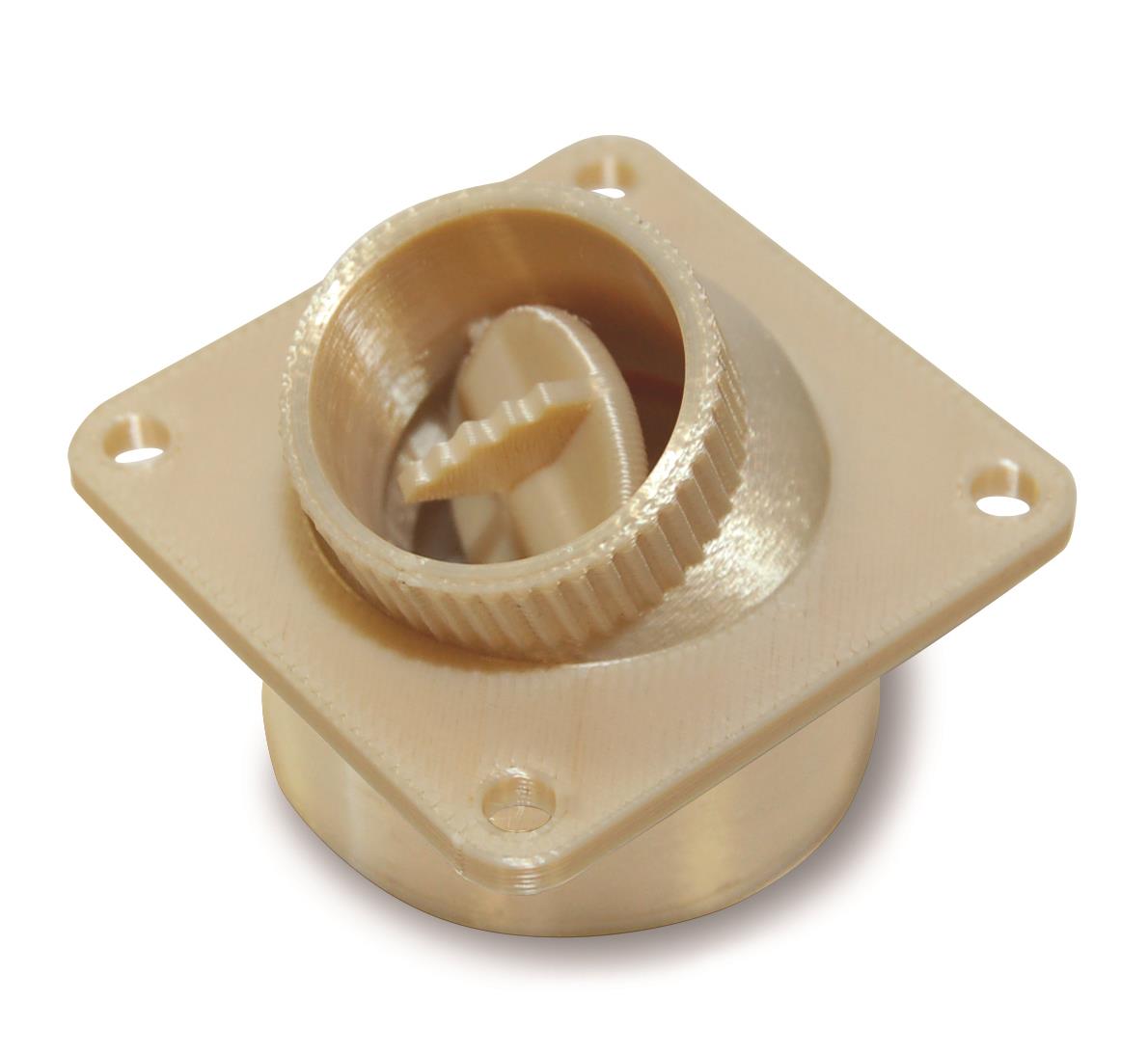
Extrusion printing produces parts in one piece at dimensions that resin platforms cannot reach, so a large enclosure or duct usually settles the question in favour of extrusion.
The build envelope of a resin platform limits the largest dimension of a part, and splitting a large resin part creates joints, fasteners and alignment features that add cost and introduce failure points. Extrusion printing covers larger envelopes, so a single printed component can replace what would otherwise be an assembly.
Size interacts with the other properties as well. A large part printed in resin would also need its distortion managed across the whole length, which is harder than on a small part. A large extrusion part, by contrast, is dimensionally stable after cooling, though it may need its own plan for warping during the build.
Where a design sits near the limit of a resin platform, the useful question is whether the part can be divided along a load path without compromising function. Where it can, resin remains an option for the finish advantage; where it cannot, the decision is made.
How do cost and lead time compare?
Both are dominated by machine time; the profile differs.
Resin cost scales with build height and finishing labour, extrusion cost scales with printed volume and support material, and the cheaper route depends on the geometry rather than the process.
Resin printing prices machine time by the number of layers and the height of the build, and then adds hand work: support removal, and sanding or polishing where the surface matters. Small, finely detailed parts are cost-effective because many can share a platform, but labour for finishing scales with the surface area that must be treated.
Extrusion printing prices machine time by the material deposited and the supports required. A large part with modest detail can be economical because the machine is laying material continuously rather than performing many short layer passes, while a small part with fine detail is uneconomical because the machine spends its time on paths rather than on volume. Where a program is comparing printed parts against conventionally made ones for a structural role, the qualification context is summarised on the ASME additive manufacturing topic page.
Lead time follows the same structure. Both processes queue behind machine availability, and both are affected by post-processing. Where a program needs parts quickly and the geometry is simple, the decisive question is often which process can include the part in an existing build rather than dedicating a cycle to it.
Choosing by what the part must prove
What the part must prove decides the process more reliably than any property table. A part that must look right, show fine detail or transmit light belongs in resin. A part that must survive handling, hold a load, resist heat or exist at a size no resin platform can reach belongs in extrusion. A part that is large and must also look good is a design decision rather than a process one, and usually means accepting a finishing step.
Where the requirement is genuinely mixed, the useful move is to split the tests. Print the geometry in both processes, test the property that governs the design, and keep the result as the reference for the production route. That is faster than debating process merits, and it produces evidence for the decision.
What does a hybrid program look like?
Use each process for what it does best.
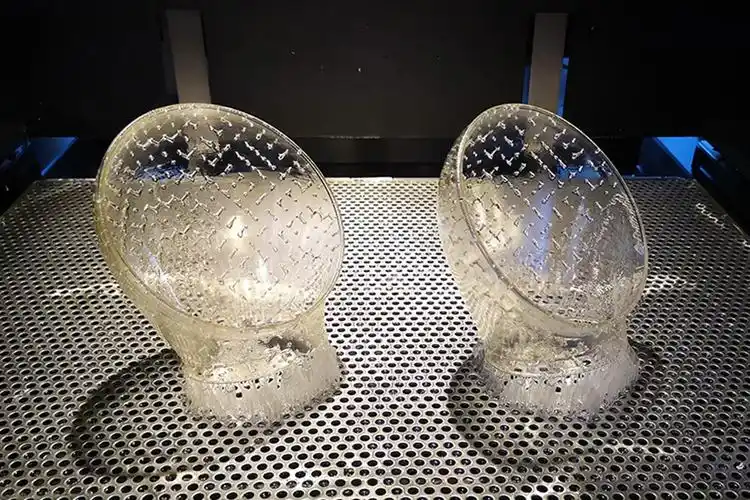
A common pattern is to validate fit and appearance in resin and to prove structure, heat tolerance or size in extrusion, with the two sets of parts sharing one design revision.
Hybrid programs work because the two processes answer different questions. A resin build confirms that the part looks right, that fine features read correctly and that the assembly closes. An extrusion build confirms that the material survives the load, the temperature and the handling the product will see. Together they cover the design review, and neither one alone does.
The discipline that makes it work is keeping a single design revision. Where the resin part and the extrusion part come from different CAD versions, the comparison is meaningless and the differences cannot be attributed to the process. Keeping the file, the orientation record and the finishing route attached to each build makes the results comparable.
Where the part will eventually be molded or machined, those two builds also establish the reference dimensions that the production tooling has to match, which is a useful by-product of a hybrid program. The vocabulary used to describe the processes follows the additive manufacturing standards maintained in ASTM F2792, and the measurement side of process qualification is described in the NIST additive manufacturing program.
Deciding between them
Finish, tolerance, load and size resolve almost every case. Resin wins on surface quality and fine detail, and it also wins on small parts with tight feature callouts as long as post-cure movement is budgeted. Extrusion wins on size, on heat tolerance and on parts that must survive impact or a sustained load, and it wins on fixtures and tooling where appearance is irrelevant.
Where the answer is still unclear, the part’s test plan settles it: identify the single property that the design depends on, then choose the process that produces it most reliably. That reframing removes the ambiguity that property tables create, and it makes the decision explainable to whoever has to approve it.
FAQ
What is stronger, FDM or resin?
For impact and toughness, extrusion printing usually wins because thermoplastics deform before failing, while photopolymers are stiffer and more brittle. For a light-duty part where stiffness matters more than impact, a resin part can be adequate. Both are weaker across the build direction, so the load case and the orientation matter as much as the material. Resin also creeps under sustained load, which a short test will not reveal.
Is SLA the same as 3D printing?
SLA is one of several additive processes under the 3D printing umbrella, alongside extrusion, powder-bed fusion and metal printing. It is defined by curing a photopolymer with a light source, which distinguishes it from processes that melt a filament or fuse powder. Saying SLA when you mean any 3D printed part is a common shorthand, but it matters when a quote is being compared, because the processes produce different surfaces and materials.
Can a resin part be used for a fixture or tooling?
Sometimes, but it is rarely the best choice. Fixtures usually see clamping loads, abrasion or heat, and a brittle photopolymer is a poor match for those conditions. Extrusion printing in an engineering thermoplastic, or a machined part where the load is severe, is the more durable route. Resin fixtures are used where the geometry is intricate and the loads are light, and where the fixture is replaced frequently.
Which process should be used for a part that has to be painted?
Both can be painted, and both need preparation. An extrusion part shows layer lines that have to be sanded out first, which adds labour and slightly changes dimensions. A resin part is smoother to begin with and usually needs less preparation, though support marks and any scarring need attention. Where the painted surface is the main requirement, resin reduces the preparation time; where the part is large, extrusion plus sanding is often still the practical answer.
If the process is still open, send the model with the property the part is judged by: the finish that must show, the load it must carry, or the temperature it must survive. 6CProto runs resin and extrusion printing in the same facility, so both routes can be quoted from one file and one manufacturing review. Upload it at the 6CProto quote page or send it to projects@6cproto.com.