

Explore Manufacturing Materials Guides
A clear lighting housing fails when the resin that looked perfect on a colour chip cannot fill a thin lit face without haze, short shot or a knit line that glows under the LED. Teams buying optical plastic injection molding lighting parts are choosing a process window as much as a datasheet transmittance number: flow length, heat near the source, scratch behaviour and whether the face stays optically clear or becomes intentionally diffused.
This page compares PC, PMMA and related clear grades for thin lit faces — flow limits, haze and yellowing near heat, when texture or film still belongs on a “clear” grade, and what to freeze before steel. The project narrative for thin translucent luminaires sits on the bespoke pendant light case; this article does not retell that story.
What the lit face actually demands from the resin
A lit face asks the resin for three jobs at once: enough light transmission through the nominal wall, a surface that does not scatter or yellow under the source, and enough toughness to survive assembly, cleaning and shipping. Those jobs conflict. Higher stiffness grades that keep a thin frame from bowing can be harder to fill over a long flow path. Softer, higher-flow grades fill more easily but may mark, scratch or creep under clamp load at mounting points.
Optical plastic injection molding for lighting therefore starts with the appearance class on the drawing, not with a generic “clear plastic” callout. State whether the face is a see-through optic, a soft diffuser, or a mixed panel with clear windows and textured zones. Name the light source type and expected proximity to the plastic, because local heat changes yellowing and residual stress behaviour even when the room ambient is mild.
Material producers such as Covestro and acrylic specialists at Röhm publish grade families for transparent applications. Industry framing from Plastics Europe and the Plastics Industry Association helps buyers talk about polymer families consistently. None of those pages replace a fill study on your wall thickness and flow length. 6CProto reviews clear-grade choices against geometry during free DFM for plastic injection molding from its Zhongshan facility and Guangdong partner network.
Secondary resins appear when the housing is only partly optical. Clear PC/ABS blends, copolyesters and specialised lighting grades can solve impact or chemical needs, but each changes shrinkage and gate blush behaviour. Treat “or equivalent clear” as a controlled list with optical and melt-flow bounds, not an open invitation to substitute opaque commodity stock.
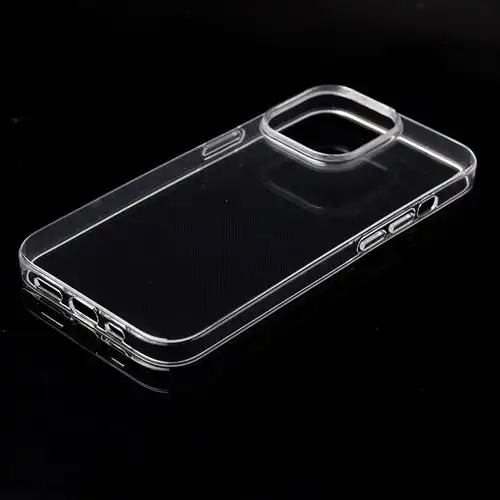
How does flow length limit wall section?
Long thin paths need higher flow or thicker walls.
Flow length-to-thickness ratio sets whether a clear melt reaches the last-to-fill zone before freezing. A wall that looks elegant on a render can short-shot or pack poorly once the resin cools against steel over a long lit face.
Polycarbonate often needs more aggressive process conditions than PMMA for the same thin section, while PMMA can fill more readily in some geometries but brings different crack and chemical-sensitivity risks. Either way, the drawing that freezes a wall from CNC aluminium habits without a moulding flow check is the usual source of first-tool haze and incomplete fill. Gate size and location also steal or give back flow length budget; those details belong with the tool shop, not only with the resin datasheet.
Machine makers such as ENGEL and ARBURG document thin-wall process capability in general terms. Ask your moulder for a fill simulation or at least a comparable-part reference before locking the thinnest lit face. Where geometry must stay aggressive, expect either a higher-flow grade, a second gate, or a local wall increase behind the lit zone that does not read as a sink on the face.
Rib and boss layout still matters for fill, but rib percentage rules and sink physics are owned by the hub and the existing sink-mark guide. Here the question is only whether the chosen optical grade can carry melt to the far edge at the frozen wall without forcing packing that prints stress onto the lit face.
Haze, yellowing and heat near the source
Haze and yellowing are not the same defect, and they are not cured by the same process tweak. Haze is scattering from surface texture, contamination, micro-voids or crystallinity effects that make the lit face look milky. Yellowing is a colour shift often tied to thermal history, UV exposure or additive packages. An LED sitting close to a thin clear wall can raise local temperature enough to stress-whiten or age the resin even when the fixture ambient feels cool to the hand.
Specify whether the housing must stay colourless after a defined burn-in or operating temperature profile. If the source is close, ask for grades with appropriate heat resistance and for process settings that avoid overheating the melt. Residual stress from packing and cooling also shows under polarised light and can become visible as rainbow patterns when the part is backlit — a cosmetic reject that still measures within dimensional tolerance.
Supplier technical literature from Covestro and Röhm, and buyer education resources from Plastics Europe, discuss optical grades and weathering at a catalogue level. Your acceptance criteria still need a light-box method and a reject standard photograph. Link optical checks to wall uniformity: uneven cooling that creates haze patterns is covered on the cooling article in this cluster and overviewed on the pendant hub.
Contamination control is part of optical yield. Regrind limits, dryer setpoints and barrel purge discipline belong in the process sheet for clear lighting resins. A lot that passes dimensional FAIR can still fail the light box if moisture or degraded melt entered the shot. Ask the quoting shop how they segregate clear production from coloured or filled work on shared presses.
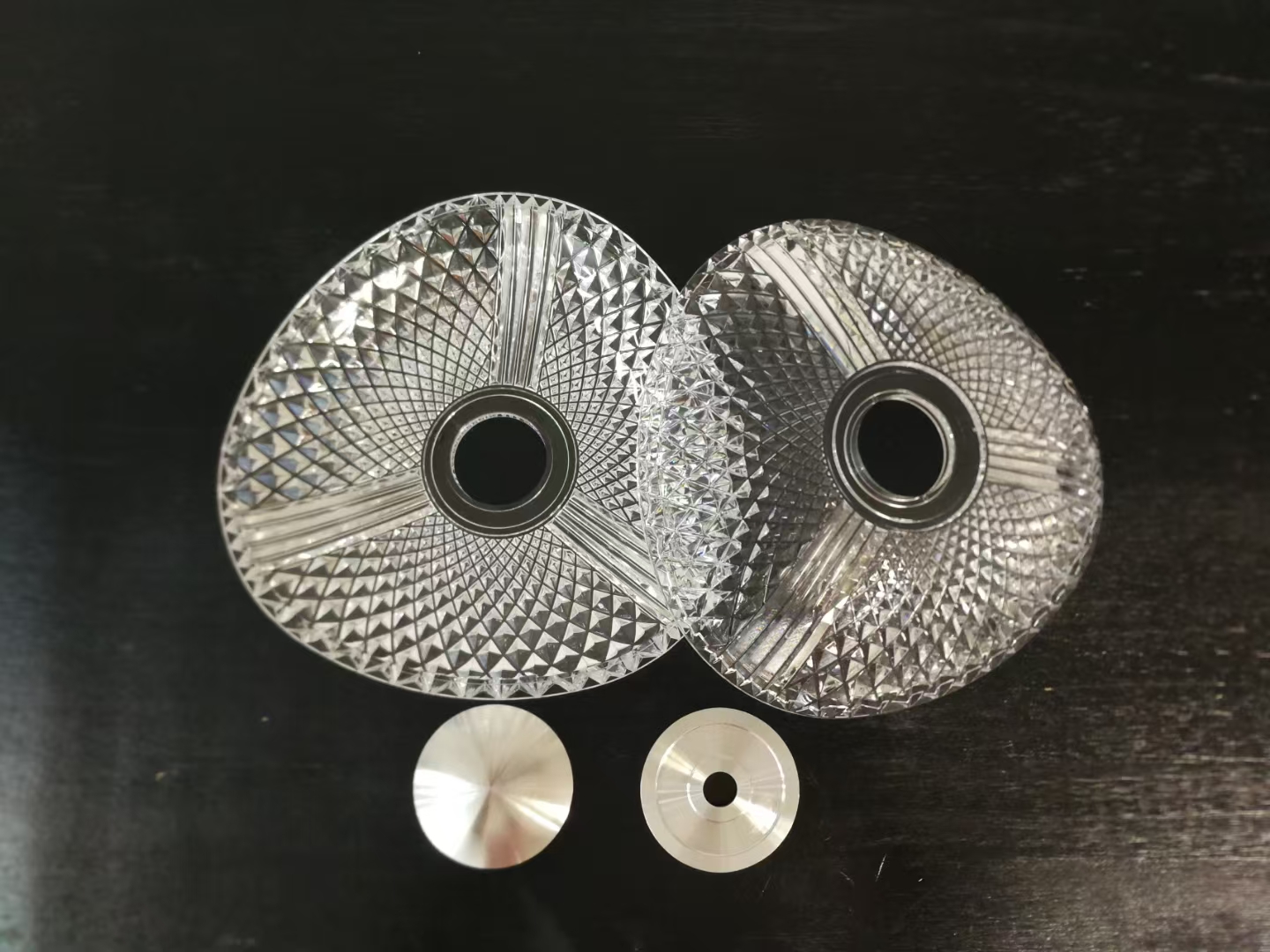
When does a clear grade still need texture or film?
Texture hides knit lines; film protects soft clear faces.
Not every lighting face should leave the tool as polished SPI-A2. A controlled texture can hide minor flow lines, reduce fingerprint visibility and create a designed diffuser look without a second film layer. Protective film on shipped clear parts prevents scratch rejects that optical grades invite during handling.
Decide texture early because it changes how thick the wall reads optically and how aggressively the melt must pack to replicate the spark. Film rules belong on the packaging note: which faces keep film through assembly, who peels it, and whether incoming inspection happens with film on or off. Soft PMMA faces especially need handling discipline; PC improves impact but still scratches under abrasive wipe-downs.
Hot-runner and gate cosmetic effects can force texture even when marketing wants “crystal clear.” If the lit face cannot tolerate a gate vestige, move the gate, use a tunnel or edge gate off the optical zone, or accept a textured zone that conceals the witness. Tool component suppliers such as HASCO and hot-runner specialists at Mold-Masters document gating hardware options; your DFM must still pick the cosmetic strategy.
Hard-coated or film-insert options exist for abrasion-prone clear faces, but they add process steps and scrap modes. Only specify them when wipe tests on uncoated samples fail the product requirement. Do not assume a catalogue hardcoat survives every gate and ejector layout without trials.
What should you freeze before tooling?
Freeze resin grade, wall, gates and appearance class.
Before steel is cut, lock the polymer family and specific grade (or an approved equivalent list), drying requirements, nominal wall and allowed local thickening, gate concept, polish or texture class, and the light-box acceptance method. Changing any of those after T1 usually reopens cooling and packing, which is why thin lighting tools are expensive to iterate.
RFQ packages that only attach a STEP file of a “clear cover” invite quotes based on opaque ABS habits. Include LED proximity, operating temperature assumptions, chemical cleaners the housing will see, and whether the part is structural or only optical. Ask for free DFM notes that call out flow risk and knit-line locations relative to the lit face.
6CProto’s injection molding and prototype injection molding paths are the usual routes to prove clear thin walls before production steel. Material notes for polycarbonate programmes are summarised on the PC materials page. Measurement discipline for first articles is framed generally by NIST MEP; apply it to optical as well as dimensional checks.
Application context for lighting-style mouldings is also collected under manufacturing application guides. Use those pages for process browsing; keep this article as the optical-grade decision owner for thin lit faces.
How this shows up on a bespoke pendant program
Thin translucent pendant pieces illustrate the same resin-versus-process tension: transmission wants a clean thin section, while stability wants structure that must not sink the lit face. The hub records that conflict and the mould levers around cooling and gates at a programme level. Keep resin selection and optical process window decisions here; use the thin and transparent lighting parts case for the integrated project view, and avoid re-arguing rib percentage rules that the hub already owns.
When a pendant-style housing mixes fragile thin lamp pieces with a stiffer frame, the resin choice on the lit piece may differ from the frame grade. Document that split on the BOM so purchasing does not unify everything to one clear pellet “for simplicity.” Optical and structural pellets that share a family name can still need separate drying and process sheets.
When the CAD and appearance class are ready, name the clear grade targets and upload the model to request a quote. Email projects@6cproto.com or WhatsApp +86 180 2219 4001 for DFM feedback before optical tooling is released.
FAQ
Is optical PC always better than PMMA for thin LED housings?
No. PC usually offers better impact strength and heat resistance near some sources, while PMMA often provides higher optical purity and easier flow in certain thin geometries. Chemical exposure, scratch expectations and gate cosmetics can overturn either default. Validate on the real wall and light-box method rather than choosing from a catalogue headline.
Can a colourless opaque ABS substitute for clear optical plastic?
Not when the face must transmit or diffuse light as designed. Opaque grades hide knit lines but fail the optical job. Some programmes use clear windows overmoulded or assembled into opaque frames; that is a different bill of materials, not a resin swap on the same cavity.
Do UV stabilisers eliminate yellowing next to LEDs?
Stabiliser packages help against defined UV and thermal ageing profiles, but they do not erase overheating from an undersized heat path or from melt degradation in the barrel. Specify the exposure profile and prove samples under your burn-in, not only under room light.
Should first-article optical checks use the production LED?
Yes when the appearance specification is defined under that source. A generic light box can miss local hot spots and colour rendering differences. If the production LED is not ready, document the substitute source and re-check when the real board arrives.