

Explore Rapid Prototyping & Low-Volume Guides
Jumping straight to hardened steel for a thin translucent lighting housing feels decisive until the first T1 shows a knit line across the optic and a wall that will not fill. Teams that validate geometry, light distribution and assembly on the right prototype path catch those failures before cavity steel is committed. Choosing how to prototype lighting housing before injection mold production tooling is a decision about which risks the prototype must prove — not a race to the cheapest sample.
This page covers what a prototype must prove for a lit thin wall, where CNC clear plastics diverge from moulded flow reality, when soft tooling and bridge volumes fit, when to stop iterating and cut steel, and which DFM inputs transfer to production. Pendant-style programmes illustrate the path on the bespoke pendant light hub without repeating that narrative here.
What must a prototype prove for a lit thin wall?
Prove optics, fill risk and assembly — not only shape.
A lighting housing prototype that only checks envelope fit leaves the expensive risks untouched. Thin translucent parts fail on fill, knit cosmetics, wall uniformity, heat near the LED and mounting stiffness. The prototype plan should name which of those risks each sample method can and cannot prove.
CNC clear plastics prove machining geometry, screw bosses and some optical path length. They do not prove gate blush, weld lines or packing-driven haze. Urethane casting approximates appearance and assembly in small lots but uses different shrinkage and heat behaviour than thermoplastic injection. Soft or prototype moulds come closest to production flow physics while steel is still changeable.
Additive equipment makers such as Stratasys and 3D Systems publish clear-resin options useful for early form studies. They are not substitutes for moulded flow validation on production-intent walls. Industry context from Plastics Industry Association and Plastics Europe helps frame polymer families; your prototype matrix still has to map risk to process.
How do CNC clear plastics differ from moulded flow reality?
Machined clears miss gates, welds and packing haze.
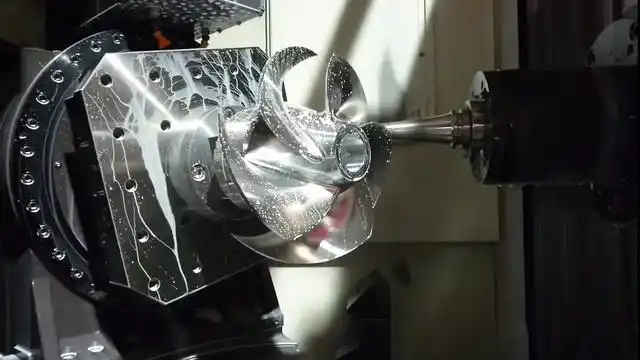
A CNC PMMA or PC cover can look optically excellent because it never saw a gate or a weld line. That excellence misleads stakeholders into freezing a wall thickness that will not fill in the tool. Use CNC to lock interfaces, LED alignment and mechanical strength; do not use it as the final optical cosmetic sign-off for a moulded lit face.
Machining also leaves tool marks and stress patterns unlike moulded skins. Hard-coat or polish steps on CNC samples may not transfer to moulded texture classes. Call out which prototype finishes are representative and which are temporary visual aids.
6CProto runs CNC machining alongside moulding paths so teams can sequence geometry prove-out before soft tools. Measurement discipline from NIST MEP still applies: measure the prototype against the same datums the moulded FAIR will use.
When do soft tooling and bridge volumes fit?
Use soft tools when flow cosmetics must be proven soon.
Aluminium or soft-steel prototype tools, and other bridge approaches, exist to mould real thermoplastic grades through production-intent gates and cooling approximations. They cost more than CNC or urethane but answer the questions steel will charge dearly to reopen. Bridge volumes also support pilot builds, certifications samples and marketing units while production tools finish.
Urethane casting remains useful for appearance models and low mechanical risk assemblies. Clear urethane parts can support lighting demos; they should not freeze packing or gate decisions. 6CProto’s urethane casting and prototype injection molding services cover those different jobs explicitly.
Press capability references from ENGEL and ARBURG remind buyers that even soft tools need adequate machine performance for thin clear fills. Match tonnage and injection speed expectations early.
When should you stop iterating geometry and cut steel?
Cut steel when residual risks are only process fine-tunes.
Stop geometry iteration when wall, gate concept, mounting scheme and optical acceptance method are stable across prototype evidence — not when the calendar says tooling should have started last month. Remaining risks should be adjustable in process or polish, not in core steel moves that relocate welds across the optic.
Red flags that steel is premature: CNC-only optical sign-off on a moulded intent part; unresolved LED proximity heat marks; wall thickness still changing weekly; no lit-face mask for weld placement; no agreement on texture versus polish. Green flags: soft-tool shots that pass light-box with production-intent resin; thickness map correlated; assembly torque and clip forces proven; packaging film rules written.
Drawing clarity expectations under ASME Y14.5 help freeze what production will inspect. Material notes from producers such as Covestro should match the resin actually moulded in the soft tool, not a catalogue cousin.
Which DFM inputs transfer from prototype to production?
Transfer walls, gates, optics method and failure photos.
The valuable prototype deliverable is not only a tray of parts. It is a DFM pack: frozen wall and rib notes (rib percentage rules stay on the hub), preferred gate region, knit predictions versus lit-face mask, thickness map method, light-box setup, failure photos, and resin drying or regrind lessons. That pack should travel into the production tool RFQ unchanged unless an ECO says otherwise.
Soft-tool cooling is rarely identical to production steel cooling. Transfer the thermal problems you saw, not a false assurance that cooling is finished. Production cooling strategy is owned by the cooling article in this cluster; prototype notes should flag haze bands that steel must eliminate.
6CProto’s free DFM on injection molding quotes expects those inputs. Skipping them restarts discovery on hardened steel.
How a pendant-style program uses that path
Pendant-style thin translucent programmes typically need more than a CNC mock-up because thinness and transmission fight each other in the tool. Use the hub for the integrated project view and order checklist; keep prototype-versus-steel decision criteria here, linking the thin-wall moulded lighting case for narrative context.
Sequence example many teams follow: CNC for mechanical interfaces, urethane for early lighting demos, soft tool for thermoplastic cosmetics, then production steel. Skip steps only when risk evidence allows — and write down what you are skipping.
Share the prototype risk matrix with your CAD package and request a quote for the next appropriate path. Email projects@6cproto.com or WhatsApp +86 180 2219 4001 for DFM sequencing advice from Zhongshan and Guangdong partners.
Keep prototype accept/reject photos in the same revision pack as the production tool kickoff so lessons do not stay trapped in a prototype vendor email thread.
Keep prototype accept/reject photos in the same revision pack as the production tool kickoff so lessons do not stay trapped in a prototype vendor email thread.
Keep prototype accept/reject photos in the same revision pack as the production tool kickoff so lessons do not stay trapped in a prototype vendor email thread.
Keep prototype accept/reject photos in the same revision pack as the production tool kickoff so lessons do not stay trapped in a prototype vendor email thread.
Keep prototype accept/reject photos in the same revision pack as the production tool kickoff so lessons do not stay trapped in a prototype vendor email thread.
Keep prototype accept/reject photos in the same revision pack as the production tool kickoff so lessons do not stay trapped in a prototype vendor email thread.
Keep prototype accept/reject photos in the same revision pack as the production tool kickoff so lessons do not stay trapped in a prototype vendor email thread.
Keep prototype accept/reject photos in the same revision pack as the production tool kickoff so lessons do not stay trapped in a prototype vendor email thread.
Keep prototype accept/reject photos in the same revision pack as the production tool kickoff so lessons do not stay trapped in a prototype vendor email thread.
Keep prototype accept/reject photos in the same revision pack as the production tool kickoff so lessons do not stay trapped in a prototype vendor email thread.
Keep prototype accept/reject photos in the same revision pack as the production tool kickoff so lessons do not stay trapped in a prototype vendor email thread.
Keep prototype accept/reject photos in the same revision pack as the production tool kickoff so lessons do not stay trapped in a prototype vendor email thread.
Keep prototype accept/reject photos in the same revision pack as the production tool kickoff so lessons do not stay trapped in a prototype vendor email thread.
Keep prototype accept/reject photos in the same revision pack as the production tool kickoff so lessons do not stay trapped in a prototype vendor email thread.
Keep prototype accept/reject photos in the same revision pack as the production tool kickoff so lessons do not stay trapped in a prototype vendor email thread.
Keep prototype accept/reject photos in the same revision pack as the production tool kickoff so lessons do not stay trapped in a prototype vendor email thread.
Keep prototype accept/reject photos in the same revision pack as the production tool kickoff so lessons do not stay trapped in a prototype vendor email thread.
Keep prototype accept/reject photos in the same revision pack as the production tool kickoff so lessons do not stay trapped in a prototype vendor email thread.
Keep prototype accept/reject photos in the same revision pack as the production tool kickoff so lessons do not stay trapped in a prototype vendor email thread.
Keep prototype accept/reject photos in the same revision pack as the production tool kickoff so lessons do not stay trapped in a prototype vendor email thread.
FAQ
Can SLA clear prints replace soft-tool shots for optical sign-off?
SLA helps with early form and light-path studies, but layer optics and resin systems differ from injection-moulded PC or PMMA. Do not freeze gate and wall decisions on SLA cosmetics alone when production is thermoplastic injection.
How many soft-tool iterations are typical before production steel?
Enough to clear the named risks — often one well-instrumented tool iteration beats three undocumented tweaks. Exact counts depend on geometry novelty. Budget at least one deliberate learning loop when thin clear walls are new to the team.
Should marketing units ship from urethane while steel is cut?
They can for appearance demos if customers understand they are not production plastics. Do not use urethane field failures to judge thermoplastic impact or heat ageing. Label prototype materials in the field kit.
Does a successful CNC torque test prove moulded boss strength?
Not fully. Moulded bosses inherit knit lines and packing differences CNC solids lack. Re-check torque and strip strength on moulded samples before locking fastener specs.