

Both processes build nylon parts in a powder bed, both produce functional components without supports, and both are quoted from the same STEP file. The differences that matter appear in the third batch, not in the first: a surface that repeats identically, a dimension that stays inside its callout across the bed, and a price per part that changes with how the geometry nests. This comparison is written for engineers who have already decided that a powder-bed nylon part is the right answer and now have to choose between the two platforms that produce it. Where a third process is still in the running, the wider comparison across resin, laser sintering and multiple jet fusion is set out in the 6CProto guide to functional testing across SLA, SLS and MJF.
MJF or SLS: which one fits the part?
Choose MJF for consistency, SLS for flexibility.
Jetting platforms repeat texture and colour more uniformly, while laser sintering places parts more freely and suits one-off geometry.
The distinction is not a quality ranking. It comes from how energy reaches the powder. In a jetting system, a fusing agent is printed onto each layer and the energy pass covers the whole bed at once, which makes the thermal history of a part more uniform and its surface more consistent from build to build. In a laser system, the beam traces each contour individually, which allows parts to be arranged more freely and to be built in configurations that a jetting platform cannot pack as efficiently.
That produces a practical rule. Where a program needs the same part, the same way, over many orders, and appearance consistency matters, the jetting platform is usually the better fit. Where the geometry is unusual, the quantity is low, or the part is being validated for the first time, laser sintering is often the more flexible choice.
Where the decision is genuinely marginal, the useful test is not a specification comparison but a single build of the same geometry in both processes, reviewed against one agreed acceptance criterion.
How do surface finish and detail resolution compare?
Similar texture, different consistency.
Both processes leave a matte grain, and the jetting platform tends to reproduce that grain more uniformly across a bed, which shows up as fewer visible differences between parts from the same batch.
As-built surfaces in both processes are matte and slightly granular, and both accept blasting and dyeing as the standard finishing route. Colour behaves slightly differently: because jetting deposits material more uniformly, dyed parts from a single build tend to match each other more closely, which matters when a batch is assembled into one product.
Detail resolution is limited by the powder in both cases rather than by the energy source. Features near the particle scale round off, small holes can partially close, and fine text is unreliable. In practice, neither process is chosen for fine detail; both are chosen for functional geometry, and any feature that must be sharp is usually machined afterwards.
The practical difference for a buyer is therefore not the best-case finish but the spread. If a program can accept a small variation in shade and texture between parts, both processes work. If the parts will be seen side by side, asking for a reference sample from a previous batch is the most reliable way to set the acceptance standard.
How do mechanical properties and part consistency compare?
Materials are close; process control is the differentiator.
Both platforms run comparable nylon grades, so strength and impact behaviour come largely from the powder, while the consistency of those properties across a batch is where the processes diverge.
PA12, PA11 and elastomeric powders are available for both routes, and published property data for each grade describes behaviour measured on specimens built under defined conditions. Those values are a starting point, not a prediction for a specific part: orientation, wall thickness and thermal history all change how a part behaves, and the layer boundaries that exist in both processes reduce strength in the build direction. The grade data itself, including the specifications listed in the Formlabs material library and the platform information published for HP Multi Jet Fusion, is the reference point for comparing them.
The meaningful difference is repeatability. A jetting platform’s uniform energy pass reduces the variation between parts built in different positions, which makes the mechanical behaviour of a batch more predictable. A laser platform gives more control over how individual parts are placed, which matters when a part needs a specific orientation for load, but introduces more position-to-position variation within a build.
For a part that carries a real load, the answer is to specify the orientation that follows the load path and to record it, in either process. 6CProto’s tolerance framework sets out how those requirements are handled across processes, and the measurement methods behind published material data are described in the NIST additive manufacturing program.
| Factor | Jetting platform (MJF) | Laser sintering (SLS) |
|---|---|---|
| Energy delivery | Full-bed pass with printed fusing agent | Laser traces each part contour |
| Batch consistency | Higher; less position-to-position variation | Good, with more variation across the bed |
| Placement freedom | Constrained by how the bed packs | More freedom for unusual geometry |
| Surface as built | Uniform matte grain | Matte grain, slightly more variation |
| Typical choice | Repeat production, appearance batches | First builds, complex or low-volume geometry |
How does cost per part differ by quantity and packing?
Both share the build, so packing decides the price.
Cost per part falls in both processes as more parts share one cycle, and the difference between them lies in how efficiently each platform packs a given geometry.
In both cases the machine cycle dominates. A part that occupies less height, nests with neighbours, and avoids protrusions that waste surrounding volume will always be cheaper than a part that does the opposite, regardless of platform. The two processes differ in how much freedom they give the nesting arrangement and in how much chamber volume a given quantity consumes.
Quantity changes the comparison. At one or two parts, the practical question is which process can include the part in an existing build, since a shared cycle is far cheaper than a dedicated one. At fifty or five hundred parts, the question becomes how densely the geometry packs and how much post-processing labour the batch requires, and the platform difference narrows to those two factors.
Post-processing is worth pricing explicitly rather than assuming. Blasting, dyeing, sealing and any machined interface are labour, and they are specified per surface. A quote that names the finishing steps is easier to compare than one that bundles everything into a single number.
Which design rules differ between the two?
The geometry rules are shared; the placement rules are not.
Wall thickness, escape paths and machined interfaces apply in both processes, while orientation and packing decisions follow the platform and are best settled with the supplier.
Shared rules cover the material behaviour: uniform wall thickness so sections cool evenly, escape paths so powder can leave enclosed volumes, pilot features for taps and inserts, and machined faces wherever a tight interface or a seal is required. These come from powder-bed fusion itself and apply equally to both platforms, which is why the 3D printing design tips library covers them once rather than per process.
Platform-specific rules concern placement. A laser platform can follow a part contour into orientations that a jetting platform would pack inefficiently, so the same geometry may need a different build angle on each. That decision changes dimensional spread and surface texture, which is why the DFM review should return the orientation rather than leaving it to the machine queue.
Terminology across both processes follows the additive manufacturing vocabulary maintained in ASTM F2792 and the standards work coordinated through ASTM committee F42.
How do colour, dyeing and post-processing compare?
Same finishing routes, different uniformity.
Both processes blast, dye and seal nylon parts, and the jetting platform’s more uniform build tends to produce batches that match each other more closely after dyeing.
Dyeing penetrates the surface rather than coating it, so colour does not chip in either process. The shade depends on the base powder, on part thickness and on how the part was blasted, which means colour consistency is a batch property rather than a platform guarantee. Where appearance matters, the practical approach is the same in both cases: agree a reference part, specify the viewing condition, and treat the match as an acceptance criterion.
Sealing matters for parts that carry fluid or see pressure, since powder-bed parts are slightly porous by nature. Either platform can be sealed, and either can have a sealing face machined where the geometry allows. The choice should follow the application rather than the process: a part with a machined gasket land and a sealed body behaves the same way whichever platform produced it.
Finishing is also where cost differences concentrate, because it is labour rather than machine time. Specifying the finish per surface, rather than applying a cosmetic standard across the whole part, keeps both routes economical.
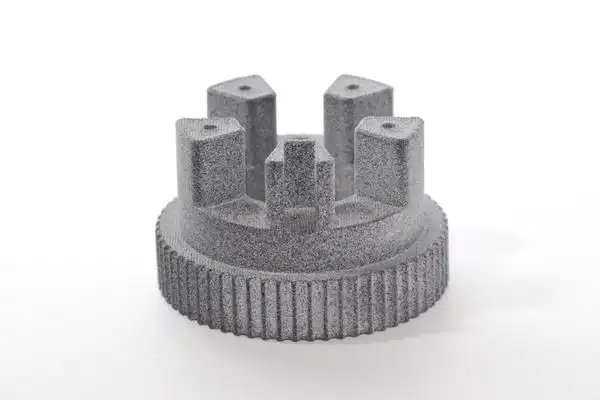
Which process fits end-use nylon parts?
Both, decided by volume and consistency needs.
End-use nylon parts are produced on both platforms; the deciding factors are how many parts are needed, how closely they must match each other, and how much freedom the geometry needs in the bed.
For low-volume end-use parts where each unit is validated individually, either process works, and the practical choice is whichever one can include the part in an existing build. For programs that will run for months, with parts assembled into the same product, consistency outweighs marginal differences in surface texture, and the jetting platform’s uniformity becomes the deciding factor.
The counter-case is a part whose design is still moving. Laser sintering’s placement freedom makes it easier to build unusual geometry or to test a design variation quickly, so it is often the better choice during development even when the production intent is a different platform. Nothing is lost in that sequence as long as the material grade stays the same between the prototype and the production part.
Where the program needs both stability and flexibility, the common pattern is to validate in one process and produce in the other, with the grade and orientation recorded in both so the parts remain comparable.
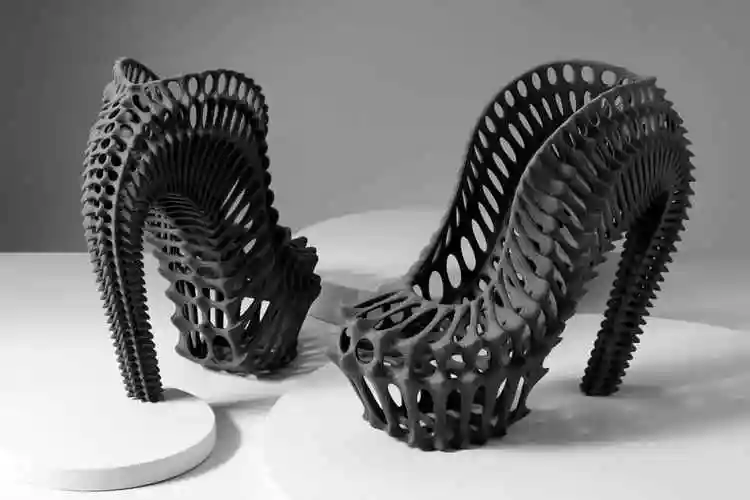
Nylon grades, finishing routes and the geometry rules shared by both powder-bed processes are collected on the SLS service page, which is the quickest way to compare what each platform would actually receive.
How do you validate the choice with one test build?
One geometry, two processes, one agreed criterion.
Build the same file on both platforms, agree beforehand what the part must prove, and let that criterion decide, rather than comparing two parts by impression.
A useful validation order contains three elements. The same CAD file, with the same finish specification per surface, so the comparison is fair. One acceptance criterion agreed in advance: an assembly stack-up, a drop test, a colour match against a reference, or a dimensional check on the interfaces that matter. And the parameters from each build recorded, since the orientation used in the test becomes the reference for every subsequent order.
Two outputs are worth keeping after the test. The first is dimensional data from the mating features on both parts, which is the evidence a production decision needs. The second is the finishing record: how the parts were blasted and whether they were dyed, because those steps, not the platform, usually explain an appearance difference.
Where both parts pass, the tie-break is normally the property that is hardest to control later: batch consistency, colour matching, or the ability to order the same part again without a new review.
Making the choice stick
The two processes are close enough on material behaviour that the decision usually comes down to consistency and packing rather than to strength. Jetting platforms repeat parts more uniformly, which matters in a program that will be reordered and assembled. Laser sintering places parts more freely, which matters when the geometry is unusual or the design is still moving.
Whichever route is chosen, the parts only stay comparable if three things are recorded: the powder grade, the build orientation, and the finishing route. Those records, plus an acceptance method agreed before the first build, are what turn a successful first order into a repeatable one. Without them, the second order is a new comparison rather than a continuation.
FAQ
Is MJF stronger than SLS?
Not in a way that can be stated as a rule. Both processes build with comparable nylon grades, so strength comes from the powder first and from orientation and section thickness second. Where the two differ is consistency: the jetting platform’s uniform energy pass produces less variation between parts in a build. For a part that carries a load, the orientation that follows the load path matters more than the platform.
Is SLS more accurate than FDM?
The two are not really competitors on accuracy. FDM lays down a filament, so it shows visible layer lines and is generally chosen for large parts, fixtures and high-temperature thermoplastics. Powder-bed processes build without supports and produce a uniform matte surface with better behaviour in thin sections. Where dimensional accuracy matters most, either process is usually paired with a machined operation on the critical face.
Can the same part be built on both platforms without redesign?
The geometry usually transfers, but the build orientation does not. Each platform packs a bed differently, so a part that builds at one angle on a laser system may need a different angle on a jetting system to nest efficiently. Because orientation affects dimensional spread and surface texture, the supplier should return the proposed orientation with the quote rather than deciding it in the machine queue.
Which process should be used for a first prototype of a nylon part?
Whichever can be included in an existing build, because a shared cycle costs far less than a dedicated one and the material behaviour is comparable. What matters at that stage is validating the geometry and the assembly, and recording the grade, orientation and finishing route so that the production order starts from a known reference instead of repeating the same decisions.
If the choice between the two nylon platforms is still open, send the model with the interfaces that matter and the quantity you expect. 6CProto runs both processes in the same facility, so the same file can be reviewed and quoted on each route, with the proposed build orientation included in the DFM report. Upload it at the 6CProto quote page or send it to projects@6cproto.com.