
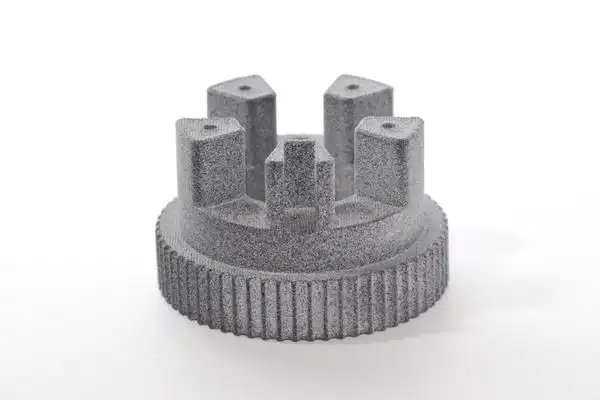
MJF for Repeatable Nylon Production
Multi Jet Fusion (MJF) is a powder-bed polymer process that applies fusing and detailing agents across each layer before thermal energy consolidates the material. It is well suited to functional nylon components, densely nested batches, and programs that need consistent part-to-part output.
This page focuses on production-oriented MJF nylon parts. For laser-sintered nylon and a broader powder material range, use our SLS 3D printing service. For low-cost filament prototypes or very large parts, use FDM 3D printing.
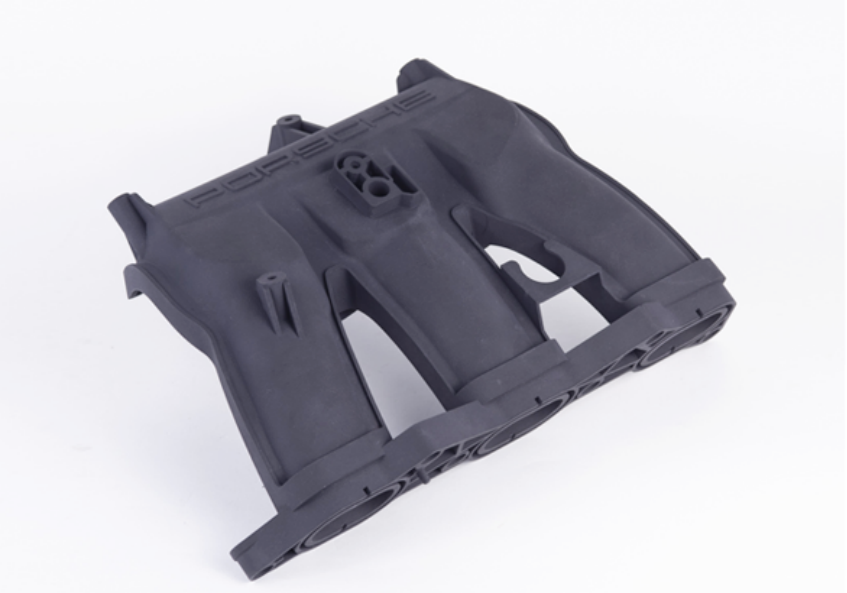
Where MJF Creates the Most Value
MJF is strongest when functional performance and batch efficiency matter more than the widest possible material selection.
Production-Like Nylon Prototypes
Evaluate housings, clips, covers, ducts, and assemblies using durable powder-bed nylon before committing to tooling.
Parts Before Tooling Is Ready
Supply early production quantities while injection molds are being built, corrected, or validated.
On-Demand Low-Volume Parts
Order changing quantities without mold storage, minimum tooling commitments, or costly design lock-in.
How Our MJF Production Workflow Works
The workflow is planned around build utilization, thermal control, and consistent batch output.
File and Batch Review
We review wall thickness, clearances, powder escape, orientation, quantity, and nesting strategy.
Agent Application
Fusing and detailing agents are selectively applied across each powder layer.
Thermal Fusion
Energy fuses the treated regions while surrounding powder supports the build.
Cooling and Finishing
Parts cool, are depowdered, inspected, and optionally dyed, blasted, polished, or painted.
MJF 3D Printing Capabilities
Use these values for initial design planning. Final specifications are confirmed after CAD review.
| Parameter | MJF Capability | Project Implication |
|---|---|---|
| Process | Multi Jet Fusion | Agent-based powder-bed polymer printing |
| Primary Material | Nylon (PA) | Grade and color confirmed during quoting |
| Maximum Build Size | 277 × 377 × 380 mm | Large parts may require splitting or another process |
| Minimum Wall | Approximately 1.0 mm | Increase for broad, loaded, or heat-sensitive walls |
| Layer Thickness | Approximately 0.08 mm | Supports fine functional detail and consistent layers |
| Design Tolerance | Approximately ±0.3 mm | Geometry, size, orientation, and finish affect results |
| Standard Lead Time | Approximately 7 business days | Depends on batch size, cooling, inspection, and finishing |
MJF vs. SLS and FDM: Choose by Production Intent
These processes can all produce polymer parts, but they solve different purchasing problems.
| Decision | Choose MJF | Choose SLS | Choose FDM |
|---|---|---|---|
| Primary goal | Repeatable nylon batches | Broader powder options and complex functional parts | Low-cost or large-format prototypes |
| Typical surface | Fine, uniform gray texture | Grainier powder-bed texture | Visible filament layer lines |
| Material focus | Nylon (PA) | PA, TPU, PA-GF, PA-CF | PLA, ABS, PETG, PC, TPU |
| Batch economics | Strong when builds are densely packed | Strong for complex support-free geometry | Strong for simple, cost-sensitive prototypes |
MJF Design Guidelines for Production Nylon Parts
Design decisions affect cooling, depowdering, fit, appearance, and repeatability across a batch.
Design for Stable Batch Results
- Use walls of approximately 1.0 mm or more.
- Keep broad walls uniform and reinforce them with ribs.
- Add accessible powder escape openings to hollow sections.
- Allow practical clearance between moving or mating parts.
- Identify cosmetic faces and critical dimensions.
Avoid Cost and Quality Risks
- Fully enclosed cavities that trap powder.
- Very thin pins, edges, and unsupported walls.
- Large flat plates with abrupt thickness changes.
- Zero-clearance moving assemblies.
- Unspecified expectations for color or texture.
Finishing Options for MJF Nylon Parts
Choose finishing according to appearance, handling, branding, and dimensional requirements.
Depowdering and Bead Blasting
Removes loose powder and creates a consistent matte surface.
Dyeing
Adds uniform color with less dimensional buildup than paint on suitable nylon parts.
Painting and Color Matching
Supports branded colors and higher-cosmetic requirements after surface preparation.
Polishing
Reduces roughness and improves touch surfaces on compatible geometries.
Plating
Available for selected projects after material and geometry review.
Custom Graphics
Decals, logos, and identification marks can be added when required.
Quality Control for Repeat MJF Orders
Consistent repeat orders begin with controlled files, approved requirements, and documented inspection points.
Pre-Build Review
Geometry, material, wall thickness, nesting, and critical dimensions are reviewed before production.
Batch Inspection
Parts receive visual checks after depowdering, with dimensional inspection according to approved requirements.
Documented Controls
First-article inspection can be arranged, supported by ISO 9001:2015 quality management controls.