

A drone frame redesign needs to lose weight, and the material table offers three answers: magnesium is lightest, aluminum is the balanced default, and titanium is strongest for its weight. The table does not decide the part — the loading, the environment, and the manufacturing route do. Magnesium saves the most mass but demands corrosion protection and controlled processing; aluminum offers the best balance of cost, machinability, and performance; titanium delivers strength and corrosion resistance at a cost that only specific applications justify. Choosing among them means comparing the part’s real requirements, not the density column.
Density and stiffness: real weight trade-offs
The weight trade starts with density, but the part is designed by stiffness and strength, not by density alone. Magnesium is roughly two-thirds the density of aluminum, and titanium is about 60 percent heavier than aluminum but roughly twice as strong — so a titanium part can be thinner and lighter than an aluminum part carrying the same load. The useful comparison is the weight of the part that meets the requirement: the same bracket can be lightest in magnesium, lightest in titanium if it is strength-limited, or lightest in aluminum if it is stiffness-limited with a size constraint. The comparison must be made on the part’s loading, not on a per-kilo material chart.
The geometry also changes with the material: a titanium part that uses thinner sections may need different features for stiffness, and a magnesium part may need thicker sections where corrosion or fatigue is a risk. The weight optimization is a design loop, not a material substitution.
Magnesium: lightest but corrosion and process constraints
Magnesium is the lightest structural metal and the most demanding of the three in processing and protection. Its corrosion resistance is poor in most environments without a coating system, its galvanic behavior against other metals is aggressive, and its machining requires controlled chip handling and fire safety. Magnesium earns its place where the weight saving is critical and the protection system is designed in: aerospace brackets, portable equipment, and moving components where mass drives performance. The part cost includes the coating and the process controls, so magnesium’s material lightness does not automatically mean a light total cost. The machining process guide covers the safety requirements; the selection point here is whether the environment and the program can support them.
Magnesium also has lower stiffness than aluminum, so a stiffness-limited magnesium part needs more material, eroding the weight saving. The design must be stiffness-aware, not density-aware.
Aluminum: the balanced default
Aluminum is the default for lightweight machined parts because it balances weight, strength, machinability, cost, and finishing. It machines quickly, anodizes well, is available in a wide range of alloys and tempers, and its corrosion behavior is manageable with the right finish. For most brackets, housings, and structural parts, aluminum delivers the weight saving at the lowest total cost, and the alloy selection — from 6061-T6 for general use to 7075 for higher strength — tunes the performance without leaving the aluminum family. The aluminum comparison pages on this site cover the alloy choices; the point here is that aluminum is the reference the other metals must beat on total cost and performance.
When the part is weight-limited, aluminum is the starting point, and the question is whether magnesium’s extra saving or titanium’s strength justifies their added cost and processing.
Titanium: strength, corrosion, and cost at the high end
Titanium combines high strength-to-weight, excellent corrosion resistance, and biocompatibility, which makes it the choice for aerospace, medical, and marine parts where those properties justify its cost. Titanium is harder to machine than aluminum or magnesium — it work-hardens, runs hot, and wears tools — so the machining cost is higher, and the material itself costs more. The applications that justify titanium are the ones where a lighter, stronger, corrosion-resistant part is worth the price: a flight-critical bracket, a medical implant component, or a marine fitting that aluminum would not survive. The titanium grade guide covers grade selection; the decision here is whether the application’s requirements leave the aluminum route behind.
Titanium’s corrosion resistance can eliminate the coating that magnesium or aluminum would need, which partially offsets its cost in marine and chemical service. The total-cost comparison should include the finishing and the protection, not just the material and machining.
A lightweighting decision table by part function
Build the decision from the part’s function. If the part is stiffness-limited and the environment is mild, aluminum is usually the answer. If the weight saving is critical and the part can be protected, magnesium earns consideration. If the part is strength-limited, corrosive, or fatigue-critical, titanium may win despite its cost. The table below frames the comparison; the numbers come from the part’s load case and the quoted manufacturing and finishing costs.
| Requirement | Magnesium | Aluminum | Titanium |
|---|---|---|---|
| Lowest density | Yes | Middle | Highest |
| Machinability and cost | Controlled process | Best balance | Hardest and costliest |
| Corrosion without coating | Poor | Good with finish | Excellent |
| Strength-to-weight | Moderate | Good | Highest |
The table is the first filter; the load case, the environment, and the total cost decide the material. A lightweighting program that compares machined parts, coatings, and costs — rather than densities — is a program that chooses the right metal for the right part.
Running the lightweighting comparison on a real part
A bracket example shows the comparison method. A structural bracket carries a bending load, must survive a salt environment, and is currently machined from aluminum with a protective coating. The weight target drives the team to compare magnesium and titanium. The magnesium version saves the most weight but needs a coating system and galvanic isolation in the assembly, and its lower stiffness means the section may need thickening, eroding some of the saving. The titanium version can use a thinner section because of its strength, saving weight despite the higher density, and it needs no coating in the salt environment — but the machining cost is the highest of the three. The comparison is made on the machined, coated, and assembled part, not on the material density: the aluminum part with its coating, the magnesium part with its coating and isolation, and the titanium part with its higher machining cost and no coating. The numbers decide which material meets the weight target at the lowest total cost, and the environment decides whether the coating and isolation costs are unavoidable.
The comparison should also include the supply risk and the schedule: magnesium requires a shop with the fire-safety process, titanium requires a shop with the tooling and the experience, and aluminum is available from every CNC shop. A material that saves weight but delays the program or narrows the supplier base has a hidden cost. The lightweighting decision is therefore a full-program comparison — material, machining, finishing, assembly, environment, and supply — and the right answer is the material that meets the weight target with the lowest total risk and cost. The decision table in this article is the starting framework, and the quote exercise is the evidence that completes it.
When the density table misleads, it is usually because the part is stiffness-limited. A bracket that must resist deflection without growing in size cannot simply swap to a lighter material, because the lighter material is also less stiff, and the section must grow to compensate. The weight comparison should be made on the part that meets the stiffness requirement, not on the same geometry in a different material. The same logic applies to buckling and fatigue: thin sections in a lighter material can buckle or fatigue where the heavier material did not, and the redesign adds material back. The engineering method is to design the part in each candidate material to the same requirement, compare the resulting weights and costs, and choose the material that wins on the full set. A lightweighting program that runs that comparison once, on the real load case, avoids the repeated surprises of density-driven substitutions.
Lightweighting also interacts with the assembly around the part. A magnesium bracket that saves weight but forces a thicker coating, additional isolation hardware, and a special fastener may add mass and cost back at the assembly level, and the net weight saving can shrink below the part-level number. The comparison should include the whole assembly: the bracket, its finish, its fasteners, and its isolation. Conversely, a titanium part that eliminates a coating and allows a smaller fastener can save at the assembly level even when the part itself costs more. The system-level view is the honest one, and it is the reason the lightweighting decision belongs to the whole product team rather than to the material selection alone.
When the comparison is done, record the load case, the environment, and the cost assumptions with the decision, so the choice can be revisited when the program changes.
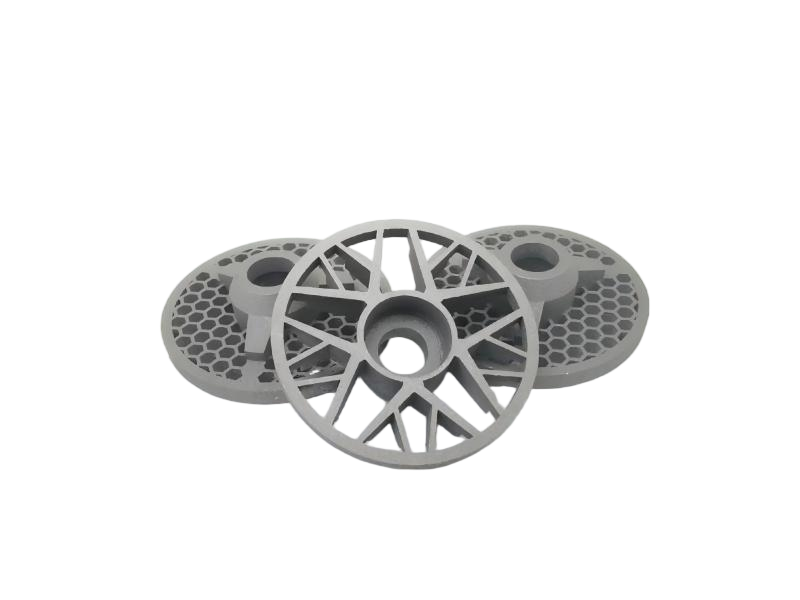
If you are lightweighting a machined part and want the magnesium, aluminum, and titanium routes compared on your load case and environment, the 6CProto CNC team can quote the same part in the candidate materials with the finishing each requires.