

A titanium part request says “grade 5” without asking whether the application needs the strength of Ti-6Al-4V or the formability of a commercially pure grade, and the shop quotes the alloy that the name implies. Titanium grades span a wide performance range: the commercially pure grades are corrosion-resistant and formable but moderate in strength, while the alpha-beta alloys like grade 5 deliver aerospace-level strength at a machining cost that only the application can justify. Choosing the grade before quoting is the difference between a part that meets its requirement and a part that either overpays or under-delivers.
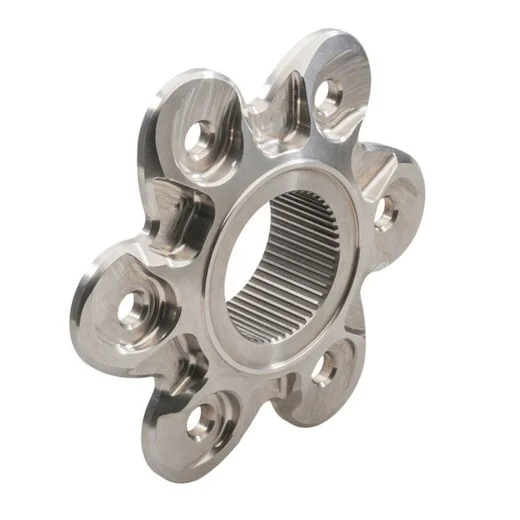
CP grades vs alpha-beta alloys: what the difference means
Titanium is divided into commercially pure (CP) grades and alloys. The CP grades — grade 1 through grade 4 — are essentially unalloyed titanium with increasing oxygen and iron, which raise the strength as the grade number rises; they are corrosion-resistant, formable, and weldable but moderate in strength. The alloyed grades add elements to create the alpha-beta microstructure: grade 5 (Ti-6Al-4V) is the most common, combining high strength with good corrosion resistance. The family difference drives the selection: CP grades serve corrosion, forming, and moderate structural duties, while the alloys serve the high-strength applications. The grade decision is a strength-and-process trade, not a “higher is better” scale.
The machinability also differs: the alloys are harder to machine than the CP grades, and the machining cost follows the grade family.
Grade 5 (Ti-6Al-4V): strength and machinability reality
Grade 5 is the workhorse titanium alloy, used across aerospace, medical, and high-performance industrial parts for its high strength-to-weight and corrosion resistance. It machines with difficulty: it work-hardens, runs hot, and wears tools, so the machining requires rigid setups, sharp tools, and controlled parameters. The machining cost is part of the grade 5 decision, and the drawing should not specify grade 5 unless the application needs its strength. For a part that needs the strength, grade 5 is the answer; for a part that only needs corrosion resistance or a moderate structural load, a CP grade may serve at a lower machining cost. The grade choice belongs in the design review with the load case in hand.
Grade 5’s properties are delivered in its heat-treated or annealed condition, and the specification should state the condition and the required properties.
Grade 23 ELI for medical and cryogenic work
Grade 23 is the ELI (extra-low interstitial) version of grade 5, with tighter limits on oxygen, iron, and other elements. The lower interstitial content improves toughness and is the reason grade 23 appears in medical implants and cryogenic applications, where the material’s behavior at low temperature and its compatibility with the body matter. Grade 23 machines similarly to grade 5 and costs more, so it is specified for the applications that need its improved properties rather than as a general upgrade. The medical and cryogenic applications carry their own material and documentation requirements, and the grade choice should be confirmed with the application standard and the material supplier.
For medical parts, the material certificate and the applicable standard belong with the order, and the grade 23 specification is only the starting point of the compliance chain.
Grade 2 for corrosion resistance and formability
Grade 2 is the most common commercially pure grade, balancing strength, formability, weldability, and corrosion resistance. It is the choice for chemical processing, marine, and heat-exchanger parts where corrosion resistance matters more than high strength, and it machines and forms more readily than the alloys. The CP grade’s moderate strength means the section may need to be larger for the same load, and the design should compare the CP route against the alloy route with the weight and the machining cost in view. For a part that does not need aerospace strength, grade 2 often delivers the corrosion resistance at a lower material and machining cost.
The CP grades also differ among themselves, and the grade 2 choice should be confirmed against the application’s strength and corrosion requirement.
Choosing a grade before you quote
Write the grade decision from the requirement: the load, the environment, the temperature, and the regulatory context. A marine or chemical part with moderate load may be grade 2; a high-strength structural part is grade 5; and a medical implant is grade 23 with its documentation. The drawing should name the grade, the condition, and the property or standard, and the quote should be based on that grade rather than a default. The material and the machining cost are both part of the decision, and the supplier should confirm the grade’s machinability and its ability to meet the drawing before quoting. The grade choice made before the quote is a design decision; the grade discovered at the quote is a cost surprise.
The titanium material page covers the family, and the grade-5 machining guide covers the process. When the requirement is on the drawing, the grade selection is an engineering decision with a clear answer.
Qualifying the titanium part and its documentation
The titanium specification is verified by the material certificate and the part tests. The certificate confirms the grade and the lot; the mechanical or corrosion test confirms the property the application needs; and the machining process is verified by the first article, because titanium’s machining behavior — work hardening, heat, and tool wear — must be controlled to hold the tolerance and the finish. The first article should be inspected for the critical features and the surface, and the process should be monitored for the tool wear that drifts the dimensions over the run. The documentation chain is part of the qualification: for medical and aerospace applications, the certificate, the lot traceability, and the applicable standard belong with the part. A titanium part whose grade and process are verified is a part whose performance is evidence-based; one that ships on the grade name carries the risk into service.
The qualification also covers the process changes: a different bar lot, a different tool, or a different machining parameter can shift the result, and the change should be re-verified before the production run. The supplier should confirm the material sourcing and the machining controls, and the drawing should state the grade, the condition, and the required certificate. When the titanium grade, the material, and the process are qualified together, the part is specified with the evidence the application needs — and the strength and the corrosion behavior that the design assumed are the properties the part delivers.
The titanium decision should also include the sourcing and the lead time, because the grade’s availability in the required form can decide the schedule. Grade 2 bar and plate are widely available; grade 5 is common but may need sourcing for the specific size; and grade 23, with its tighter limits, can carry a longer lead time and a higher material cost. The form and the size should be confirmed before the grade is locked, and the supplier should quote the material and the machining together so the decision includes the total cost and the schedule. The titanium program that reviews the availability with the grade choice avoids the late-stage surprise of a material that cannot be sourced for the program. When the strength, the corrosion, the machining, and the supply are all in the decision, the titanium grade is the one the program can execute.
The grade decision should also include the surface treatment and the finishing, because titanium’s surface behavior affects its service. The natural oxide that gives titanium its corrosion resistance can be enhanced or altered by anodizing or other treatments, and the finish choice depends on the application — a decorative color, a wear surface, or a medical surface each has its route. The drawing should state the surface treatment and its acceptance, and the supplier should confirm the finishing with the grade. The titanium part that is specified with its surface treatment is the part whose corrosion and appearance are controlled; one that ships bare carries the surface risk into service.
Keep the titanium material and process record with the part: the grade certificate, the condition, the surface treatment, and the first-article result. The record is the evidence that the part meets its specification, and it is the reference for the next order and the compliance review. A titanium part that carries its record is a part whose grade and process claims are documented — and the documentation is what makes the material decision defensible in the applications that demand it.
Ask the supplier to confirm the machinability of the specific grade and form before quoting, because the machining cost is part of the grade decision. The first article verifies the finish and the tolerance that the process can hold.
Keep the grade decision documented with the load and the environment, so the choice is reviewable when the part or the application changes.

If you are selecting a titanium grade for a machined part and want the strength, corrosion, and machining trade reviewed, the 6CProto CNC team can work from your application to the grade and the specification.