

Quality documents turn a supplier’s promises into checkable evidence. Across a typical order, thea documents a buyer should expect follow the production flow: material certificates at incoming, a first article inspection (FAI) at first-off, CMM and dimensional data during and after machining, and compliance documents such as RoHS where the product requires them. This guide lists the documents, explains what each one proves, and shows how to attach the requirements to an RFQ so they arrive with the parts rather than after a dispute.
The Document Set a Serious Supplier Should Produce
A well-run manufacturing order generates a small set of documents, and a serious supplier produces them as routine rather than on request:
- Material certificates — incoming material verification.
- First article inspection report — first-off validation.
- Dimensional inspection data, including CMM reports where critical dimensions exist.
- In-process and final inspection records.
- Compliance documents (RoHS, material declarations) where applicable.
- Nonconformance and corrective action records when issues occur.
The pattern to look for is completeness and traceability. A supplier that can produce the full set for a previous order is running a quality system; one that produces a single generic certificate is not. The document set is also a process signal — a supplier that produces the full set routinely is treating quality records as the process’s output, not as a formality.
The document set should be requested in the RFQ, not after the order. Listing the required documents and their scope in the RFQ gets them priced and produced; asking later means negotiating the price and waiting. The document scope belongs with the quote.
First Article Inspection (FAI): What to Ask For
The FAI is the first-part check that verifies the production process produces the part within drawing requirements. Ask for a report that covers:
- The drawing revision being validated.
- The material grade and certificate reference.
- Each critical dimension with measured value and tolerance.
- Surface finish readings where specified.
- The inspection method used for each dimension.
- The inspector and the approval status.
An FAI is valuable only if it is tied to the drawing revision and covers the dimensions that matter. A report listing a few easy measurements without datum references proves little; a complete FAI lets you release a batch with confidence. Specify the FAI’s coverage with the order, because the first article is the batch’s reference. The approval status is the gate — the first article is reviewed, approved, and signed off before the batch runs, and the buyer should hold that gate.
CMM Reports and Dimensional Data
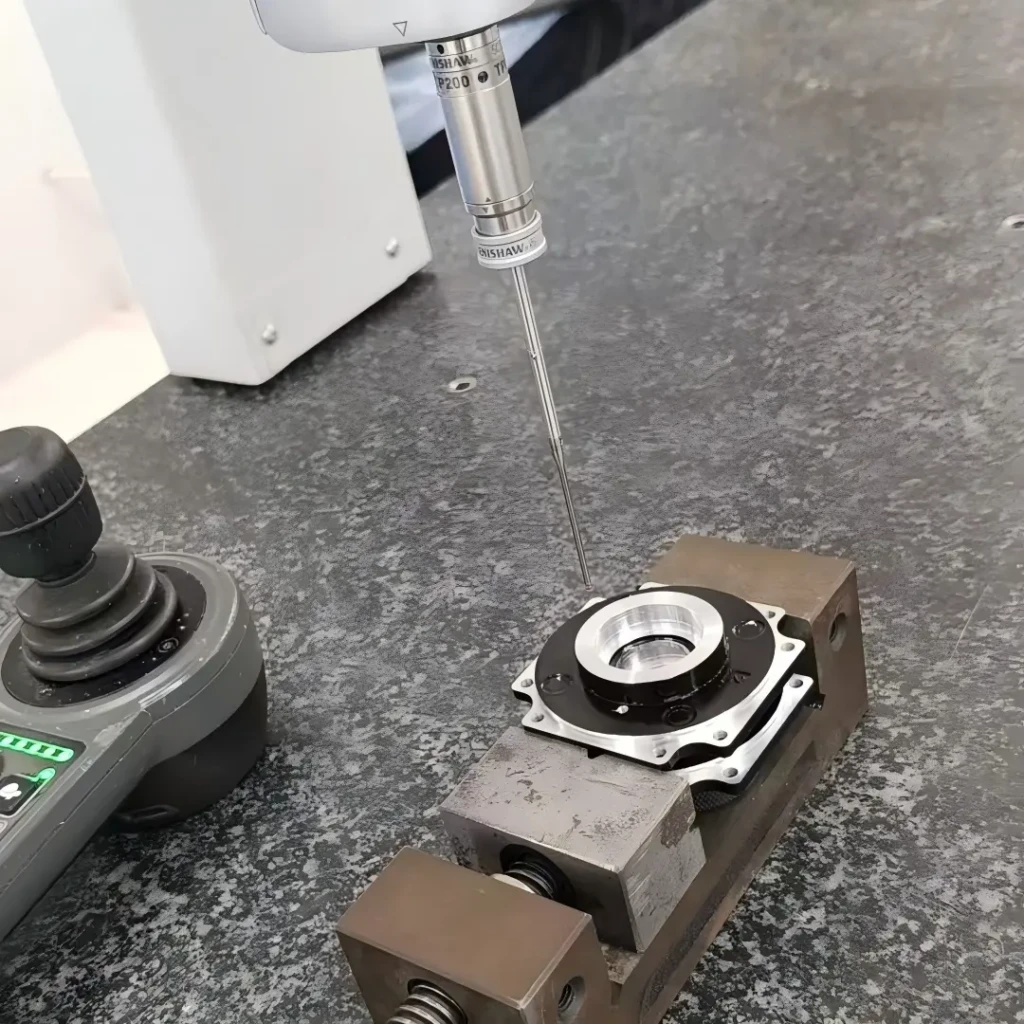
Coordinate measuring machines (CMM) verify complex geometry and tight tolerances that handheld gauges cannot reliably check. A CMM report typically shows nominal value, measured value, deviation, and tolerance for each probed feature, tied to the drawing’s datum scheme.
Be specific about scope: which dimensions need CMM verification, which can be checked with simpler gauges, and whether you need a full dimensional inspection report (DIR) or a targeted set. Inspection cost follows scope, so the requirement belongs in the RFQ. If a supplier offers CMM data as an option, ask for a sample report format before the order so you can confirm it matches what your team can use. The datum alignment is the readability test — a report aligned to the drawing’s datums is usable; one aligned to a different scheme is data without a reference.
Material Certificates and Traceability
A material certificate (mill test report, or MTR) documents the material’s identity: grade, heat or lot number, and the chemical and mechanical properties measured at the mill. For machined parts, it is the evidence that the stock was the alloy you specified.
Traceability is the practical requirement to add: the certificate should be traceable to the batch of material used for your order, and your parts identifiable to that batch. For most prototype and low-volume projects, a certificate with the heat number and purchase record is sufficient; regulated industries may need lot-level traceability under a defined system — confirm the scope rather than assuming a generic certificate covers it. Check the certificate against the drawing: the grade should match the grade, and the properties should match the requirement.
Compliance Documents: RoHS and Beyond
Compliance documents answer a different question: does the material and finish meet the restrictions your market requires? RoHS certificates or declarations are common for electronics-adjacent products; REACH communication applies to certain substances in the EU; conflict-minerals and other supply-chain declarations may be required by specific customers. Name the regulation in the RFQ — “RoHS compliance required” is a request, while “RoHS compliance required with declaration for the specific material grades and finishes in this drawing” is a requirement a supplier can price and verify. 6CProto states that RoHS compliance certificates are available on request.
How to Attach Document Requirements to an RFQ
Documents are cheapest when they are in the RFQ. Include a short section stating which documents are required (material certificate, FAI, CMM report, RoHS, etc.), the scope of each (which dimensions, materials, finishes), the format and language required, whether documents must accompany shipment or can follow within a defined window, and which drawing revision the documents must reference. This takes a few minutes of drafting and removes the most common failure mode: a supplier that did not know documents were needed until the parts were ready. It also makes price comparison fair, because document scope is a cost component.
What 6CProto Includes by Default
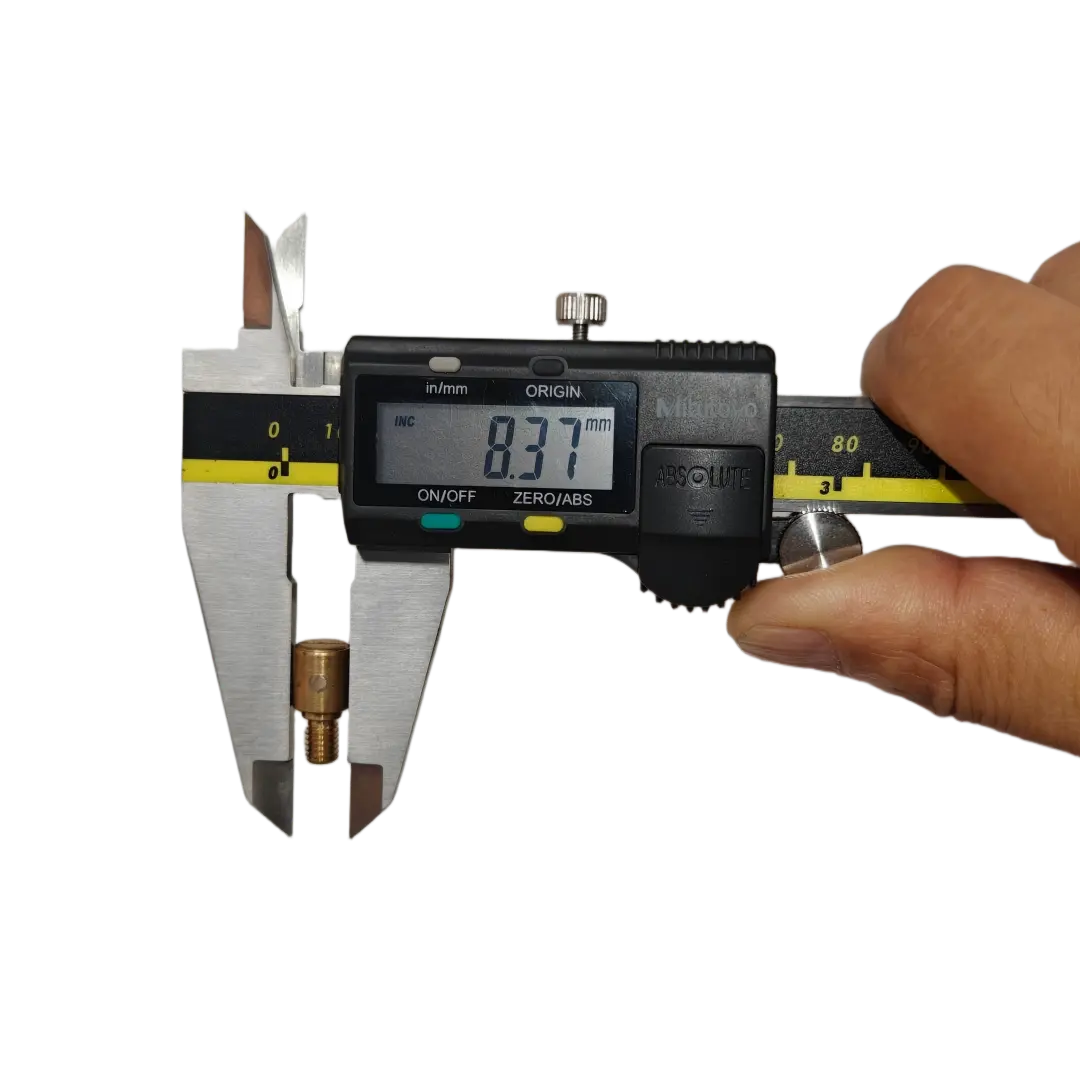
6CProto’s stated quality system covers the inspection stages — incoming quality control, first article inspection, in-process control, final control, and outgoing control — and its documentation includes material certificates, FAI reports, CMM inspection reports, dimensional data, RoHS certificates, and functional test results. The document set described here is part of the standard process rather than a special request. If you are evaluating a supplier, ask for sample documents before the order: a real FAI, a CMM report, and a material certificate.
The document review after delivery is the acceptance step: check the received documents against the RFQ scope and accept or return them with the parts. File the certificates and reports with the order so they are retrievable for audits and traceability. That closing step is what makes the paperwork part of the quality system instead of a folder.
Conclusion
The quality documents that matter follow the production flow: material certificates at incoming, FAI at first-off, CMM and dimensional data during and after machining, and compliance documents where the market requires them. The discipline is in the scope — name the documents, the dimensions, and the revisions in the RFQ so the evidence arrives with the parts. Add a document-requirements section to your standard RFQ and ask the supplier to confirm the scope and provide sample formats before the order.
FAQs
Which quality documents should I request for machined parts? At minimum, a material certificate, a first article inspection report, and dimensional data for critical dimensions. Add CMM reports for tight or complex geometry, and RoHS or other compliance documents where your market requires them.
What is the difference between an FAI and a CMM report? An FAI is the first-part validation that the production process produces the part within drawing requirements. A CMM report is dimensional data from coordinate measuring, typically used to verify tight or complex features and often included within the FAI.
Should documents be included in the quote price? Yes, when specified in the RFQ. Document scope — which dimensions, which reports, what depth — is a cost component, so define it before quoting to keep comparisons fair.
Can I get sample reports before placing an order? Reasonable suppliers can provide sample formats. Ask for a sample FAI, CMM report, and material certificate; the format reveals whether the documentation will serve your quality team or just fill a folder.