

A supplier asks for “PPAP level 3” on a machined bracket order, and the buyer’s first question is whether a 200-piece prototype order needs a full production part approval process at all. The answer depends on the customer, the industry, and the risk — not on the order size. PPAP (Production Part Approval Process) is a standardized way for a supplier to prove that its production process can make parts that meet the drawing, and it was built for automotive supply chains. For custom machining and molding, the useful question is which level of evidence the risk justifies, and when a lighter quality-document set is the right engineering call.
What PPAP is and which submissions really need it
PPAP is a process, not a single document: the supplier produces a submission package that demonstrates its production process can hold the drawing, then the customer reviews and approves it before production parts are used. The full process makes sense when a part is safety-critical, high-volume, or governed by an automotive or customer specification that requires it. For a low-volume prototype or a noncritical part, the same evidence can be scaled down to the documents that matter. The do-you-need-it question is answered by the customer contract and the risk, not by a universal rule that every part gets a full PPAP.
The quality-documents guide on this site explains what a buyer can request from a custom parts supplier; PPAP is the structured version of that request, and this page maps its levels and documents.
The five levels and what each delivers
PPAP defines five submission levels that scale the evidence. Level 1 requires only the part submission warrant — the signed declaration that the part meets the requirements. Level 2 adds limited supporting data, Level 3 is the full submission with complete supporting data, Level 4 is defined by the customer, and Level 5 gives the supplier a full review at its site. In practice, Level 3 is the most common automotive default, while Level 1 suits low-risk parts and Level 5 appears in audits and special reviews. The level should be stated by the customer requirement; if it is not, the buyer and supplier should agree on the level before quoting, because the document cost is part of the price.
| Level | What the customer receives | Typical use |
|---|---|---|
| 1 | Part submission warrant only | Low-risk parts with a signed declaration |
| 2 | Warrant + limited supporting data | Moderate-risk parts with lighter evidence |
| 3 | Warrant + complete supporting data | Common automotive default |
| 4 | Defined by customer | Customer-specific submission |
| 5 | Full review at the supplier site | Audits and special reviews |
The table is the map: the level scales the evidence, and the evidence should match the risk of the part and the requirement of the customer.
Core documents: PFMEA, control plan, MSA, and capability
Behind the warrant sit the documents that make the process credible. The PFMEA (Process Failure Mode and Effects Analysis) identifies how the process can fail and what controls prevent it. The control plan states how each characteristic is controlled and inspected in production. MSA (Measurement System Analysis) shows that the inspection method is trustworthy, and capability studies show that the process can hold the tolerances. For a machined or molded part, the meaningful subset depends on the features: critical dimensions need capability and measurement evidence; cosmetic or noncritical features need less. Requesting every document for every feature inflates cost without improving quality; requesting the right documents for the critical features is the engineering task.
If the supplier does not routinely run PPAP, ask which of these documents it can produce and at what cost. The documents are evidence, and the supplier that cannot produce them for a critical part may not have the process control the part needs.
PPAP for machined and molded parts at small scale
PPAP was designed for production processes, and its full weight does not fit every custom machining order. For a machined part, the production process is the CNC program, the fixture, and the inspection plan; for a molded part, it is the mold, the machine, and the process window. At low volume, capability studies need enough parts to be meaningful, and a small run may not support a statistical claim. The scaled-down equivalent is a first-article inspection plus the control plan and the critical-dimension evidence, which gives the buyer the assurance PPAP is designed to provide without the full automotive package. The buyer should say which evidence it needs and why, so the supplier can price the package honestly.
The inspection reports and the drawing revision must match; a PPAP-style package built against the wrong revision is worse than none, because it certifies a part that is not the part being produced.
A buyer checklist to request the right level
Before requesting a level, answer five questions: is the part governed by a customer or automotive PPAP requirement? What is the risk if the part fails? Which dimensions are critical? Which documents support those dimensions? And what quantity supports the evidence? The answers set the level and the document list. Then state the level, the document list, and the revision on the PO, and ask the supplier to confirm it can deliver the package before quoting, because the document cost is real and belongs in the comparison.
Keep the approved package with the part number and revision, because it becomes the baseline for future changes: any process or material change should trigger a re-evaluation against the original submission, and the file is the reference that makes the change review fast.
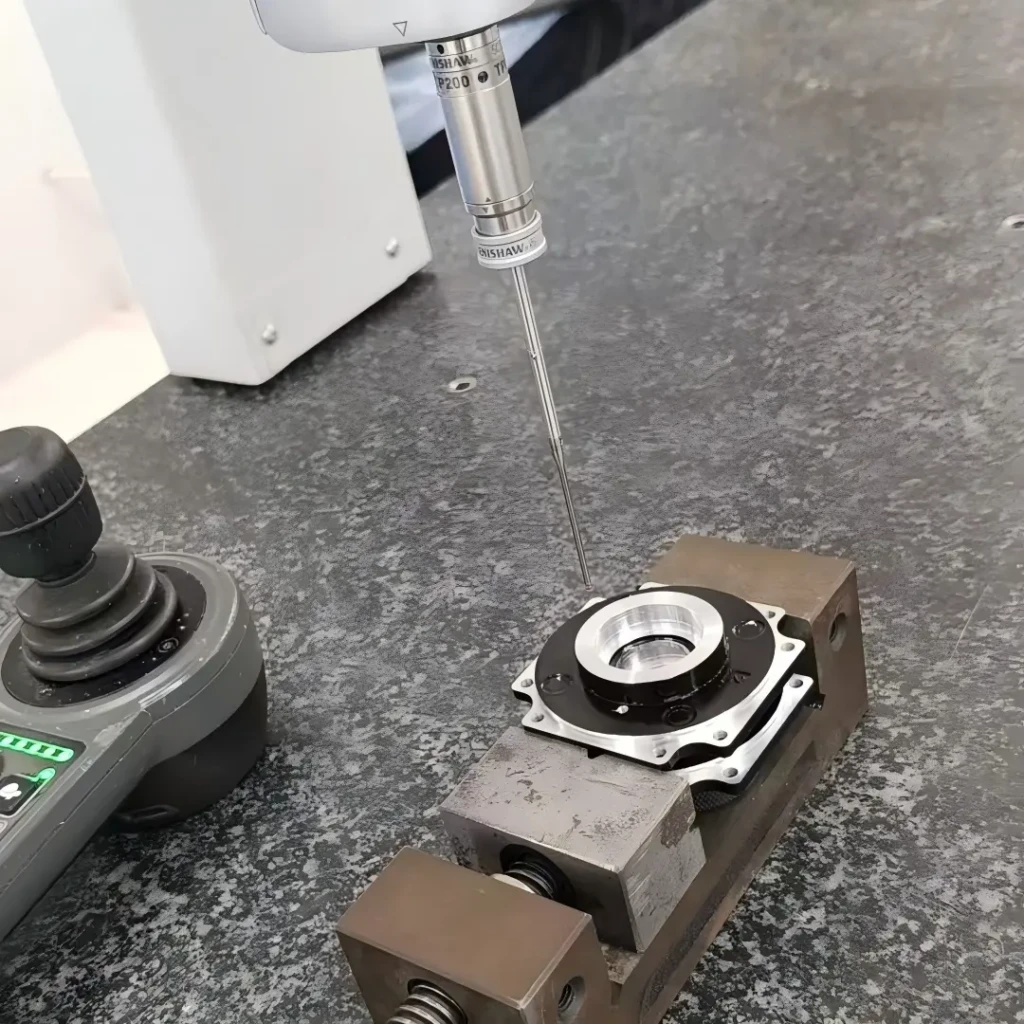
A scaled example shows how the level is chosen. A customer orders a machined sensor bracket with two critical hole positions, a noncritical outer profile, and a cosmetic finish. The automotive-style PPAP requirement is not present, but the part is safety-adjacent and the buyer wants evidence. The agreed package is a level-2-style submission: the warrant plus the dimensional report on the two hole positions, the material certificate, and the control plan for the features that matter. The supplier prices the documents as a separate line, the first article is measured with the CMM, and the report travels with the lot. A second part on the same order — a simple spacer with no critical features — ships with only the warrant-style declaration, because the risk does not justify the same evidence. The same customer, the same order, and two different evidence levels, chosen by the risk of each part. If the buyer had demanded level 3 for every part, the spacer would carry unnecessary document cost; if the buyer had accepted a bare warrant for the bracket, the critical positions would ship without evidence. PPAP is a toolkit precisely because it scales: the level and the document list are set by the customer requirement and the part risk, and the engineering work is choosing the evidence that supports the decision the part will be used for.
The buyer’s PPAP request should state the level, the document list, the drawing revision, and the quantity that supports the evidence — and ask the supplier to confirm the package before quoting. Keep the approved package with the part number as the change baseline. When the order is small, scale the evidence to the risk; when the customer requires a level, deliver it in full. The request that says what it needs is the request that gets quoted honestly.
Frequently asked questions
Is PPAP required for prototype parts?
Usually not in full form. Prototypes are made to validate the design, not the production process, so the evidence is a first-article or inspection report rather than a production capability study. If the prototype will be used in a regulated or safety-critical application, the customer requirement decides what evidence is needed; otherwise, scale the package to the decision the prototype supports.
What is the difference between PPAP and a first-article inspection?
First-article inspection verifies that one part or a small sample meets the drawing; PPAP verifies that the production process can repeatedly make parts that meet it, using process documents and capability evidence. FAI is a snapshot of the part; PPAP is a picture of the process. Small orders may use FAI as the practical substitute when a full PPAP is not required.
Who pays for the PPAP documents?
The cost is part of the quoted price, and it should be visible: the supplier spends engineering time on PFMEA, control plans, measurement studies, and reports. Ask for the PPAP cost as a separate line when the package is required, so you can compare suppliers on the part and the documentation together. A supplier that absorbs the cost silently is either pricing it into the part or not doing the work.
The right evidence for the risk
PPAP is a toolkit for proving process capability, and the level should match the risk and the customer requirement. Request the level and the documents that support the critical features, scale the package for small runs, and keep the approved file as the baseline for change. The parts that ship without dispute are the ones whose process evidence was agreed before the order, not requested after the first bad batch.
If you are deciding what quality evidence a custom machined or molded part needs, the 6CProto quality team can review the part risk and the drawing to recommend the right submission level and document set before quoting.