

Buying an assembly instead of a box of parts changes where the risk sits. Instead of accepting a set of individually correct components and discovering at build time that they do not fit together, you accept a single item whose interfaces have already been proven.
What makes a fabricated assembly different from a parts order
An assembly is a set of formed and machined components joined into a functional unit: a chassis with welded brackets, an enclosure with a hinged door and pressed inserts, a frame with fastened panels. The difference is not the number of parts but the fact that the joining process introduces its own tolerance behaviour, and that the assembly has to be measured as a unit rather than as a collection.
| Joining method | Effect on tolerance | Where it suits |
|---|---|---|
| Spot or seam welding | Distortion from heat; needs a fixture | Structural frames and enclosures in steel |
| Riveting or clinching | Local deformation; position set by tooling | Panels and covers where heat distortion is unacceptable |
| Fasteners and inserts | Clearance accumulates across the joint | Serviceable assemblies and field replacement |
| Adhesive bonding | No heat distortion; surface preparation is critical | Visible panels and mixed materials |
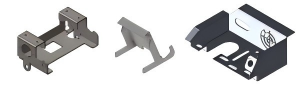
How welding changes the tolerance of the assembly
Welding introduces heat, and heat moves material. The distortion is not random: it depends on the sequence, the restraint offered by the fixture and the amount of heat put in. That is why an assembly drawing should identify the dimensions that matter after joining rather than only the dimensions of each component before it, and why a welding fixture is often the most valuable tooling in the order.
Two consequences follow for the drawing. Features that must align after welding should be located from a datum that survives the process, which is usually a machined face or a fixtured hole rather than a formed edge. And tolerances applied to individual panels should be no tighter than the assembly tolerance requires, because tightening a component that will be distorted by joining adds cost without improving the result.
What is sheet metal assembly, and when should it be bought complete?
Buy the joined item when the joint is hard to control.
If the assembly requires a fixture to hold alignment, if it involves welding distortion that must be managed, or if the interfaces have to be verified after joining, then buying the finished item moves that responsibility to the party with the equipment and the process knowledge. If the joint is a simple fastener that your own team will install anyway, buying parts separately is often cheaper.
The decision also depends on how the assembly will be shipped. Larger joined items take more space and need more protection than flat components, so a design that can travel flat and be fastened on arrival sometimes wins on logistics even when the joining itself is straightforward. It is worth modelling that trade-off early, because the shipping decision is difficult to reverse once the assembly drawing is frozen.
Finish and hardware sequencing on a joined item
Coating a welded assembly is cheaper than coating each component separately, because handling happens once, but it limits what can be done afterwards. Welding after coating damages the finish, and pressing inserts after coating risks marking a visible surface. Deciding the sequence early prevents an assembly that has to be finished, fitted and touched up in a particular order to avoid damage.
Two practical rules apply. Press or rivet hardware that can be installed before finishing only where the coating will not interfere with the fit; otherwise place it afterwards and mask. And keep weld areas free of finish, because coating inside a weld joint contaminates it. Coating classifications follow ASTM Committee B08, environmental requirements for coating and cleaning lines are published by the US EPA, drawing conventions follow ASME, and measurement practice for the joined item is described by the NIST Manufacturing Extension Partnership.
What to specify so an assembly arrives installable
An assembly brief should name the interfaces rather than the components: the mounting pattern that must match the receiving structure, the faces that carry a mating part, and the features that must remain adjustable after joining. It should also state whether the assembly will be inspected as a unit and what happens to components that do not fit, since rework on a joined item is materially different from rework on a single panel.
Hardware, fasteners and any purchased items belong on the brief too, including their positions and torque requirements where these matter. Supplying them yourself is an option that removes a sourcing loop, but it also removes the supplier’s ability to substitute an equivalent when stock is short. Detail on the forming side sits under forming and bending, and on the cutting side under laser cutting. Material behaviour data for the grades involved is published by ASM International.
Two references help when an assembly has to meet a written requirement. Structural welding and drawing conventions follow ASME standards, and the dimensional verification of the joined item is described by the NIST Manufacturing Extension Partnership.

Send the assembly drawing with the interfaces that must match, and request a quote for the completed sub-assembly.
FAQ
What is sheet metal assembly?
It is the step that joins formed components into a functional unit by welding, riveting, clinching or fastening, and it introduces tolerance behaviour of its own. An assembly is measured as a single item rather than as a collection of individually correct parts.
What are the different types of sheet metal fabrication?
Cutting by laser, punching, plasma or waterjet; forming by press brake, rolling or stamping; joining by welding, riveting, clinching or fastening; and finishing by coating, anodizing, plating or blasting. Most assemblies combine three or more of these.
How do you control tolerance on a welded assembly?
By controlling the fixtured datum rather than the individual panels, and by specifying the dimensions that matter after joining. Welding heat adds distortion, so a fixture and a defined weld sequence are usually more effective than tighter panel tolerances.