

Explore Manufacturing Application Guides
A device prototype is ordered for a reason, and that reason determines what has to arrive with it. A part that measures correctly but cannot be traced to its material lot, or cannot be cleaned as the test requires, will not support the decision it was bought to inform.
Is there a company that makes medical device prototypes?
Yes, and suppliers differ by what the prototype must prove.
Component suppliers machine, print, cast or mold parts to a model and drawing, and they are the right choice when the question is whether a geometry works or a mechanism functions. Development firms take a clinical or user requirement and produce a working device, which suits the point at which the system rather than a part is in question. Contract manufacturers serve the stage where the prototype has to be representative of production, because the process itself is being evaluated.
Most programmes use more than one. A device may begin with a machined frame and a printed housing from a component supplier, then move to a development firm for integration, then to a contract manufacturer for the pilot build. Choosing a supplier whose role matches the current stage avoids paying for capability the programme is not yet using.
What a manufacturer should deliver
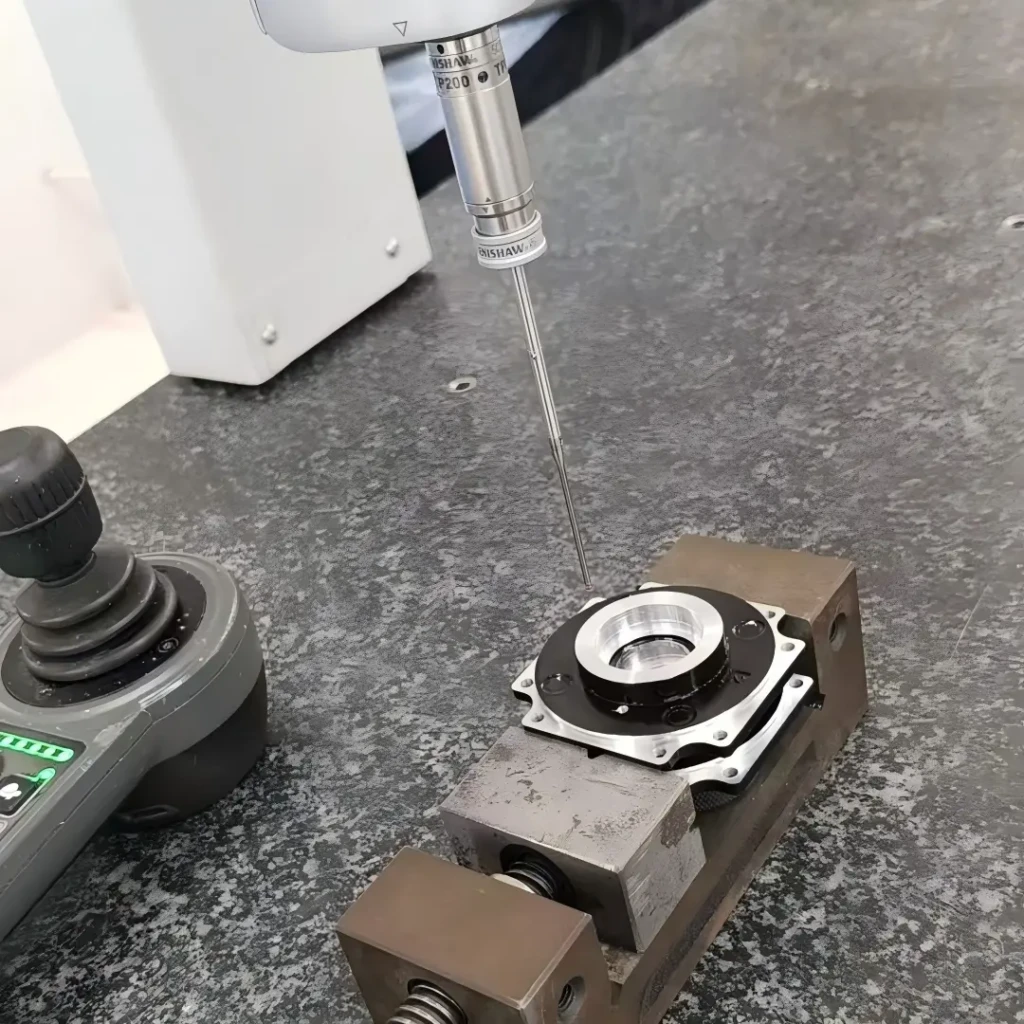
Six items define a complete delivery, and the level of each rises with the intended use. Material identification with the lot or batch, so a later investigation can trace what went into the unit. An inspection record for the features the drawing controls, measured against stated datums. Cleanliness appropriate to the intended contact, with the method stated rather than assumed. Packaging that preserves the condition of the parts in transit, which for small or clinical items usually means individual protection rather than a bulk box. A clear link between the parts supplied and the revision they were made to. And a statement of any deviation or concession agreed during manufacture, because an undocumented deviation becomes a surprise later.
| Item | Why it matters |
|---|---|
| Material identification and lot | Traceability if a fault appears during testing or in service |
| Inspection record against datums | Evidence the controlled features were verified |
| Cleanliness and method | Required where parts contact a sample, tissue or a clean process |
| Packaging | Preserves the part and its cleanliness until use |
| Revision linkage | Prevents testing a unit built to a superseded design |
| Deviation record | Makes any concession visible rather than discovering it later |

What drives the cost of a device prototype
Cost follows the requirements rather than the size of the part. Geometry that is difficult to machine or print adds time. Material choice adds cost directly and may add processing requirements, since some polymers need drying or finishing steps. Tight tolerances add inspection effort, and on a small quantity the inspection can cost as much as the machining. Low volume carries the full setup, so the fixed block dominates the price. And documentation, cleanliness and packaging each add a controlled operation that has to be performed and recorded.
The practical consequence is that a device prototype is almost never cheap per unit, and comparing quotations on unit price alone is misleading. A quote that appears lower may exclude the inspection record, the cleaning step or the traceability that the programme will need later, at which point repeating the work costs considerably more than the difference. Material references are published by ASM International.
Managing change on a device programme
Device prototypes change frequently, and the way a manufacturer handles that is a better indicator of capability than the size of its equipment list. Three practices distinguish a supplier that manages change from one that absorbs it. Changes are quoted rather than silently applied, so the effect on cost and schedule is visible. The revision is recorded on the parts and the paperwork together, so a tested unit can be identified afterwards. And when a change lands mid-order, the supplier states what is already made and what is affected rather than continuing and hoping.
The corollary for a buyer is to keep revisions deliberate. Releasing a change while the machine is running splits a batch into two revisions under one record, which makes both the inspection evidence and any later investigation more difficult than the change was worth. Booking changes as their own release keeps the programme traceable.
Cleaning, handling and packaging
Requirements in this area rise sharply with intended use. A bench-only test article needs to be free of machining debris and handling contamination. A unit that will contact a sample or tissue needs a defined cleaning method and packaging that preserves it. A unit intended for clinical evaluation brings further requirements, and those should be established with the clinical team rather than inferred by the manufacturer.
Two practical points help. Specifying cleaning without specifying the method leaves the result undefined, so the method and the acceptance criterion belong together. And packaging chosen to protect a part physically may not preserve its cleanliness, so the two requirements need to be considered as one. Cleaning practices and the obligations that apply to process waste are set out by the US EPA, and expectations for devices that contact patients are published by the US Food and Drug Administration.
How to brief a medical prototype order
State the development stage and the intended use, because those two facts determine the material, cleanliness and documentation requirements. Name the features that will be measured and the datums they reference. Say whether the unit will be tested, and how. Identify any features that may still change, so the supplier can plan the order accordingly rather than treating each revision as a new part. And say what must accompany the delivery, so the documentation is priced with the parts rather than added afterwards.
Two further items reduce risk. Mention any prior processing such as polishing, blasting or a previous coating, since residues affect both cleaning and adhesion. And state the acceptance criteria for the parts, because a prototype that cannot be judged against an agreed standard will be accepted or rejected on impression rather than on evidence. Drawing conventions follow ASME standards, surface terminology follows ASTM Committee B08, and manufacturing practice is described by the NIST Manufacturing Extension Partnership. Related process routes are described under CNC machining and rapid prototyping.
Send the component with the stage, intended use and documentation you need, and request a quote with the delivery contents itemised.
FAQ
Is there a company that makes medical device prototypes?
Yes, and the supply base divides by purpose: component suppliers machine or print parts to a model and drawing, development firms produce integrated working devices, and contract manufacturers provide prototypes representative of production tooling and processes.
What should a medical device prototype manufacturer provide?
Material identification with the lot, an inspection record measured against stated datums, cleanliness with the method stated, packaging that preserves the part’s condition, a clear link to the design revision, and a record of any deviation agreed during manufacture.
What drives the cost of a medical device prototype?
Requirements rather than size: difficult geometry, material choice and its processing, tight tolerances and the inspection they demand, the fixed setup cost at low volume, and the controlled operations of cleaning, packaging and documentation.