

The three common ways to make a metal enclosure behave differently in every respect that matters: what the tooling costs, what the per-part price looks like, how well the case seals, and how much the design can change. Machining needs no tool and holds the tightest interfaces but removes most of the billet as chips. Sheet metal forms thin stock into a light, stiff structure but cannot produce a machined sealing face. Extrusion sits between them for long, constant cross-sections. This comparison sets out how to choose, and where the hybrid arrangements capture most of what each route offers.
Machining, sheet metal or extrusion: which route?
Choose by volume, sealing and change tolerance.
Machining suits low volume and demanding interfaces, sheet metal suits volume with a formed structure, and extrusion suits long parts with a constant profile and moderate tooling.
The three routes have different cost structures, and that is what separates them. Machining carries no tooling cost and a high cost per part, because the billet is mostly converted into chips. Sheet metal carries a lower cost per part and requires forming tools, fixtures or programs, but it cannot produce thick sections or precise machined faces without secondary operations. Extrusion requires a die, which is a meaningful tooling investment, and produces a constant cross-section that is then cut and machined.
The requirements then decide which structure applies. Where the enclosure must seal against moisture with a machined face, or must hold a tight interface for internal components, machining has a decisive advantage. Where the case is a cover, a housing for a stable assembly, or a chassis in modest quantities, sheet metal is usually the economical answer. Where the part is long and its cross-section is constant, such as a rail or a heat sink enclosure, extrusion is efficient.
The design’s likely stability matters as much as the price. A machined part can be changed with a new program; a formed part with a new setup; an extruded part needs a new die, which makes it the least forgiving of late changes.
How do tooling and per-part cost compare?
One is all variable cost, the other mostly fixed.
Machining has no tooling and a high unit cost, sheet metal has modest tooling and a moderate unit cost, and extrusion has significant tooling and a low unit cost at length.
At low quantities, machining is usually competitive, because there is nothing to amortise. A single enclosure can be cut from a billet in days, and the price reflects the machine time rather than a tool. As quantity rises, that variable cost dominates and the machined route becomes expensive, while the routes with tooling amortise their fixed costs across the run.
Sheet metal sits in the middle. Laser cutting requires only a program, forming requires press brake setup that is shared across parts with the same bend radius, and hardware insertion adds a small operation. The result is a moderate cost per part that falls with quantity but less steeply than an extruded or molded component.
Extrusion has the highest tooling and the lowest per-part cost, which makes it economical only where the volume and the length justify a die. Cutting and secondary machining are then added, so the fully finished part cost includes those operations rather than just the extrusion.
| Factor | Machining | Sheet metal | Extrusion |
|---|---|---|---|
| Tooling | None | Programs and press brake tooling | Extrusion die |
| Cost per part | High, and variable | Moderate | Low at length |
| Wall sections | Thick sections and deep pockets | Thin gauge, formed structure | Constant profile |
| Sealing | Machined sealing faces possible | Sealing depends on formed joints | Sealing requires end machining |
| Design change | New program | New setup | New die |
| Typical volume | Prototypes to low hundreds | Hundreds to thousands | Long runs of constant profiles |
How do sealing, shielding and thermal needs differ?
Machining seals best; sheet metal shields well.
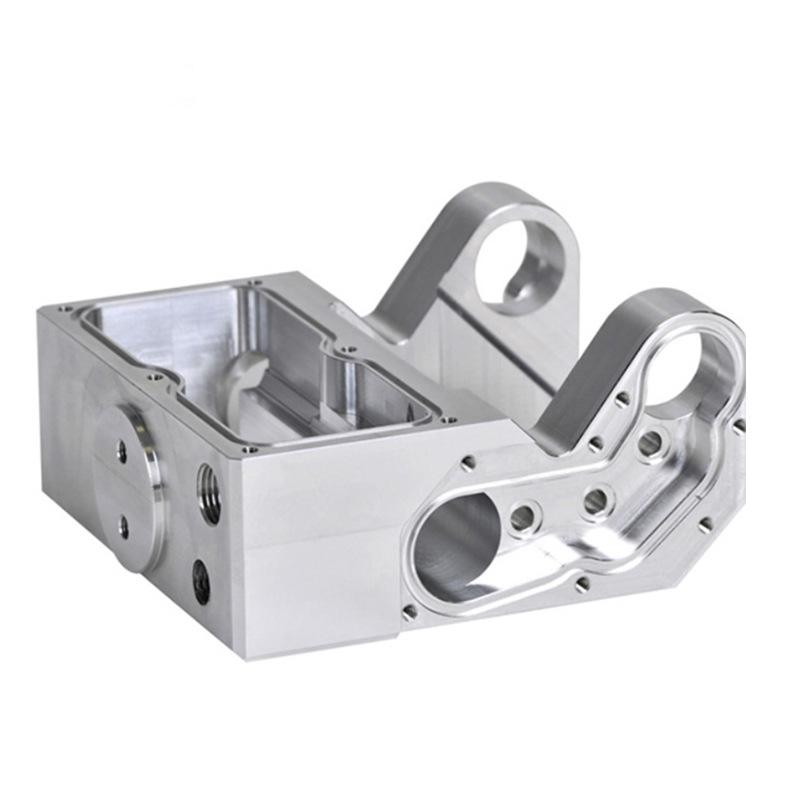
A machined enclosure can produce a flat sealing face and a gasket groove in the same operation, while a formed enclosure relies on folded joints and separate sealing elements.
Sealing is the clearest functional difference. A machined case can have a gasket groove cut into one half and a flat sealing face on the other, both produced by the same machine, which gives a predictable compression path. A sheet metal enclosure can be sealed, but the joint relies on formed flanges, the flatness of a bent edge and the gasket’s ability to accommodate the variation. That works for many products, particularly at larger sizes, but achieving a high ingress protection rating on a formed enclosure requires careful design of the flange and the fastener spacing.
Shielding behaves differently. Sheet metal enclosures are the traditional answer for electromagnetic compatibility, because a continuous conductive structure with properly bonded seams provides a good shield. A machined enclosure also shields well, provided the joints are conductive and any coating is masked at the seams, since a coated joint interrupts the shielding path. Where both functions are needed, the practical question is which one sets the geometry.
Thermal performance depends on the material and the section rather than the process. Aluminium conducts heat well in any form, so an extruded profile can act as a heat sink as well as a housing, while a machined case can carry thick sections to spread heat from a hot component. The design intent, rather than the process, determines which route performs better.
Where do the volume breakpoints fall?
Between prototypes, low hundreds and thousands.
Machining is usually economical up to low hundreds of parts, sheet metal takes over from there, and extrusion applies to long runs of constant profiles.
The breakpoints depend on the part, but the pattern is consistent. At one to fifty units, machining is often the fastest and cheapest route because there is no tooling and the design can still change. Between fifty and a few hundred, the comparison narrows: a machined part is still competitive when the geometry is complex, while a formed part becomes attractive as the quantity rises and the setup is amortised.
Above several hundred units, sheet metal is usually the economical structure for a box-like enclosure, particularly where the design does not need thick sections or machined sealing faces. Where the part has a constant cross-section and the volume is high, extrusion becomes the best answer, and the die cost is recovered over the run.
Two factors move those breakpoints. Complexity favours machining, because it removes the tooling requirement that a formed part would need for a difficult shape. And sealing favours machining, because a machined sealing face removes a whole class of assembly risk. Where both apply, machining often remains the right answer well past the quantity at which a simple enclosure would have moved to sheet metal.
How do cosmetics and design changes compare?
Cosmetics favour different routes by surface.
Machined faces can be anodized or finely finished; formed surfaces are uniform but show bend lines; extruded profiles carry die lines and are usually finished after cutting.
The visible surface is where the processes differ most clearly. A machined enclosure can have a fine, uniform face with edges that are deliberately chamfered or radiused, and it takes anodizing or a brushed finish well. Its characteristic appearance is a solid, machined object, which suits instrument and industrial products.
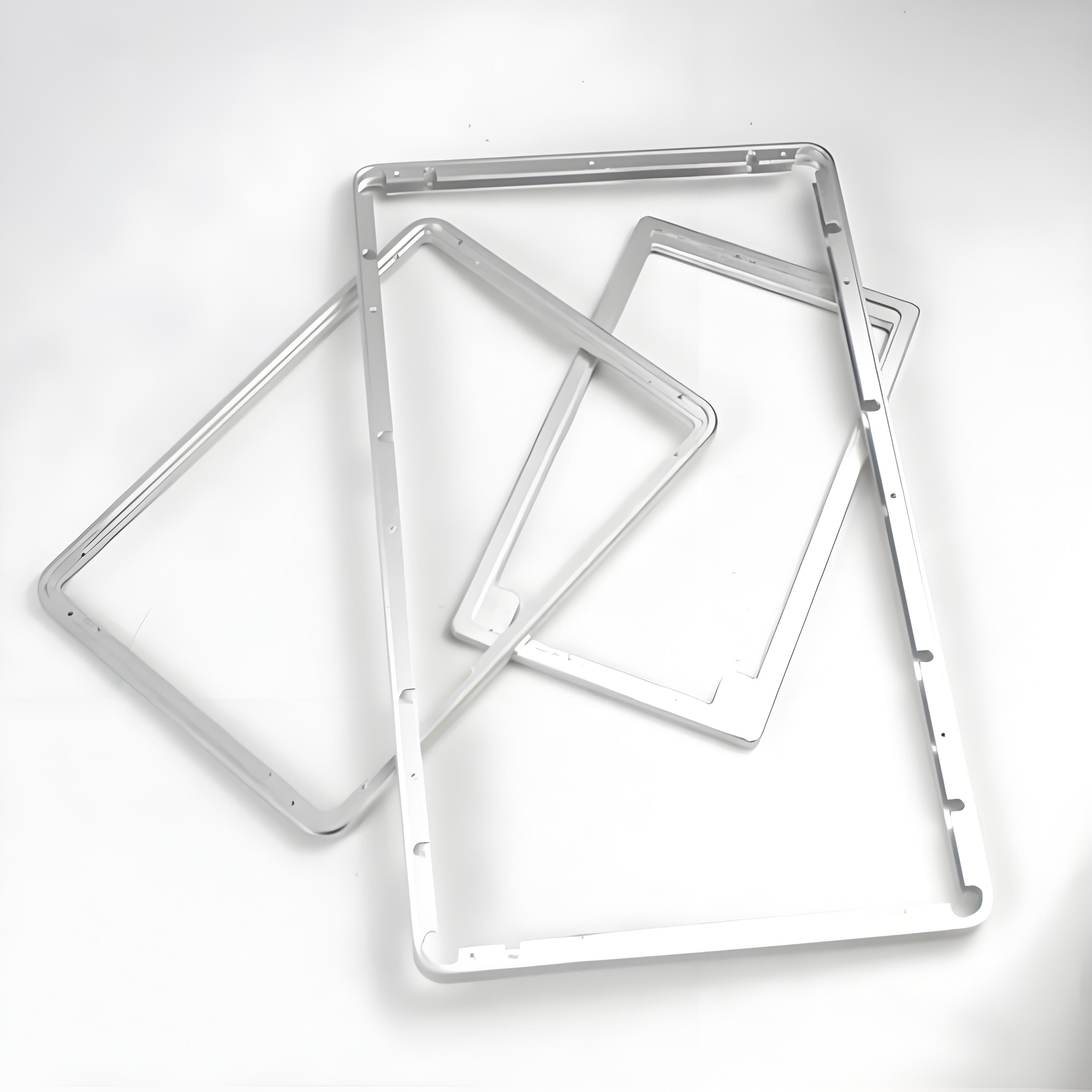
A formed enclosure has the appearance of sheet: broad faces that are uniform, bend radii that show as highlights, and joints where the fabrication closes the box. Welded or riveted assemblies add visible features. Where those are part of the design language, sheet metal is the right choice; where a seamless appearance is required, machining or a covering process is needed.
Design changes follow the tooling. A machined part changes with a program, a formed part with a bend setup, and an extruded profile changes only by cutting or machining the profile differently unless the die itself changes. That makes machining the most flexible during development, which is why it is frequently used for the first units even when the production plan is sheet metal. The hybrid case, where a formed body carries machined features, captures the flexible part of each route and is described elsewhere on the site in the 6CProto guide to custom metal enclosures.
When is a hybrid enclosure the right answer?
When the box is formed and the interfaces are machined.
A formed body with machined features combines the economics of sheet metal with the accuracy of a cutting tool where the interfaces require it.
The pattern is common and practical. The outer shell is folded from sheet, which keeps the structure light and the cost per part low. The features that need accuracy, such as a sealing face, a mounting boss, a connector cut-out or a machined slot, are produced on a machined component that is attached or inserted into the formed body. The result weighs less than a solid machined enclosure and costs less than a formed assembly with marginal interfaces.
Extrusion can play the same role in a different geometry. A constant profile forms the body of the enclosure and provides the mounting features, while machined end caps close the ends and carry the interfaces. This is a standard arrangement for rail-mounted and instrument enclosures, where the profile provides the appearance and the end caps provide the function.
Choosing a hybrid arrangement requires deciding which features genuinely need machining. Usually that is a small set: a sealing face, a bearing bore, a gasket land, or a connector interface. Identifying those clearly allows the rest of the enclosure to be formed or extruded, and the cost follows from the split rather than from a general preference.
Deciding with a volume and a sealing requirement
Two inputs resolve most enclosure decisions: how many parts the product will need, and whether it has to seal or hold a tight interface. Where the quantity is low, machining is usually right regardless of the geometry. Where the quantity is high and the enclosure is a simple box, sheet metal or extrusion is the economical structure. Where the requirement is a sealing face or a precision interface, the machining decision is made by that requirement rather than by volume.
The useful habit is to describe the enclosure by its interfaces and its quantity rather than by a preferred process, and to ask for the routes to be compared on that basis. A request submitted through the quote flow receives a manufacturability review, so the process decision is made against the actual geometry. The tolerance framework for the interfaces is set out on 6CProto’s standards and tolerances page.
FAQ
Is sheet metal cheaper than machining?
At quantity, usually yes, because a formed enclosure starts as thin stock rather than a solid billet and the material cost is far lower. At low volume the comparison narrows, because sheet metal still requires cutting programs, forming setups and often hardware insertion, while a machined part needs only a program. The breakpoint depends on the complexity of the enclosure and how many operations the formed version requires.
Can a sheet metal enclosure be sealed to a high IP rating?
It can, and formed enclosures are used for weatherproof products, but achieving a high rating requires careful design of the flange, a gasket that accommodates the variation in a formed edge, and fastener spacing tight enough to keep the joint closed. A machined sealing face is easier to control because the surface is produced by a single operation. Where the rating is demanding, the machined route removes a significant risk.
When does extrusion make sense for an enclosure?
When the cross-section is constant along the length and the volume justifies a die. Extruded profiles suit rail-mounted instruments, heat sink enclosures and long housings where the profile provides both the structure and the appearance, with machined end caps providing the interfaces. The die cost is the barrier, and it makes extrusion unsuitable for a design that is still changing.
What is a hybrid enclosure?
It combines processes so that each does what it is best at. A typical hybrid uses a formed or extruded body for the structure and the appearance, with machined components providing the sealing faces, connector interfaces and precision mounting points. The result is lighter and cheaper than a solid machined case while keeping the accuracy where the interfaces require it, and it is a common arrangement in instrument and industrial products. The standards, materials data and regulatory framework referenced in this article are published by ASTM committee B08, ASTM D3359, ASTM committee D20, ASTM committee E28, ASM International.
If an enclosure needs to be compared across processes, send the model with the quantity, the sealing requirement and the interfaces that must be exact. 6CProto runs machining, sheet metal fabrication and extrusion in the same facility, so the routes can be quoted from one manufacturing review. Upload the file at the 6CProto quote page or send it to projects@6cproto.com.