

Glass bead blasting is usually specified for one of two reasons: a part needs a uniform matte appearance, or a surface needs a profile that a subsequent coating will bond to. Both are achievable, and both depend on decisions made before the parts reach the cabinet, because media size, pressure and the way parts are handled determine whether the result is an even satin finish or a patchy surface with rounded edges and masked-off detail. This guide covers what the process does, how to specify it, where it interacts with tolerances and masking, and what to check on the finished parts.
What does glass bead blasting do to a surface?
It peens and cleans without cutting deeply.
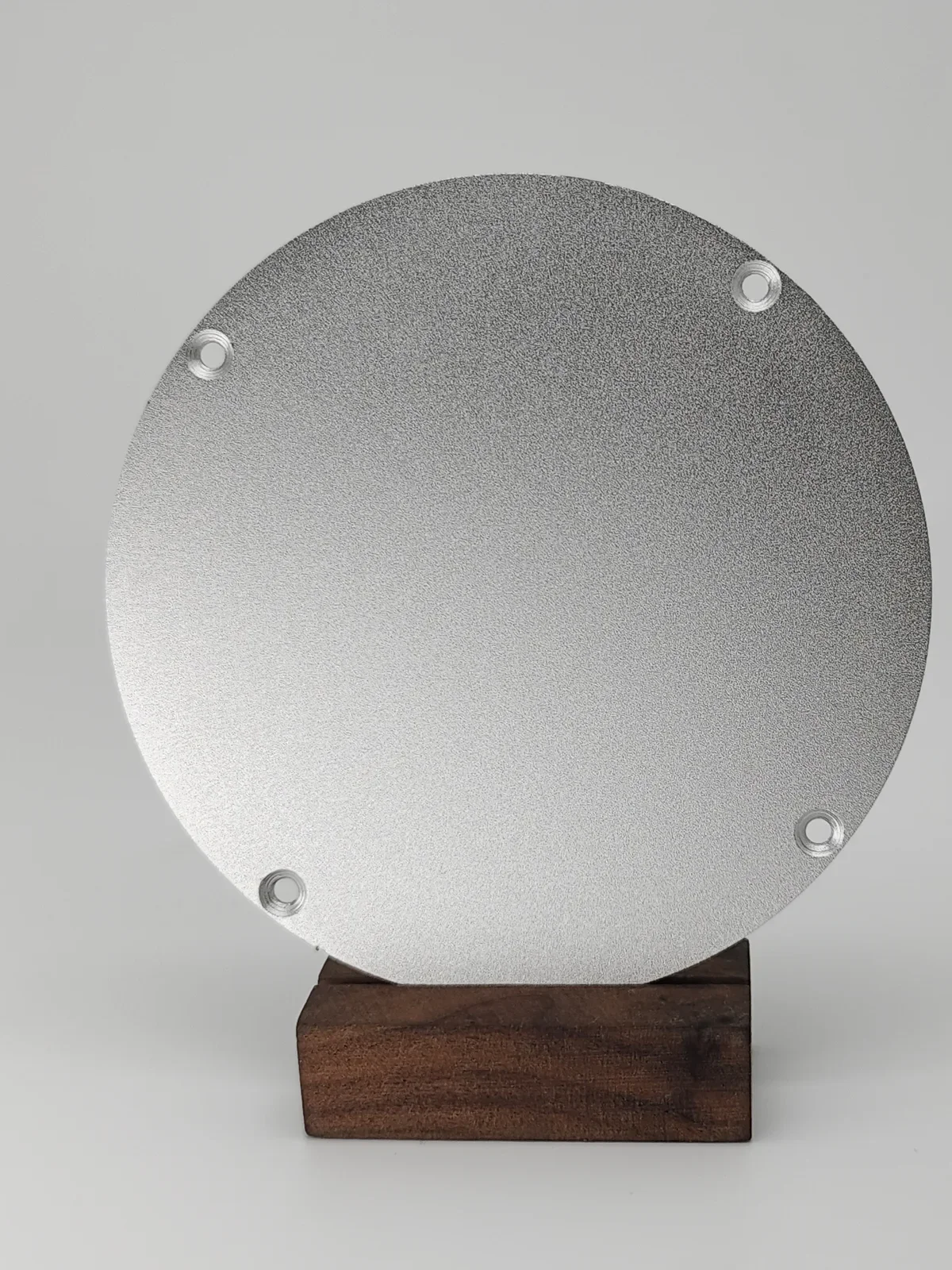
Glass beads are spherical and relatively light, so they hammer the surface rather than cutting it, producing a uniform matte texture with minimal material removal.
The shape of the media is what defines the process. Spherical beads deform the surface plastically on impact, closing small pores and producing a smooth, dimpled texture that reads as satin. Angular media such as aluminium oxide cut rather than peen, producing a more aggressive profile and a duller finish. That distinction explains why glass bead blasting is chosen for appearance and for preparation before coating, while angular media are chosen where a deeper key is needed.
The cleaning effect is a by-product of the impact. Contamination, light scale and discolouration are removed from the surface as the beads strike it, which makes the process useful after welding or heat treatment where a part needs to look uniform before a finish is applied. It does not remove heavy scale or rust; those require a more aggressive media or a chemical process first. The materials context for those substrate differences is documented by ASM International.
Peening also leaves the surface in slight compression, which is a characteristic rather than a defect. On thin sections that compression can be enough to move the part, which is why thin-wall components need lower pressure and careful support. The surface finish guides describe how the different blasting routes compare.
How do media size and pressure change the result?
They set the texture and the aggressiveness together.
Coarser media and higher pressure produce a more pronounced texture and remove material faster, while finer media at lower pressure give a smoother satin finish.
Media size is the primary control. Fine beads produce a subtle, uniform appearance that suits cosmetic machined parts and prepares a surface gently for anodizing. Coarser beads produce a visibly heavier texture, which is often used where a matte finish is part of the product’s design language or where the surface needs to hide machining marks.
Pressure controls how hard the media strikes the surface, and it interacts with media size. Higher pressure with coarse beads produces the most aggressive result; lower pressure with fine beads produces the gentlest. Changing either without the other changes the outcome, which is why the specification is best written in terms of the finish required rather than a pressure setting, and confirmed with a sample.
Distance and angle matter as much as the settings. A nozzle held closer to the surface, or at a steeper angle, produces a different result than one held further away, which is one reason uniformity depends on operator technique as well as on parameters. For parts where appearance matters, processing in a consistent pattern and finishing with a light pass reduces the risk of visible directional marks.
How is a uniform finish achieved on machined parts?
By controlling what the surface looked like before blasting.
A machined surface carries tool marks, and blasting reproduces them as a directional texture unless the machining finish is uniform to begin with.
That is the point most often missed when a part comes back looking uneven. The blasting process creates its own texture, but it does not erase the geometry beneath it. If the incoming surface has visible cutter marks, grinding scratches or steps between operations, those features remain after blasting and are often more visible than they were on the raw metal, because the matte finish scatters light differently.
The practical consequence is that the machining specification and the blasting specification have to agree. Where a part will be blasted for appearance, the machine shop should be told so that it can leave a uniform finish rather than the fastest one. A light finishing pass that removes the previous tool’s marks costs little at the machine and saves a rework cycle at the blasting cabinet.
Where a part has welds, castings or forged surfaces, the same principle applies. Those features will show through the blasted finish, and where a uniform appearance is required the surface has to be prepared before blasting rather than after.
| Parameter | Effect | Practical note |
|---|---|---|
| Media shape | Spherical peens; angular cuts | Glass bead for satin, angular media for profile |
| Media size | Texture scale and removal rate | Fine for cosmetic parts, coarse for heavier texture |
| Pressure | Impact force | Reduce on thin sections and soft substrates |
| Nozzle distance and angle | Uniformity and local intensity | Operator technique affects consistency |
| Incoming surface | What shows through the finish | Machine to a uniform finish first |
| Masking | Which features stay protected | Threads, bores and sealing faces |
What does it do for a subsequent coating?
It creates the profile the coating bonds to.
Blasting before anodizing, plating or powder coating cleans the surface and gives it a uniform key, which improves adhesion and appearance.
For anodizing, the blasted surface becomes the surface the oxide grows from, which means the texture is reproduced in the finished part. A fine bead blast produces a soft satin anodized finish; a coarse blast produces a more pronounced matte appearance. Because the coating follows the substrate, the blasting specification is effectively part of the appearance specification for the anodized part.
For powder coating, blasting serves two purposes. It removes contamination and light oxide so the pretreatment chemistry can work, and it provides a mechanical key that improves adhesion. The profile produced by glass beads is relatively gentle compared with angular media, which suits coatings that do not need a deep anchor pattern.
For plating, blasting is used where a part needs a uniform matte appearance before the deposit, but it is applied with care on parts that will be dimensionally critical, because the peening effect changes the surface slightly. Where a subsequent coating adds its own thickness, the blasted surface is usually the least of the dimensional considerations.
How do masking and tolerances interact?
Blasting reaches everywhere, and it rounds edges.
Threads, bores and precision faces are usually masked, and sharp edges lose their definition as the media peens them.
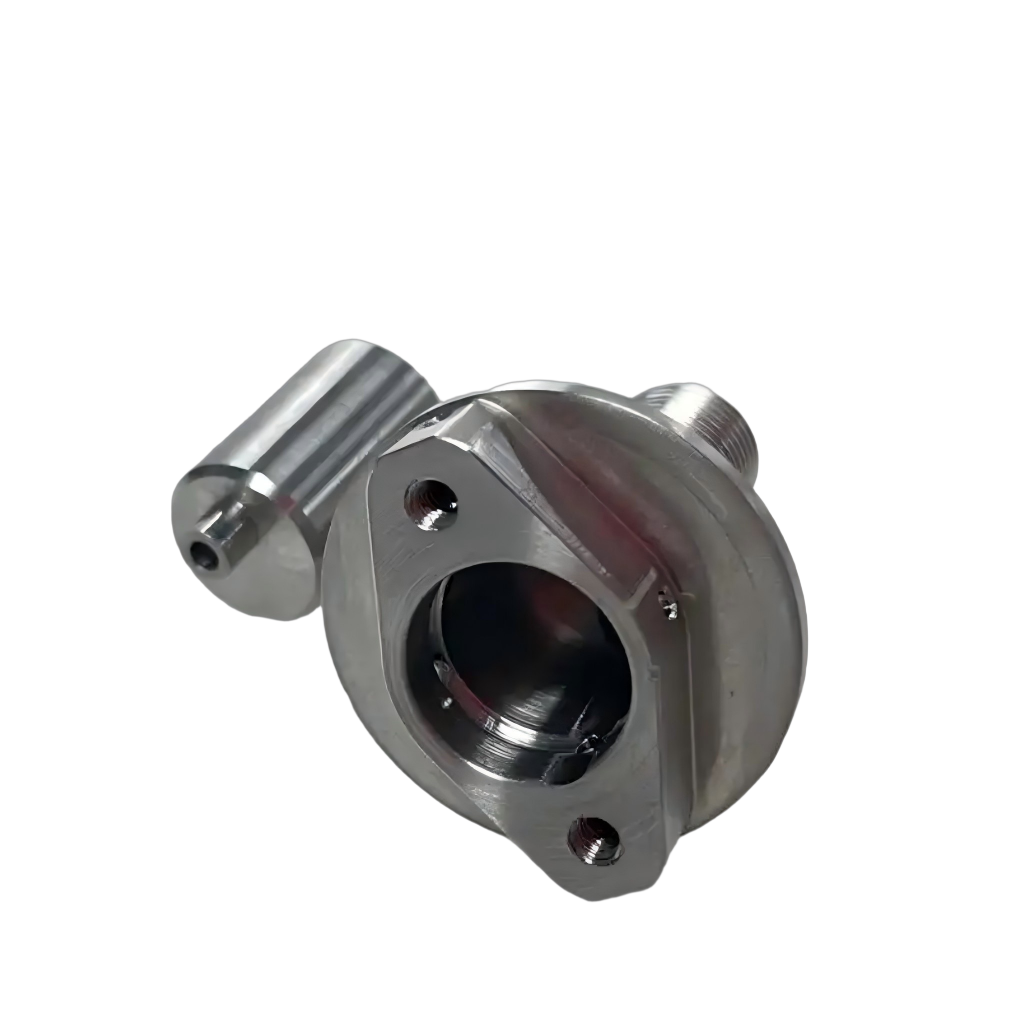
Masking protects the features that must not be blasted. Threads are the common case, because media peening a thread flank changes the fit and can leave media embedded in the thread; plugs or caps are used to keep the blast away. Bores and sealing faces are protected for the same reason, and any surface that must remain smooth and dimensionally exact is best masked rather than blasted and re-machined.
Edge rounding is the second consideration. Peening rounds a sharp edge, and on a part where an edge is functional, such as a scraper or a locating feature, that rounding matters. Radii that were machined to a specification may measure differently after blasting, and where an edge must stay crisp it should be masked or left unblasted.
Dimensional change overall is small but not zero. Glass bead blasting removes very little material, so a general tolerance is unaffected; the effects that matter are local, at edges, threads and features that were dimensionally tight to begin with. The tolerance framework that covers those callouts is set out on 6CProto’s standards and tolerances page.
How does glass bead compare with other media?
By aggressiveness and by the finish produced.
Glass bead is the gentle option, ceramic sits between, and aluminium oxide or steel shot are used where a heavier profile or a deeper clean is needed.
Glass beads are chosen for appearance work and for preparing surfaces for coatings that do not require a deep profile. They are relatively soft, which limits how much material they remove and how much they can clean, and they break down over time as they are used, which gradually changes the media mix unless it is managed.
Ceramic beads are harder and last longer, producing a similar style of finish with more cutting power. They suit parts where a slightly more aggressive result is wanted without moving to an angular media. Aluminium oxide is angular and cuts, producing a pronounced profile that is used where a coating needs a strong mechanical key or where heavy scale has to be removed. Steel shot is used for heavy cleaning and for shot peening applications where the intent is to induce compressive stress.
The comparison article on blasting media types covers the differences in more depth, and the choice for a specific part should follow the finish required and the next process step rather than a general preference.
What drives cost, and what should be inspected?
Handling sets the price; appearance sets the check.
Blasting is a manual operation for most parts, so cost follows handling, masking and the consistency required rather than the media consumed.
Batch handling is the main lever. Parts that can be tumbled or processed in a basket cost less per unit than parts that must be held and turned by hand to reach every surface, and parts that need masking carry additional labour at the start and finish. Where appearance is critical, the requirement to blast uniformly adds time, because a consistent result depends on even coverage rather than on intensity.
Inspection then covers what the process was specified to achieve. Appearance is assessed against a reference sample under a defined light, because a satin finish looks different under different conditions and a reference removes the ambiguity. Where the surface is being prepared for a coating, the acceptance check is often the coating’s own adhesion test, performed on a sample. And functional checks cover the masked features, confirming that threads still accept their fasteners and that protected faces remain as machined.
6CProto provides quality inspection reports on request and assigns a dedicated project manager to each order, so the finish reference and the masking list can be agreed before the batch runs. Surface preparation practice is described in ASTM D3359, which covers the adhesion test used after coating; the wider coating framework is published by ASTM committee B08; and the materials behaviour behind media selection is documented by ASM International.
Specifying a blasted finish
Glass bead blasting is a finishing process with a small number of controls, and each can be named in a specification: the media, the finish required, the masking list and an appearance reference. Adding a note about what comes next, such as anodizing or powder coating, allows the profile to be matched to the coating rather than chosen in isolation.
Two habits prevent most problems. Tell the machine shop that the part will be blasted, so the incoming finish is uniform rather than merely fast. And mask the features that must stay exact, because peening changes edges and thread flanks whether the change is welcome or not. Those two steps, plus a reference sample for appearance, cover the majority of the ways a blasted batch disappoints. Process waste from the blasting operation, including spent media and dust, is handled under the framework published by the US Environmental Protection Agency.
FAQ
What is glass bead blasting used for?
Two purposes mainly: producing a uniform matte or satin appearance on a machined part, and preparing a surface for a subsequent coating. Because the media is spherical, it peens rather than cuts, removing little material and leaving a smooth dimpled texture. It is also used to clean light contamination and to even out a surface before anodizing, plating or powder coating.
What is the difference between sandblasting and glass bead blasting?
The media shape and hardness. Sand and other angular media cut the surface, producing a rougher profile and removing material quickly, which suits heavy cleaning and preparation for coatings that need a strong key. Glass beads are spherical and strike rather than cut, producing a gentler satin finish with less material removal. The choice follows the finish required and the condition of the incoming surface.
How expensive is bead blasting?
Cost is driven by handling rather than by media, because blasting is largely a manual operation. Parts that can be processed in baskets cost less per unit than parts that must be held and turned to reach every surface, and masking adds labour at both ends of the process. A finish requirement that demands visible uniformity adds time as well, since consistency depends on even coverage rather than on intensity.
Can blasting be used on threads and precision bores?
It can, but it usually should not be. Peening changes the surface of a thread flank and can leave media embedded, affecting the fit, and it rounds the edges of a bore or a sealing face. The standard practice is to mask those features so they remain as machined. Where a thread must also be cleaned, a brush or a chemical process is the more appropriate route. The test methods referenced in this article are published by ASTM committee D20.
If parts need a uniform matte finish or preparation before coating, send the model with the masking list and an appearance reference if you have one. 6CProto reviews the part together with the finishing route and returns a DFM report with the quote, so the media and the finish are matched to what happens next. Upload the file at the 6CProto quote page or send it to projects@6cproto.com.