
Black Oxide Coating Services
Give compatible steel or other reviewed metal parts a dark conversion finish with minimal dimensional buildup. Black oxide orders are controlled around alloy, heat treatment, surface preparation, process chemistry, desired appearance, oil or wax sealing, corrosion expectations, inspection, and packaging.
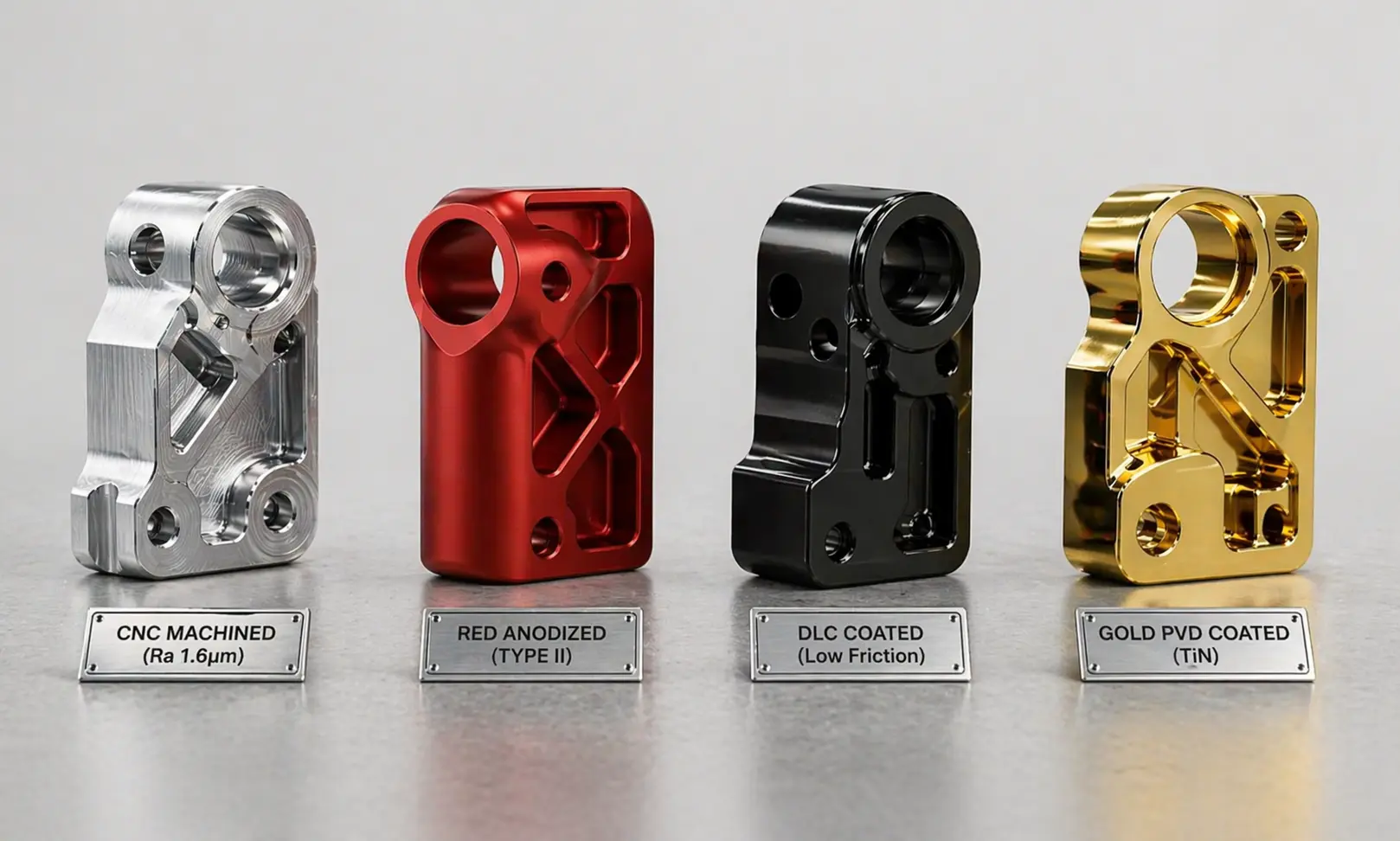





A Black Conversion Finish, Not Black Paint
Black oxide is a chemical conversion finish that forms a dark oxide layer on a compatible metal surface. It is valued for a black appearance, low reflectivity, and minimal dimensional change. Its corrosion behavior depends strongly on the substrate, preparation, conversion process, and oil, wax, or other seal.
This page is the commercial destination for black oxide orders. The Surface Finish Guides should answer general chemistry and comparison questions. For a deposited metallic layer, use Electroplating Services.
Where Black Oxide Fits Best
The finish is selected for appearance and low buildup, with corrosion performance tied to the complete sealed system.
Machine Components
Shafts, gears, fasteners, tooling, fixtures, and hardware where a dark low-build finish and handled surface are required.
Optical and Equipment Hardware
Brackets, mounts, and internal components where reduced reflectivity and a consistent black appearance are purchasing priorities.
Protected Indoor Parts
Components used with an approved oil or wax post-treatment and a realistic storage and service environment.
Black Oxide RFQ Checklist
A complete callout connects the conversion process with the required sealed condition and environment.
| Decision | Specify | Why It Matters |
|---|---|---|
| Material | Exact alloy, hardness, heat treatment, weld or braze condition | Different metals require different chemistry and can finish differently |
| Starting surface | Machined, ground, polished, blasted, or heat treated | The conversion finish follows and reveals the base texture |
| Process callout | Applicable standard, class, temperature route, or customer process | Defines the required chemistry and control |
| Post-treatment | Oil, wax, seal, dry-to-touch condition, or later assembly need | Strongly affects handling and corrosion behavior |
| Acceptance | Color range, stains, rub-off, masking, tests, certificates, packaging | Creates an objective production release basis |
Our Black Oxide Workflow
Surface preparation and post-treatment are as important as the conversion step for the final appearance and handling.
Confirm Alloy and Requirement
Review material, heat treatment, finish standard, appearance, masking, seal, testing, quantity, and use.
Clean and Condition
Remove oil, scale, rust, and process contamination using a route compatible with the substrate.
Form the Black Oxide
Process parts through the approved conversion chemistry and rinse sequence.
Post-Treat and Inspect
Apply the specified oil, wax, or seal, then check appearance and required features before protective packing.

Black Oxide Appearance and Quality
Define acceptable color range, streaking, smut or rub-off, visible faces, masking transitions, sealed condition, corrosion or functional tests, and packaging. A natural conversion finish can vary with alloy, heat treatment, surface texture, and part geometry.
Service Page vs. Surface Finish Guide
Choose the destination that matches whether you are buying finished parts or researching a process.
Request a Production Quote
This page is the commercial destination for custom black oxide finishing. Send part files, substrate, quantity, finish specification, masking, appearance, inspection, and packaging requirements.
Research the Process
For process principles, finish comparisons, and general design education, visit the Surface Finish Guides and read the black oxide chemistry and design guidance. The Guide is informational and should retain its own self-referencing canonical.