

The features that stop a milling job are usually small, sharp and hard: a square internal corner in a hardened tool steel block, a deep rib narrower than any cutter, a slot through a part that has already been heat treated. Electrical discharge machining exists for exactly those features, and it is often the difference between a tool that can be built and one that has to be redesigned. This guide covers what the process does that milling cannot, how wire and sinker variants differ, what tolerance and finish can be specified, how electrodes are priced, and how to send an EDM job for a feasibility check.
What does EDM do that milling cannot?
It cuts hard metal with no cutting force.
Discharge machining removes material with electrical sparks, so it cuts hardened steel regardless of hardness and reaches sharp corners.
Two properties make the process unique. The first is that material removal depends on electrical conductivity rather than on hardness, which means a part can be machined after heat treatment, at full hardness, with no risk of the tool deflecting or wearing out against the workpiece. The second is that the electrode never has to rotate, so geometry that a spinning cutter cannot reach becomes accessible.
That combination solves a specific set of problems. Sharp internal corners in a mold cavity, where a milling cutter always leaves its radius. Deep ribs and narrow slots in tool steel, where a cutter would deflect or break. Through-features of any profile in a hardened part, cut with a wire. And fine details in thin or fragile sections, where clamping and cutting forces would otherwise distort the part.
The process is not a general replacement for milling. It removes material slowly, it needs an electrode or a wire, and it leaves a surface layer that has to be considered. Where a part can be milled before heat treatment, milling is usually faster and cheaper.
What wire EDM handles best
Through-features, tight profiles and tapers.
A wire machine cuts a continuous contour through the workpiece, so it suits through-holes of any shape, punch and die profiles, and tapered or ruled surfaces where the top and bottom differ.
Wire EDM works by running a thin, conductive wire past the workpiece while discharges remove material along the path. The geometry it produces is a two-dimensional profile cut through the part’s thickness, which makes it ideal for die plates, stripper plates, punches, extrusion dies and any component where a precise contour runs through the material.
Two capabilities distinguish it from other cutting processes. Corner accuracy is high, because the wire path is controlled precisely and the cut follows a programmed contour rather than relying on a tool radius. And taper cutting allows the top and bottom profiles to differ, which is how draft angles and clearance reliefs are produced in a die.
The practical limits are that the feature must be through the part, the material must be conductive, and the cut has to be reachable from the outside unless a start hole is drilled first. For a blind cavity, the sinker process is the alternative.
What sinker EDM handles best
Blind cavities, sharp corners and deep ribs.
A shaped electrode is sunk into the workpiece to reproduce its form, which allows blind pockets, square internal corners and ribs that no cutter could reach.
Sinker EDM, also called ram or die-sinking EDM, uses an electrode machined to the negative of the cavity it will produce. The electrode is advanced into the workpiece while discharges erode material, and the resulting cavity reproduces the electrode’s form. Because the electrode does not rotate, the cavity can have sharp internal corners and complex three-dimensional detail.
This is the process behind many mold and die details. Ribs in a plastic mold that are too narrow for a cutter, sharp corners where two surfaces meet, textured or engraved details in a cavity, and features deep enough that a milling cutter would deflect. It is also used to remove broken taps and to rework hardened tooling where welding would change the material.
The trade is that each cavity needs its own electrode, and the electrode wears as it cuts. That has consequences for both cost and accuracy, and it is why electrode design is discussed with the machining plan rather than afterwards. Where several identical cavities are needed, the number of electrodes and the wear allowance become part of the quote.
| Feature | Wire EDM | Sinker EDM |
|---|---|---|
| Through-profile of any shape | Ideal | Possible but inefficient |
| Blind cavity | Not applicable | Ideal |
| Sharp internal corner | Sharp in the cut plane | Limited by electrode corner radius |
| Taper or draft | Cut directly | Built into the electrode |
| Deep narrow rib | Only if through the part | Ideal |
| Hardened material | Both processes are unaffected by hardness | Both processes are unaffected by hardness |
What tolerance and surface finish can be specified?
Close on the cut face, and finish controllable in steps.
Discharge machining holds tight tolerances on the profile it cuts and offers a controllable surface finish, with finer settings producing a smoother surface at the cost of machining time.
The tolerance a drawing should carry depends on which variant is cutting the feature and how the part is set up. Wire EDM cuts a contour in a single plane with high positional accuracy, so profiles, hole positions and die clearances are the natural callouts. Sinker EDM reproduces an electrode form, so accuracy depends on the electrode as well as on the machine, and deep cavities have more room for wear-related variation.
Surface finish is controlled by the discharge energy. Coarser settings remove material faster and leave a rougher surface with a thicker affected layer; finer settings take longer and produce a smoother finish. Because the settings are selectable, finish is a specification decision rather than a fixed property of the process, and the drawing should state what the surface has to do rather than assuming a default.
Which values are achievable for a specific feature depends on the material, the geometry and the number of passes, so the framework on the standards and tolerances page is the right starting point. Confirming the range for a calling feature before the drawing is released is faster than discovering a mismatch at first article.
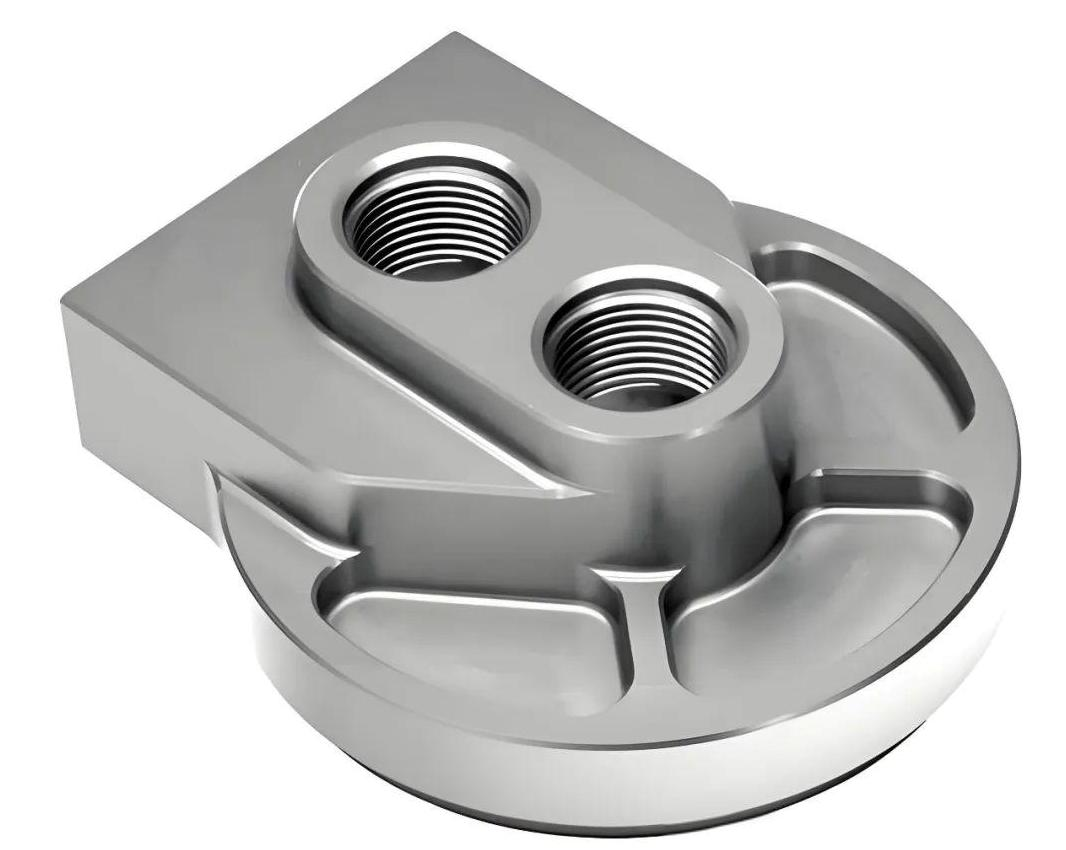
How is electrode design priced?
Electrodes are a separate part, and they wear.
Each sinker cavity needs an electrode machined to its form, and because the electrode erodes as it cuts, the number of electrodes required depends on the cavity depth and the accuracy demanded.
Electrode cost has three components. The first is the material: copper, graphite and copper-tungsten behave differently in terms of wear rate, machinability and the surface they produce. The second is the machining of the electrode itself, which is a precision job in its own right, often produced on the same milling equipment the EDM process is replacing. The third is the number of electrodes needed, which follows from how much wear the cut consumes.
That structure explains why electrode design is part of the quoting conversation. A deeper cavity, a requirement for a finer finish, or several identical cavities all increase the number of electrodes and therefore the price. Where a design can be adapted to reduce depth or simplify the form, the saving appears both in machining time and in electrode count.
For wire EDM the equivalent consumable is the wire itself, plus the start holes that have to be drilled to thread it through internal features. Start holes are often overlooked in a design review, and they are a genuine cost item when a part needs several of them.
Which materials suit discharge machining?
Any conductive material, with different behaviours.
Tool steels, stainless steels, carbides and nickel alloys are all machined by EDM, and the choice mainly affects cutting speed, electrode wear and the surface layer left behind.
The process requires electrical conductivity, which covers most engineering metals. Tool steel is the classic application because parts are usually machined after heat treatment, when the material is too hard for conventional cutting. Carbide is machined for die inserts, where EDM is often the only practical route. Stainless steels and nickel alloys are cut for precision components where sharp internal corners or thin sections rule out milling.
Material behaviour matters in two ways. Cutting speed varies with thermal conductivity and melting point, so some alloys take substantially longer to erode than others. And the surface layer left by the process, usually described as the recast or white layer, varies with the material and with the discharge settings, which is why the finishing passes matter more on some alloys than others.
The materials 6CProto machines are documented on the steel and related material pages, and where a part is being routed between milling and discharge machining, the comparison is best made at the review stage rather than after the drawing is released. The materials and heat treatment context for those decisions is covered by bodies such as ASM International.
What drives the cost of an EDM part?
Cut length, cavity volume, electrode count and passes.
The price follows how much material has to be eroded and how many passes are needed to reach the finish, plus the electrodes or start holes the geometry requires.
For wire EDM, cost scales with the length of the contour and the thickness of the part: a long profile through a thick block takes proportionally longer. Multiple passes for a fine finish multiply that time, and the number of start holes adds a drilling operation. Fixturing matters too, since the part has to be held accurately and located so the wire can approach the contour.
For sinker EDM, cost scales with the volume removed and with the electrode count. A deep cavity with a fine finish consumes several electrodes, and each one has to be produced to a precision that the cavity inherits. Finishing passes add time but reduce the affected surface layer, which matters where the cavity will see fatigue or where the surface is functional.
The cheapest EDM job is one whose drawing states the finish and tolerance only where they are needed. Applying a fine finish across a whole cavity, or a tight positional tolerance to a feature that has clearance around it, adds cost without adding function. Consumables and waste belong in the same calculation: used dielectric fluid and eroded sludge are process waste that has to be handled, which is part of why the process is priced by the work it performs rather than by a flat rate. The regulatory context for industrial process waste is set out by the US Environmental Protection Agency.
How are recast layer and inspection handled?
Set the finishing passes by what the surface must do.
Discharge machining leaves a thin recast layer on the cut surface, which finer passes reduce; inspection then covers the profile, the position of the feature and the finish where it is functional.
The recast layer is a result of the process: metal melted by the discharge resolidifies on the cut surface, with different properties from the parent material. It is thin, and its thickness decreases as the finishing passes get finer. Where the surface is functional, such as a fatigue-critical edge or a sealing face, the specification should say so, because that is a decision about how many passes to run.
Inspection follows the same logic. Wire-cut profiles are checked dimensionally against the drawing, with attention to the position of the contour and any taper. Sinker cavities are checked against the electrode form and the specified dimensions, with the finish evaluated on the surfaces that function. Where the part is a die or mold component, the fit against its counterpart is often the real acceptance test.
6CProto provides quality inspection reports on request and assigns a project manager to each order, so the inspection scope can be agreed before production. The technical vocabulary used for those specifications, including surface texture parameters, follows the standards work of bodies such as ASTM committee B08 for coating and surface subject matter and the measurement guidance published by NIST, whose manufacturing extension work is described by NIST MEP.
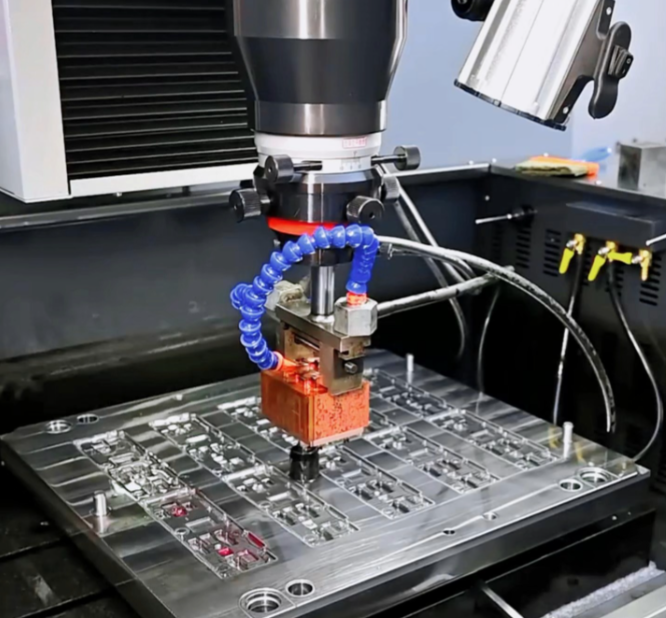
Routing a part to discharge machining
EDM belongs in the process plan wherever the geometry or the material rules out conventional cutting. Hardened tool steel with sharp corners, cavities deeper than a cutter can reach, through-profiles that must be exact, and thin sections that would distort under cutting force are all natural candidates. Where the part can be milled in its soft state, milling usually remains the faster and cheaper route.
The specification that gets a good result names the feature, not the process. State what the corner, profile or cavity has to do, give the tolerance and finish where they are functional, and identify the material condition the part will be in when it is cut. That information lets the shop choose between wire and sinker, plan the electrode or the start holes, and quote the passes that the surface actually requires. The broader context for precision machining decisions is covered on the precision machining page.
FAQ
How much does EDM machining cost?
Price follows the amount of material eroded and the number of passes. Wire cutting scales with contour length and part thickness, with start holes added as a separate operation. Sinker work scales with cavity volume plus the electrodes it consumes, since each electrode is machined to a precision the cavity inherits. Applying a fine finish or a tight tolerance only where it functions is the most reliable way to control cost.
What are the disadvantages of EDM machining?
It is slower than milling for removing bulk material, which is why it is normally used for finishing features rather than clearing stock. It requires conductive material, so it cannot produce non-metallic parts. Sinker work needs an electrode for each cavity, and those electrodes wear. And the cut surface carries a recast layer whose thickness depends on the finishing passes, which matters where the surface is fatigue-critical.
Can EDM be used before heat treatment?
It can, but the usual reason to use it is that the part is already hard. Cutting before heat treatment risks distortion during quenching, which can move the fine features the process was chosen to produce. Where the sequence allows, the common practice is to rough out in the soft state, heat treat, then finish critical features by discharge machining. Confirming the sequence at review stage avoids rework later.
What is a start hole, and does it affect cost?
A start hole is a small drilled hole through which the wire is threaded so an internal contour can be cut. It has to be positioned accurately, because the wire uses it as an entry point, and it adds a drilling operation to the order. Parts with several internal cut-outs need several start holes, so the number is worth counting during design. Where a hole can be moved to a location that will be removed later, it costs nothing functionally.
If a feature has stopped a milling process, send the drawing with the material condition and the finish it needs. 6CProto reviews EDM work for feasibility, plans the sequence around heat treatment, and returns a DFM report with the quote. Upload the file at the 6CProto quote page or send it to projects@6cproto.com.