
EDM Machining Services
Create precision profiles, narrow slots, deep cavities, and difficult internal details in conductive metals without conventional cutting forces. Our EDM machining service supports wire EDM and sinker EDM for tooling, molds, hardened components, and features that rotating cutters cannot produce reliably.
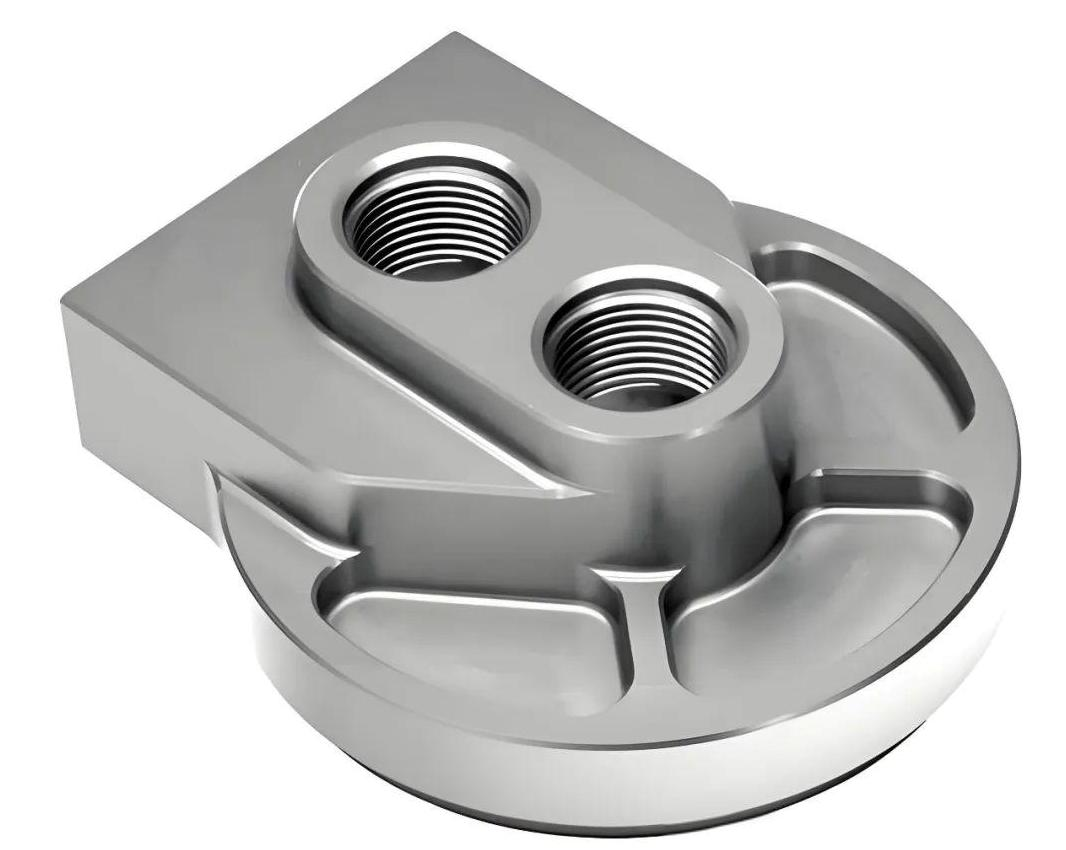





Electrical Discharge Machining for Features Cutting Tools Cannot Reach
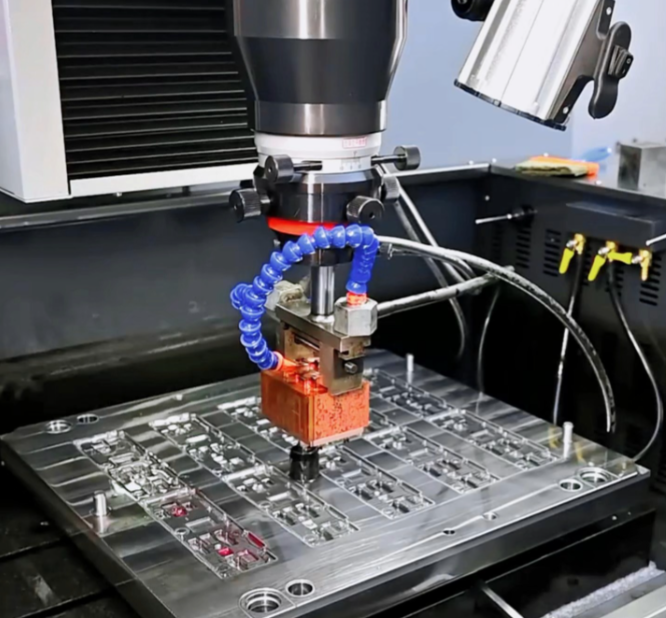
EDM removes material through controlled electrical discharges between an electrode and an electrically conductive workpiece submerged in dielectric fluid. Because removal does not depend on conventional cutting force, EDM can machine hardened steel, narrow geometry, fine profiles, and internal details after heat treatment.
This page is dedicated to electrical discharge machining. Use 3-axis CNC machining for economical prismatic milling and 4-axis CNC machining for rotary or multi-face cutting.
Explore EDM Machining Resources
Jump directly to the capability, materials, applications, design guidance, quality, or FAQ section needed for your project.
Why Use EDM for Precision Machining?
Following the existing Precision Machining page, the page first establishes why EDM belongs in a high-accuracy manufacturing workflow before separating wire and sinker processes.
Machine After Hardening
Create accurate features in suitable conductive materials after heat treatment without conventional cutter pressure.
Fine Internal Detail
Produce smaller internal radii, narrow slots, ribs, cavities, and intricate profiles than common milling tools allow.
Low Cutting Force
Reduce mechanical load on delicate tooling details and slender conductive components.
Integrated Precision Workflow
Coordinate milling, heat treatment, grinding, wire or sinker EDM, polishing, and final inspection.
Wire EDM vs. Sinker EDM
The geometry determines whether a traveling wire or a shaped electrode is the correct process.
Wire EDM
A continuously fed wire cuts through conductive stock to produce accurate 2D profiles, tapers, punches, dies, slots, and intricate through-features. A start hole or accessible edge is normally required.
Sinker EDM
A shaped electrode reproduces its geometry into the workpiece to form blind cavities, ribs, deep pockets, text, and internal details used in molds, dies, and tooling.
How the EDM Machining Process Works
EDM planning connects electrode or wire access with tolerance, overburn, flushing, recast-layer requirements, and inspection.
Choose the EDM Route
We review conductivity, heat-treated condition, geometry, corner requirements, tolerance, and surface finish.
Plan Start Holes or Electrodes
Wire access, electrode design, overburn, flushing, datum transfer, and setup are established.
Rough and Skim Cuts
Controlled sparks remove material; additional skim passes may refine accuracy and surface finish.
Clean and Inspect
Parts are cleaned and critical profiles, cavities, dimensions, and surfaces are measured.
Materials for EDM Machining
Electrical conductivity is mandatory; grade, heat treatment, thickness, and surface integrity requirements guide process selection.
Hardened and Tool Steels
Dies, punches, inserts, cavities, and wear components can be machined after heat treatment with minimal cutting force.
Stainless Steel
Precision slots, profiles, tooling, and components where burr control and difficult geometry matter.
Copper and Copper Alloys
Conductive components and electrode materials requiring controlled geometry and surface quality.
Titanium and Nickel Alloys
Difficult-to-cut conductive alloys considered where conventional tooling would face heat or wear challenges.
Carbide
Selected conductive carbide tooling may be EDM machined after grade, geometry, cracking risk, and finish review.
Nonconductive Materials
Standard EDM cannot machine ordinary plastics, ceramics, glass, or other nonconductive materials.
EDM Machining Capabilities
EDM capability must be tied to the exact material, feature, electrode or wire route, tolerance, finish, and inspection method.
| Requirement | EDM Planning Capability | What Must Be Confirmed |
|---|---|---|
| EDM Types | Wire EDM and sinker EDM | Through-profile vs. blind cavity |
| Material | Electrically conductive metals and selected conductive carbides | Exact grade and heat-treated condition |
| Tight Tolerance | Down to ±0.01 mm after review | Feature size, thickness, taper, datum, and inspection method |
| Corner Strategy | Much smaller internal radii than milling | Wire diameter, overburn, electrode, and finish pass |
| Surface Finish | Roughing plus optional skim or finishing passes | Required Ra and recast-layer limit |
| Part Envelope | Project-specific machine assignment | CAD, drawing, thickness, travel, tank, wire access, and fixture |
Common EDM Machined Parts and Features
EDM creates value where material hardness, fine geometry, internal access, or cutting-force sensitivity limits conventional machining.
Punches and Dies
Accurate profiles, clearances, tapers, and wear-resistant heat-treated tooling.
Mold Cavities and Inserts
Blind cavities, narrow ribs, deep details, text, and electrode-generated forms.
Precision Slots
Narrow through-slots and key features where conventional cutters are impractical.
Complex Through-Profiles
Wire-cut outlines, tapers, internal openings, and stacked components.
Hardened Components
Features added after heat treatment without introducing milling-scale cutting forces.
Tooling Corrections
Localized modifications and precision details in existing conductive tooling after review.
Design Guidelines for Wire and Sinker EDM
The drawing should distinguish functional sharpness from an unnecessarily small radius, because corner size directly affects wire, electrode, passes, cost, and lead time.
Wire EDM Design Checklist
- Provide an accessible edge or specify a start-hole location.
- Define stock thickness and heat-treated condition.
- Dimension tapers and profile relationships from clear datums.
- Specify the actual allowable internal radius.
- State surface finish and skim-cut requirements.
Sinker EDM Design Checklist
- Identify blind depth, ribs, corner detail, and draft.
- Allow for electrode overburn and wear compensation.
- Plan electrode access and dielectric flushing.
- Define recast-layer or polishing requirements.
- Coordinate milling, heat treatment, grinding, and EDM sequence.
EDM Quality and Surface Integrity
Tight dimensions are only part of EDM quality; recast layer, microcracking risk, taper, surface texture, cleanliness, and datum transfer may also matter.
Pre-EDM Verification
Material, hardness, stock condition, datums, start holes, electrode geometry, and drawings are confirmed.
Process Control
Discharge settings, wire or electrode condition, flushing, offset, and finishing passes are controlled for the required feature.
Final Inspection
Profiles, cavities, tapers, slots, corner radii, and agreed surface requirements are measured and documented as specified.