

Explore CNC Milling, Turning & EDM
What a Custom CNC Machining Service Covers
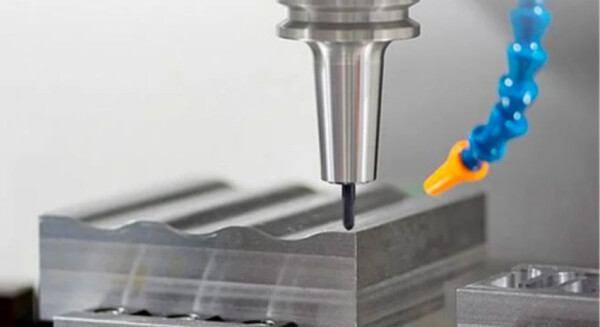
Custom CNC machining is a subtractive process in which computer-controlled machines remove material from a solid block, rod, or billet to produce parts with defined geometry, tolerances, and surface finish. It suits low-to-mid volume runs, non-standard components, and rapid iterations where tooling cost or lead time would be prohibitive, and modern mills and lathes hold critical features to tolerances as tight as about 0.02 mm on mature processes. The service range covers metals such as aluminum, stainless steel, brass, and titanium, and plastics such as ABS, PC, POM, and nylon, which lets the designer match material to the performance, weight, and cost requirement instead of to the process.
The practical value is the same across a startup and a production buyer: parts that match the drawing, arrived on a schedule, with records that prove both. CNC machining needs no dedicated tooling, so a single piece and a mid-volume run are produced on the same machines, and the transition from validation to pilot is a scheduler’s task rather than a tooling project. That is why CNC machining services sit at the center of most on-demand manufacturing programs.
Why Sourcing Is Harder Than It Looks
The failures in custom machining sourcing are rarely about the machines. Parts that look correct can fail function due to hidden dimensional errors, poor surface finish, or inconsistent material state. Shops without calibrated equipment, documented inspection, or a quality system produce variability between batches, and the buyer discovers the difference at assembly or test. The same hidden layer affects quotes: a price that looks cheap can grow through rework, scrap, and expedited shipping once the design meets a process that was never reviewed.
Lead time is the second layer. Capacity pressure, scheduling, and communication quality decide whether a promised delivery is real, and for teams working across time zones, the availability of engineering support is part of the lead time. Documentation is the third: regulated industries need material certificates, inspection reports, and compliance records such as RoHS, and a supplier that cannot produce them blocks certification and scale even when the parts are good.
What to Check When Comparing Suppliers
| Sourcing factor | What to verify | Risk if missing |
|---|---|---|
| Quality system | Certification, inspection stages, calibrated equipment | Batch-to-batch variability |
| Tolerance capability | Claimed and proven range for your feature types | Failed fits and rework |
| Engineering/DFM support | Review of your geometry before quoting | Hidden cost and long cycles |
| Documentation | Material certs, FAI, dimensional data | Blocked audits, no traceability |
| Lead time and communication | Capacity, point of contact, time zone fit | Stalled programs, missed launches |
The comparison that matters is not machine count but the reliability profile: whether the supplier can reproduce the part, document the process, and flag design risk before the run. A supplier that reviews the [drawing for manufacturability](https://www.6cproto.com/resources/blog/dfm-for-cnc-machining-a-checklist-before-you-order/) and returns a process plan is describing how the part will be made; a supplier that only returns a price is quoting a hope.
How to Get the Most from the Order
The two inputs that improve every CNC order are a complete drawing and a DFM conversation. The drawing should name the material and grade, the critical dimensions with tolerances, the datum scheme, and the surface finish requirements; the conversation should confirm which features are critical, how they will be inspected, and what the supplier would change to reduce cost or risk. This is where geometry details, thread standards, common drill sizes, and finishing choices are settled before the machine runs.
For parts moving from prototype to production, keep the material, the fixture, and the inspection standard continuous across the stages so the validated part is the produced part. The CNC turning, milling, and precision machining pages describe the capability ranges, and the material selection page narrows the grade choice before the quote. The tolerance plan should follow the standards guidance so the drawing language is unambiguous.
Scenarios That Change the Sourcing Decision
A startup validating a new component needs speed and honest DFM feedback, because the design is still moving and the first runs are learning events. A distributor ordering mid-volume parts needs repeatability and documentation so the SKU behaves the same across reorders. A private-label program needs traceability and compliance records for the market. An engineering team iterating rapidly needs short cycles and responsive engineering support. Each profile weights the same factors differently, and naming the profile before comparing quotes makes the decision explicit rather than price-led.
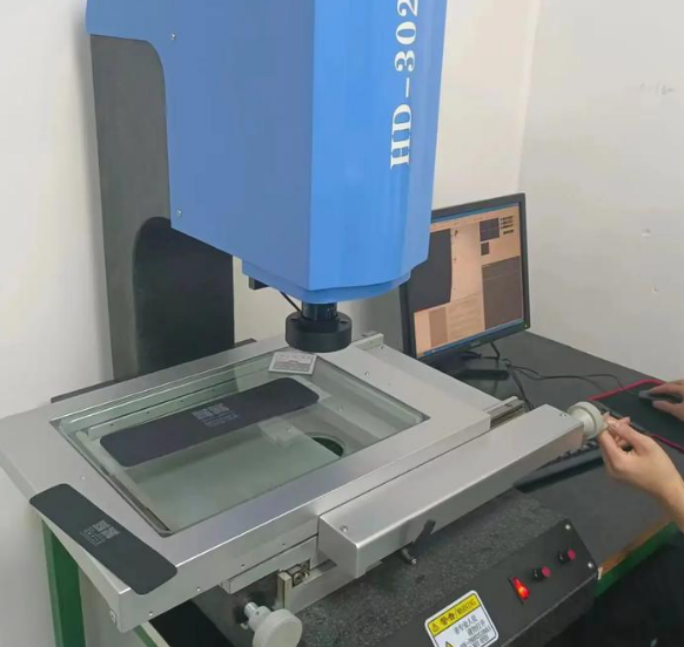
Standards such as NIST measurement practice provide the reference for how tolerances are verified, and the inspection framework used for critical features is described in the CMM inspection guide. Buyers who put these checks in the RFQ get quotes that compete on process as well as price.
Materials and Finishing That Matter in CNC Work
Material choice drives every downstream decision, from the tooling and cycle time to the finish that will be specified. Aluminum machines quickly and lends itself to anodized or as-machined finishes, which makes it the default for housings and brackets. Stainless adds corrosion resistance and strength at the cost of slower machining and harder tool wear. Brass and copper turn cleanly and suit electrical and fluid parts. Engineering plastics such as POM, PC, and nylon satisfy wear, chemical, and light-weight requirements where metals are overkill. Each grade within a family behaves differently, so the drawing should name the exact material and condition, not just the family.
Surface finish moves with the geometry and the process. A machined surface can hold a fine Ra value on an open face while an inside corner or a deep pocket finishes differently, and the finish callout should state the measured feature and the method. Secondary finishes, anodizing, passivation, plating, and bead blasting, each have their own allowance and masking needs, so the finish should be reviewed with the tolerance plan. The surface finishing service covers the options and their interaction with the base material.
Documentation and Quality Records
Quality records are part of the deliverable in engineered procurement. The material certificate traces the alloy and heat; the first-article report verifies the process against the drawing; the dimensional report records the measured values at the agreed points; and the compliance records cover material restrictions for the target market. The documentation level should be stated in the RFQ so the price and the process include it, and the buyer should name which dimensions must be reported rather than accepting a generic report. For regulated work, the same records are what let the product pass the audit, and the discipline is what the inspection framework guide describes in practical terms.
Lead Time, Capacity, and Communication
The lead time in a quote is a commitment, and it is only as reliable as the capacity behind it. A supplier running near capacity can quote an ideal schedule that the shop floor cannot honor, and the buyer discovers the slippage when the program is waiting. Ask how the quoted lead time is managed, whether there is a single point of contact for the order, and how engineering questions are escalated across time zones, because each of these determines whether a promised delivery is real. For iterative programs, the speed of the feedback loop, how quickly a DFM question returns, is often more valuable than the machining hours.
Communication quality shows up in the handoff documents as much as in the emails. A supplier that returns a process plan with the quote, names the inspection points, and flags the risk features is one that will manage the order actively; a supplier that returns only a price leaves the program exposed. The same discipline that makes finishing and fabrication work in-house gives the buyer one accountable partner instead of a chain of handoffs.
Quoting, MOQ, and Scaling
The quote should separate the costs that scale from the costs that do not. Programming, setup, and first-article verification are paid once per order; material, machine time, finishing, and inspection scale with each part. Reading the quote this way explains why the first part is the most expensive and why a mid-volume price is far below the single-piece price. It also explains the no-MOQ model: with no tooling to amortize, a single piece is a legitimate order, and the buyer pays a fair share of the fixed block rather than a penalty. That transparency matters for startups iterating weekly and for programs bridging to production, because the same quote structure continues into the low-volume run.
Scaling from one to production quantities is a planning exercise, not a supplier change. Confirm the process will be the production process, the fixture and datum strategy continue, and the inspection standard matches; then the pilot data transfers to the full run. The low-volume manufacturing service and the rapid prototyping workflow are the two ends of that bridge, and keeping them under one review loop protects the transition.
FAQs
What tolerances can custom CNC machining hold?
Mature machining processes hold critical features to about 0.02 mm on suitable geometries and materials, but the practical value depends on feature type, material, and setup count. The tolerance plan should be set against the function and confirmed in the DFM review.
How fast is a custom CNC part?
Simple geometries can turn around in one to a few days; complex prototypes typically take longer. The lead time depends on capacity, material availability, and the review cycle, and it should be stated with the quote rather than assumed.
Is CNC machining cost-effective for one piece?
Yes, because there is no tooling commitment. The fixed cost of programming and setup is spread across the order, which makes one piece and small batches viable, and the per-part price falls as quantity rises.