

The most common mistake on a custom printing order is choosing a process by what is available rather than by what the prototype has to prove. A part that will be dropped, cycled or used in a fixture needs a different process from one that will be photographed, and the two are not priced the same.
Start from the test the prototype has to pass
Four tests cover most prototyping work. An appearance test asks whether the part looks like the product, which points to resin printing and its smooth finish. A fit test asks whether components assemble with the intended clearances, which points to whichever process has the dimensional behaviour measured on a coupon. A function test asks whether the part survives repeated use, which points to nylon or to machining in the production material. A form test asks only whether the shape is right, which any process can satisfy.
| What the prototype must prove | Process that fits | What to specify |
|---|---|---|
| Appearance | Resin (SLA) | Faces to protect; finish level; whether it will be painted |
| Assembly fit | Resin or nylon, tested against a clearance coupon | Clearances agreed from measurement, not assumption |
| Repeated handling or load | Nylon powder bed or machined production material | Material grade and the surfaces that carry load |
| Shape and ergonomics | Any process | Overall dimensions; no fine tolerance needed |
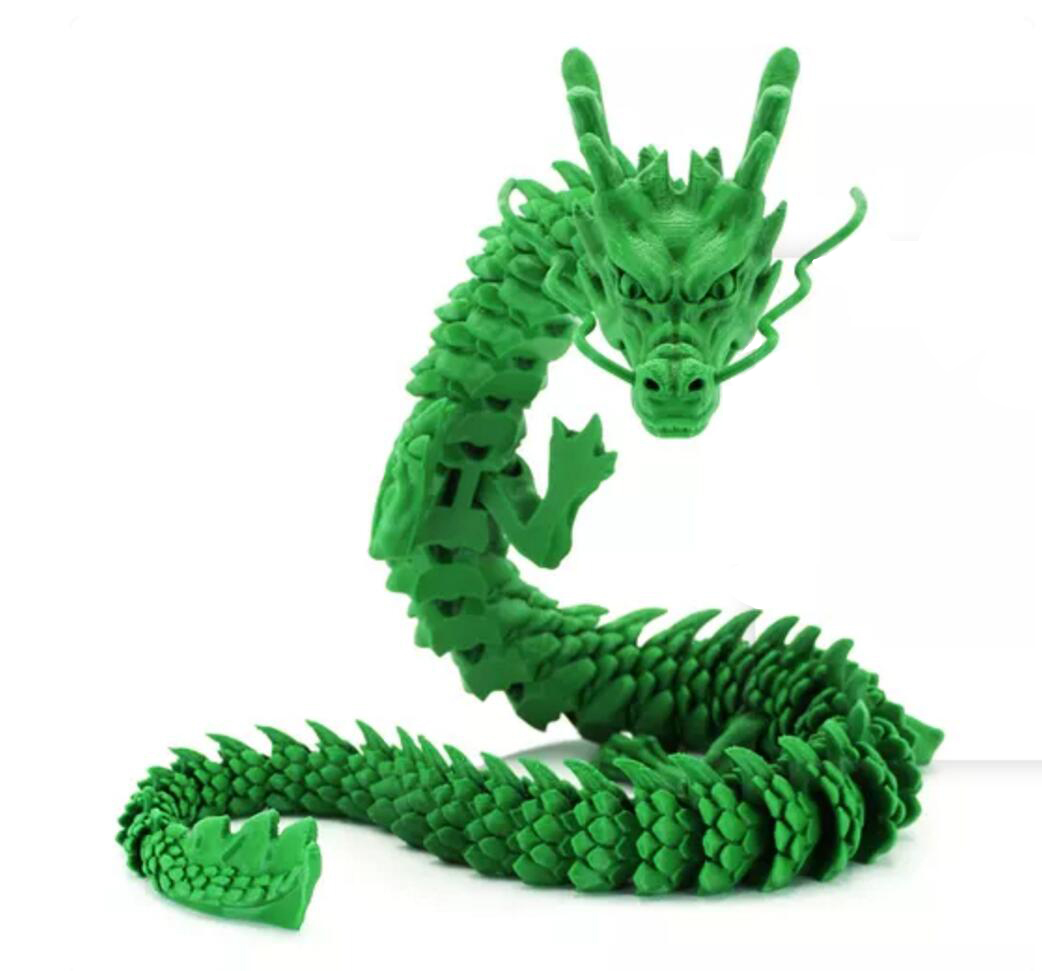
How much does a custom 3D print job cost?
Build volume, material, supports and finishing, not weight.
Printing is priced by how much of the machine a job occupies and how much labour it needs afterwards. A small part that shares a build with others is cheap because the machine time is shared; a large part that occupies the chamber alone carries the full run. Material is a secondary line in resin and nylon, and a primary one in metal. Supports, cleaning and surface finishing are the labour that turns a raw print into a usable prototype.
The practical consequence is that a quote is more responsive to orientation and nesting than to negotiation. A part redesigned to sit lower in the chamber, or ordered together with its neighbours, can cost materially less than the same geometry ordered alone. Sending the whole set of prototype parts in one enquiry rather than one at a time is the simplest way to benefit from that.
Can you hire someone to print a part for you, and what should you send?
Yes, and a service often beats a desktop printer.
Yes, and a service is often the right choice even for a team with a printer on the bench, because production machines hold tighter tolerances, use engineering materials and offer post-processing that a desktop machine cannot match. The trade-off is the lead time and the need to describe requirements that an in-house print would have absorbed informally.
A useful enquiry contains five things: the model in a neutral format, the quantity, the process or the test the part must pass, the faces that must stay clean, and any feature that will be measured. Where a part will be assembled, add the mating components so clearances can be checked together rather than guessed. That package removes the clarification round that otherwise sits between the upload and the build.
Post-processing is where custom work differs
Two orders with identical models can produce very different parts depending on post-processing. Resin parts are cleaned and cured, then sanded where a smooth surface is required; nylon parts are bead blasted to a uniform texture or dyed for appearance; metal parts are stress relieved, separated from their supports and machined on the controlled faces. Each step changes the part and each is charged separately.
The instruction that prevents most disappointment is naming the purpose of each face. A face that will be measured should not be sanded; a face that will be seen should not carry support marks or blasting texture; a face that will seal has to be machined rather than printed. Process terminology is standardised through ASTM Committee F42, and application guidance is published by ASME and UL Solutions.
Comparing two custom printing quotes
Quotes are rarely comparable on price alone, because the process assumed may differ. One supplier may quote resin for a part that will be handled repeatedly, another may quote nylon at a higher price that survives the test. Comparing means asking each one to state the process, the material, the build orientation and the post-processing included, then checking those against the test the prototype has to pass.
Two further questions sharpen the comparison. Is the part built alone or nested with others, since that changes the price substantially? And what happens if the first build fails — is the build repeated, and at what cost? Those answers distinguish a service that manages the process from one that simply sells machine time. Material data is published by ASM International, measurement practice by the NIST Manufacturing Extension Partnership, and resin and powder handling obligations by US EPA rules. Process options are set out on the SLA and materials pages.
For a part that will be measured, it is worth stating which dimensions matter before the build rather than after: orientation, support placement and finishing all change the numbers a report will show.
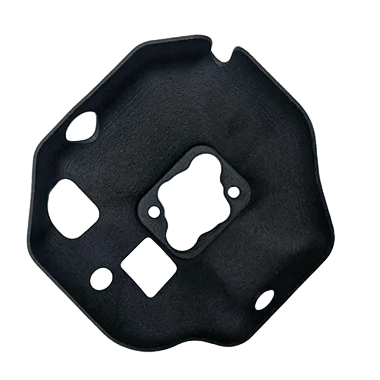
Send the parts together with the test each one has to pass, and request a custom 3D prototyping quote with the process and post-processing stated.
FAQ
How much do 3D printing services usually cost?
Pricing follows the share of the machine a job occupies plus the labour for supports and finishing, so it responds to orientation and nesting more than to part weight. Ordering related parts together is usually the largest single saving available.
Can you hire someone to 3D print something for you?
Yes, and a service often makes sense even when a desktop printer is available, because production machines hold tighter tolerances, offer engineering materials and provide post-processing such as dyeing, blasting or machining of controlled faces.
What should I send for a custom 3D printing quote?
A neutral CAD file, the quantity, the process or the test the part must pass, the faces to keep clean, and any feature that will be measured. Adding mating components lets clearances be checked together rather than assumed.