

Copper conducts heat better than aluminium, which sounds like the end of the comparison until the weight, the cost and the machining behaviour are taken into account. In practice the two metals are used for different parts of the same thermal path: copper where heat enters through a small area, aluminium where it has to leave through a large one. This comparison covers how the two behave, where each wins, how they behave when they are joined, and how to decide with the thermal budget and the weight allowance in hand.
Copper or aluminium: which should a heat sink use?
Copper for hot spots, aluminium for the bulk.
Copper spreads heat better from a concentrated source, while aluminium provides more fin area per unit of weight and is the practical choice for the body of a heat sink.
The distinction follows from the two properties that matter: thermal conductivity and density. Copper conducts heat substantially better than aluminium, which means it spreads heat laterally faster and therefore keeps a small heat source at a lower temperature for a given footprint. Aluminium conducts less well but weighs roughly a third as much, which means a given mass of aluminium provides far more fin area than the same mass of copper.
That trade produces a practical split. Where the heat enters through a small die or a small contact patch, a copper spreader reduces the spreading resistance and wins clearly. Where the heat has already spread and has to be dissipated into air, the limiting factor is surface area rather than conductivity, and aluminium provides more of it for the same weight.
The result is that most high-performance designs combine the two, with copper placed where the heat enters and aluminium used for the fins. A pure copper heat sink is chosen only where space is so constrained that the fin area cannot be increased, and the weight penalty is acceptable.
How do conductivity and density trade off?
One moves heat faster, the other carries less mass.
Copper’s higher conductivity reduces spreading resistance, while aluminium’s lower density allows more surface area for the same weight, which is what ultimately dissipates the heat.
Spreading resistance is the part of the thermal path where copper’s advantage is largest. When heat enters a base through a small area, it has to spread laterally before it can reach the fins, and that spreading happens through the base material. A higher conductivity spreads the heat with a smaller temperature difference, which lowers the temperature at the source. The effect is strongest when the source is small relative to the base and when the base is thin.
Fin efficiency is where aluminium recovers the advantage. A fin dissipates heat through its surface into air, and the amount of surface available for a given weight depends on density. Aluminium provides roughly three times the fin volume per kilogram, so a weight-limited design can have a much larger fin field. Where the design is limited by weight rather than by volume, that difference is decisive.
A third property matters in some designs: specific heat capacity. Copper stores more heat per unit mass, which can be useful in a transient application where the heat sink must absorb a short burst of energy before the airflow catches up. For steady-state dissipation, the difference is less relevant than conductivity and area.
Where does copper win?
Small footprints and concentrated heat.
Copper is chosen where the heat source is small, the flux is high, or the space available limits how much fin area can be provided.
The clearest case is a small, high-power device mounted on a heat sink with a limited contact area. The heat has to spread from a small patch into the base, and copper reduces the temperature rise associated with that spreading. In a compact product, where the heat sink cannot be enlarged, this can be the difference between a component running within its limit and one that does not.
Copper is also used in the base of heat pipes and vapour chambers, where the working fluid contacts the metal and high conductivity helps both the evaporation and the condensation process. Those assemblies are often copper throughout because the internal surfaces have to be compatible with the working fluid as well as conductive.
A third case is a transient load. Where a device produces bursts of heat and the average dissipation is lower, a copper mass absorbs the peak and releases it more slowly, which smooths the temperature profile. The advantage depends on the duty cycle, so the design should be based on the actual load profile rather than on a steady-state figure.
Where does aluminium win?
Weight, cost and manufacturability.
Aluminium is lighter, cheaper and easier to machine and extrude, which makes it the practical choice wherever the thermal requirement can be met with a larger fin field.
Weight is the first consideration in most products, particularly anything portable or mounted on a moving assembly. Aluminium’s density makes a large fin field practical where a copper equivalent would be too heavy to mount or too heavy to justify. Cost follows the same path: aluminium costs less per kilogram, and its machinability means the operations that produce the fins take less time.
Manufacturability is the third advantage, and it is often decisive. Aluminium extrudes readily, which is how most heat sinks with straight fins are produced, and it machines quickly for skived or milled designs. Copper is available in extrusions, but the range is smaller and the material is more difficult to work, and it tends to smear and work-harden during machining, which requires more careful feeds and more attention to chip evacuation.
Surface treatment adds a further consideration. Aluminium anodizes well and takes a finish that protects it and provides appearance options, though the anodic layer is less conductive than the metal and must be kept off the contact face. Copper oxidises readily, and a bare copper surface loses interface performance over time, so it is usually plated or otherwise protected.
| Factor | Copper | Aluminium |
|---|---|---|
| Thermal conductivity | Higher; better spreading | Good; adequate for most designs |
| Density | High; heavy parts | Low; allows large fin fields |
| Cost | Higher material and machining cost | Lower; widely available |
| Machinability | Gummy; smears; needs care | Fast-cutting; good finish |
| Extrudability | Limited profiles | Wide range of profiles |
| Surface protection | Usually plated or coated | Anodized or conversion coated |
| Typical use | Spreaders, vapour chambers, tight spaces | Fin stacks, extruded bodies, most products |
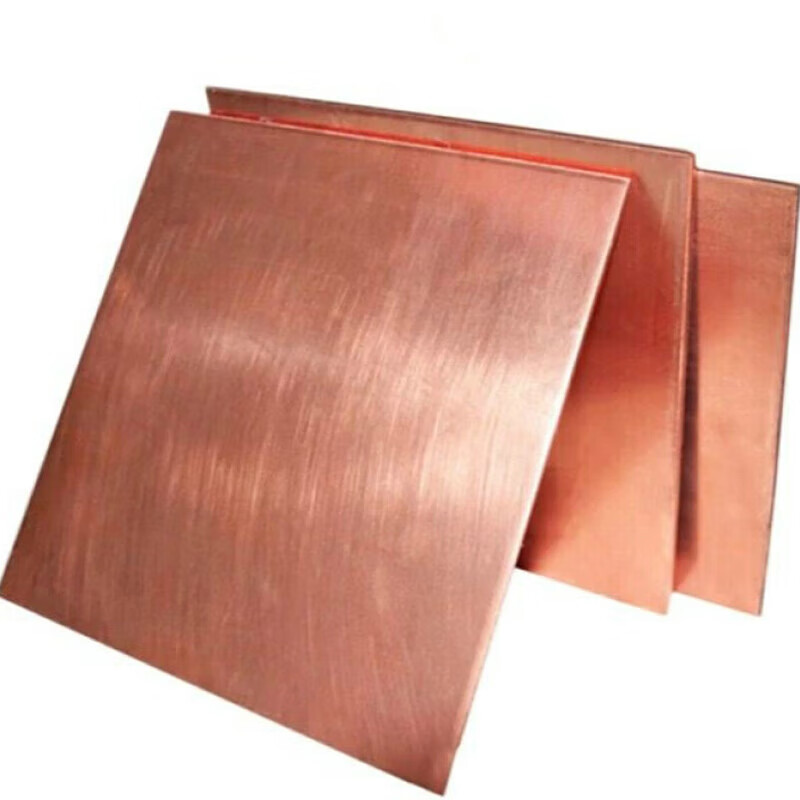
What happens when the two are joined?
You gain both benefits, at the cost of an interface.
A hybrid design places copper where the heat enters and aluminium where it dissipates, and the join between them becomes part of the thermal path.
The common arrangement is a copper spreader bonded or pressed into an aluminium base, or a copper insert set into the contact area of an aluminium heat sink. The copper handles the spreading from the small source, and the aluminium provides the fin area at an acceptable weight. The result is usually better than either material alone for the same weight.
The join is the design challenge. A bonded joint adds an interface resistance, which erodes some of the benefit, so the bond has to be thin and continuous. Where the two are mechanically assembled, the contact pressure and the surface finish determine how well the joint conducts, and the assembly must hold that pressure over thermal cycling. Solder and thermal adhesives are both used, with different trade-offs in thermal resistance and process complexity.
Corrosion needs attention too. Copper and aluminium form a galvanic couple, and in the presence of moisture the aluminium will corrode preferentially at the joint. In a dry indoor application the risk is usually manageable; where the product may see humidity or condensation, the joint has to be protected or the contact avoided. That is a materials decision rather than a machining one, but it belongs in the specification because it can rule out an otherwise attractive design.
How do machinability and finishing differ?
Aluminium is straightforward; copper needs attention.
Aluminium machines quickly to a good finish, while copper tends to smear and work-harden, which slows the operation and complicates thin fin production.
The machining difference is significant on a fin field. Aluminium permits fast passes and produces a clean surface, which keeps the cost of a dense fin pattern manageable. Copper’s tendency to smear means the tool has to be managed carefully, chip evacuation has to be reliable and the feed rate has to be lower, all of which increase the time per fin. On a heat sink with a substantial fin field, that difference is a large part of the price.
Finishing follows the material. Aluminium heat sinks are commonly anodized or conversion coated for corrosion resistance, with the contact face masked so the interface remains metallic. Copper is typically plated, since an oxidised copper surface degrades the thermal interface and looks unacceptable on a visible part. In both cases the masking requirement is set by the contact area rather than by appearance, and it belongs on the drawing.
The grades available for either material are listed on the aluminium and copper material pages, and the ways thermal components are finished are described in the surface finish guides.
How should the decision be made?
With a thermal budget and a weight allowance.
The decision needs the heat load, the contact area, the space available for fins and the maximum weight the assembly can carry.
Those four inputs resolve most cases. A small contact area with a high flux and limited space points toward copper at the contact. A large area with space for fins and a weight limit points toward aluminium. Where both constraints bind, a hybrid arrangement is usually the answer, with copper at the source and aluminium for the fin field.
Where the analysis is marginal, a thermal test on a representative part is more informative than a comparison of material properties, because the interface and the airflow dominate the result. Testing with the actual interface material and mounting hardware ensures the measured performance reflects the assembled product rather than an idealised model. A review of the design against manufacturability then confirms that the chosen geometry can be produced at an acceptable cost. 6CProto reviews thermal components for manufacturability before production and returns a DFM report with the quote, so fin geometry, base condition and material choice are settled together.
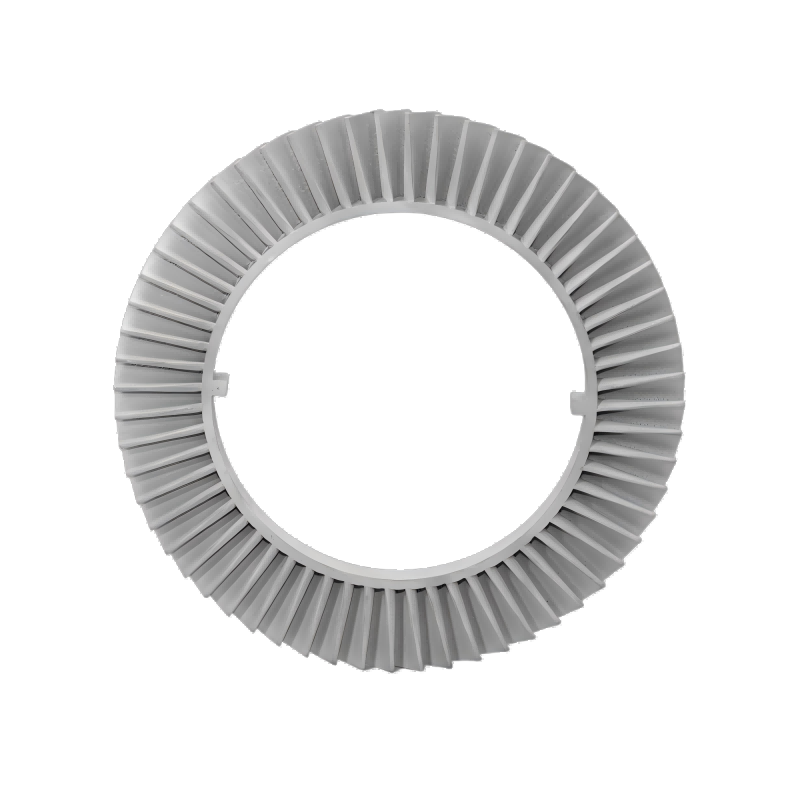
Choosing a heat sink material
Copper and aluminium are complementary rather than competing. Copper is the better conductor and the better choice where heat enters through a small area or where space is tight. Aluminium is lighter, cheaper and easier to work, and provides more surface area for the same weight, which is what most heat sinks need. The two are frequently combined, with the join treated as part of the thermal path and the galvanic pair considered in the specification.
The practical route is to define the load and the constraints first, then choose the material that satisfies them rather than starting from a preference. Where the result is marginal, a thermal test on a real part with the real interface material settles the question, and a manufacturability review confirms the design can be produced at a sensible cost.
FAQ
Does aluminium lose heat faster than copper?
It dissipates heat more slowly per unit of conductivity, but it can dissipate more for a given weight because a lighter material allows a larger fin field. Copper conducts heat away from the source faster; aluminium allows more surface area for the same mass. Which performs better in a specific product depends on whether the design is limited by spreading, by fin area or by weight.
Why use copper instead of aluminium?
Copper is chosen where the heat enters through a small area and has to spread, where space limits the fin area available, or where a transient load has to be absorbed. Its higher conductivity reduces spreading resistance, which lowers the temperature at the source. The trade is weight and cost, and it is usually resolved by using copper only where it changes the result and aluminium elsewhere.
Are copper and aluminium heat sinks ever combined?
Yes, and it is common in high-performance designs. A copper spreader or insert sits where the component contacts the sink, and an aluminium body or fin stack does the dissipating. The join adds an interface that has to be thin and continuous, and the galvanic pair has to be considered where moisture is possible. Managed well, the hybrid performs better than either material alone for the same weight.
Which material is easier to machine into fine fins?
Aluminium, by a considerable margin. It cuts quickly, produces a clean surface and tolerates the light passes a dense fin field requires. Copper smears and work-hardens, so feeds have to be reduced and chip evacuation managed, which increases the time per fin and the risk of a poor finish. On a substantial fin field, that difference is a significant part of the cost. The standards, materials data and regulatory framework referenced in this article are published by ASTM committee B08, ASTM D3359, ASTM committee D20, ASTM committee E28, ASM International.
If a thermal design needs a material decision, send the model with the heat load, the contact area, the space available and the weight limit. 6CProto reviews heat sink designs for manufacturability and returns a DFM report with the quote. Upload the file at the 6CProto quote page or send it to projects@6cproto.com.