

Copper conducts heat better than aluminium, and aluminium still wins most heat sink applications. The reason is that a heat sink is a system, not a material property, and the metal choice has to account for weight, cost, corrosion and how the heat leaves the component.
Which metal conducts heat better
Copper, by a wide margin on thermal conductivity alone.
Copper’s thermal conductivity is substantially higher than aluminium’s, which means a copper heat spreader moves heat away from a source faster for the same cross-section. That is why copper appears at the point of contact in demanding thermal designs: a copper base or a copper heat pipe absorbs heat quickly from a small source and spreads it into a larger area before the heat is rejected.
The comparison changes when the metal is asked to reject heat to air rather than conduct it within itself. A finned heat sink loses heat through its surface, and the limiting factor becomes the available surface area and airflow rather than the conductivity of the metal. Once the fins are doing the work, the conductivity advantage of copper buys less than the material price suggests.
| Consideration | Copper | Aluminium |
|---|---|---|
| Thermal conductivity | Higher | Lower |
| Density and weight | Much heavier | Light |
| Cost per part | Higher material and machining cost | Lower |
| Machining and extrusion | Gummy to machine, harder to extrude into fins | Extrudes into complex fin profiles readily |
| Corrosion behaviour | Patina but stable; galvanic risk against aluminium | Needs anodizing or coating for exposed use |
| Typical role | Heat spreader at the source | Finned body that rejects heat to air |
Why aluminium wins most heat sink applications
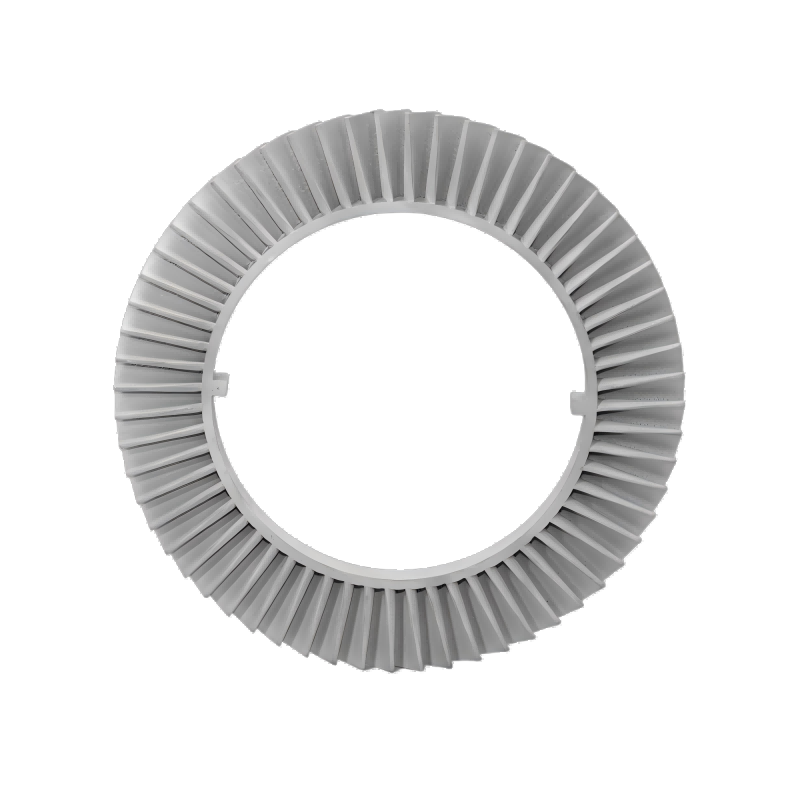
Three practical advantages decide the majority of designs. Aluminium is far lighter, which matters in anything portable or mounted on a moving component. It extrudes into complex finned profiles at low cost, so a heat sink body can be produced with dense fins in a single process. And it costs less per part, both in raw material and in the machining or extrusion operations that follow.
The thermal penalty is smaller than the conductivity numbers imply, because the fin geometry compensates. A structure with more surface area and adequate airflow can outperform a smaller copper component even though the copper conducts better internally. Where space is tight and the source is small, however, the balance shifts towards copper at the interface, sometimes as a copper slug in an aluminium body. Materials and their thermal properties are described under materials.
What determines the right choice
Four questions usually settle the decision. How concentrated is the heat source, because a small hot spot favours a copper spreader while a distributed source does not. How much space and airflow are available, because abundant surface area reduces the need for conductivity. How much weight is acceptable, because this is often the constraint that removes copper entirely. And what the total cost target is, including material, machining or extrusion, and finishing.
Two further factors appear in practice. Manufacturing method constrains the shape: aluminium extrudes into dense fin arrays that copper cannot readily match, while copper is better suited to machined or skived forms. And corrosion behaviour constrains the assembly: a copper component in contact with an aluminium one creates a galvanic couple in the presence of moisture, which means the joint needs isolation or a transition material rather than direct contact.
Why copper and aluminium cannot be joined carelessly
When two dissimilar metals are in contact and moisture is present, the more active metal corrodes preferentially. Copper and aluminium form such a couple, and aluminium is the metal that gives way, so a direct copper-to-aluminium joint in a damp environment corrodes at the interface. That is precisely where thermal and structural performance matter most, which is why the risk is taken seriously in heat sink design.
The standard responses are to isolate the joint or to avoid the couple. Isolation can be achieved with a coated interface, a thermal interface material that also acts as a barrier, or a plated layer between the metals. Where the joint must also conduct heat, an isolating layer that adds thermal resistance is a poor solution, so a bimetallic transition or a plated barrier is usually preferable. Coating and corrosion terminology follows ASTM Committee B08, and material data is published by ASM International.
When each metal is the right answer
Choose aluminium for the body of most heat sinks, for extruded finned profiles, for anything weight sensitive, and for cost-driven designs where the fin surface does most of the work. Choose copper where the heat source is small and concentrated, where space forces a compact high-performance component, where a copper heat pipe or vapour chamber is already part of the design, or where the thermal load makes the higher conductivity decisive.
A hybrid design often beats either material alone: a copper spreader or a copper slug at the interface, bonded or mechanically clamped into an aluminium finned body. That arrangement uses copper where conductivity is limiting and aluminium where surface area and cost are limiting, and it is one of the most common arrangements in demanding electronic cooling. Machined heat sink options are described under CNC machined heat sinks and extrusion options under custom extrusion.
Specifying a heat sink part
State the heat load and the maximum allowable temperature rise, the available space and airflow, the weight limit and the mounting method, since those four items determine the metal and the geometry. Identify the interface surface where the component contacts the heat sink, because flatness and surface condition there affect thermal transfer more than the rest of the part. And state the environment, including humidity, because it governs whether a mixed-metal assembly needs isolation.
Two practical notes reduce rework. If the design uses both metals, say how they will be joined, so the galvanic question is addressed at quoting rather than discovered in service. And specify the finish on any exposed aluminium surface, because anodizing or coating is often required for corrosion protection even when it plays no part in the thermal function. Drawing conventions follow ASME standards, measurement practice is described by the NIST Manufacturing Extension Partnership, and process obligations are set out by the US EPA.
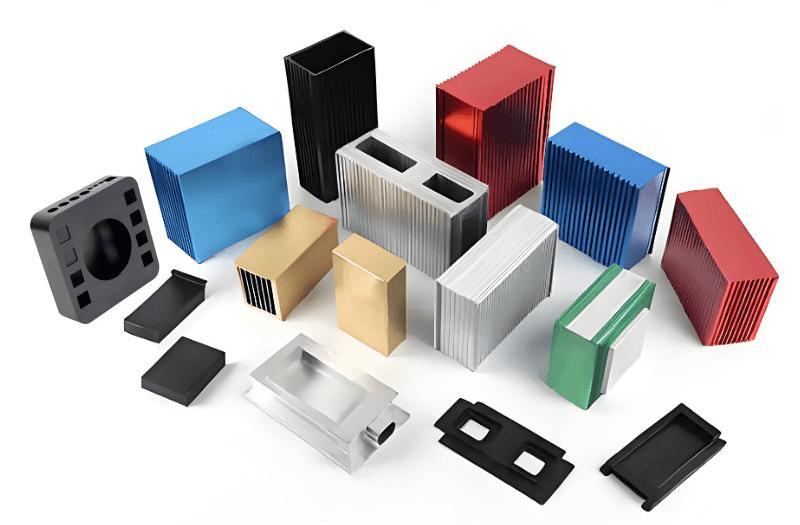
Send the heat load, the space and the weight limit, and request a heat sink quote in aluminium, copper or a hybrid arrangement.
FAQ
Which has higher thermal conductivity, copper or aluminium?
Copper does, by a wide margin, so a copper component spreads heat from a small source faster. Aluminium still wins most heat sink designs because it is lighter, cheaper and extrudes into dense finned profiles that provide the surface area the application needs.
What determines whether a heat sink should be copper or aluminium?
How concentrated the heat source is, how much space and airflow are available, how much weight is acceptable and what the cost target is. A small hot spot favours copper; a large finned area rejecting heat to air favours aluminium.
Why can’t copper and aluminium be joined without protection?
They form a galvanic couple, and in the presence of moisture the aluminium corrodes preferentially at the joint, which is exactly where thermal and structural performance matter. Isolation, a plated barrier or a bimetallic transition avoids the problem.