

Chromate conversion coating occupies a different role from anodizing. It is a very thin chemical film that protects aluminium while leaving the surface electrically conductive, which is why it appears on housings and chassis rather than on wear surfaces.
How chromate conversion coating works
The part is cleaned and then immersed in a chemical bath that reacts with the aluminium surface, converting the outer few nanometres into a mixed oxide film containing chromium compounds. No electrical current and no thick layer are involved. The film seals the surface enough to slow corrosion, provides a key for subsequent paint or adhesive, and because it is so thin it does not isolate the metal electrically.
| Property | Chromate conversion | Anodizing |
|---|---|---|
| Layer thickness | Very thin, measured in nanometres | Measured in micrometres |
| Electrical conductivity | Retained; used for earthing | Largely insulating |
| Wear resistance | Minimal | Hard, abrasion resistant |
| Paint adhesion | Excellent as a pretreatment | Good, but usually a finish in itself |
| Dimensional effect | Negligible | Significant on tight fits |
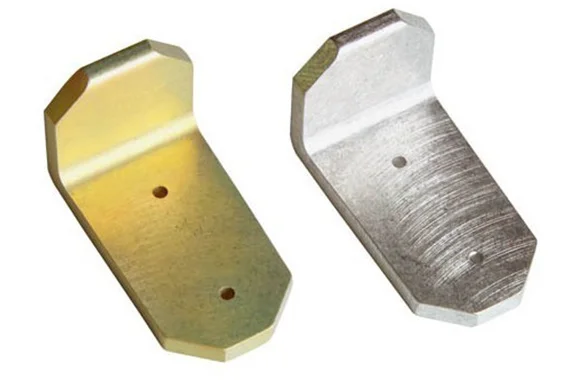
How thick is a chromate conversion coating?
Extremely thin — a fraction of a micrometre.
The film is measured in nanometres rather than in micrometres, which places it in a different category from anodizing or plating. For a designer, that has one large practical benefit: the coating changes dimensions so slightly that tight tolerances usually do not need adjustment for it. Unlike anodizing, there is no need to allow for growth on a bore or a thread.
The trade-off is durability. Because so little material is involved, the film offers no meaningful abrasion resistance and can be worn or damaged by handling, particularly against harder surfaces. Where a part will be rubbed, impacted or repeatedly cleaned, the coating is not the answer; where it will be painted, stored or assembled into equipment, its thinness is exactly what makes it useful.
What the coating is actually for
Four uses account for most applications. It protects aluminium parts during storage and shipment before further processing or assembly. It provides a pretreatment that helps paint, powder coating or adhesive bond reliably to aluminium. It retains electrical conductivity, which allows a coated housing to be earthed through a fastener without masking the contact area. And it protects internal or hidden surfaces where a decorative finish would be wasted.
Two of those uses are worth separating. A coating specified as a paint pretreatment has to be judged by how the paint performs, not by its own appearance, whereas a coating specified for corrosion protection during storage has to be judged on its own. Saying which purpose applies changes the qualification test rather than the process, and it prevents a part being accepted on the wrong criterion.
Specifying chromate conversion coating
A workable specification names the alloy, the coating class and its intended function, the surfaces that must be left bare for electrical contact where relevant, the permissible colour range, and whether the coating will subsequently be painted. Where conductivity matters, the contact areas should be identified on the drawing rather than assumed, because a film that is deliberately present everywhere is not automatically compatible with a low-resistance joint.
Two details prevent most problems. The coating colour varies with the alloy, the bath and the film weight — from clear to iridescent to a yellowish tone — so appearance should be specified as a range or against a sample rather than a precise colour. And because the film is easily damaged, handling and packaging after coating matter as much as the process itself. Coating classifications and test methods are published by ASTM Committee B08.
What is the best protective coating for aluminium?
It depends on which protection the part needs.
Anodizing is the general answer where the part needs wear resistance, colour and long-term corrosion protection, and where a small dimensional change is acceptable. Powder coating suits visible parts that need a durable coloured finish and will not be earthed through the surface. Chromate conversion suits parts that must stay conductive, be painted, or be protected during storage without altering dimensions. Plating aluminium is possible but requires specific pre-treatment and is chosen when a particular conductive or wear surface is needed.
Two factors usually settle the choice. Whether the surface must conduct, because that eliminates the thicker finishes, and whether the part will be rubbed or impacted, because that eliminates the very thin ones. Material and coating references are published by ASM International, drawing conventions follow ASME standards, qualification and testing practice is described by the NIST Manufacturing Extension Partnership, and bath and waste obligations, which are particularly significant for chromium chemistries, are set out by the US EPA.
Where the process fits in a production sequence
Chromate conversion is usually applied late in the sequence, after all machining and surface preparation and before assembly or painting. Because the film is thin and easily abraded, parts should not be machined or deburred after coating. Where the part will be painted, coating and painting are normally consecutive operations with handling kept to a minimum between them.
It is also worth agreeing what happens to masked areas. Where a contact surface must remain conductive, the coating can be left off that area or removed afterwards, and each route has different consequences for corrosion protection at the boundary. Stating the requirement in the drawing avoids a part that conducts correctly and corrodes at the joint. Related finishing routes are described under passivation services and anodizing services.
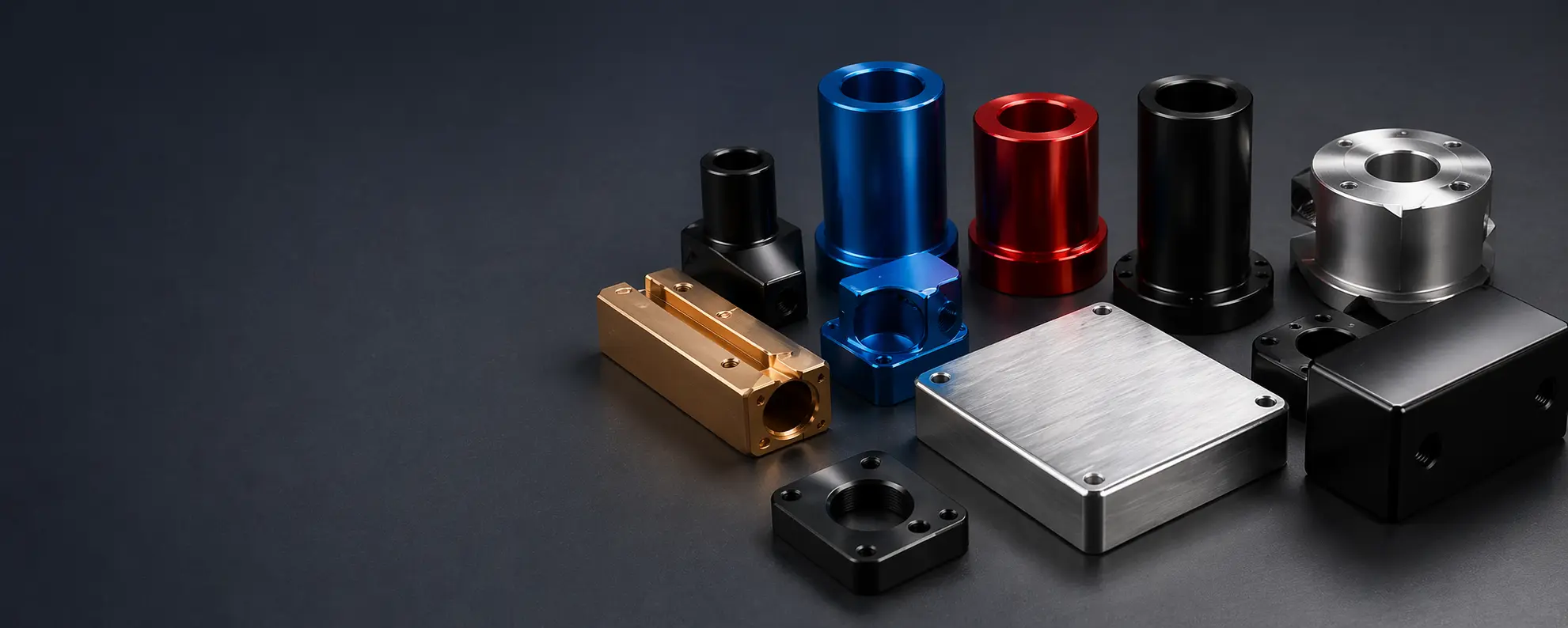
Send the part with the alloy and whether the surface must conduct or be painted, and request a conversion coating quote with the intended function stated.
FAQ
How does chromate conversion coating work?
The cleaned aluminium part is immersed in a chemical bath that converts the outer few nanometres of the surface into a mixed oxide film. No current is used and no thick layer forms, so the surface stays conductive while gaining corrosion protection and a good key for paint.
How thick is a chromate conversion coating on aluminum?
It is measured in nanometres, a fraction of a micrometre, which is why it barely affects part dimensions compared with anodizing. The same thinness means it provides no meaningful abrasion resistance.
What is the best protective coating for aluminum?
Anodizing for wear resistance, colour and long-term protection with a small dimensional change; powder coating for durable coloured visible surfaces; chromate conversion where the surface must conduct, be painted, or be protected during storage without altering dimensions.