

Aluminium takes a beautiful satin finish from bead blasting and reacts to it differently from steel in ways that catch people out. It is softer, so the media deforms the surface more deeply; it smears rather than cutting cleanly, so embedded media and contamination become a real risk; and it conducts heat away from the impact zone quickly, which changes how the surface responds. This guide covers what happens to aluminium under blasting, how to keep a thin part straight, how to prepare a surface for anodizing, and what to check on the finished part.
Why does aluminium behave differently under blasting?
It is softer, so the media displaces the surface.
Aluminium deforms plastically under bead impact, which produces a deeper peened layer than the same process would create on steel and makes the metal prone to smearing.
The mechanism explains several effects at once. Steel is hard enough that the beads largely clean and lightly deform the surface. Aluminium yields more readily, so the beads push material aside rather than merely striking it, which produces a softer-looking finish but also a deeper deformed layer and a greater tendency for edge detail to be lost. The metallurgical background for those differences is documented by ASM International.
Smearing is the characteristic failure. Soft metal displaced by impact can be pushed over the surface rather than removed, particularly at the lower end of the pressure range, which can cover contamination instead of cleaning it. A contaminated area that is smeared over looks clean but holds a film of foreign material under the surface, which affects adhesion in any coating that follows.
Heat conduction adds a second factor. Aluminium carries heat away from the impact zone quickly, so the surface does not build up the same local temperature as steel, which changes how the material responds at the surface and is one reason aluminium behaves differently at the same nominal settings.
How is smearing and contamination avoided?
By cleaning before blasting and by controlling pressure.
A clean surface, adequate pressure and light media reduce the chance that a contaminant film is pushed into the metal rather than removed.
Pre-cleaning is the first defence. Oil, machining lubricant, polishing compound and handling contamination should be removed before the part reaches the cabinet, because blasting a greasy surface drives the contamination into the metal rather than lifting it off. Where a part has been machined and handled without cleaning, the smeared result is predictable.
Pressure and media size are the second control. Light media at sufficient pressure clean the surface and produce an even finish; media that are too coarse or a pressure that is too low can both produce a smeared surface, for opposite reasons. Coarse media displace too much material, while low pressure may push contamination across the surface without removing it.
The third factor is the media itself. If the blasting media has been used on steel or on a different alloy, it may carry contamination that transfers to the aluminium. Where a program requires clean results, dedicated media or replacement before the aluminium batch is the practical arrangement, and it is worth confirming with the supplier rather than assumed.
How do peening and thin walls interact?
The surface goes into compression, and thin sections move.
Bead impact induces compressive stress at the surface, and on a thin wall that stress is enough to bow or distort the part even though little material is removed.
The effect is proportional to the energy delivered per unit area, which means pressure, distance and dwell time all contribute. A thin panel that is blasted at the same setting as a heavy machined block will curl toward the blasted side, because the surface on that side has been expanded relative to the other. The distortion is real and it is not corrected by further processing.
Three measures manage it. Reducing pressure reduces the energy per impact and the resulting stress. Blasting from both sides where the geometry allows balances the effect and leaves the part flat. And supporting the part from behind, on a flat fixture or a bed of media, prevents it from deflecting during the process rather than correcting it afterwards.
Where a part has both a thick and a thin section, the two will respond differently, and the practical answer is often to blast the part at a setting chosen for the thin section and accept a lighter finish on the thicker area. That decision is worth making with the finishing shop rather than arriving as a specification that cannot be met.
Which media and pressure suit aluminium?
Fine beads at reduced pressure, controlled by sample.
Glass beads in the finer grades, applied at a pressure below what would be used on steel, produce a uniform finish without embedding or distorting the part.
The media choice follows the finish required rather than the material alone. A fine bead produces a subtle satin surface appropriate for cosmetic machined parts and for preparation before anodizing. A coarser bead produces a stronger matte texture, which is sometimes wanted for design reasons but carries a higher risk of edge deformation and of local distortion on thin sections.
Ceramic beads are harder and can be used where a slightly more aggressive result is required, but the increased hardness relative to aluminium makes the process less forgiving, and the finish may show more variation. Angular media are generally unsuitable for aluminium where appearance or dimensions matter, because the cutting action produces a rough surface and removes material from every exposed face.
The practical rule is to produce a sample before a batch. Aluminium’s response to blasting depends on the alloy and temper as well as on the media and pressure, so a finish approved on one grade may look different on another, and the sample is what establishes the reference the batch will be judged against.
| Effect | Cause | Control |
|---|---|---|
| Smearing | Soft metal displaced rather than removed | Clean before blasting; correct media and pressure |
| Embedded contamination | Residues driven into the surface | Pre-clean; dedicated media |
| Thin-wall distortion | Peening induces surface compression | Lower pressure; support; blast both sides |
| Edge rounding | Edges lose definition under impact | Mask functional edges |
| Uneven finish across sections | Different thermal and mechanical response | Set parameters for the thinnest section |
How is aluminium prepared for anodizing or powder coating?
Blasting sets the texture the finish will show.
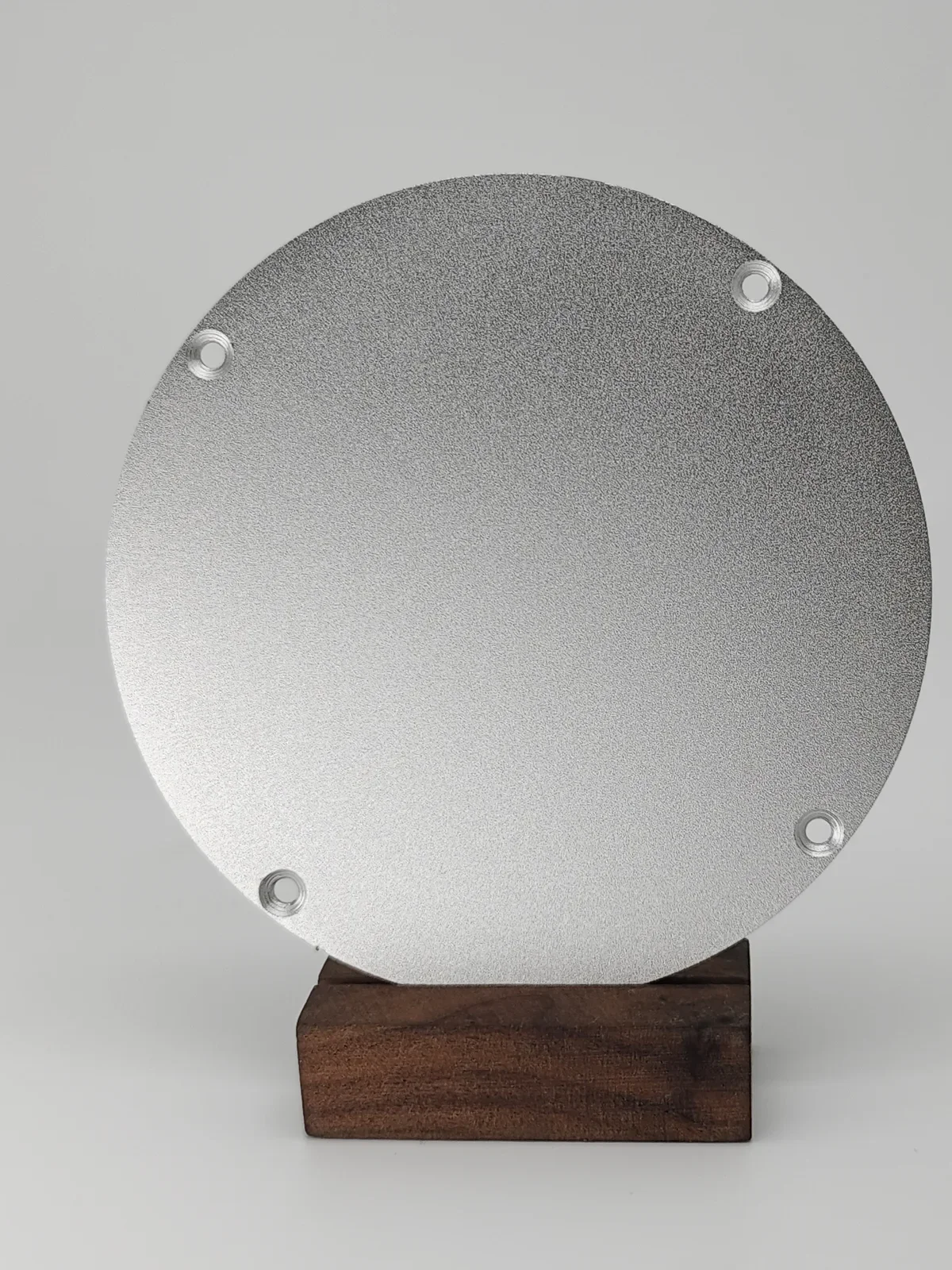
Because anodizing grows from the blasted surface, the texture produced by blasting becomes the texture of the finished part, which makes the two processes a single specification.
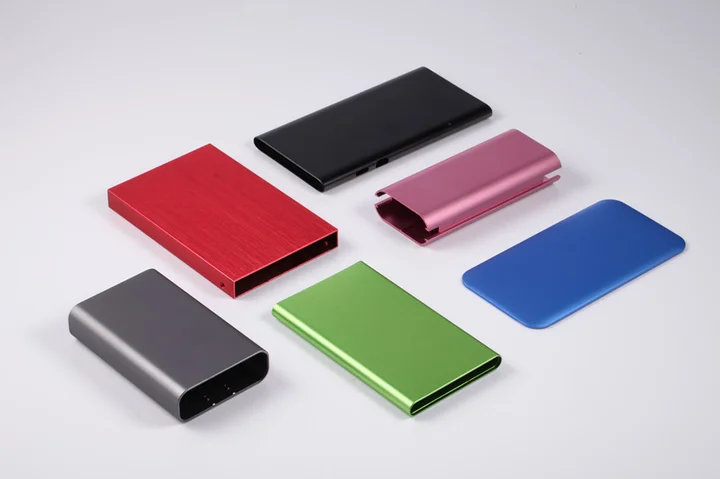
For anodizing, a fine uniform bead blast produces a soft satin finish that is often chosen for instrument panels, enclosures and visible aluminium components. A coarser blast produces a more pronounced matte appearance, and the choice has to be made with the anodized result in mind, because the coating will amplify the texture rather than hide it. Colour behaves similarly: a dyed anodized finish reads differently on a blasted surface than on a polished one.
For powder coating, blasting serves as preparation rather than as the visible finish, since the coating covers the surface. Its purpose is to remove contamination and provide a key, and the profile needed is moderate. A gentle bead blast is usually sufficient on aluminium, and the coating’s own pretreatment chemistry does the rest.
In both cases the blasted part must be handled carefully before the next process. Aluminium is soft and the blasted surface is easily marked, and a fingerprint or a scratch on a freshly blasted surface shows through an anodized finish, because the coating follows the substrate. Gloves and immediate progression to the next operation are the practical responses.
How are masking and acceptance handled?
Mask what must stay exact; judge against a reference.
Threads, bores, sealing faces and functional edges are masked, and appearance is assessed against an approved sample rather than against a description.
The masking list on an aluminium part usually includes more features than on a steel equivalent, because aluminium’s softer surface loses definition faster. Threads are the common case, since media embedded in a thread flank affects the fit, and bores and sealing faces follow. Functional edges, such as a scraper or a locating lip, are protected because peening rounds them.
Acceptance then has two parts. The functional check confirms that the masked features are unchanged and that the part still assembles. The appearance check compares the blasted surface with a reference sample under a defined light, because a satin finish reads differently in different conditions and a verbal description cannot resolve a disagreement.
Where the part will be anodized, the reference should be approved after anodizing rather than after blasting, since the coating changes the appearance. That single adjustment removes most of the disputes that arise when a customer approves a blasted sample and then rejects the anodized part. 6CProto provides quality inspection reports on request and assigns a dedicated project manager to each order, so the reference and the masking list can be agreed before the batch runs, with surface preparation practice described in ASTM D3359, the coating framework published by ASTM committee B08, and spent media and blasting dust handled under the framework published by the US Environmental Protection Agency.
Specifying bead blasting on aluminium
The specification should describe the finish required, name the media family, list the features to be masked and set out what happens next. Those four items are what allow the blasting parameters to be chosen sensibly rather than by habit, and they make the result comparable across batches.
Two habits prevent the common failures. Clean the parts before they reach the cabinet, because blasting a contaminated aluminium surface drives the contamination into the metal. And approve the reference after the coating is applied, because anodizing and powder coating both change how the blasted texture reads. Where the part is thin or has mixed sections, add a note about distortion so the pressure and support can be set accordingly. The aluminium grades available are listed on the aluminium material page, and the blasting routes in the surface finish guides.
FAQ
Can you bead blast aluminium?
Yes, and it produces an attractive satin finish when the process is controlled. Aluminium is soft, so the media deform the surface more than they would on steel, which means the parameters have to be chosen for the material rather than copied from a steel job. Fine beads at reduced pressure are the usual starting point, and a sample before the batch confirms the result.
Why does blasted aluminium sometimes look smeared?
Smearing happens when the media displace soft metal across the surface instead of cutting or cleaning it, which can cover contamination rather than removing it. It is associated with a contaminated surface, unsuitable media and pressure settings that push material rather than lift it. Cleaning before blasting, using appropriate media and confirming the parameters on a sample are the standard controls.
Does bead blasting distort thin aluminium parts?
It can. The impact puts the surface into compression, and on a thin section that is enough to bow the part toward the blasted side. Reducing pressure lowers the effect, supporting the part from behind prevents it from deflecting during processing, and blasting both sides where the geometry allows balances the stresses. Where a part is very thin, a gentler process or a different finish may be the better answer.
Should a blasted aluminium part be approved before or after anodizing?
After, because the anodized coating follows the blasted texture and changes how the surface reads. A sample approved after blasting may look quite different once anodized, particularly if it is dyed. Approving the reference after coating sets the standard that production parts can actually be compared against, and it removes the most common source of dispute in this sequence. The test methods referenced in this article are published by ASTM committee D20.
If aluminium parts need a matte finish or preparation before anodizing, send the model with the masking list and the coating that follows. 6CProto reviews the part together with the finishing route and returns a DFM report with the quote, so media, pressure and handling are matched to the material. Upload the file at the 6CProto quote page or send it to projects@6cproto.com.