

A product team needs a long aluminum rail with a constant cross-section, and the sourcing question splits the room: extrude it and save material, or machine it from bar and save tooling. The answer depends on quantity, features, and tolerance, and it is rarely a clean either-or. Extrusion shapes the material in one continuous process, making long constant-section profiles cheap at volume but requiring a die and limiting feature complexity; machining removes material from bar stock, handling complex features and tight tolerances at low volume but wasting material on long, simple sections. The practical answer is often a mix: extrude the profile and machine the features that need precision.
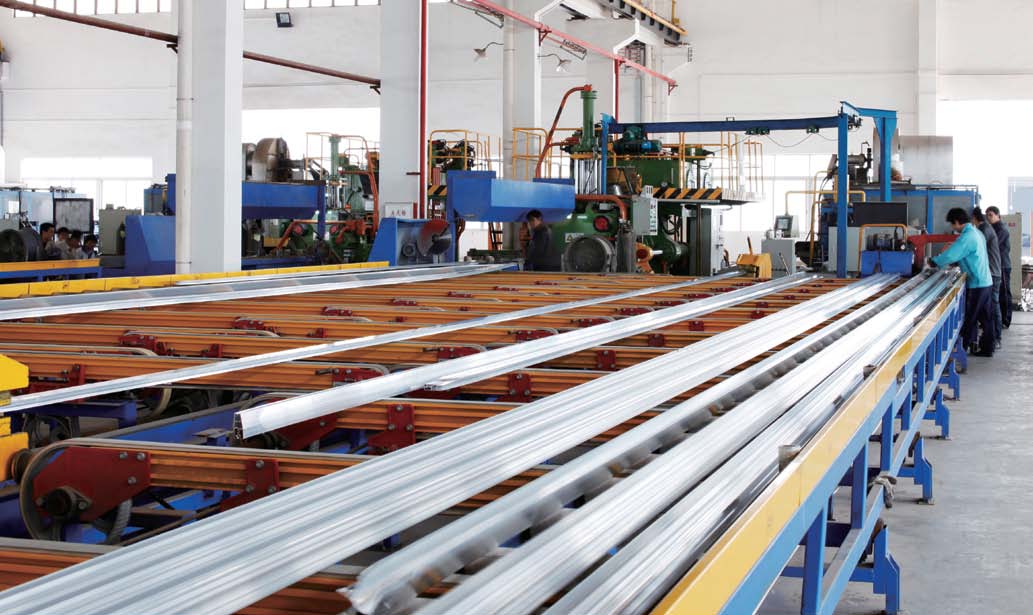
Where extrusion earns its die cost: constant cross-section at volume
Extrusion earns its die cost when the part is a long, constant cross-section produced in meaningful quantity. The die is a one-time investment, and once it is paid, the extrusion process produces the profile continuously at low material cost and high speed. Rails, frames, housings, and heat sinks are the classic cases: their length and their constant section make extrusion the economical route, and the secondary machining is limited to cut lengths, holes, and end features. The economics improve with length and quantity because the die cost amortizes across more material, and the extrusion tolerance is sufficient for the profile’s nonfunctional surfaces.
The die cost also buys design freedom within the section: wall thicknesses, hollows, slots, and fins can be built into the profile, eliminating the machining that would create them from bar. The profile design guide covers the geometry; the decision here is whether the quantity and the section justify the die.
When bar-stock machining wins: features, tolerances, and low volume
Machining from bar wins when the part is low volume, has complex or non-constant features, or needs tolerances that extrusion cannot hold. A part that is mostly one shape but changes section along its length cannot be extruded as a single piece, and a feature with a tight tolerance or a precise relationship to another feature is better machined. Machining also avoids the die investment entirely, which makes it the right route for prototypes, one-offs, and parts whose design is still changing. The material waste on long, simple sections is the cost of that flexibility, and the machining time grows with the amount of material removed.
For a short run of a constant-section part, machining can be cheaper than paying for a die; the crossover quantity depends on the section complexity, the length, and the machining time, and it should be calculated rather than assumed.
Mixed routes: extrusion plus secondary machining
Most real parts use both processes: the profile is extruded for the constant section, then machined for the features that need precision — cut lengths, holes, pockets, threads, and mating faces. The mixed route captures the extrusion’s material and speed advantage and the machining’s precision, and it is the standard answer for rails, frames, and housings that carry machined interfaces. The design should separate the extrusion tolerances from the machined tolerances: the profile holds the section, and the machining holds the functional features, so each process is asked to do what it does best. The machining after extrusion also removes the extrusion tolerance from the critical dimensions, which is why mixed routes appear wherever precision meets length.
The mixed route needs planning for the finish sequence: anodizing after machining coats the machined faces consistently, while anodizing before machining leaves bright cut faces. The tolerance and the finish are designed together.
Tooling cost and lead time compared
Extrusion carries a die cost and a die lead time; machining carries setup and per-part time. The die is a fixed cost that amortizes over the quantity, while machining cost scales with every part, so the comparison is an amortization question: divide the die cost by the quantity and add it to the extrusion part cost, then compare with the machined part cost at the same quantity. Lead time also differs: the die must be designed, cut, and tried before production, while machining can start from stock immediately. A program with an urgent schedule and a small quantity may choose machining even when the long-run economics favor extrusion, and the decision should state which constraint — cost or schedule — drives it.
| Decision factor | Extrusion | Machining from bar | Mixed route |
|---|---|---|---|
| Quantity sweet spot | Volume justifies the die | Low volume, one-offs | Any volume with precise features |
| Section complexity | Built into the profile | Machined as needed | Profile + machined detail |
| Precision features | Limited | Best | Machined where needed |
| Tooling investment | Die cost | Setup only | Die + machining setup |
The table frames the comparison; the numbers come from quoting the same part both ways at the actual quantity.
A decision path for rails, housings, and frames
Use the part to walk the decision. Is the section constant along the length? If no, machining or a mixed construction is needed. Does the quantity justify a die? If no, machining from bar or stock shapes. Are there precise features that extrusion cannot hold? If yes, add machining to the extruded profile. The path usually ends at the mixed route for production parts: extrude the section, machine the interfaces, and anodize or finish at the right point in the sequence. The extrusion-vs-machining debate is resolved by separating the profile from the features, and by letting each process hold what it can hold best.
Quoting the same part two ways
The decision method is a quote exercise, not a debate. Take the rail, housing, or frame and ask for three quotes: extruded with the profile drawn, machined from bar or plate, and extruded plus machined for the precise features. At a quantity of fifty, the machining quote may win because the die cost has no volume to amortize; at five hundred, the extrusion or mixed quote usually wins because the die is spread across more parts and the material cost is lower; at five thousand, the mixed route is almost certainly the answer, with the profile extruded and the interfaces machined. The crossover quantity depends on the section complexity, the length, and the machining time, and the only way to find it is to quote the routes at the actual quantities. The quote exercise also reveals the non-price differences: the extrusion lead time includes the die, the machining quote starts immediately, and the mixed route carries both. The schedule and the cost are compared together, and the decision is made from the numbers, not from the vendor’s preferred process.
The same exercise should include the finish and the assembly. An extruded profile that will be anodized after machining behaves differently from a machined bar that is anodized after cutting, and the finish sequence is part of the route decision. A frame that will be welded or bolted may need the extrusion’s section and the machining’s precision in the same part, which is the mixed route by definition. The quotes should state the finish sequence and the assembly features, so the comparison covers the full manufacturing path rather than the raw profile or the raw machining. When the routes are quoted on the same scope, the extrusion-versus-machining decision becomes a straightforward program choice.
The three-quote exercise also surfaces the non-obvious costs. The extruded route carries the die amortization and the profile’s minimum order, which can force the buyer to purchase more material than the program needs; the machined route carries the material waste on long sections and the machine time; and the mixed route carries both but allocates them where they pay. The exercise should include the minimums and the waste, because a quote that ignores the extrusion minimum or the machining waste understates the real cost. The schedule is part of the same table: the die lead time, the machining lead time, and the mixed route’s combined lead time should be stated, and the program should choose the route that meets the schedule as well as the cost. When the three quotes are compared on cost, minimums, waste, and schedule, the extrusion-versus-machining decision is a complete program choice rather than a process preference.
The design itself can shift the economics. A profile designed with the extrusion process in mind — balanced walls, standard tolerances, and features that the die can produce — quotes lower and machines less than a profile that is simply the machined geometry redrawn as an extrusion. The design-for-extrusion review belongs before the quote exercise, because it changes the numbers that the exercise compares. Conversely, a machined part designed with bar-stock machining in mind — accessible features and standard tool sizes — quotes lower than one that assumes the process will adapt. The process decision and the design review feed each other, and the program that runs them together finds the route that the geometry and the quantity support.
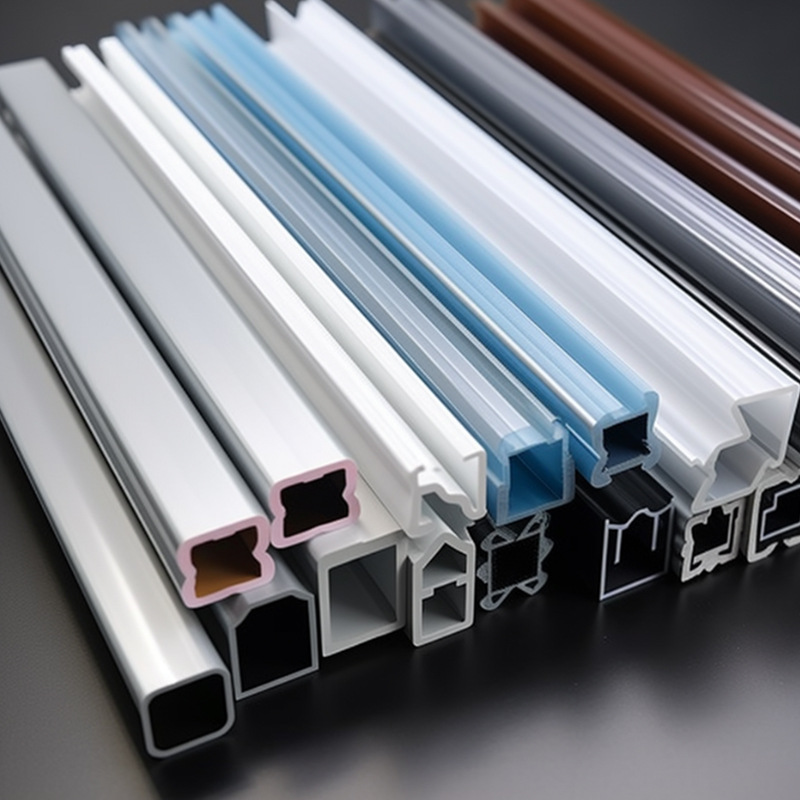
If you are choosing between extrusion and machining for a rail, housing, or frame, the 6CProto custom extrusion and CNC teams can quote the same part both ways — and the mixed route — so the decision is based on your quantity and your features, not on a vendor’s default.