
Bronze CNC Machining Services — Custom Bronze Parts & Alloys
6CProto provides CNC turning and multi-axis milling for custom bronze components, including C93200, C83600, C95400, C95500, C86300 and C51000. Send the exact alloy, stock form, critical features, finish, quantity and inspection needs; our team will review the manufacturing route before quoting.
- Drawing-specific tolerance review
- Exact UNS grade and stock-form check
- Prototype and repeat-order support
- Inspection scope confirmed at quote
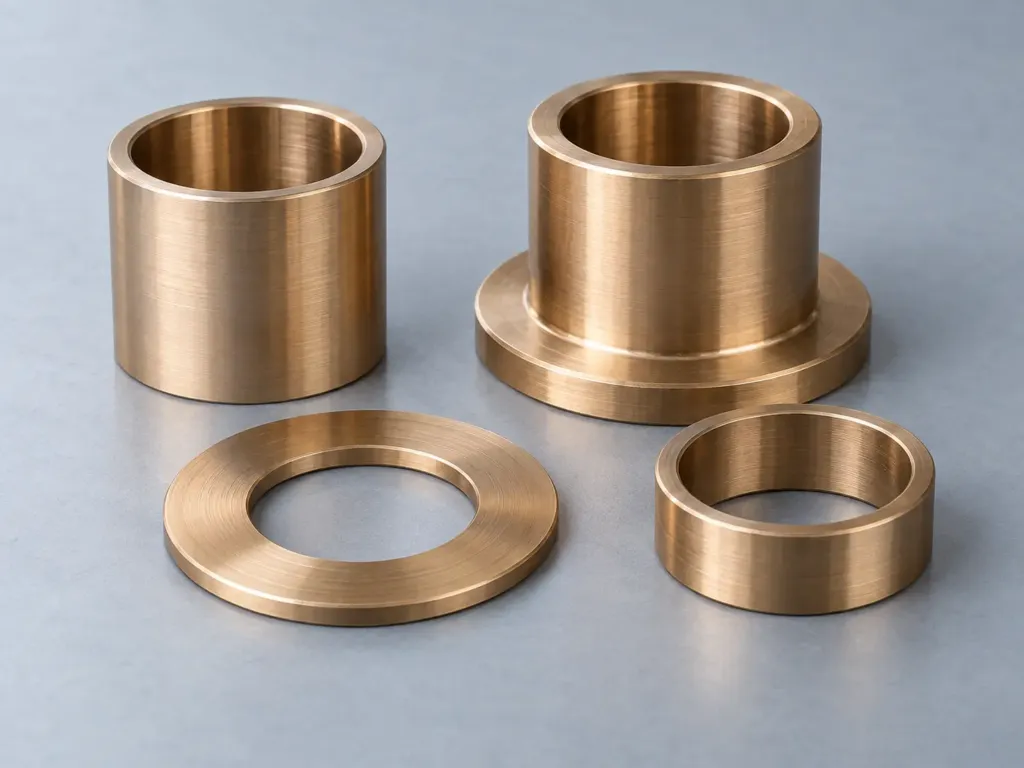
Bronze CNC Machining at a Glance
Bronze alloys are often selected for bearing surfaces, wear parts, gears, valve and pump components, electrical springs and selected marine hardware. Performance depends on the ordered grade, mating material, lubrication, alignment and environment, so the material callout must stay tied to the application rather than to the word “bronze” alone.
For a useful RFQ, identify the bore or running surface, mating component, critical datums, surface finish, quantity and any certificate or inspection requirement. 6CProto can then review wall thickness, tool access, workholding and finishing with the quotation. Material substitutions remain subject to your engineering approval.
| Material family | Copper-alloy family including tin, aluminum, manganese, phosphor and leaded bearing bronzes; order by exact grade |
| Grades we machine most | C93200 (SAE 660), C83600, C95400, C95500, C86300, C51000, C52100, C54400 |
| Machining processes | 3-, 4- and 5-axis CNC milling, CNC turning and turn-mill centres, EDM, tapping and thread milling |
| Standard tolerance | Drawing-specific; selected features may be achievable around ±0.02 mm after geometry and inspection review |
| Surface finish | Specified and quoted by feature; achievable roughness depends on alloy, stock form, tool path and finishing |
| Minimum wall thickness | Reviewed case by case for unsupported length, alloy, stock form and workholding |
| Order quantity | Prototype, pilot and repeat quantities; final scope is confirmed in the quotation |
| Lead time | Confirmed after alloy availability, geometry, quantity, finish and documentation review |
| Quality documentation | ISO 9001:2015 quality system; certificates and dimensional reports available when specified and quoted |
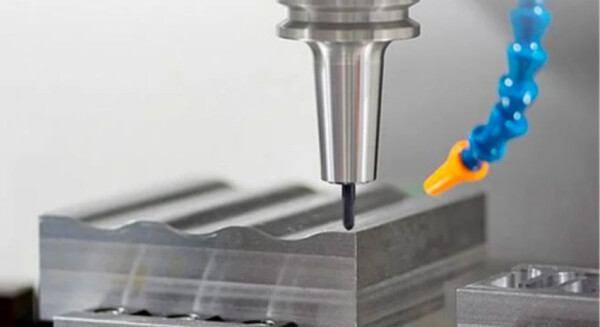
Need a bronze grade that is not listed here? RFQs may also specify C93700, C90500, C89833, C63000 or equivalent European designations such as CuSn7Zn4Pb7-C (CC493K) and CuAl10Fe5Ni5-C (CC333G). Send your drawing with the standard you are working to and we will confirm availability and machinability.
Bronze Alloys We Machine for Custom Parts
Bronze is a family, not a single material. The alloying additions decide whether a part slides, resists seawater or carries load — so the grade you pick matters more than the machining itself. The table below compares the bronze grades we machine most often. Not sure which one fits? Send the application and we will recommend a grade before you commit to a drawing.
| Alloy | Also known as | Typical composition | Tensile strength | Hardness | Machinability | Typical parts |
|---|---|---|---|---|---|---|
| C93200UNS C93200 | SAE 660 bearing bronze | Cu – 7 Sn – 7 Pb – 3 Zn | 240 MPa (35 ksi) | 70 HB | Excellent | Sleeve bearings, bushings, thrust washers, pump and gearbox parts |
| C83600UNS C83600 | 85-5-5-5 valve bronze, leaded red brass | Cu – 5 Sn – 5 Pb – 5 Zn | 255 MPa (37 ksi) | 60 HB | Excellent | Valve bodies, pump housings and fittings; verify lead and potable-water compliance |
| C95400UNS C95400 | Aluminium bronze | Cu – 11 Al – 4 Fe | 586 MPa (85 ksi) | 170 HB | Moderate | Bushings, worm wheels, valve seats, marine hardware, wear plates |
| C95500UNS C95500 | Nickel-aluminium bronze | Cu – 11 Al – 4 Ni – 4 Fe | 660 MPa (96 ksi) | 190 HB | Moderate | Seawater pumps, propellers, valve trim, offshore and desalination parts |
| C86300UNS C86300 | Manganese bronze | Cu – 25 Zn – 6 Al – 3 Mn – 3 Fe | 758 MPa (110 ksi) | 210 HB | Moderate | Worm gears, heavy-duty bearings, hydraulic bushings, cams, valve stems |
| C51000UNS C51000 | Phosphor bronze, 5% tin | Cu – 5 Sn – 0.2 P | 483 MPa (70 ksi) | 150 HB | Good | Springs, electrical contacts, bearings, bellows, marine fasteners |
| C52100UNS C52100 | Phosphor bronze, 8% tin | Cu – 8 Sn – 0.2 P | 550 MPa (80 ksi) | 180 HB | Good | Heavy-duty springs, wear plates, bushings, contact springs |
| C54400UNS C54400 | Leaded phosphor bronze | Cu – 4 Sn – 4 Pb – 4 Zn – 0.1 P | 340 MPa (50 ksi) | 80 HB | Excellent | Bearings, bushings, gears, screw-machine and electrical parts |
| C22000UNS C22000 | Commercial bronze, 90/10 | Cu – 10 Zn | 275 MPa (40 ksi) | 60 HB | Excellent | Architectural trim, nameplates, hardware, decorative parts |
Alloy reference: Review Copper Development Association data for C93200, C95400 and C86300. These sources support material identification and selection discussions; the purchase specification and mill certificate control the order.
A note on naming: UNS C22000 is a copper–zinc alloy and is metallurgically a brass, even though it is sold commercially as “commercial bronze”. If a specification calls it out by that name, we will machine it — just be aware that it will not give you the wear or seawater performance of a true tin bronze.
Bronze Grade Data Sheets
These are the bronze grades that cover the large majority of custom part enquiries we receive. Values are typical figures for the standard temper or as-cast condition; forgings, continuous cast bar and centrifugal castings differ slightly.
C93200 — Bearing Bronze
SAE 660
C83600 — Valve Bronze
85-5-5-5 · Leaded Red Brass
C95400 — Aluminium Bronze
UNS C95400
C95500 — Nickel-Aluminium Bronze
UNS C95500
C86300 — Manganese Bronze
UNS C86300
C51000 — Phosphor Bronze
5% tin · UNS C51000
Material certificates, first-article reports, dimensional results and traceability can be included when specified and confirmed in the quotation. Tell us which standard you are working to — ASTM, EN, DIN, JIS or your own specification — and we will confirm the grade and documentation before production starts.
Bronze vs. Brass vs. Copper: Which Should You Specify?
All three are copper alloys, and that is where the similarity ends. The alloying element decides the mechanical behaviour, the corrosion performance and how easily the material machines — which in turn decides the cost of your part.
| Property | Bronze | Brass | Copper |
|---|---|---|---|
| Main alloying element | Tin, plus aluminium, manganese or phosphorus in high-performance grades | Zinc | None — 99.9%+ pure copper |
| Colour | Reddish-brown to golden brown; develops a dark patina | Bright yellow-gold | Orange-red; turns green as it weathers |
| Strength & wear resistance | Highest of the three — the standard choice for sliding wear surfaces | Moderate; fine for machined hardware | Low to moderate; work-hardens quickly |
| Corrosion resistance | Excellent, especially aluminium and nickel-aluminium bronze in seawater | Good in fresh water; dezincifies in salt water | Excellent in marine and atmospheric exposure |
| Machinability | Excellent to moderate, depending on grade | Excellent — the best of the three | Poor to moderate; gummy and prone to tearing |
| Electrical conductivity | Low (roughly 7–15% IACS) | Moderate (about 28% IACS) | Extremely high (up to 101% IACS) |
| Weldability | Limited — brazing and soldering preferred | Good, but zinc fume and dezincification need care | Good weldability |
| Typical uses | Bearings, bushings, worm gears, valves, pumps, marine and architectural parts | Fittings, valves, connectors, plumbing and decorative hardware | Busbars, heat exchangers, RF shielding, electrodes, gaskets |
| Relative material cost | Moderate to high, driven by tin and nickel content | Low to moderate | High and volatile |
How to choose in three questions ?
- Does the part slide, rotate under load, or see seawater? Specify bronze. Start with C93200 for bearings and bushings, C95400 or C95500 for seawater, and C86300 where the load is high enough to break a tin bronze.
- Is it mainly a fitting, connector or decorative part that has to machine fast and cheap? Specify brass. It cuts faster than any bronze and costs less, as long as corrosion is not severe. See our brass material page for grades and finishes.
- Is conductivity or heat transfer the primary function? Specify copper. Bronze sacrifices conductivity for strength and wear resistance, so it is the wrong answer for a busbar or a heat sink.
- Still not sure? Send your drawing and application notes. We will tell you which grade gives the best cost-to-service-life ratio, and we will say so if a cheaper material would do the job.
Bronze Parts Machining Capabilities & Tolerances
Most commonly used bronze alloys offer good machinability. However, machining performance varies depending on the alloy grade, material condition, part geometry, and dimensional requirements. We develop appropriate machining processes based on your drawings, material specifications, and quality requirements to achieve consistent dimensional accuracy and surface quality.
| Machining processes | 3-axis, 4-axis, and 5-axis CNC milling, CNC turning, mill-turn machining, EDM, tapping, and thread milling |
| Standard tolerance | Tolerances are evaluated based on part size, geometry, and inspection requirements. For suitable features, critical dimensions can be controlled to ±0.02 mm. Final tolerances are subject to drawing requirements and engineering review. |
| Surface roughness | Achievable surface roughness depends on the bronze alloy, part geometry, toolpath, and finishing process. Specific surface finish requirements are evaluated according to the drawing. |
| Minimum wall thickness | Thin-wall features can be machined. Minimum achievable wall thickness is evaluated based on alloy grade, wall height, unsupported length, part dimensions, workholding method, and tolerance requirements. |
| Threads | Metric M, Unified UNC/UNF, and pipe threads including NPT, BSPP, and BSPT. Threads can be produced by tapping, thread milling, or single-point threading. |
| Surface finishes | Sandblasting, brushing, mechanical polishing, electroplating, chemical coloring, anti-oxidation / anti-tarnish treatments, and clear protective coatings, depending on the alloy and customer requirements |
| Order quantity | No MOQ. We support prototypes, one-off parts, low-volume, and volume production. |
| Lead time | As fast as 5 days, depending on material availability, part complexity, quantity, surface finishing, and inspection requirements. |
| Inspection | ISO 9001:2015 — incoming material inspection, first article inspection, in-process and final inspection |
Milling and turning under one roof
Turn-mill centres let us produce a bronze bushing with cross-holes, flats and a groove in a single setup, so concentricity is held between features instead of being stacked up across operations.
Inspection you can file
Define the required dimensional report, material evidence, surface-roughness data and sampling plan in the RFQ. Availability and report format are confirmed before the order is accepted.
Complete RFQ, clearer quotation
Send a STEP model, controlled 2D drawing, material callout, quantity, finish and inspection requirements. 6CProto will return pricing, manufacturability notes and a quoted schedule after review.
Design Guidelines for Bronze CNC Parts
Bronze is forgiving to machine, but a handful of design decisions separate a part that runs for a decade from one that starts wearing in weeks. These are the points our engineers raise most often in DFM reviews of bronze components.
- Choose a leaded bronze when machinability matters most. C93200 and C83600 cut cleanly at high feed rates and give the best surface finish per dollar. Reserve the harder aluminium and manganese bronzes for parts that genuinely need their strength.
- Plan for work hardening, not built-up edge. Bronze work-hardens readily, so use sharp, positive-rake carbide tooling and keep the feed steady. Dwelling on a bronze surface polishes it instead of cutting it, which dulls the finish and burns the tolerance.
- Review thin or unsupported walls early. Minimum practical wall thickness depends on the alloy, stock form, unsupported length and workholding. A rib or local thickness increase may reduce distortion and setup cost.
- Design bushings for running clearance, not a press fit. For a bronze sleeve bearing in continuous duty, allow roughly 0.001–0.002 in of clearance per inch of shaft diameter so the part can form a lubricating film instead of seizing.
- Round internal corners. A corner radius of at least one third of the pocket depth lets a standard end mill reach the floor. Sharp internal corners push the part into EDM and multiply the cost.
- Keep holes and threads standard. M, UNC, UNF, NPT and BSP threads are all available, but deep small-diameter holes are slow and prone to tool breakage. Where you can, keep hole depth to about four times the diameter.
- Mark the wear surface on the drawing. Bronze parts usually have one critical sliding face. Calling it out lets us control finish and tolerance exactly there and machine the rest economically — you get the same service life for less money.
- Flag any part that will be joined. Most bronzes are poor welding candidates, so tell us at quoting if the part is a weldment or an assembly. Brazing, silver soldering or a press-fit joint is usually the right answer, and it changes the design.
Surface Finishes and Post-Processing for Bronze Parts
Bronze is often specified for how it looks as much as how it performs — so the finish is part of the design, not an afterthought. We offer the full range below in-house or through our vetted finishing partners, with the same inspection standard applied after finishing as before it.
As machined
A clean, functional finish straight off the machine, typically Ra 0.8 µm (32 µin). The best value for bronze parts where appearance is not critical.
Bead blasting
A uniform matte surface that removes tool marks and blends machined faces. Popular for bronze housings, handles and consumer-facing parts.
Brushed and satin
A directional grain finish that hides fingerprints and light scratches. A common specification for architectural and decorative bronze hardware.
Polished and mirror polish
Removes all visible machining marks for a deep reflective surface. Used on bronze sculptures, instrument parts, jewellery and optical components.
Electroplating
Nickel, chrome, tin or silver plating applied to bronze for added wear resistance, solderability or a specific appearance.
Chemical patina and antiquing
Controlled chemical conversion that produces the classic brown, black or green bronze patina specified for architectural and artistic parts.
Clear lacquer and anti-tarnish
Seals a polished or patinated bronze surface and slows natural oxidation, so the appearance stays consistent over time.
Powder coating
A durable coloured polymer finish for bronze parts that are handled frequently or exposed to weather.
Laser marking and engraving
Permanent part numbers, logos and traceability marks applied directly to machined bronze components.
A common misconception worth clearing up: anodizing is an electrochemical process for aluminium and titanium and does not apply to bronze. If a drawing specifies “anodized bronze”, what is usually wanted is nickel plating, a chemical patina or a clear protective coating. Tell us the environment and the appearance you need and we will recommend the right process — then confirm it on a sample before the full run.
Why Engineers Choose 6CProto for Bronze Machining
Prototype and repeat-order support
6CProto supports prototype, pilot and repeat-order work. The manufacturing route, inspection level and price are planned around the quoted volume.
Drawing-led manufacturability review
A complete RFQ allows the team to review wall thickness, tool access, material callout, critical fits and reporting needs with the quotation.
ISO 9001:2015 quality control
Quality requirements are planned from the drawing and purchase order. Material certificates, first-article and dimensional reports can be included when specified and quoted.
Lead time confirmed per RFQ
The schedule is confirmed after stock availability, geometry, quantity, finishing and documentation have been reviewed.
Flexible manufacturing planning
Process selection and capacity are planned for the part geometry, target quantity and required controls, with one quoted scope for the customer.
Export project communication
English-language project communication, export packing and tracked shipping can be included in the quoted delivery plan.
Bronze Part Applications and Industries
Bronze earns its place in a design because of what happens at the contact surface: it absorbs shock, tolerates marginal lubrication and refuses to gall against steel. Those properties drive the applications below, and they are the reason bronze parts often outlast the equipment they were fitted to.
Pump and valve internals
Valve bodies, seats, stems, impellers, gland bushings and stuffing boxes in C83600, C95400 and C95500.
Bearings and bushings
Sleeve bearings, flanged bushings, thrust washers and wear plates in C93200 and C54400, turned and finish-bored to clearance.
Worm gears and power transmission
Worm wheels, gear blanks, cams and high-load transmission parts in C86300 and C95400.
Marine and offshore
Seawater pump components, propeller hardware, deck fittings and subsea parts in C95400 and C95500.
Electrical and instrumentation
Contact springs, connector bodies, terminals and shielding parts in C51000 and C52100 phosphor bronze.
Aerospace and defence
Bushings, wear parts and fluid-system components machined to print with full traceability and inspection data.
Medical and dental
Instrument components, sterilizable fittings and precision mechanical parts in lead-free bronze grades.
Robotics and automation
Low-friction joints, bushings, gripper components and linear-motion wear parts.
Typical bronze parts we machine include sleeve and flanged bushings, thrust washers, worm wheels, valve bodies and seats, pump impellers, glands, cams, gear blanks, contact springs, bellows, marine fasteners, hydraulic cylinder bushings and decorative architectural hardware. If your part is not on the list, it almost certainly still fits our process — send the drawing and we will confirm.
How to Order Custom Bronze Parts
Four steps from CAD file to parts at your door. A complete RFQ lets the team return pricing, manufacturability notes and a realistic schedule with fewer clarification cycles.
STEP 01
Upload your CAD file
Send a STEP, IGES, X_T or SolidWorks file, plus a 2D drawing if you have one. Material, tolerance, finish and quantity are all we need to start.
STEP 02
Get a quote and DFM notes
A project engineer reviews the manufacturing requirements and returns pricing, manufacturability notes and the quoted schedule.
STEP 03
Approve and we machine
Review the quote and the DFM notes, place your order, and production starts in our Zhongshan facility or at a vetted partner plant.
STEP 04
Parts shipped to your door
After machining, the quoted finishing and inspection steps are completed before export packing and tracked shipment.