

A small order does not automatically belong in a silicone mold. Fifty attractive cast housings can answer an appearance question while leaving the production-resin question open. In a purchasing discussion about urethane casting vs injection molding, ask what the delivery must prove before asking which process should make it.
What each process proves
Choose urethane casting or injection molding for ten to one hundred cosmetic parts by the evidence required, actual resin, geometry, appearance, durability, revision outlook, and tooling scope. Casting can support defined prototype objectives; molding can address the specified thermoplastic route. Approve representative samples and distinguish appearance acceptance from material and production-process validation.
Buyer: Are we buying a display model, a functional trial, or production evidence? Start with that question. A display housing may prioritize color, texture, seams, and assembly fit. A functional trial may add repeated handling, fastener retention, heat, or chemical exposure. A production release may require the designated resin and a representative molding configuration.
Engineer: Can the cast material represent the intended plastic? Sika’s vacuum-casting overview describes polyurethane systems that simulate thermoplastic properties. Simulation of selected characteristics does not establish identical composition, processing history, or behavior. Record which questions a surrogate can answer and which remain open.
Name the proposed resin, hardener, pigment, finish, and relevant conditioning. Request the applicable data sheet and confirm the actual processing route. Neither a material nickname nor a process label establishes a supplier’s supported capability for your part.
Cosmetic durability
Buyer: Will the finish remain acceptable after use? Define use before accepting a cosmetic sample. Identify handling points, mating surfaces, cleaning agents, light exposure, packaging contact, and the intended inspection condition. Separate a visible scratch, color shift, coating failure, and substrate damage instead of combining them as a general durability score.
For opaque color comparison, the public scope of ASTM D1729 identifies controlled visual appraisal. Agree the reference, lighting, viewing arrangement, and acceptable difference through an applicable procedure. A photograph is useful for locating an issue but should not silently replace the approved physical appearance reference.
If the part is coated, the public scope of ASTM D3363 concerns pencil hardness of organic films. It is not a universal lifetime or abrasion rating for an uncoated polyurethane housing. Select a method that fits the actual coating and damage mechanism, then document the agreed limits and specimen condition.
Check texture, gloss, edge treatment, parting-line cleanup, and any visible gate or repair area separately. Test the delivered combination of resin, pigment, surface preparation, and coating. Passing a bare-resin check does not establish the behavior of a painted assembly.
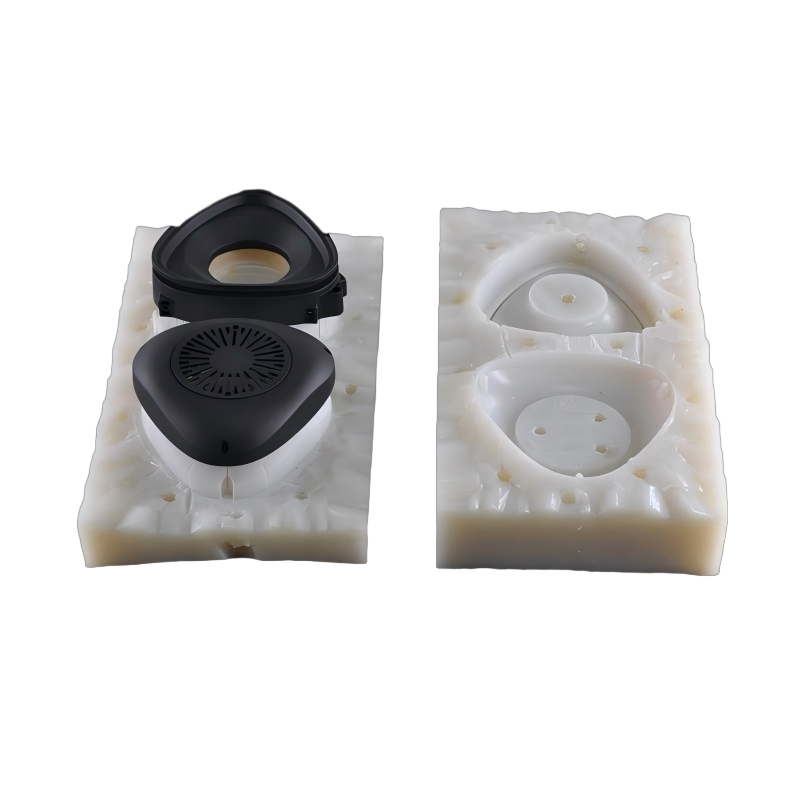
Table: 10–100 decision
Buyer: What should the comparison quote contain? Give both proposed routes the same accepted-part objective. Ask each supplier to state deviations and the evidence included. The table is a decision worksheet, not a promise of price, tool life, or a universal quantity crossover.
| Order question | Urethane casting proposal | Injection molding proposal | Decision evidence |
|---|---|---|---|
| Purpose | Defined visual or functional prototype objectives | Defined thermoplastic and molding objectives | Written test and acceptance purpose |
| Material | Named casting resin system and finish | Named molding resin, color and additives | Data sheets and agreed differences |
| Geometry | Master, mold split, filling and demolding review | Tooling, draft, gates, ejection and molding review | Approved geometry and exceptions |
| Appearance | Master quality, cleanup, pigmentation or coating | Tool surface, resin color and molding marks | Representative physical reference |
| Repeat demand | Replacement master or mold assumptions | Tool ownership, maintenance and repeat scope | Written repeat-order proposal |
| Revisions | Effects on master, molds and finishing | Effects on tool, trials and records | Controlled change proposal |
For a hypothetical fifty-piece order, consider whether every piece shares one design and color or whether the order includes changing variants. Those are different scopes even at the same quantity. Define sample approval, acceptable variation, inspection, packaging, and disposition of rejected parts before comparing totals.
When CNC is still better
Engineer: Is the choice limited to these two routes? No. CNC can remain a candidate when accessible geometry and the required stock material suit the trial, or when a small set of precise interfaces needs separate investigation. Review cutting access, fixturing, internal features, joining, appearance, and inspection rather than assuming every housing can be machined as one piece.
A machined plastic sample also has a material and manufacturing history. It does not automatically reproduce a molded part’s gate location, weld lines, orientation, residual stresses, or surface texture. Select it because it answers a defined question, then identify the questions still requiring representative molded evidence.
A hybrid trial can use one route for cosmetic covers and another for a critical interface. Keep the assembly configuration and acceptance responsibilities explicit. Additional components introduce their own joints, fit, finish, and handling requirements.
FAQ
These questions address specification details that should be settled before sample approval.
Does an ABS-like casting prove ABS performance?
No. Identify the actual casting resin and evaluate the required properties. A descriptive resemblance is not material identity or qualification evidence.
Is fifty parts a mandatory casting quantity?
No. Fifty is a possible order size, not a process threshold. Compare the purpose, geometry, material, finish, tooling, revisions, and accepted deliverables.
Related process selection notes
Buyer: How do we prevent sample approval from becoming an unsupported production claim? Follow four steps. First, define the decision the parts support and the features that must be representative. Second, freeze the proposed material system, revision, appearance reference, process assumptions, and exceptions. Third, approve the representative finished sample against those criteria. Fourth, review repeat orders or process transfers against the recorded configuration.
Material processing can change the result even within one named system. The SikaBiresin PX 224 technical sheet discusses cure-dependent appearance and evaluating post-cure support on an actual piece. This is a grade-specific example, not a recipe for every casting resin.
Smooth-On’s TASK 9 instructions likewise address moisture-sensitive handling and application suitability. Use the selected material’s current instructions and the supplier’s documented process; do not copy another resin’s mixing or curing parameters into the purchase specification.
Retain the sample identifier, revision, resin system, finish, relevant process condition, inspection result, and approved limitations. If the final production route changes, explicitly review which appearance, fit, durability, and material results still apply.
Internal links and next steps
Send the CAD and drawing, intended use, total quantity and variants, resin requirements, visible surfaces, cosmetic reference, relevant exposures, revision outlook, and required records. Request a comparison of urethane casting, prototype injection molding, and low-volume injection molding against the same acceptance objective.
Request a casting-versus-molding comparison with the prototype purpose and cosmetic acceptance attached. Confirm the proposed material and the evidence included before releasing the order.
FAQ
These questions address specification details that should be settled before sample approval.
Can an attractive sample establish cosmetic durability?
No. Initial appearance and durability are different acceptance questions. Evaluate the agreed handling and exposure conditions on the specified finished system.
Should an approved casting automatically release injection molding?
No. Review the transfer explicitly. The production resin, tool, molding effects, cosmetic boundaries, assembly, and validation scope can require new evidence.