

Electroless nickel is often chosen for corrosion or wear resistance, but on precision parts it is chosen for a different reason: the deposit thickness is predictable across complex geometry, which means the plated part can still meet its drawing.
What plating means in a manufacturing context
Plating is the addition of a metallic layer to a surface, either to change how the surface behaves or to change how it looks. The layer can provide corrosion resistance, wear resistance, electrical conductivity, solderability or a decorative finish, and the choice of metal follows the function. Electroplating uses an electrical current to deposit the metal; electroless plating uses a chemical reaction instead, which removes the current distribution as a variable.
| Requirement | Typical coating family | Why it is selected |
|---|---|---|
| Uniform deposit on complex geometry | Electroless nickel | No current path, so recesses coat like outer faces |
| Hardness and wear resistance | Electroless or hard chrome | Surface hardness in sliding or abrasive contact |
| Barrier corrosion protection | Zinc, nickel, passivated layers | Slower attack in wet or chemical environments |
| Appearance | Nickel, chrome, anodized colours | Cosmetic requirement on visible surfaces |
| Conductivity or solderability | Nickel, gold, tin | Electrical interface requirements |

Why electroless nickel suits precision parts
The deposit forms by chemical reduction at the surface, so it grows wherever the bath reaches rather than wherever current flows best. That means a bore, an internal passage or a recess receives a coating thickness comparable to an outer face, which is what allows a designer to predict the finished dimension. Where the part has one tolerance that must survive plating, the uniform layer is the property being bought.
Precision EN work adds its own requirements. Because the deposit reaches everywhere, masking is needed to protect features that must remain at their pre-plate size; the measurement condition must be stated, since a bore measured before plating is a different number from the same bore after; and the plater has to control the bath closely, because its composition drifts with use and the deposit properties follow it.
Which metals are used for plating
The practical list is short and each metal answers a specific need. Nickel provides hardness, wear resistance and a barrier layer. Zinc protects steel sacrificially, so it continues to protect even where the coating is scratched. Chrome provides hardness and a decorative finish, often as a thin layer over nickel. Tin offers solderability and electrical contact performance, copper provides conductivity and a levelling base layer, and precious metals such as gold serve low-resistance contacts and stable surfaces.
Selection therefore follows the failure the coating is meant to prevent. A part that will corrode in a wet environment needs a barrier or sacrificial layer; a part that will wear needs hardness; a part that carries a signal needs conductivity. Stating the failure mode in the enquiry produces a better coating recommendation than naming a metal and hoping it fits. Material and coating references are published by ASM International.
How many types of plating are there?
Two process families, many material combinations.
The families are electrolytic and electroless, and almost every named plating is a variant within them, defined by the metal or alloy deposited and by the pre-treatment the substrate requires. Chrome, nickel, zinc, tin and copper are all commonly applied electrolytically; nickel can also be applied electrolessly; and coatings such as anodizing are a conversion of the base metal rather than an added layer, which is why they behave differently on a drawing.
That distinction matters more than the count. An added layer changes the part’s dimensions and can be measured as a coating; a conversion layer consumes and changes the base metal. Confusing the two leads to specifications that ask for the wrong measurement method or the wrong tolerance condition, which is why the process family should be named on the drawing rather than only the finish. Coating classification and test methods are published by ASTM Committee B08.
Specifying a precision plated part
A complete specification names the substrate, the coating family and alloy, the thickness or class with its range, the surfaces to mask, any heat treatment, and the condition at which dimensional tolerances apply. Where the coating is functional, the specification should also state the test that demonstrates the function, because a thickness reading does not show whether a coating resists wear or corrosion.
Two details reduce most precision disputes. Naming the measurement points, since coating thickness varies even in an electroless bath at the extremes of a complex part, and stating whether the drawing dimensions apply before or after plating, because a plated bore that measured correctly pre-plate may not assemble afterwards. Drawing conventions follow ASME standards, and process measurement practice is described by the NIST Manufacturing Extension Partnership.
Quality checks and where precision work fails
Inspection covers thickness at the defined points, adhesion by a recognised test, appearance against an agreed standard, and coverage of internal features where those are the reason electroless nickel was chosen. Where the coating carries a wear or corrosion duty, a functional test on a sample is the only direct evidence.
Precision plating usually fails for one of three reasons. Pre-treatment was insufficient on an alloy that needs activation, so the coating adheres poorly. Masking was incomplete, so a feature that should have stayed at its pre-plate size was coated. Or the bath drifted out of its controlled range, so the deposit’s hardness or composition is not what the specification assumed. All three are process control issues rather than inspection ones, which is why the process record matters as much as the report. Bath and waste obligations are set out by the US EPA, and the wider range of finishes is described under surface finishing.
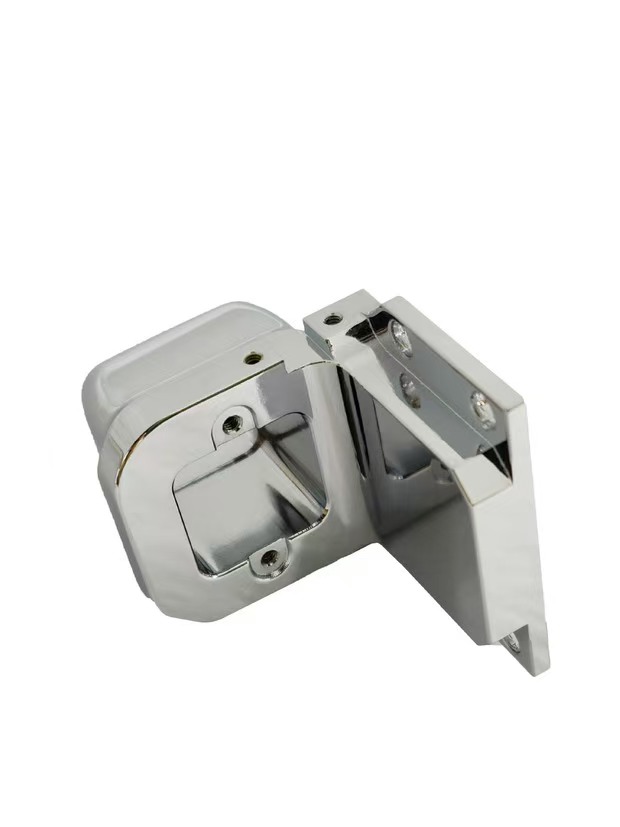
Send the part with the tolerance that must survive plating and the surfaces to mask, and request a precision electroless nickel quote with the measurement condition stated.
FAQ
What does plating mean in manufacturing?
It is the addition of a metallic layer to a surface to change how it behaves or looks, providing corrosion resistance, wear resistance, conductivity or appearance. The layer is applied electrolytically with current or electrolessly by chemical reaction.
Which metals are used for plating?
Nickel for hardness and barrier protection, zinc for sacrificial protection on steel, chrome for hardness and appearance, tin for solderability, copper for conductivity and levelling, and precious metals such as gold for stable low-resistance contacts.
How many types of plating are there?
Two process families, electrolytic and electroless, with many variants defined by the metal deposited and the pre-treatment the substrate needs. Conversion finishes such as anodizing are a separate category, since they change the base metal rather than adding a layer.