

Explore Rapid Prototyping & Low-Volume Guides
Hardware teams do not fail because they lack a definition of on demand manufacturing. They fail when every revision restarts vendor onboarding, or when finance treats every CNC invoice as a tooling mistake. On-demand models—digital quoting, shared project management, and multi-process capacity—exist so you can climb from plastic prototypes and sheet metal prototyping into prototype tooling and stable low volume without building a warehouse of wrong parts. This guide lays out that ladder for practical sourcing.
What on-demand manufacturing means for hardware buyers
It means capacity and quoting that scale with revision speed.
Instead of forecasting thousands to unlock a factory, you release what the test or pilot needs now, with DFM feedback before chips or cavities. Explainers from on-demand platforms and manufacturers (RPWORLD on-demand notes, Pelagus overview, 3YourMind primer) emphasize flexibility and inventory reduction. For a China partner with CNC, molding, sheet, and additive under one roof, the operational win is fewer handoffs.
The process ladder: print → CNC/sheet → soft tool → production
Map each learning goal to a process.
Form & packaging: additive plastic prototypes. Functional plastics: CNC plate or urethane. Functional metals / precision: CNC. Thin enclosures: sheet metal prototyping via laser and brake. Bridge plastics: prototype tooling / soft molds. Stable demand: production tools or ongoing CNC/sheet low volume. See rapid prototyping, CNC machining, sheet metal fabrication, low-volume injection molding, and low-volume manufacturing.

Sheet metal prototyping inside on-demand programs
Cut the real thickness immediately.
Sheet metal prototyping should use production-intent thickness and coatings where possible so EMC, stiffness, and PEM hardware learnings are valid. Laser cutting and forming scale from one to dozens without dies. When volumes rise, revisit stamped blanks—but do not wait on dies to learn hinge alignment. Tie gauge callouts to decimal thickness as discussed in your gauge chart workflow.
Plastic prototypes and prototype tooling without false economy
Spend on information, then on steel.
Plastic prototypes (CNC or urethane) answer snaps and assembly. Prototype tooling answers gates, warp, and cosmetics at tens to hundreds of pieces. Production steel answers cost at volume. Skipping straight to hardened multi-cavity tools before UI freeze is how ECO budgets explode. Ask molders to quote soft and hard options side by side.
Governance: revisions, owners, and decision logs
On-demand fails without document control.
Assign a single engineering owner per release, name revisions consistently, and store DFM replies with the CAD. WhatsApp and email are fine for speed if decisions are mirrored into the controlled folder. Finance should see a roadmap (“Rev C CNC → soft tool → steel”) so invoices map to learning stages rather than looking like thrash.
Quality at low volume
Small lots still need acceptance criteria.
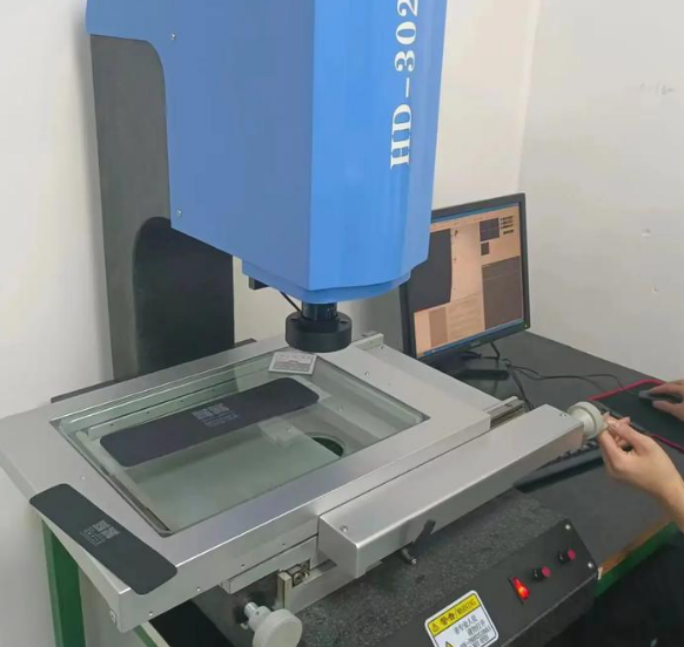
Define which dimensions are checked, whether COCs suffice, and how cosmetics are graded. Quality-minded inspection imagery aside, put methods on the PO. ASME/NIST thinking on measurement clarity still applies when you only build fifty units—especially if those fifty ship to paying pilots.
Commercial model: what good on-demand quotes include
Assumptions visible beats bottom-line theater.
Look for process split (CNC vs sheet vs mold), lead-time assumptions, finishing adders, and DFM notes. Compare landed cost across the learning plan, not a single piece price. SAE/ASME references belong when your industry mandates them (SAE standards, ASME codes).
When on-demand should hand off to dedicated production
Graduate when demand and geometry are stable.
Signals: frozen interfaces, predictable monthly volume, and cost models that favor dedicated cells or multi-cavity tools. Keep the on-demand partner for spares, engineering changes, and parallel SKUs. Hybrid supply chains are normal.
Inventory policy paired with on-demand releases
On-demand is not an excuse for zero planning.
Keep minimum buffers of stable hardware (fasteners, inserts, certified resins) while fabricating custom geometry on demand. Stockouts of commodity inserts can halt a “fast” CNC cell as surely as a broken tool. Write a two-bin policy for those commodities next to your on-demand CAD release process.
Choosing an on-demand partner that spans processes
Ask how the shop will fixture, inspect, and document the first article.
Request a short process traveler outline: incoming material check, machine type assumptions, in-process checks, finishing handoff, and final pack. Vendors who cannot describe that path will struggle when revisions hit. Compare two quotes only after those assumptions are written. For China on-demand partners, also confirm English technical communication channels and who owns DFM replies when the primary engineer is offline.
Release trains from prototype lots to low-volume POs
Freeze what you cut; annotate what you are still learning.
Every release should state which features are locked for the current build and which are experimental. Shops can then avoid over-investing in hard fixtures for features you expect to delete. Purchasing should refuse to release POs that lack a revision letter. When an ECO arrives mid-run, decide scrap-versus-rework explicitly rather than leaving parts in limbo on a shelf.
Mixed-process kits: labeling CNC, sheet, and molded lines
The job is not done at the spindle or press.
Define bagging, desiccant, edge protection, and label fields (PO, revision, quantity, material). Receiving teams should know which dimensions to spot-check on arrival. Photos of packaged first articles help remote buyers accept shipments without unpacking every carton immediately. Damaged cosmetics on polished stainless or brass are often packaging failures, not machining failures—write the pack spec once.
On-demand builds that still respect electronics freezes
Mechanical releases should carry connector and PCB keep-out updates.
When electronics change hole patterns after mechanical CAD is quoted, machining and molding both suffer. Hold a brief cross-functional gate before releasing metal or soft tools. Share a single interface control sketch with the manufacturer so bosses, PEM nuts, and keep-outs stay synchronized across processes.
Comparing ladder costs, not single piece prices
Ask for a line-split even when you will approve a lump sum.
Seeing setup versus run versus finish versus freight teaches the team where redesign leverage exists. A part that is “expensive” because of hand polish may need a texture change more than a new vendor. Freight mode should be selectable per release—air for demos, consolidated ocean for stable pilots—without rewriting the manufacturing quote.
KPI set for on-demand programs
Track revision cycle time, first-pass yield on critical dimensions, quote turnaround, and percent of releases that needed clarification. These KPIs tell you whether on-demand is working or whether documents are chaotic. Share a simple dashboard with the manufacturer monthly during intense pilot phases.
Multi-process BOMs on a single PO
Group CNC, sheet, and molded lines under one project manager when assemblies must fit together. Separate POs to unrelated vendors recreate tolerance stack fights. On-demand manufacturers that span processes can stage deliveries so brackets arrive with covers. Ask for a combined DFM note covering interfaces across processes.
Service-part strategy after the pilot ends
Decide which SKUs stay on-demand forever (spares, accessories) versus which move to dedicated production. Keep soft tools or CNC programs archived with revision notes. Label service inventory clearly so obsolete revisions are not shipped to the field years later.
Training buyers and engineers on the ladder
A one-hour internal workshop on print → CNC/sheet → soft tool → steel saves months of thrash. Use your own past ECO examples. When new PMs join, hand them the ladder one-pager before they release the first RFQ. On-demand capacity cannot compensate for teams that skip learning stages out of optimism.
Buffer stock for inserts while geometry stays on-demand
Document assumptions in the RFQ, confirm material grades in writing, and separate tooling or setup costs from piece price whenever quotes are compared. Ask the manufacturer to restate critical dimensions, finishes, and inspection methods in the quotation so purchasing, engineering, and the shop share one interpretation. Keep revision letters synchronized across CAD, PDF, and email threads. When lead time is critical, identify finishing and hardware as separate critical-path items rather than burying them inside a single optimistic date. Record DFM decisions in a shared folder so later ECOs do not reopen settled questions. These habits matter as much as spindle time or cavity steel for cross-border on-demand work with English-speaking project managers.
KPIs that show whether on-demand learning is working
Document assumptions in the RFQ, confirm material grades in writing, and separate tooling or setup costs from piece price whenever quotes are compared. Ask the manufacturer to restate critical dimensions, finishes, and inspection methods in the quotation so purchasing, engineering, and the shop share one interpretation. Keep revision letters synchronized across CAD, PDF, and email threads. When lead time is critical, identify finishing and hardware as separate critical-path items rather than burying them inside a single optimistic date. Record DFM decisions in a shared folder so later ECOs do not reopen settled questions. These habits matter as much as spindle time or cavity steel for cross-border on-demand work with English-speaking project managers.
Additional buyer note 3 for this topic
Document assumptions in the RFQ, confirm material grades in writing, and separate tooling or setup costs from piece price whenever quotes are compared. Ask the manufacturer to restate critical dimensions, finishes, and inspection methods in the quotation so purchasing, engineering, and the shop share one interpretation. Keep revision letters synchronized across CAD, PDF, and email threads. When lead time is critical, identify finishing and hardware as separate critical-path items rather than burying them inside a single optimistic date. Record DFM decisions in a shared folder so later ECOs do not reopen settled questions. These habits matter as much as spindle time or cavity steel for cross-border on-demand work with English-speaking project managers.
Conclusion
On-demand manufacturing is a ladder: plastic prototypes and sheet metal prototyping for fast learning, CNC for functional metals and engineering plastics, prototype tooling for bridge plastics, then low-volume or production processes when stability arrives. Govern revisions tightly and quote with visible assumptions so speed does not become chaos.
Next step: Upload a mixed-process BOM for DFM-backed planning via Request a Quote, projects@6cproto.com, or WhatsApp +86 180 2219 4001.
FAQ
Is on-demand manufacturing only for startups?
No. OEMs use it for pilots, service parts, and parallel engineering changes while mass lines run stable SKUs.
How do plastic prototypes differ from production plastics?
Process and sometimes grade differ. Label surrogates clearly and reserve sign-off tests for production-intent materials when required.
Can sheet metal prototyping use production PEM hardware?
Yes—and it should when hardware is part of the learning. Confirm thickness grip ranges.
When is prototype tooling worth it?
When you need molded cosmetics or volumes beyond economical CNC/urethane but still expect changes before multi-cavity steel.
What files start an on-demand quote?
STEP/native CAD, PDF drawing, material list, quantities, finishes, and inspection expectations—ideally as one revision-controlled package.