

Explore Injection Molding Assembly & Process Control Guides
When a medical device program reaches tooling, the expensive surprise is rarely steel hardness or cavitation. It is the scope of medical mold qualification: material consumed in challenge runs, machine time held for OQ and PQ, and records that must survive an audit months later. Buyers who treat qualification as a line item after T0 trials usually renegotiate mid-program. Buyers who write IQ, OQ and PQ into the RFQ compare quotes that cover the same work.
This article stays on what each stage has to prove, what a runnable process window looks like, which changes restart which stage, and what belongs in the RFQ. For how medical tooling differs from ordinary industrial tooling at a systems level, see where medical tooling differs from ordinary tooling.
What does medical mold qualification have to prove?
It proves the tool and process make conforming parts repeatedly.
Qualification is evidence that the mold was built as specified, that a defined process window yields parts that meet acceptance criteria, and that routine production can stay inside that window with records that connect lots to process conditions.
A first-article dimensional report alone does not qualify a medical mold. Qualification ties three claims together: the physical tool matches the controlled drawing and steel/cooling design; the molding parameters produce parts that pass dimensional and functional acceptance across the edges of a documented window; and subsequent production runs can reproduce those results under the same frozen recipe. Each claim needs its own records, not a single pass/fail stamp on a sample tray.
Regulators and quality systems treat process validation as evidence of control, not as a one-time ceremonial run. The U.S. Food and Drug Administration publishes process validation general principles and practices, and device quality system expectations appear in 21 CFR Part 820. Neither document replaces your protocol; both explain why auditors look for planned challenges, predefined acceptance criteria, and clear links between equipment, process settings and released product.
In practice that means budgeting resin lots, machine reservation and inspection capacity beyond a short T0 sample. It also means writing acceptance criteria before the challenge starts. Criteria invented after the data arrive rarely convince a second reviewer.
How do IQ, OQ and PQ map onto a mold program?
IQ checks the tool; OQ sets the window; PQ proves routine runs.
Installation qualification confirms the mold and supporting equipment match the specification. Operational qualification establishes the process window and shows parts meet requirements across it. Performance qualification demonstrates that normal production stays inside the validated range with traceable records.
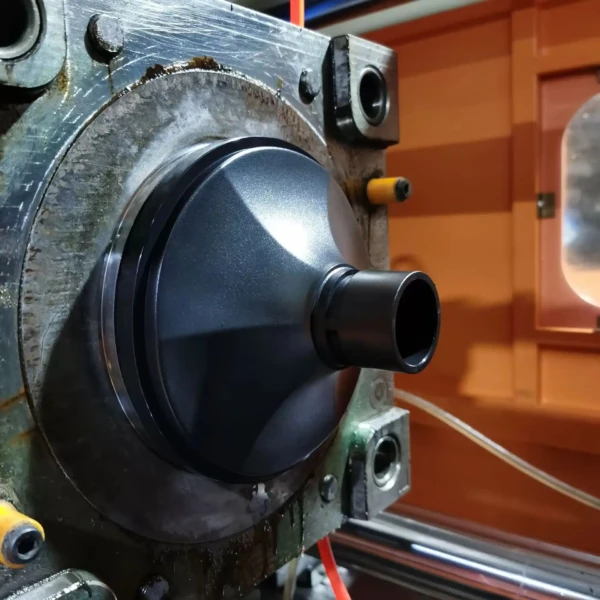
On a mold program, IQ typically covers steel grade and hardness evidence, cavity and insert identification, cooling circuit integrity, ejector and slide function, sensor placement if used, and confirmation that the mold is mounted on the intended press class with correct utilities. IQ fails when the physical tool or machine setup does not match the controlled documents, even if a few sample parts look fine.
OQ is where most schedule risk sits. Teams challenge melt temperature, mold temperature, pack/hold pressure, transfer position and cycle time at the edges of the proposed window, often with short shots, dimensional grids and functional checks. The goal is a window wide enough for a production shift to hit, not a single golden setting that only works when the process engineer is standing at the press. Material lot identity, drying conditions and colorant or masterbatch loading belong in the same protocol when they affect the part.
PQ then runs consecutive lots or a defined production-like sequence using the frozen recipe, with sampling plans and lot genealogy. PQ does not invent a new process; it shows the OQ window survives ordinary variation. When buyers buy plastic injection molding capacity for medical work, they should ask which of these stages the quoted price includes and which remain the device owner’s responsibility.
Industry process-control guidance from bodies such as ISPE regulatory resources and device-quality discussions from the FDA medical devices pages reinforce the same sequencing idea: install and verify equipment, challenge the process, then demonstrate routine performance. Map those ideas to your own QMS language rather than copying another firm’s form set.
What must a realistic process window survive in production?
It must survive normal shift and lot variation.
A window that only works on a carefully nursed development press is not production-ready. The validated range should absorb ordinary resin lot differences, typical dryer performance, mold temperature drift within control limits, and operator changeovers without leaving the acceptance criteria.
Three failure modes appear often. First, the window is a single point dressed up as a range: every OQ challenge used the same pack pressure and melt temperature, so production has nowhere to go when the first lot of resin fills differently. Second, the window ignores drying and moisture: hygroscopic grades pass OQ on carefully dried pellets and fail PQ when the dryer alarm is muted. Third, the window ignores cavity balance on multi-cavity tools: one cavity drives the setting while others sit near flash or short-shot risk.
Build the window from the features that carry device risk. Sealing lips, snap fits, optical paths and fluid channels deserve denser sampling and tighter process sensitivity studies. Cosmetic walls that do not affect function can sit on a wider general tolerance, which keeps OQ from chasing noise. Dimensioning practice should follow controlled drawing conventions such as those described under ASME Y14.5 so the inspection plan and the process window talk about the same features.
Ask the molder to state the intended press tonnage class, screw and hot-runner configuration, and whether the window assumes a dedicated tool-press pairing. Floating a medical mold across dissimilar presses after OQ without a documented transfer plan is a common way to invalidate PQ before the first commercial lot ships.
Which changes restart which qualification stage?
Tool, material and recipe changes restart different stages.
Not every maintenance polish equals a full revalidation. Changes that alter cavity geometry, steel identity, gating, cooling, resin grade or the frozen process recipe usually force at least a partial OQ/PQ restart; administrative documentation fixes may stay inside change control without new molding challenges.
Use a simple decision frame before the first steel cut. Geometry or steel changes that affect contact surfaces, gate location or cooling capacity restart OQ for the affected cavities and typically require new first-article evidence. Switching resin grade, filler loading, colorant system or supplier of a critical compound is a material change: treat it as a process change even if the mold is untouched. Altering pack pressure, melt temperature setpoints or transfer position outside the frozen window is a recipe change and needs a planned challenge, not an informal tweak on night shift.
Like-for-like spare parts that restore original dimensions under a controlled maintenance procedure may stay inside IQ/maintenance records if your QMS allows it and if measurements prove restoration. Aggressive polishing that removes steel and shifts critical dimensions is not like-for-like. Batch impact recording for repairs is covered in the companion article on change control; the qualification question here is whether the validated window still applies after the intervention.
Device owners should keep a change matrix that names the trigger, the stage to reopen, the sampling required and the approvers. Suppliers quote more honestly when that matrix is attached to the RFQ instead of discovered during a CAPA. For the broader documentation package list that sits beside IQ/OQ/PQ records, use the hub overview of medical mold making documentation rather than duplicating it here.
What should go in the RFQ so quotes include the same scope?
Itemize stages, samples, records and ownership.
Quotes diverge when one supplier prices steel and T0 samples while another prices IQ support, OQ challenges, PQ lots and a documentation binder. The RFQ should name each deliverable so price and lead time compare like for like.
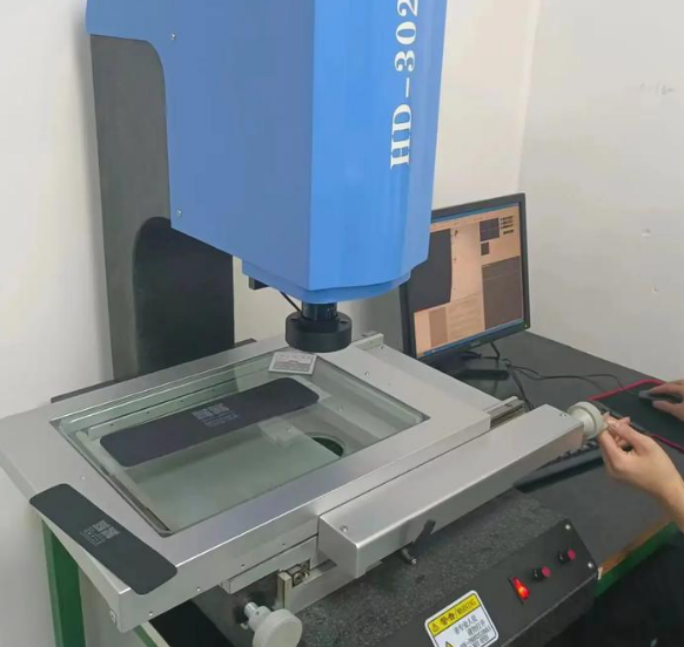
Include at least: part drawing with controlled dimensions and functional tests; resin grade and any alternate grades under consideration; expected cavitation and annual volume bands; which IQ/OQ/PQ activities the supplier must host or execute; sample quantities per stage; inspection methods (CMM, vision, functional gauges); required records (parameter sheets, cavity maps, steel certificates, lot genealogy); packaging and cleanliness expectations at a high level; and change-control notice rules. State whether prototype injection molding tools are in scope for early builds or whether this RFQ is production steel only.
Ask for a clear split between non-recurring engineering (protocol drafting, challenge runs, report writing) and piece price. Ask whether machine time for OQ/PQ is included or billed separately. Ask who owns protocol templates: some device makers insist on their forms; others accept supplier formats that map to their QMS. Ambiguity here becomes a change order later.
Manufacturing extension guidance such as NIST MEP resources can help smaller device teams structure supplier questions without copying large-company bureaucracy. Keep the RFQ proportional to device risk class, but never silent on validation ownership.
How do documentation packages support audit readiness?
They connect tool, process, lots and decisions.
Audit-ready packages let a reviewer reconstruct which tool revision, resin lot and process recipe produced a given shipment, and which approvals authorized any deviation. The package is not a stack of certificates with no narrative links.
Minimum connective tissue includes controlled drawings and tool revisions, IQ evidence for the mold and press pairing, OQ protocol and results with predefined acceptance criteria, PQ results and lot genealogy, frozen process sheets, and a change log that points to revalidation when triggers fire. Training records for operators on the frozen recipe matter when human setup is part of the process definition.
6CProto supports injection molding programs from its Zhongshan facility and Guangdong partner network with free DFM review before steel decisions harden. That DFM step is the right moment to flag features that will explode OQ sampling or force an unrealistically narrow window. It is not a substitute for the device owner’s validation protocol or regulatory filings.
International device quality management discussions continue under ISO technical committee TC 210 and public health framing from the World Health Organization medical devices topic pages. Use those as context for why records exist; implement control inside your own QMS and market clearances. This article does not assert regulatory clearance, certification status or validation outcomes for any specific device or supplier.
Conclusion
Medical mold qualification is a scoped engineering program: IQ proves the tool and setup, OQ proves a production-survivable window, and PQ proves routine lots stay inside it with traceable records. The RFQ should itemize those stages, sample counts and document owners so quotes are comparable. Plan resin, machine time and change matrices before the first cavity is cut; discovering them after T0 is how programs lose months.
Send the drawing, resin grade, controlled dimensions and the IQ/OQ/PQ scope you expect itemised, then request a quotation via the quote form, email projects@6cproto.com, or WhatsApp +86 180 2219 4001.
FAQ
Does a first-article inspection equal medical mold qualification?
No. First-article inspection shows that sampled parts met criteria at a point in time. Qualification also requires evidence that the tool matches its controlled design, that a defined process window works at its edges, and that routine production can stay inside that window with lot-linked records. Treat FAI as one input to IQ/OQ/PQ, not the whole program.
Who should own the IQ/OQ/PQ protocol templates?
The device owner’s quality system usually owns the requirements and acceptance criteria. Suppliers may draft working protocols that map to those requirements if the RFQ allows it. Decide ownership in the RFQ: mixed ownership without a named approver is a common source of delayed sign-off and incomplete records when an auditor asks for the controlling document.
How many cavities should be challenged during OQ on a multi-cavity tool?
Challenge enough cavities to expose imbalance and worst-case filling, not only the easiest cavity. Many programs require data from all cavities for critical dimensions, or a documented statistical rationale if sampling is reduced. State the rule in the protocol before molding starts so cavity-to-cavity surprises do not appear first in PQ.
Can soft or aluminum tooling complete full PQ for launch?
Sometimes for limited clinical or pilot builds if your QMS and risk file allow it, but production steel often still needs its own qualification path when cavitation, steel wear behavior or cooling differs. Treat bridge-tool PQ as evidence for that tool class, not automatic credit for a different production mold. Align the tooling path decision with validation expectations before cutting either tool.