

Two stainless parts cut from the same sheet look different at the edge: one has a clean, bright, vertical edge, and the other has a dark oxide layer that must be removed before welding or painting. Both were laser cut — one with nitrogen assist gas and one with oxygen. The gas does not just blow the molten metal away; it changes the chemistry of the cut edge, the speed of the cut, and the cost per part. Choosing between nitrogen and oxygen for stainless is a trade between edge quality, speed, and the downstream process — and the drawing should say which edge the part actually needs.
What assist gas does to a stainless cut edge
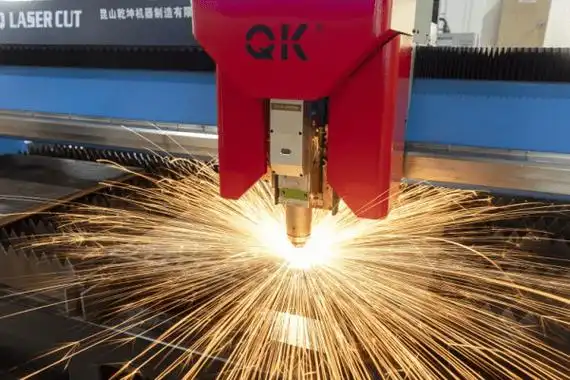
The assist gas clears molten material from the kerf and, depending on the gas, participates in the cut. Nitrogen is inert: it pushes the melt out without reacting, leaving a clean, oxide-free edge that is ready for welding, painting, or anodizing after minimal prep. Oxygen reacts with the steel, adding energy to the cut and increasing speed, but it leaves an oxide layer on the edge and can produce a darker, harder edge that affects downstream processes. For stainless, the gas choice is therefore an edge-quality decision as much as a speed decision.
The edge matters beyond appearance. An oxide layer can interfere with welding, create porosity, and make painted or coated surfaces fail. On the other hand, a clean nitrogen edge costs more per cut, so parts that are hidden and noncritical do not need the premium.
Nitrogen cutting: clean edges, dross trade-offs, and cost
Nitrogen cutting produces the clean, bright edge that stainless buyers usually picture: no oxide, minimal discoloration, and a surface ready for welding or finishing with little preparation. The trade-offs are speed and cost: nitrogen cuts more slowly than oxygen on thicker material, and the gas itself is a consumable that adds to the cost per part. On thin stainless, nitrogen is the standard for quality-critical parts; on thicker sections, the speed penalty grows and the cost comparison shifts.
Dross is the other variable. Nitrogen-cut edges can carry dross on the underside, especially near the limits of the machine’s thickness capability, and the dross must be removed before use. A clean edge claim should be verified on the actual thickness and machine, not assumed from the gas name.
Oxygen cutting: speed and oxide edges for non-critical parts
Oxygen cutting adds exothermic energy to the cut, which raises speed and helps cut thicker stainless in many cases. The cost is the edge: oxygen reacts with the chromium in stainless, leaving an oxide layer that can be dark, slightly rough, and harder than the parent material. For parts that will be welded, painted, or exposed, that oxide must be removed — usually by grinding or brushing — which adds labor that can erase the speed saving. Oxygen cutting suits noncritical edges, internal cutouts that are never seen, and applications where the edge prep is already planned.
Oxygen-cut edges can also be slightly less square than nitrogen edges on some setups, and the heat-affected zone is larger. If the part has a precision edge or a tight profile tolerance, verify the cut quality on the actual material before choosing the gas by cost alone.
Material thickness ranges and machine limitations
Gas choice interacts with thickness and machine power. Thin stainless up to a few millimeters cuts quickly and cleanly with nitrogen on modern fiber lasers; thicker material may cut faster with oxygen or require higher power for nitrogen. Each machine has a capability envelope — maximum thickness per gas, achievable edge squareness, and dross behavior — that the quoting process should confirm. The practical question for the buyer is not “which gas is better?” but “which gas, on this machine, produces the edge this part needs at this thickness?”
| Requirement | Nitrogen | Oxygen |
|---|---|---|
| Clean, oxide-free edge for welding or finishing | Preferred | Needs edge prep |
| Highest cutting speed on thicker stainless | Slower on thick sections | Often faster |
| Lowest consumable cost | Higher gas cost | Lower gas cost |
| Noncritical internal cutouts | Clean but costs more | Economical and adequate |
The table frames the quote comparison: state the edge requirement, and the gas and speed decisions follow from it.
Specifying edge quality and follow-up processing on drawings
Write the edge requirement as a result, not a process: “oxide-free cut edges for welding” or “cut edges acceptable as-cut on noncritical faces” tells the shop what the part needs and lets it choose the gas. If a face will be welded or painted, say so, because the edge prep cost belongs in the quote. If the edge is visible, add the finish class and the sample standard. Do not write “nitrogen cut” on every part; specify the edge condition and let the shop select the process that meets it at the lowest cost.
Follow-up processing should also be specified where it applies: deburring, grinding of oxygen-cut edges, or passivation after cutting. A drawing that says “clean edges” without defining clean will be interpreted differently by every shop; a drawing that says “oxide-free edges on faces marked W” is a spec.
A part-by-part example shows how the decision is applied. A sheet-metal order includes a welded stainless frame, a painted bracket, and a hidden internal gusset. The frame edges will be welded, so the drawing marks them “oxide-free for welding” and they are nitrogen cut; the bracket is painted, and its visible edges are also nitrogen cut so the paint does not fail at an oxide layer; the gusset is hidden, carries no finish, and is oxygen cut to save cost. The same sheet, the same thickness, and three different edge requirements produce three different gas choices — and the quote reflects the mixture instead of one blanket rule. If the buyer had written “all edges nitrogen cut,” the gusset would carry an unnecessary premium; if the buyer had written “cut at lowest cost,” the welded frame would arrive with oxide edges and the weld prep would erase the saving. The drawing that separates the welded faces from the hidden faces is what makes the quote both economical and correct. The example also shows why the thickness matters: if the frame were much thicker, the nitrogen speed penalty might push even the welded edges toward oxygen plus grinding, and the comparison would be made on the actual machine. Edge requirements, thickness, and machine capability together set the gas — and the specification that names the edge condition lets the shop choose the route that meets it at the lowest total cost.
When you write the laser-cutting notes, separate the requirements by edge: mark the faces that will be welded, painted, or finished, state the edge condition each needs, and leave the hidden faces to the economical route. Confirm the machine’s thickness envelope for each gas, and ask the shop to state the edge condition and the gas on the quote so the comparison is real. The drawing that names the edge requirements is the drawing that quotes both routes honestly.
One more decision belongs on the drawing: the finish after cutting. If the edge will be ground, brushed, or passivated, say so, because the gas choice and the prep step trade against each other — a nitrogen edge may skip the grinding that an oxygen edge requires, and the quote should compare the finished edge, not the raw cut. The edge requirement, the post-cut process, and the gas together make the laser-cutting spec complete.
Frequently asked questions
Can oxygen-cut stainless edges be welded without preparation?
Not reliably. The oxide layer and edge contamination from oxygen cutting can cause weld porosity and poor fusion. Grind or brush the edge back to clean metal before welding, or cut those edges with nitrogen. The prep cost should be part of the comparison between gases.
Does nitrogen cutting work on thick stainless?
Yes, within the machine’s power envelope, but the speed penalty grows with thickness and the gas cost rises. For very thick stainless, oxygen or another process may be more economical. Confirm the maximum nitrogen-cut thickness and the edge quality on the specific machine before specifying.
How do you tell which gas was used on a finished part?
The edge appearance is the first clue: nitrogen edges are bright and oxide-free, while oxygen edges are darker with an oxide layer. If the part was ground or brushed after cutting, the evidence is gone, so the record — the cutting process note or the certificate — is the reliable answer. Specify the edge requirement and request the process note when it matters.
The edge decision in one paragraph
Choose nitrogen when the edge must be clean for welding, painting, or appearance; choose oxygen when speed and cost outweigh edge quality and the prep is planned or unnecessary. State the edge requirement on the drawing, confirm the machine’s capability at the thickness, and compare quotes on the same edge condition. The cheapest cut is not the cheapest part when the edge prep comes later.
If you are specifying laser-cut stainless and want the gas and edge prep compared on your thickness and finish, the sheet metal team can quote both routes with the edge condition stated.