

Explore Sheet Metal Design, Materials & Assemblies
A clean nest can still ruin the bend lot. Heat tint near a flange, dross on the outer fibre, film that welded to the kerf, or blanks rotated against the grain all show up after the first hit on the brake. Planning laser cutting aluminum sheet before bending means treating the cut as the start of the forming process, not a separate commodity blank.
This page covers edge quality the brake and anodize will inherit, heat effects on near-edge bends, protective film through cut and form, nesting with grain and bend lines, and inspection checks before the first bend lot. Wider alloy and springback context sits on aluminum sheet metal fabrication.
What edge quality will the brake and anodize inherit?
Cut edges become strain starters and cosmetic lines.
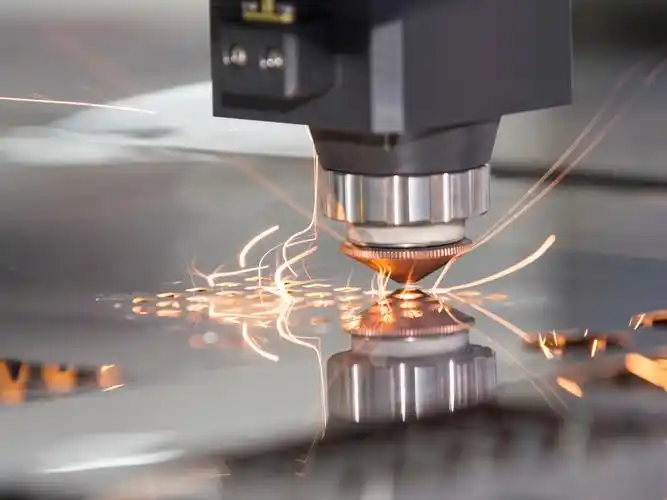
Laser-cut aluminium edges carry striations, possible micro-dross and a heat-affected fringe. On a bend, the outer fibre stretches across that edge; dross particles act as crack starters, especially on harder tempers and tighter radii. After anodizing, edge texture and tint become more visible on cosmetic flanges.
Specify the acceptable edge condition: as-cut, deburred, or lightly machined. Call out which edges are cosmetic. Process capability for laser systems is described by equipment makers such as TRUMPF laser cutting machines and Bystronic laser cutting; beam source suppliers including IPG Photonics discuss aluminium cutting behaviour. None of those pages replace a sample edge on your thickness.
6CProto routes blanks through laser cutting with DFM notes when bend lines sit close to kerfs that need cleanup before forming and bending.
How do heat effects change near-edge bends?
Heat tint and HAZ can change the bend zone locally.
Aluminium conducts heat quickly, yet a laser still leaves a local heat-affected zone along the kerf. When a bend line sits close to that edge, local yield strength and surface oxide condition can differ from the parent sheet. Shops see angle scatter and, on some tempers, earlier cracking than coupons cut farther from heat-affected edges.
Design responses include moving the bend line inward, adding a sacrificial lip that is trimmed after forming, or specifying edge cleanup that removes the tinted fringe. Assist gas choice and cutting speed also change dross and tint; those are process parameters the supplier should freeze once first-article edges pass.
Industry forming discussion from the AMT forming topic and measurement support from NIST MEP both push the same habit: verify the actual blank, not only the CAD distance from edge to bend.
How should protective film travel through cut and form?
Keep film where it protects; strip where it contaminates.
Protective film reduces scratch risk on soft aluminium but can melt, char or adhere at the kerf if cutting parameters are wrong. Some shops cut with film on, then peel; others peel before cutting cosmetic faces. Forming with film on non-visible faces prevents brake shoe marks; film left on through anodize prep contaminates cleaning.
Write the film rule on the RFQ: which faces keep film through laser and brake, when film is removed, and who inspects for residue. Mixed rules across a nest create cosmetic rejects that look like handling damage but started at cutting.
Environmental expectations for cleaning chemistries ahead of finishing are framed by the U.S. EPA. Pair film discipline with finishing intent on surface finishing when anodize follows forming.
How do you nest with grain and bend lines?
Orient for bend behaviour and cosmetics, not only yield.
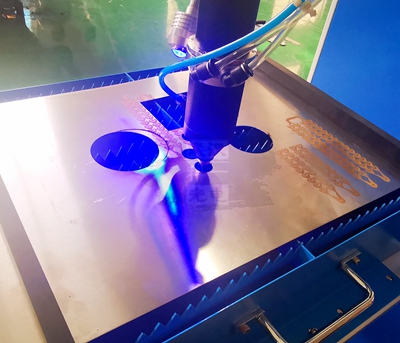
Nesting software maximises sheet utilisation by default. Aluminium programmes often need a constraint: primary bend lines across the grain, brushed grain aligned to cosmetic edges, or identical orientation across a matched set of panels. Rotating every other blank to fill a sheet can produce two springback populations in one lot.
Mark grain on the drawing and require the nest report to show orientation. When yield pressure conflicts with grain, decide which wins in writing. Material selection context for sheet grades sits under sheet metal materials; mill product orientation habits are discussed by producers such as Novelis and Hydro.
Common design patterns for flanges and nests are collected in sheet metal design guides. Use them to brief the programmer before the first sheet is burned.
What inspection checks belong before the first bend lot?
Approve edge, tint, film and orientation on sample blanks.
Before committing a full nest to the brake, inspect a sample blank for dross, burr direction, heat tint width, hole quality near future bends, film adhesion, and grain marks. Measure critical edge-to-bend distances against the drawing. Only then cut the production quantity.
First-bend samples should record overbend settings tied to that blank condition. If later nests change assist gas or speed, re-approve edges. Drawing clarity for those distances follows ASME Y14.5 practices.
Send the model with alloy, grain, film and bend notes, then request a quote. Email projects@6cproto.com or WhatsApp +86 180 2219 4001 for DFM before nesting aluminium that will form immediately after cutting.
How do piercing, etching and micro-tabs affect later bends?
Leave tabs and etch marks off critical outer fibres.
Nests often hold blanks with micro-tabs. If a tab sits on a future bend’s outer fibre, the breakaway scar becomes a crack initiator. Move tabs to edges that stay flat, or require tab grind/blend before forming. Etched part numbers and QR marks belong on faces that will not stretch across a radius.
Internal corners and reliefs cut by laser also feed bend quality. A missing bend relief concentrates strain into a slit end and tears aluminium that would have survived with a proper relief radius. Check reliefs in the cut file, not only in the CAD solid, because CAM can alter corners when converting tooling paths.
Hole-to-bend distances inherit both cut tolerance and stretch. If a hole pattern locates after forming, either open positional tolerances or pierce after the brake. Trying to hold punched-after-stretch accuracy on a laser-before-bend blank without measuring stretch is a common source of assembly drift.
Programme notes should freeze assist gas, focus and speed once edges pass. A weekend parameter tweak that improves cut speed can widen HAZ enough to change springback on near-edge flanges. Treat cutting parameters as part of the controlled process for aluminium forming programmes, similar to how moulding freezes melt settings.
Equipment references from TRUMPF, Bystronic and beam suppliers such as Coherent help buyers ask informed questions; sample blanks still decide acceptance. Ask 6CProto to include edge photos with first-article aluminium blanks when bends sit close to kerfs.
Where does this sit in the aluminum fabrication flow?
Laser-before-bend quality is the blank-prep slice of aluminium fabrication. Keep edge, film and nest rules here; use the hub for alloy choice, springback physics and dissimilar-metal context in alloy, springback and dissimilar metals.
Scrap nesting strategies also affect bend quality. Using remnant sheets with unknown grain orientation or mixed alloy stickers is a false economy when flanges are angle-critical. Label remnants with alloy, temper and grain before they re-enter the nest queue, or restrict remnants to non-critical flat plates.
Operator inspection at the laser should catch film bubbles, wrong alloy colour codes and obvious dross before blanks reach the brake queue. A five-second edge check costs less than a formed scrap panel. Build that check into the router with a pass/fail photo for first piece of each nest.
When bend lines run parallel to long thin webs, cutting sequence can introduce bow that the brake then fights. Ask the programmer whether lead-ins and cut order were chosen to control warping on aluminium, especially on large panels. Flatness before forming is part of edge quality, not a separate cosmetic concern.
If secondary machining follows forming, leave reliable datums on the blank that survive both laser and brake. Etched datum targets or non-functional tabs can help fixturing. Coordinate with the machining plan early so the cut file does not remove the only reliable reference the mill needs.
Finally, align packaging between cut and form. Blanks shipped loose will pick up scratches that anodize later magnifies. Interleave, keep film on, and reject blanks that were stacked raw aluminium-to-aluminium for cosmetic jobs. Handling discipline is part of the laser-before-bend process, not warehouse trivia.
Quote packages should list laser edge condition, film rule, nest orientation constraint and bend proximity checks as explicit lines when aluminium will form immediately after cutting. Bundled “cut and form” prices that hide those assumptions produce the cheapest blank and the most expensive scrap flange.
During DFM, ask whether near-edge bends need a coupon matrix across the nest — corners of the sheet sometimes see different heat history than the centre. Approving only a centre blank can miss the worst edge. That habit closes the loop between laser parameters and brake results before volume cutting starts.
Keep a living edge library: photos of acceptable and rejectable aluminium kerfs for each thickness family your products use. Train receiving and brake operators against that library so debates do not restart every lot. Update the library when cutting equipment or gas recipes change.
If overseas partners cut blanks and domestic teams form, freeze edge standards in the purchase agreement with measurable criteria (max dross height, tint width, burr direction). Distance multiplies ambiguity; photos alone without criteria still cause disputes.
Closing the loop, aluminium laser-before-bend success is mostly specification discipline: edge, film, grain, nest and inspection gates written once and reused. That is the unique job of this page inside the cluster.
With those gates in place, cut-and-form aluminium programmes stop treating the laser as a disconnected commodity and start treating it as the first controlled step of the bend.
FAQ
Should aluminium blanks be tumble-deburred before every bend?
Not always. Tumbling can round edges helpfully but may peen cosmetic faces or fold film debris into surfaces. Use targeted deburr on bend-critical edges when as-cut quality is insufficient. Define the method on the RFQ rather than leaving it to operator habit.
How close can a bend line sit to a laser-cut edge?
There is no universal millimetre rule across alloys and thicknesses. Validate with coupons that use the real cut parameters and temper. If the first coupons crack or angles scatter, move the bend, enlarge the radius, or clean the HAZ before forming.
Does nitrogen assist eliminate heat tint on aluminium?
Nitrogen assist often improves edge colour versus oxygen on many setups, but tint and HAZ width still depend on power, speed and thickness. Qualify the edge on your gauge instead of assuming gas choice alone solves cosmetic and bend issues.
Can punched blanks avoid laser heat issues entirely?
Punching avoids laser HAZ but introduces its own roll-over and fracture zones that also affect bends. Choose the blank process for the feature set; do not assume punching is automatically gentler for every aluminium flange.