

Insert molding solves a specific problem: a part needs the lightness and formability of plastic in most places, and the strength, wear resistance or conductivity of metal in a few. Instead of assembling the two afterwards, the metal is placed in the mold and the plastic is formed around it.
What an insert actually is
An insert is a pre-formed component placed into the mold before the plastic is injected, so the finished part is a single item with the insert embedded. The most familiar are threaded inserts, which give a metal thread in a plastic housing, and electrical contacts molded into a connector body. Less obvious examples include wear sleeves in a bearing housing, a metal shaft molded into a plastic gear, and a reinforcement plate that stiffens a thin plastic section.
| Insert type | Why it is molded in | What it replaces |
|---|---|---|
| Threaded insert | Repeated fastening in a soft material | A tapped plastic thread that would strip |
| Electrical contact | Conductivity and sealing | A separate terminal assembly with a joint |
| Wear sleeve or bushing | Hard surface where plastic would wear | A pressed-in bushing after molding |
| Structural reinforcement | Stiffness in a thin section | A separate metal plate and fasteners |
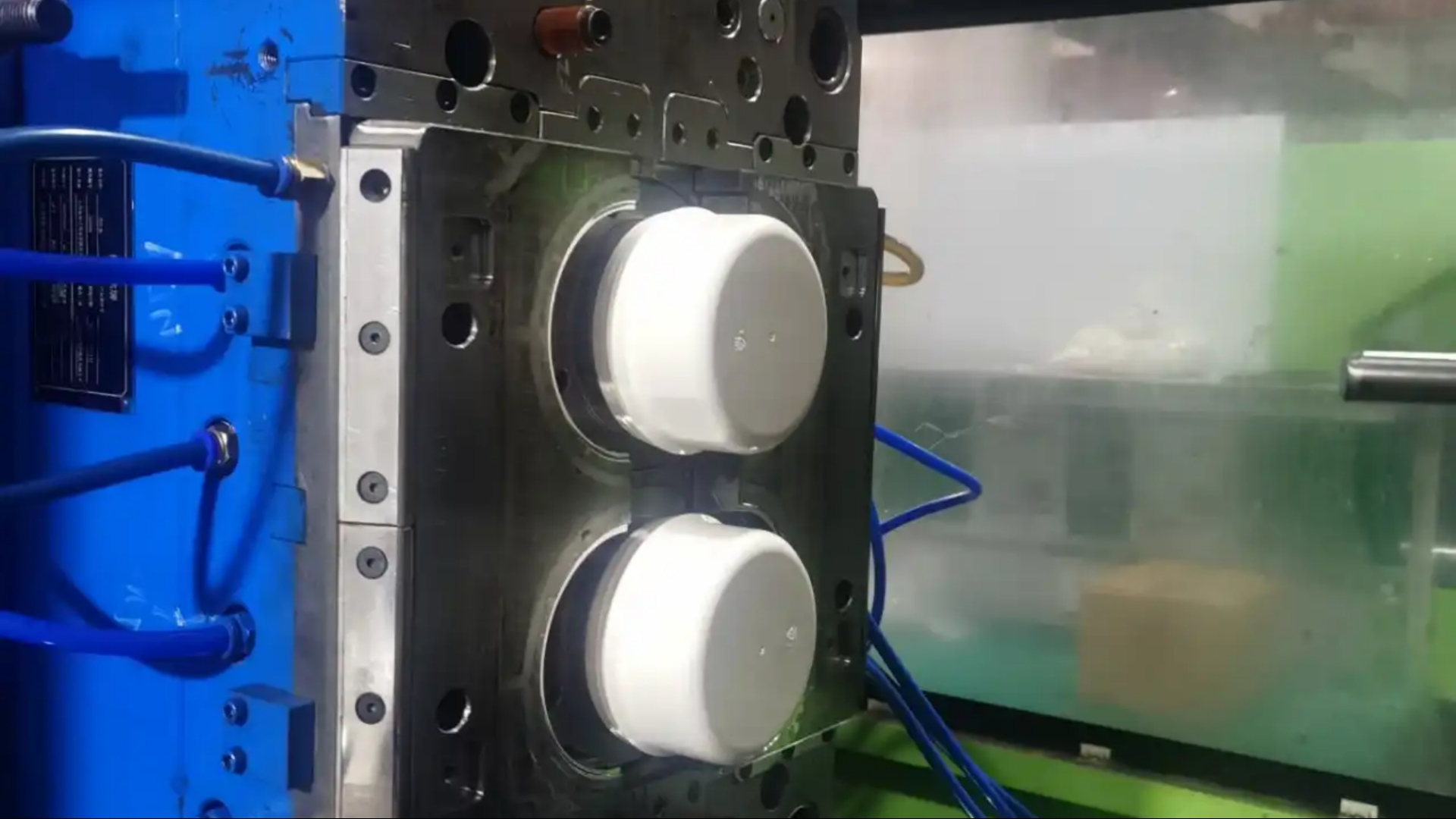
What is the difference between overmolding and insert molding?
The second material, not the technique.
Both processes place a pre-formed component into a mold and inject material around it. Insert molding embeds a functional component, usually metal, whose purpose is structural, electrical or wear resistance. Overmolding covers a substrate with a second plastic layer, usually for grip, sealing or appearance. The distinction matters because the design rules differ: an insert is about retention and stress, while an overmold is about bond and surface.
In practice the two often appear in the same part. A housing may contain a threaded insert for fastening and an overmolded soft grip around its outside, which means the mold has to locate a rigid insert and form a soft outer layer without disturbing either. Planning both features together avoids a tooling design that solves one and compromises the other.
How inserts are located and retained
Inserts are held by the mold itself, either on a pin that passes through a hole in the insert or by a recess that captures its shape, and the plastic then flows around the retained portion. Retention comes from mechanical features rather than adhesion: knurling, grooves, undercuts and holes through which the melt can flow all increase the pull-out strength. A plain cylindrical insert with no mechanical feature will rotate and pull out under load, no matter how well it is molded in.
Thermal considerations matter as much as geometry. Metal expands differently from plastic, so a large insert surrounded by a thin plastic wall can generate stress as the assembly cools, cracking the plastic or loosening the insert. Preheating an insert reduces that differential, which is one reason a larger insert sometimes costs more than its size suggests.
Design rules for walls, spacing and stress
Four rules cover most insert molding problems. Keep enough plastic wall around the insert to carry the load the insert will transmit, because a thread that can take a bolt is useless if the surrounding wall splits. Space inserts away from each other and from the part edge so the melt can flow evenly and the tooling can support each location. Avoid sharp transitions between the insert and the plastic, which concentrate stress during cooling. And design the fastening load path so it passes into the plastic by design rather than by hope, using a boss with a radius at its base rather than a straight wall meeting a flat face.
Where the insert carries a sealing function, the plastic around it also has to be dimensionally stable, because a seal that relies on the insert sitting in a fixed position will not tolerate shrinkage. Molding around inserts reduces cycle-time flexibility, since each cycle needs the insert loaded, and that handling is one of the reasons insert molding is better suited to steady volumes than to one-off work. Material references are published by ASM International, and drawing conventions follow ASME standards.
What insert molding adds to cost
Three lines appear that a plain molded part does not carry. The insert itself, which may be a purchased component with its own lead time. The tooling modification needed to locate and retain it, which is more complex than a simple cavity. And the handling time in every cycle, because someone or something has to place the insert before the mold closes. Automation reduces the last of those at higher volumes but has its own capital cost.
The comparison should therefore be against the alternative it replaces, which is usually an assembly: a molded part, a separate insert, and a pressing or bonding operation. Insert molding often wins that comparison because it eliminates a joint and a handling step, even though the molding cycle itself becomes more expensive. Where the volume is too low for tooling, machining a prototype from solid or printing a fixture and fitting inserts afterwards is the practical route to a representative part.
Quality control on insert molded parts
Inspection focuses on things a dimensional check does not reveal. Insert position and height matter because a misplaced insert will not accept its mating fastener, and pull-out or torque resistance should be verified on a sample rather than assumed from the mold design. Visual checks cover flash around the insert, incomplete fill where the melt had to flow around an obstruction, and cracks in the plastic surrounding a large insert.
For repeat production, two records are worth keeping: the insert specification and its incoming condition, since a change of insert supplier can change the fit, and the molding parameters, because a different melt temperature changes how the plastic shrinks around the insert. Dimensional verification is described by the NIST Manufacturing Extension Partnership, the overmolding and single-material cases are covered under overmolding and prototype injection molding, and material handling obligations are set out by the US EPA.
When an insert should be fitted after molding instead
Insert molding is not always the right answer. Where the insert is large relative to the part, where the volume is low, or where the insert has to be fitted with a specific interference, pressing or heat-staking it into a molded bore afterwards can be more practical. That route uses a simpler mold and moves the complexity into an assembly step that can be reworked if it goes wrong.
The decision usually turns on stress and volume. A threaded insert carrying a frequently removed fastener justifies molding in place because the pull-out and torque resistance come from the mold design. A locating pin or a small insert in a low-volume part is usually cheaper pressed in afterwards. Either way the bore and the insert specification are part of the drawing, not an afterthought. Process guidance on the single-material case is covered under injection molding, and drawing conventions follow ASME standards, with inspection practice described by the NIST Manufacturing Extension Partnership.
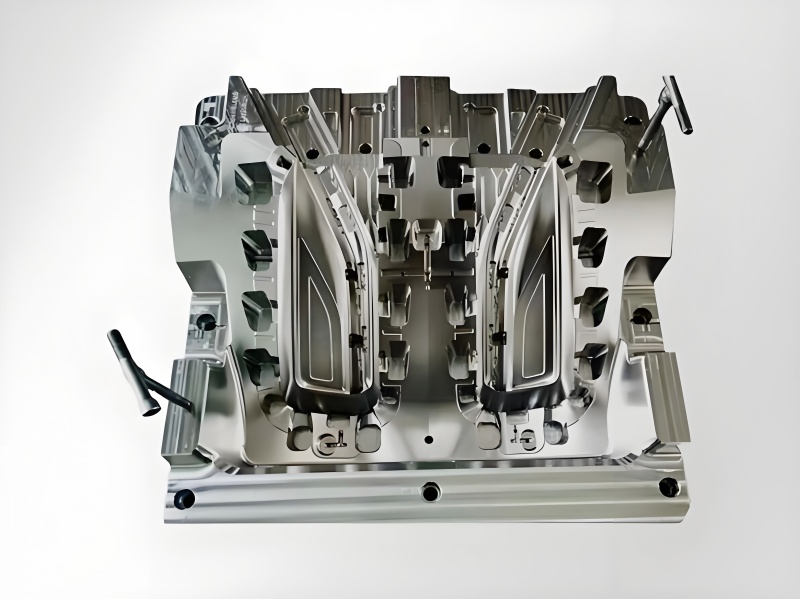
Send the insert drawing and the part model with the loads the insert carries, and request an insert molding quote with the handling method stated.
FAQ
What is an insert in injection moulding?
A pre-formed component placed into the mold before the plastic is injected, so the finished part contains it. Threaded inserts, electrical contacts, wear sleeves and reinforcement plates are the common examples, and each is retained mechanically rather than by adhesion.
How are inserts held in place during molding?
The mold locates them on a pin or in a recess, and the plastic flows around knurled or grooved features that provide retention. A smooth cylindrical insert with no mechanical feature will rotate and pull out under load.
Does insert molding cost more than assembling the parts afterwards?
The molding cycle does, because tooling is more complex and every cycle needs the insert loaded. The comparison is against the assembly it replaces, and eliminating a joint plus a handling step often makes insert molding cheaper overall.