Choosing a CNC machining supplier is a qualification process, not a price search. A shop that quotes low and machines your part incorrectly costs more than one that quotes higher and delivers on the first run. This guide gives you a structured path: build a shortlist from your part type, score candidates with a weighted scorecard, verify the quality system, and use a small pilot order as the final test. The goal is a repeatable process you can use for every new supplier, not a one-time gut decision.
Build the Shortlist Around the Part Type
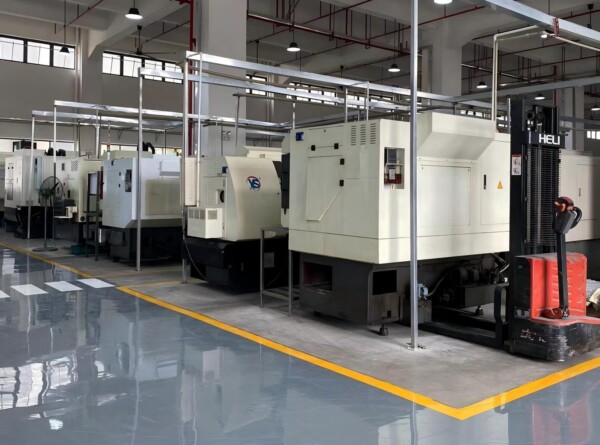
Start by mapping your geometry to the machine families that should produce it. A supplier's machine list should overlap with what your part actually needs; capability that does not match your part type is irrelevant.
| Part family | Machine type to look for | Capability questions to ask |
|---|---|---|
| Shafts, pins, bushings, spacers | Turning centers, Swiss-type lathes | Bar capacity, max turning length, live tooling availability |
| Housings, brackets, plates, covers | 3-axis vertical machining centers | Table size, spindle speed, max part envelope |
| Impellers, sculpted surfaces, undercuts | 5-axis machining centers | Number of continuous axes, CAM postprocessors, collision simulation |
| Large frames, weldments | Large-format mills, boring mills | Envelope, crane capacity, setup strategy for heavy parts |
| Micro and high-precision features | Precision machines with high-speed spindles | Temperature control, vibration isolation, measurement method |
Then check the size range and material list the shop handles regularly. A titanium part or a 600 mm plate needs a supplier that cuts that class of work routinely, not one that accepts the order and learns on your part. Ask how often the shop runs your material grade and what stock sizes they keep in-house, because that affects both lead time and minimum order behavior.
The Qualification Scorecard
Use a weighted scorecard so the decision is comparable across candidates. The weights below are a starting point; adjust them to your industry, but keep the same weights for every supplier in one selection round.
| Criterion | What you verify | Suggested weight |
|---|---|---|
| Machine capability match | Machine list versus your geometry family and size | 20% |
| Engineering and DFM depth | Quality of the response to your actual drawing | 20% |
| Inspection capability | Equipment, first-article format, sampling plan | 20% |
| Quality system | ISO 9001 certification, NCR/CAPA process, certificates | 15% |
| Communication | Response time, revision control, escalation path | 15% |
| Commercial fit | Line items, lead time, how changes are priced | 10% |
Score each criterion 1 to 5 using evidence, not brochures. Require a minimum score on the criteria that matter most for your part; for a medical or aerospace component, inspection and quality system should each pass a floor even if the total is high. Do not average scores across parts from different families, because a shop that excels at turning may be average at 5-axis milling, and the total hides the mismatch.
What to Put in the RFQ Package
The RFQ determines whether you can compare suppliers at all. Send the same complete package to every candidate and require the same response structure.
- Drawing with revision number and title block
- Material grade, temper, and certificate requirements
- Quantity, expected annual volume, and forecast horizon
- Tolerance state: before or after surface finishing
- Inspection and documentation requirements for the first article and for production
- Packaging and delivery requirements
- Target lead time and the date the quote is valid until
- Requested response format: DFM comments, line-item quote, inspection plan, fixture plan
The line-item quote is what lets you compare cost blocks, and the DFM comments are what let you compare engineering depth. A candidate that returns only a price and no engineering feedback has not demonstrated the behavior you need in production, regardless of the number.
Reading the First Article Report
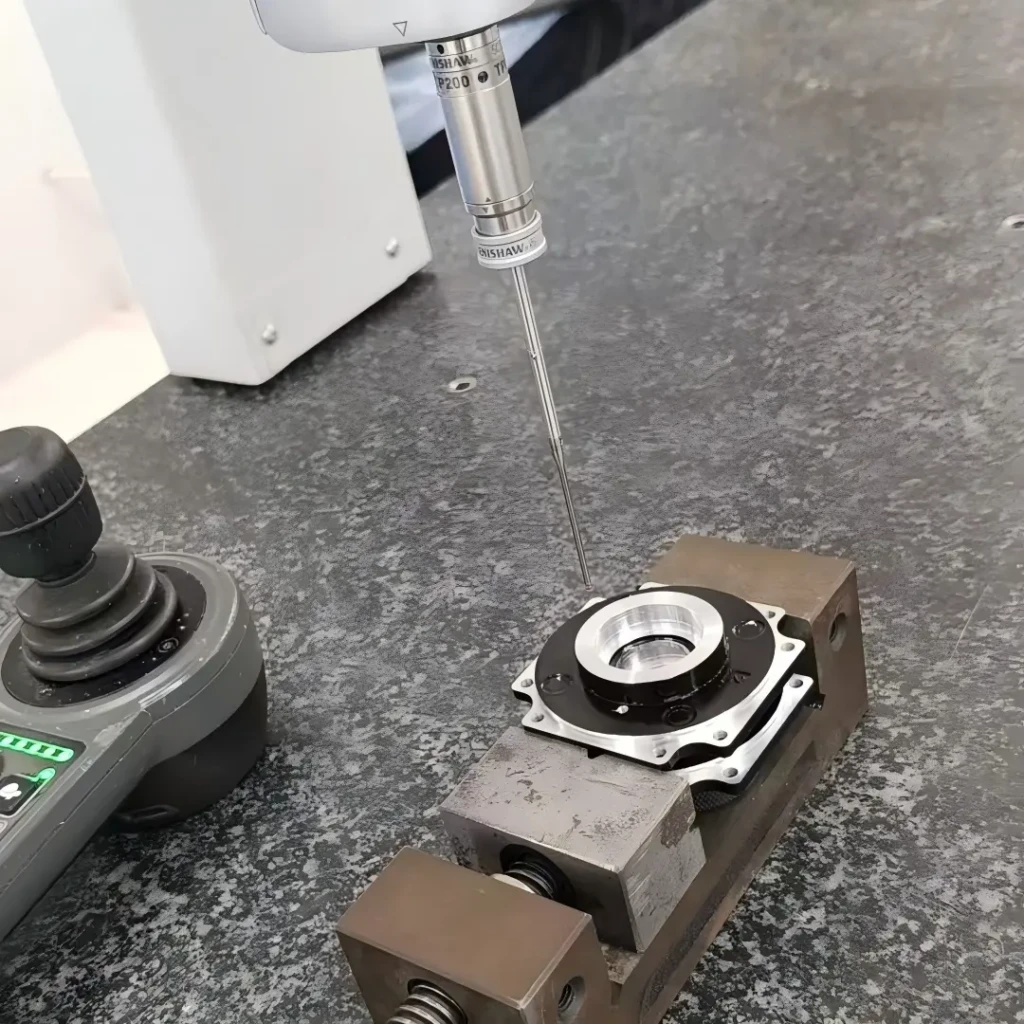
Inspection is where quoted tolerances become delivered parts, and the first article report is the evidence trail. A report that documents the method is meaningful; a one-page certificate without method is not. The report should include at minimum:
- Drawing revision that the part was measured against
- Material grade and the certificate reference for the lot
- Instrument used for each measurement, with calibration status
- Datum setup description for datum-referenced dimensions
- Nominal, measured, and deviation for every critical dimension
- Disposition: accepted, rejected, or conditional
- Inspector and reviewer sign-off
Ask how often critical features are checked in production, not just on the first article. A supplier that checks only the first piece may miss drift that appears later in the run, and drift is exactly what causes assembly failures in larger quantities. In-process gauging, SPC on critical features, and sampling plans matched to your quantity are stronger evidence than a wall certificate.
Quality System Questions That Matter
Certification describes process, not product acceptance, so verify how the system behaves on a problem.
Nonconformance handling. Ask how a rejected part is documented and dispositioned. A written NCR with quarantine, root cause, and corrective action is a working system; a verbal "we will remake it" is not. Ask for the typical corrective action timeline and how the customer is notified.
Material traceability. Ask whether mill certificates or certificates of conformance are included or cost extra, and how the certificate is linked to the finished part. For regulated industries, the record trail must survive from the lot to the shipped serial number.
Documentation depth. For medical, aerospace, or other regulated work, ask whether the supplier supports PPAP-style submissions or equivalent documentation. The answer separates shops that treat documentation as an afterthought from shops that build it into the process.
Finish callouts. Anodizing, plating, and coating change dimensions and lead time. Confirm whether tolerances apply before or after finishing, and make sure the inspection plan measures the state that the drawing specifies.
Communication and Change Control
Agree on communication rules before the order, not during it. A simple SLA makes behavior measurable.
| Communication item | What to agree on |
|---|---|
| Drawing exchange | File format, version labeling, single source of truth |
| DFM response | Target turnaround after the RFQ is complete |
| Revision handling | Who reviews drawing changes and how impact is quoted before machining |
| Problem notification | When and how the customer is informed of delay or nonconformance |
| Escalation | Single point of contact and the path for disputes |
Time zone and language matter less than response quality. The supplier that answers engineering questions clearly and documents changes is easier to work with than one that is local but silent. Ask what happens if the drawing changes after the order starts: does the supplier quote the impact before machining, or silently proceed on the old file? A written change log and version labels on drawings are signs of discipline.
Score the Pilot Order
The pilot order is the behavioral test that paper evaluation cannot replace. Place a small order for a real part, and score the same criteria you used in qualification, but now with observed evidence.
| Pilot criterion | What good looks like |
|---|---|
| DFM response quality | Specific comments on your drawing, not generic advice |
| First article accuracy | Measured values match the drawing, method documented |
| On-time delivery | Promised date met or communicated early if missed |
| Problem handling | Nonconformance documented and explained, not hidden |
| Change handling | Drawing revisions quoted before machining |
| Inspection documentation | Complete report with instruments and datum setup |
Document the agreed quality plan during the pilot: critical features, inspection methods, and acceptance criteria. If the pilot passes, that document becomes the baseline for production; if it fails, it shows exactly what to fix. Either way, the pilot produces the most valuable document in the relationship, and a CNC machining partner should treat the pilot as part of the onboarding, not an inconvenience.
When the Audit Fails
Some signals should end the conversation regardless of price.
- Accepting work beyond demonstrated machine capacity
- No named inspection instruments or measurement method
- Generic "OK" on a complex drawing instead of DFM comments
- Silent changes to drawings or material grades
- Certificates or inspection reports priced in only after the quote
- No documented nonconformance process
- No answer on who reviews drawing revisions
Next Step
Send the RFQ package and scorecard to a shortlist of three to five suppliers, then run a pilot order with the highest scorer. If you need to see how the cost blocks behave before you start, review the CNC machining cost guide and the tolerance reference first. 6CProto's engineering team uses this same qualification structure on every new program, and our RFQ responses include DFM comments, line-item pricing, and an inspection plan so the scorecard can be applied directly.
FAQs
What questions should I ask a CNC machining supplier before placing an order?
Ask about machine capability for your part family, DFM feedback on your drawing, inspection equipment and first-article format, material certificates, nonconformance handling, revision control, and how changes are priced. Score the answers with a weighted scorecard so candidates are comparable.
What should a first article inspection report include?
The drawing revision, material grade with certificate reference, instruments used with calibration status, datum setup, nominal and measured values for every critical dimension, disposition, and sign-off. A report without the method or instrument named is not evidence.
Is ISO 9001 certification enough to trust a CNC supplier?
It is a starting point, not a guarantee. Certification shows the quality system exists; product acceptance still depends on inspection plans, nonconformance handling, and change control for your specific part. For regulated industries, verify PPAP-style documentation and material traceability separately.
How do I evaluate a CNC supplier on a trial order?
Score DFM response quality, first-article accuracy, on-time delivery, problem handling, change handling, and inspection documentation. Document the agreed quality plan during the pilot; if it passes, that document becomes the production baseline.
Sources
- 6CProto CNC Machining Services
- 6CProto CNC Milling Services
- 6CProto Industrial Equipment Manufacturing
- ISO 9001:2015 – Quality management systems
- SAE AS9100D – Aerospace quality management system