

A machined nylon bushing is delivered at size, passes incoming inspection, and binds in the assembly three weeks later in a humid plant. The machinist did nothing wrong: nylon absorbed moisture from the air, and the bushing grew beyond its clearance. Delrin would not have moved — but it also would not have survived the impact loads that led you to nylon in the first place. This is the real Delrin-versus-nylon decision: both machine well and both are workhorses, but Delrin is the dimensionally stable, low-friction choice while nylon trades stability for toughness and wear resistance. Choosing correctly means deciding which property your part cannot live without.
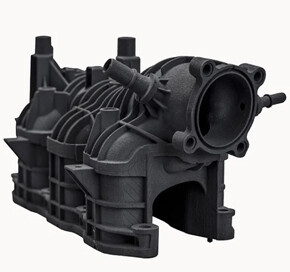
Delrin holds size; nylon trades stability for toughness
Delrin is an acetal homopolymer (POM) with a crystalline structure that resists moisture uptake, giving it excellent dimensional stability, low friction, and good machined surface quality. Nylon is a polyamide family whose amide groups attract water; absorbed moisture acts as a plasticizer, changing dimensions, stiffness, and impact strength. The chemical difference shows up in service: nylon parts move with humidity, while Delrin parts hold their size across normal environmental changes.
The family names hide real variation. Filled acetals and filled nylons behave differently from unfilled grades; nylon 6, nylon 6/6, and cast nylon differ in moisture response and wear; and impact-modified or moisture-stabilized grades narrow the gap. Comparing “Delrin versus nylon” is the right first question, but the material decision should end on specific grades from specific suppliers.
Machined tolerances follow the material’s moisture behavior
Delrin holds machined tolerances better over time because it absorbs almost no moisture and creeps less under sustained load. Nylon can be machined to tight dimensions at the bench, but the dimension is not guaranteed to stay: moisture growth and thermal expansion move it, and the movement depends on the environment. If the part must hold a clearance or interference in service, or if it will be stored and used across changing humidity, Delrin is usually the safer choice for dimensional control.
Designers who need nylon’s toughness on a dimensionally critical feature have three options: allow for moisture growth in the design clearance, specify a moisture-stabilized or impact-modified grade, or machine the final pass after conditioning the material to the service environment. Conditioning is the most reliable but adds time and cost, so it belongs in the specification, not discovered at inspection.
Wear and impact separate the two families in service
For moving parts the comparison is close, and the application decides. Delrin offers low friction against steel, excellent machined finish, and good wear under steady, clean loads — a classic choice for bushings, guides, and precision gears. Nylon is tougher and more abrasion-resistant, performs well in dirty or impact-heavy service, and is often chosen for rollers, wear pads, and parts that see shock. Nylon also runs quieter in some gear applications because it absorbs energy; Delrin is stiffer and transmits more noise.
| Requirement | Delrin (POM) | Nylon (PA) |
|---|---|---|
| Dimensional stability in humidity | Excellent — low moisture uptake | Moves with moisture; needs allowance or conditioning |
| Low friction, steady wear | Preferred | Good, but tougher and quieter in some gears |
| Impact and shock loads | Stiffer, more notch-sensitive | Preferred |
| Machined surface quality | Excellent, minimal fuzz | Good; grade-dependent |
The table is a screening tool. Wear tests on the actual pair — plastic against the mating metal, with the real lubricant or none — are the only way to choose confidently, because published wear factors assume conditions that may not match your assembly.
Applications decide: guides in Delrin, shock loads in nylon
Match the material to the environment and the load. Precision guides, bearing-like surfaces, and parts with tight fits in changing humidity favor Delrin. Impact-loaded rollers, wear pads in abrasive service, and parts that must survive rough handling favor nylon, with extra allowance for moisture. Electrical parts add their own requirements: both materials insulate, but tracking resistance and operating temperature differ, and regulated applications name specific grades with test certificates.
Food contact and medical use add another layer entirely, because the grade, the additives, and the process must meet the regulation, not just the polymer name. If the part is regulated, specify the certified grade and request the documentation; a generic “Delrin” or “nylon” callout is not a compliant material spec.
What should the drawing say so the shop makes the right part?
Write the grade, the form, and any conditioning on the drawing: “Delrin (POM-C), natural, machined from plate” or “nylon 6/6, moisture-conditioned, natural” is far more useful than “plastic.” State whether critical dimensions are measured dry or conditioned, and note the service environment if it differs from the shop floor. If the part will be used outdoors or in a humid plant, say so, because the supplier may recommend a different grade than the one chosen for a climate-controlled lab.
The CNC machining team can confirm stock condition, machinability, and achievable tolerances for the specific grade before the first article. When wear is critical, machined-plastic suppliers can also advise on running clearances, because plastic wear parts often need different clearances than their metal equivalents.
Temperature and chemical exposure complete the material picture that strength tables miss. Delrin performs well in many solvents but is attacked by strong acids and some chemicals, while nylon resists alkalis and many solvents but hydrolyzes in hot, humid conditions and absorbs water that changes its properties. Continuous-use temperature limits differ by grade, and both materials creep under sustained load at elevated temperature, so a bushing that works at room temperature may loosen or bind in a hot enclosure. If the part contacts lubricants, cleaning agents, or process fluids, confirm the specific grade’s chemical resistance with the supplier’s data, because family-level tables hide grade-to-grade differences. Filled grades add another layer: glass-filled nylon is stiffer and more dimensionally stable than unfilled but more abrasive to mating surfaces and tools; PTFE-filled acetals reduce friction but change strength and wear debris. The practical method is to build a short requirement table before selecting the material — temperature range, chemicals, load type, humidity, and mating material — and to check the grade against that table rather than against a generic polymer comparison. This table also becomes the review checklist when a substitution is proposed later.
Lubrication changes the Delrin-versus-nylon decision more than most comparisons admit. Many machined plastic parts run dry or against water, and the two families respond differently: Delrin’s low friction gives it an advantage in dry running against steel, while nylon can perform better when water or a process fluid is present, because the fluid changes the interface and nylon’s moisture absorption alters its dimensions and surface. If the part runs lubricated, identify the lubricant, because some oils and greases attack or swell plastics over time, and the material data sheet should be checked against the specific lubricant rather than the generic “lubricated” label. Running clearance is the practical output of this analysis: plastic parts need larger clearances than metal parts of the same size because of thermal expansion, moisture movement, and wear-in, and the clearance table should come from the plastic supplier or from testing, not from a metal design handbook. A bushing that binds after warm-up or loosens when dry is usually a clearance and material interaction problem, not a machining defect, and it is best resolved before the part geometry is locked.
Frequently asked questions
Can Delrin be used for impact-loaded parts?
Delrin is stiffer and more notch-sensitive than nylon, so sharp impacts can crack it at corners and molded-in stress points. It works for steady loads and moderate impacts if the geometry avoids sharp notches, but for repeated shock, nylon or an impact-modified acetal is usually the safer choice. Test the actual loading rather than extrapolating from a data sheet.
Does machining affect the moisture behavior of nylon?
Machining exposes fresh surface and removes the skin, which can change how quickly the part absorbs moisture, but the equilibrium uptake is set by the grade and the environment. Machined nylon parts should be conditioned or allowance-designed for the service humidity, and measured at a defined condition so the inspection result is repeatable.
Are Delrin and nylon interchangeable in a design that already works?
No. Swapping one for the other changes clearance, wear, noise, impact resistance, and chemical resistance, and the change can break an assembly that worked. If a substitution is proposed, review the full set of requirements — not just strength — and validate on samples before approving the change.
Conclusion
Delrin and nylon are both excellent machined plastics, and the decision is about which property the part needs most: Delrin for dimensional stability and steady low-friction wear, nylon for toughness and impact-heavy service. Specify the exact grade, account for moisture where nylon is chosen, and validate wear on the real material pair. The material callout on the drawing is where the decision becomes enforceable.
If you are selecting a machined plastic for a bushing, gear, or guide, send the load, the environment, and the tolerance to the 6CProto CNC team. The grade recommendation should come from the service condition, not from the material name.