

Short Runs Have a Different Cost Shape
A turned part ordered in a short run carries a different cost shape than one ordered in thousands. Every turning order starts with work that happens once: reading the drawing, programming the lathe, setting up the tooling, and proving the first part. In a run of one, that work sits entirely on one part; in a run of 500, it spreads across 500. The result is a unit price that starts high, falls fast, and flattens toward the variable cost. That shape is not a pricing quirk, it is the structure of the process, and the quote structure is the thing to read.
The one-off is the most expensive unit for a reason: it carries the entire fixed block. That is the correct cost for proving the part, the tuition for the drawing, the material, and the process, but it is not the per-piece price of the part. Budget a prototype program for the one-off cost as the entry fee and the production price as the follow-on. The reorder changes the arithmetic: if the part will return, the programming and tooling can be retained, and the reorder carries only the setup and the variable cost.
Fixed Costs: Programming, Setup, and Tooling
The fixed block in turning includes programming the tool path, setting up the machine with bar stock and tooling, and any dedicated tooling or fixtures. Programming is typically paid once and reused if the part is reordered; setup is paid every time the job runs; tooling may be reusable or order-specific. The questions to ask are about the block: is programming charged per order or reusable, is setup charged per run, and does the tooling belong to you and get retained for reorders?
Tooling ownership is a real decision. A custom form tool, a collet, or a fixture that the buyer owns can be transferred to another supplier or retained for reorders; a tool the supplier owns may disappear with the quote. State the tooling expectation in the RFQ: what tools are needed, who owns them, and how they are retained. The setup charge is where the batching decision lives: ordering 100 parts in one run pays the setup once, and ordering 50 twice pays it twice. Ask for the setup line, because the batch decision needs the number.
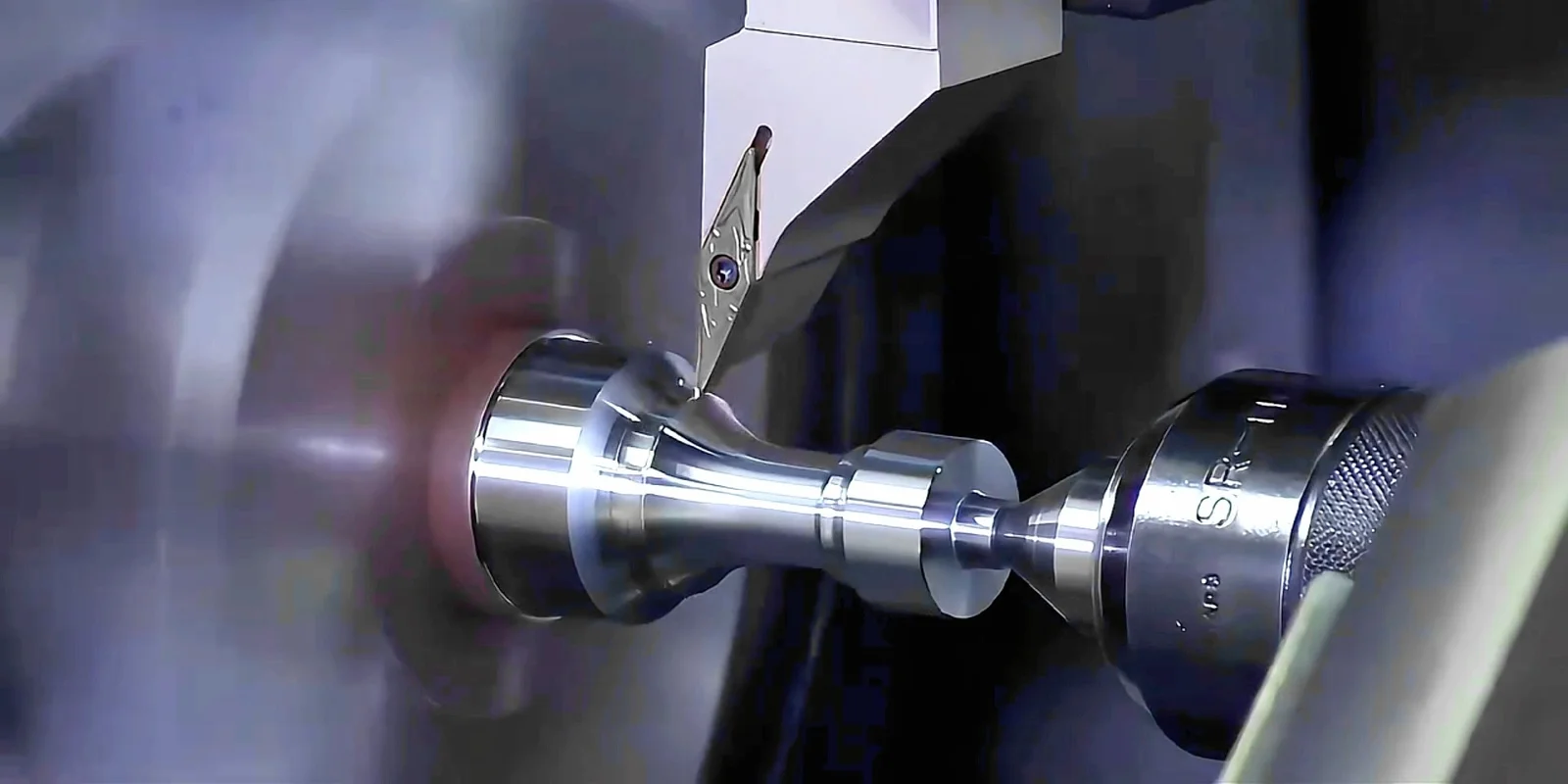
How Unit Price Falls from 1 to 500 Parts
The shape is easiest to see with numbers. The example below is illustrative, not a quotation or a capability guarantee, for a small turned shaft with a $320 fixed block and an $8 variable cost per part. One part lands at $328, ten at $40, fifty at $14.40, two hundred at $9.60, and five hundred at $8.64. The curve flattens quickly because the variable cost becomes the floor, and the table does not show the second-order effects of material price breaks and setup reuse, which add steps at specific quantities. The exact curve belongs to the quote, not to the table.
The batching arithmetic deserves a worked example because the difference is easy to miss. With the illustrative $320 fixed block, ordering 50 parts now and 50 later at $40 each gives a blended $28 per part over the two runs, because the fixed block is paid twice; ordering 100 once at $14.40 saves real money when the design is stable. The decision reverses when the design may change: a 50-part run that tests the drawing costs less than a 100-part run that must be scrapped. That is why the batch size question has two answers, one for stable designs and one for evolving ones, and why the supplier should quote both options rather than a single price.
Material and tolerance choices sit on the variable side, and they compound with the fixed block at low quantity. A free-machining grade that costs more per kilogram can be cheaper per part when the cycle time falls, and a tolerance tighter than the process needs adds inspection and scrap risk that inflates the quote at any quantity. Lock the material grade on the drawing, compare grades by the per-part cost at the real quantity rather than by price per kilogram, and hold tolerances only where the fit requires them.
The machine choice changes the curve. A standard CNC lathe handles most short runs with a modest setup; a Swiss-type lathe adds capability for small, precise parts at a higher rate; a turn-mill center adds milling features in one setup. The buyer does not need to choose the machine, but should know which class the quote assumes, because the machine class determines where the price flattens.
Turning vs. Milling vs. 3D Printing at Low Volume
At low volume, the process choice is about the part, not the quantity. Turning suits rotationally symmetric parts such as shafts, sleeves, and fittings, and its bar-stock efficiency keeps material cost low. Milling suits prismatic parts with flat features. 3D printing suits complex geometry with no tooling, at the cost of material properties and surface finish. A round part in a production metal is turned to get the production material’s behavior; a printed part in resin or nylon may be adequate for concept work but not for the functional test.
The comparison should be made per part at the actual quantity, because the crossover depends on geometry and volume. A shaft 10 mm round and 100 mm long is a turning part; a bracket with flat faces is a milling part; a complex housing with internal channels is a printing or casting candidate. Turn-mill capability merges the two families when a part combines a turned body with milled flats, which is where the process comparison becomes a quote comparison.
When Bar Stock Economics Favor Turning
Turning starts from bar stock, and the economics are a real advantage. The material is cut from a standard bar, so there is no blank preparation cost, and the round shape matches the process, which removes less material than machining the same part from a block. The bar diameter is a design input: a part with a 12 mm major diameter needs a bar at least 12 mm plus the allowance, and a larger bar means more material removed and more waste. Use the smallest standard bar that fits the part and show the bar size on the drawing so the quote reflects the efficient choice.
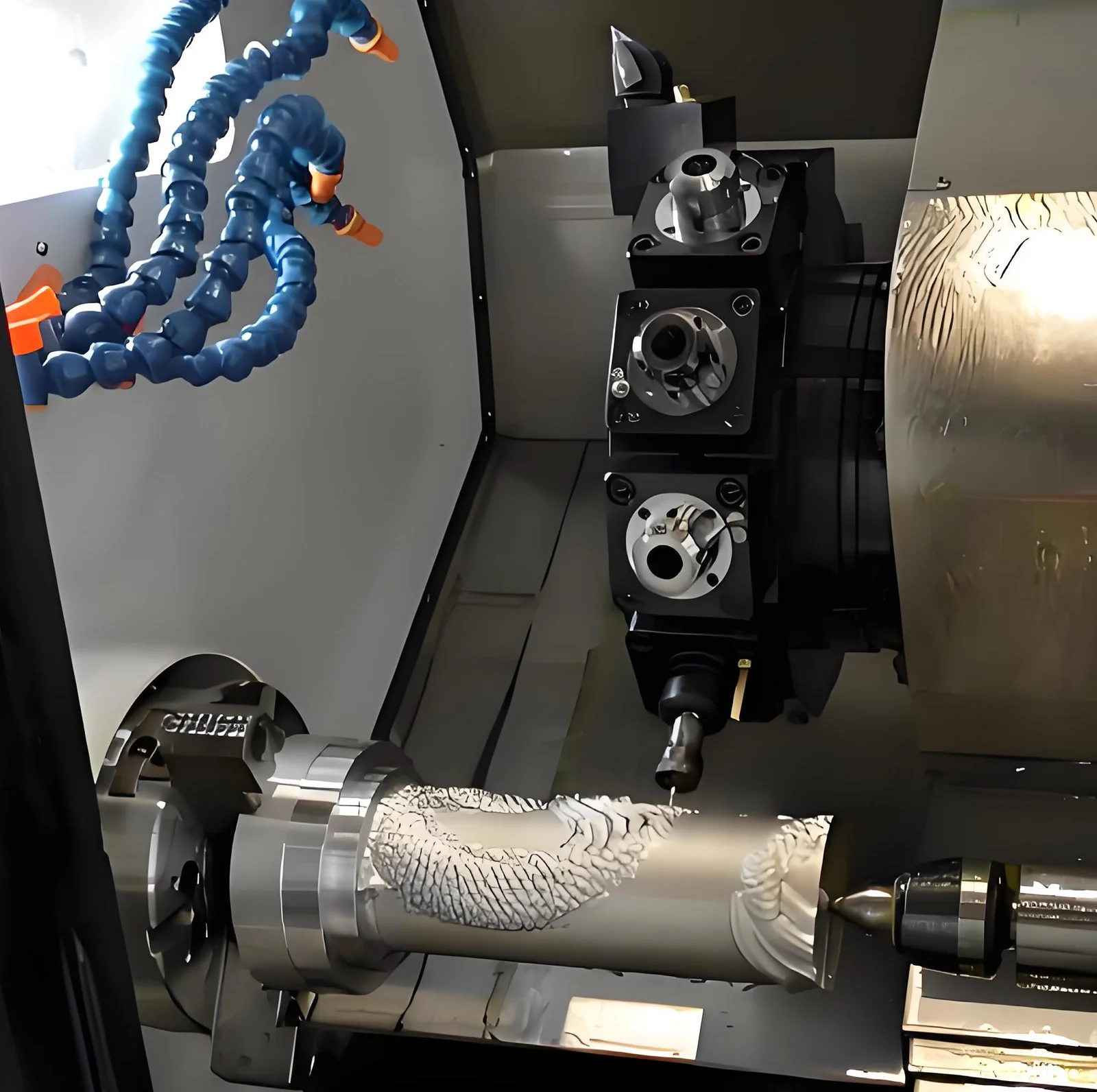
Bar length and part count interact with the setup. A bar-fed lathe feeds the bar automatically, and the run length is a setup and a material decision; a short run may use a precut blank rather than a full bar. State the quantity and part length so the supplier can plan the bar and the feeding. Confirm the bar size and grade in the quote, because a non-standard size adds cost and lead time.
What to Include in a Short-Run RFQ
To get a useful short-run turning quote, provide the drawing with critical tolerances and surface requirements, the quantity or a range with the reorder expectation, the material grade and bar size or the requirements to select them, any finishing, plating, or heat treatment, and the reorder expectation, which affects programming and tooling treatment. The RFQ should also carry the finish and inspection expectations, because a turned part with plating or anodizing needs the process sequenced with the machining, and the tolerance framework on the standards and tolerances page defines what the inspection must show.
A drawing with gaps produces a quote with assumptions. Send the drawing with the RFQ, and the short-run quote will follow the drawing’s completeness. The reorder expectation is the detail most buyers skip, and it changes how the quote treats the fixed block and how future orders are priced.
Conclusion
Short-run turning is fixed-cost economics applied to round parts. The programming and setup dominate at low quantity, unit price falls fast and flattens, and bar stock keeps material costs efficient. The quote structure is the decision tool and the reorder expectation belongs in the RFQ. 6CProto’s CNC turning service covers short runs from one piece upward, and the low-volume manufacturing service covers the wider quantity range.
The next step is to send the drawing with the quantity, reorder expectation, and material, and ask for a line-item quote that shows the fixed block. The types of CNC machines guide explains the machine classes that shape the curve, and the NIST engineering references cover the bar stock and material property data the quote depends on.
FAQs
Why is a one-off turned part so expensive per piece?
Because the programming, setup, and tooling are paid once and sit entirely on that part. At 500 pieces the same fixed block spreads across the run, so the unit price falls dramatically.
When does turning beat milling for low-volume parts?
For rotationally symmetric parts such as shafts, sleeves, and fittings. Turning’s bar-stock efficiency and matched geometry make it the natural process; milling suits prismatic parts.
Should I state that my part will be reordered?
Yes. Reorders justify retained tooling and reusable programming, which changes how the quote treats the fixed block and how future orders are priced. State it in the first RFQ.