

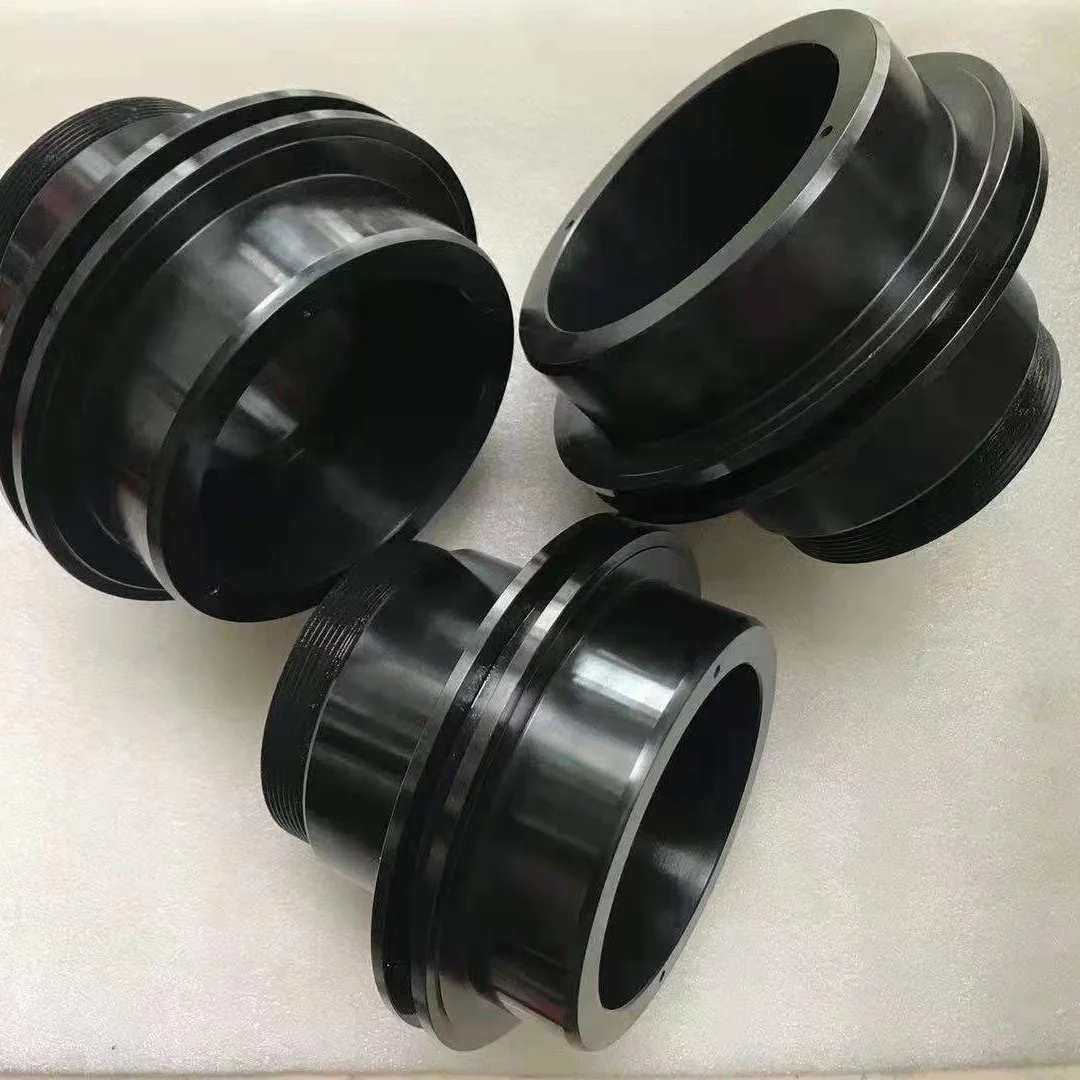
A blackened steel part that rusts in a humid workshop is not a failed coating; it is a coating that was never intended to provide the protection on its own. Black oxide converts the surface into magnetite, a layer that is thin, slightly porous and largely decorative unless something is applied to fill and cover it. The post-treatment is where the corrosion performance actually comes from, and its selection belongs in the specification. This guide covers how each option behaves, how to state a corrosion requirement, what the governing specifications define, and how handling affects the result.
Why is black oxide not corrosion protection by itself?
Because the conversion layer is thin and porous.
Black oxide changes the steel surface into an oxide layer that is measured in fractions of a thousandth of an inch, and it remains permeable to moisture unless it is filled.
The distinction from a plated or coated surface is important. A plating builds a barrier of a different metal over the substrate; a coating such as powder paint builds a film on top. Black oxide does neither: it converts the iron at the surface into magnetite, which provides the colour and a small amount of wear resistance but leaves a structure with microscopic porosity.
That porosity is why the finish is always specified together with a post-treatment. The oil, wax or sealer penetrates those pores and forms a barrier on the surface, and the combination provides the protection. Remove the post-treatment and a blackened part in a humid environment will show rust, usually within days on a plain carbon steel.
It is also why the finish is not comparable to a coated surface in salt spray performance. A blackened part with an oil film will not match a powder-coated or plated component in a corrosion test, and treating the two as alternatives for an outdoor application leads to disappointment. Where corrosion resistance is the primary requirement, the coating choice should follow it rather than the desired colour.
How do the post-treatment options differ?
By durability, surface feel and cost.
Oil is cheap and traditional, wax gives a drier and more durable surface, and lacquers or specialised sealers provide the longest protection at the highest cost.
Oil is the baseline treatment, applied as a dip after the blackening and rinse stages. It penetrates the coating, leaves the familiar slightly glossy black appearance, and protects the part in indoor storage and in dry service. Its weakness is that it can be wiped off, removed by solvent, or displaced by handling, and the part loses protection wherever that happens.
Wax treatments produce a drier finish that resists transfer better. They are common on fasteners and on parts that will be handled during assembly, and they hold up better than oil in a workshop environment where parts are repeatedly touched. The appearance is slightly less glossy, which for many machine components is an improvement.
Lacquers and sealers form a harder film and are specified where the part must resist corrosion for a defined period. They are the appropriate choice for parts that will be exposed to humidity, wiped down, or stored for long periods before use. Some formulations are intended to meet a salt spray requirement, which makes the performance measurable rather than descriptive.
| Treatment | Surface feel | Durability | Typical use |
|---|---|---|---|
| Oil | Slightly glossy, oily to touch | Removed by handling and solvents | Indoor machine components, storage protection |
| Wax | Dry, low sheen | Resists transfer under handling | Fasteners, hardware, assembled components |
| Lacquer or sealer | Hard film, uniform appearance | Longest protection; specified to test | Parts exposed to humidity or cleaned in service |
| No post-treatment | Matte, dry | Minimal protection | Parts that will be painted or oiled by the user |
How is corrosion performance stated?
As a test requirement, not as a description.
Salt spray hours are the usual way to express corrosion performance, and stating a requirement makes the post-treatment a specification item rather than a default.
Salt spray testing exposes a coated part to a controlled saline fog and records how long it takes for corrosion to appear. The result depends on the whole system: the substrate, the blackening process, the post-treatment and the preparation. That means the same part with different post-treatments will produce very different figures, and a part specified without a requirement will be treated to whatever the shop considers standard.
The practical consequence is that a buyer who needs protection should state the environment rather than the hours if they are unsure. A part that will be stored indoors and assembled within a month needs far less than one that will sit in a humid warehouse or be exposed outdoors, and the two cases justify different treatments. Where a salt spray figure is required by a customer’s specification, it should be stated with the test method that applies to it, since results are only comparable between identical conditions.
The governing specifications for black oxide and its post-treatments define the process and, in some cases, the protective requirements. The coatings framework is published by ASTM committee B08, the materials context for the steel substrate by ASM International, and surface preparation practice by ASTM D3359.
What do the specifications define?
The process types, the classes and the acceptance criteria.
Military and industry specifications define black oxide by type and class, covering the process route and the protective treatment applied afterwards.
That structure is useful because it separates the conversion coating from the protection. A specification may define a hot blackening process in one paragraph and then offer the choice of supplementary treatments in another, with the classes distinguished by what is applied afterwards. The buyer selects the type and class that suits the application rather than specifying a chemistry.
Referring to the specification rather than describing the result makes the requirement verifiable. A class that includes a supplementary protective treatment can be inspected against a test rather than against an impression, and the same class means the same thing between suppliers. That is the same principle that applies to anodizing classes and to plating thickness classes.
Where a customer’s program already invokes a specification, that is the simplest route: quote the specification and the class, and the process follows. Where a program is being written from scratch, the useful starting point is the environment the part will see, expressed as a test requirement or as a description of exposure, and the class that follows from it.
How do handling and packaging affect the result?
Directly, particularly on a matte black surface.
Handling marks, fingerprints and contact between parts all show on a freshly treated surface, and packing that allows parts to rub will damage the finish in transit.
Black oxide surfaces show contamination clearly. A fingerprint on a matte black part is visible immediately, and on an oiled part it disrupts the film and leaves a lighter patch. That means the finishing process is not finished at the rinse: the way the parts are handled and packed is part of the delivered result.
The practical measures are straightforward. Handling with gloves after treatment, individual wrapping or compartmented packing for cosmetic parts, and separating parts that could rub against each other. Where the parts are hardware processed in bulk, individual packing is not economical and the acceptance criteria should reflect that: minor marks on concealed components are usually acceptable, and saying so in advance removes a dispute.
Storage matters as well. Parts packed while still carrying solvent or moisture can develop staining, and parts stored in a humid area will lose the benefit of an oil treatment over time. For long storage, a wax or sealer treatment holds up better, and the packing should protect against humidity rather than merely preventing contact.
When is a different finish more appropriate?
When the environment exceeds what black oxide can do.
Powder coating and plating both provide more corrosion protection than a blackened surface, at the cost of thickness, appearance or both.
Powder coating builds a thick, durable film with excellent corrosion resistance and a wide colour range, and it is the natural choice for parts that will be outdoors, wiped down or exposed to chemicals. The trade is dimensional: the film closes clearances and affects threads, so masking and allowance are needed. Zinc plating provides sacrificial protection on steel and is the common choice for fasteners exposed to weather.
Black oxide remains the right choice where the requirements are appearance, thread compatibility and thinness rather than corrosion resistance. Machine components, tools, instrument hardware and parts that will be oiled in service are all natural applications, and the finish performs well in those conditions. The comparison with phosphate coating, another conversion treatment used in similar applications, is covered in the existing 6CProto article on black oxide and phosphate coating.
Where a program needs both a black appearance and real corrosion protection, the answer is usually a coating rather than a conversion finish, and the dimensional planning that a coating requires becomes part of the design. The finishing alternatives are described in the surface finish guides and on the powder coating service page.
Specifying protection, not just colour
The lesson of blackened steel finishes is that colour and protection are separate requirements, and only the first comes from the blackening bath. Naming the post-treatment, stating the environment the part will see, and agreeing how the parts will be handled and packed are what turn a black finish into a protected component.
Where a program already works to a specification that defines types and classes, quoting the specification and the class is the clearest route, because it makes the protective treatment part of the requirement rather than an assumption. Where a part will simply be blackened and oiled, the useful addition is a note about humidity and storage, which is the information the supplier needs to recommend the right treatment. 6CProto provides quality inspection reports on request and assigns a dedicated project manager to each order, and process waste from the finishing line is handled under the framework published by the US Environmental Protection Agency.
FAQ
Does black oxide provide corrosion protection?
The conversion layer itself provides very little, because it is thin and slightly porous. Protection comes from the oil, wax or sealer applied afterwards, which fills the pores and creates a barrier. That is why a specification that names only the blackening process leaves the performance undefined, and why the environment the part will see should be stated so the appropriate post-treatment can be selected.
How many salt spray hours does black oxide give?
The figure depends on the post-treatment and the substrate rather than on the blackening process, and it varies widely between an oiled part and one with a specified sealer. Rather than working from a general number, state the exposure the part will see and, where a test requirement exists in a customer specification, state the test method and the hours together, since results are only comparable under identical conditions.
Is a wax finish better than oil on blackened steel?
For parts that will be handled, yes. Wax produces a drier surface that resists transfer, so the protection survives assembly and repeated contact better than an oil film. Oil remains appropriate for parts that will be stored and installed without much handling, and it is the less expensive option. The choice is a consequence of the service environment rather than a quality ranking.
Can blackened parts be painted or coated afterwards?
They can, and the blackened surface sometimes provides a good base for a subsequent coating, but the two finishes serve different purposes. Where a coating is applied over blackening, the corrosion protection comes from the coating and the blackening contributes appearance rather than performance. Where the requirement is real corrosion protection, specifying the coating alone is usually simpler and avoids adding a process step. The test methods referenced in this article are published by ASTM committee D20.
If blackened steel parts need to survive a specific environment, send the model with the exposure the parts will see and the storage conditions before assembly. 6CProto reviews the part together with the finishing route and returns a DFM report with the quote, so the post-treatment is matched to the requirement. Upload the file at the 6CProto quote page or send it to projects@6cproto.com.