

Black oxide is the finish that makes a steel part look like a machine component rather than a piece of stock, and it is also one of the thinnest coatings available. That combination explains most of the questions it attracts: which process to specify, how much corrosion protection it actually provides, and why two batches of the same part can come back at different shades. This guide covers how the coating forms, how hot and cold processes differ, which steels respond, what has to be specified alongside the colour, and what to inspect.
Hot or cold black oxide: which process?
Hot for durability and colour, cold for convenience.
The hot process produces a deeper black with better wear characteristics, while cold processes are simpler to operate and are used where appearance and cost matter more than performance.
Black oxide is a conversion coating, which means the surface of the steel itself is chemically altered rather than covered. The familiar black appearance comes from magnetite, an oxide of iron, formed on the surface. The two process routes reach it differently: hot black oxide uses an alkaline bath at elevated temperature, while cold processes use a chemistry that works at or near room temperature, often with a selenium or copper-based formulation.
The difference shows in the result. A hot process produces a coating that is more uniform, darker and more resistant to abrasion, and it is the standard route for parts that will be handled or that need a consistent appearance. Cold processes are used where a smaller shop or a lower volume makes the heated bath impractical, and the resulting finish is usually lighter, less uniform and less durable.
For most engineering parts, the hot process is the one to specify, and the militarily derived specifications that govern black oxide describe the elevated-temperature process. Where a part is decorative or where the volume is very small, a cold process may be adequate, but the difference should be a conscious decision rather than what happened to be available. The coating and process framework is published by ASTM committee B08.
How does the conversion coating form?
By reacting the steel surface into magnetite.
The bath converts iron at the surface into a black oxide, so the coating is part of the metal rather than a layer sitting on top of it.
Because the reaction consumes the surface, the dimensional change is minimal. That is one of the reasons black oxide is chosen for parts with threads, close fits and fine features: the coating does not close clearances in the way a plated or painted layer does, and it does not need to be masked off every interface. A thread that has been black oxidized will still accept its fastener.
The coating is thin, which is also its principal limitation. It provides very little barrier protection on its own, because it is only a surface conversion and it remains slightly porous. Its corrosion resistance comes largely from what is applied afterwards: the oil, wax or sealer that fills the pores and provides the actual barrier. That is why black oxide is usually specified together with a post-treatment rather than on its own.
The coating also depends on the steel beneath it. The black colour develops through a reaction with iron, so alloys with high alloy content respond differently from plain carbon steels. Where the substrate resists the reaction, the result is lighter, less uniform or requires an activation step before processing.
Which steels respond well?
Carbon and low-alloy steels; others need help.
Mild steel, medium-carbon steels and many tool steels blacken readily, while stainless steels and highly alloyed materials need an activation step and produce a different result.
Plain carbon steels are the straightforward case. The bath reacts with the iron at the surface and produces a uniform black finish that takes oil well and holds its appearance during handling. Alloy steels respond almost as readily, and tool steels blacken acceptably, which is why black oxide is common on hand tools, fasteners, machine components and firearm parts.
Stainless steel is the difficult substrate. Its chromium-rich surface resists the reaction, so the part needs an activation step before blackening and the resulting colour is usually less deep than on carbon steel. The corrosion performance of the blackened stainless is also different, because the coating interacts with the alloy’s own passive layer rather than replacing it. That subject is covered in the companion article on black oxide on stainless steel.
Castings and powder metallurgy parts introduce porosity, which affects both the appearance and the post-treatment. A porous surface absorbs more of the oil or sealer and can appear uneven, and the trapped chemistry is harder to rinse out. Those parts are processed, but they need a specification that accounts for the substrate rather than one copied from a machined component.
What process sequence is involved?
Clean, activate where needed, blacken, rinse, seal.
The sequence begins with thorough cleaning, includes an activation step for difficult alloys, and ends with a rinse and a post-treatment that provides the corrosion protection.
Cleaning is the step that determines whether the result is uniform. Oil, scale, rust and machining residue all prevent the bath from reaching the surface, and any area that is not clean will blacken unevenly or not at all. On a machined part, that usually means a degreasing stage followed by a descaling or pickling step where heat treatment or welding has left oxide.
Activation is required where the alloy resists the reaction. For carbon steels the bath itself performs the activation through a mild etch; for stainless and high-alloy materials a separate activation stage prepares the surface. That is why a part made from an unusual alloy should be identified in the request rather than discovered by the finisher when the batch comes out pale.
The post-treatment completes the process. Parts are rinsed thoroughly to remove residual chemistry, then treated with oil, wax or a sealer that fills the pores of the coating and provides the barrier protection. The choice of post-treatment is the main variable in corrosion performance, and it belongs in the specification rather than being left to a default.
| Element | What it affects | Consequence if omitted |
|---|---|---|
| Process route | Depth of colour and abrasion resistance | A lighter, less durable finish than expected |
| Pre-cleaning | Uniformity of the coating | Patchy or missing colour |
| Activation | Whether difficult alloys react at all | Pale or inconsistent result on stainless |
| Post-treatment | Corrosion protection and surface feel | A part that rusts in a humid workshop |
| Appearance reference | Depth of black and sheen | Arguments about an acceptable shade |
| Handling and packing | Whether the finish survives transit | Marks and fingerprints on delivery |
Which post-treatments are available?
Oil, wax, lacquer and specialised sealers.
The post-treatment provides most of the corrosion protection, and the choice depends on the environment and on whether the part will be handled.
Oil is the traditional finish and the cheapest. It penetrates the pores of the coating and provides a barrier that protects the part in normal indoor storage and service, and it gives the familiar slightly glossy black appearance of machine components. Its limitation is that it can be removed by handling, cleaning or exposure to solvents, so it is not a durable solution for a part that will be touched frequently or wiped down.
Wax-based treatments are more durable and give a drier surface, which suits parts that will be handled during assembly. They resist removal better than oil while still allowing the part to be worked on, and they are common on fasteners and hardware.
Lacquers and specialised sealers provide a harder, longer-lasting barrier and are used where a part must resist corrosion for a defined period or where a particular appearance is required. They can be specified to a salt spray requirement, which is the practical way to state corrosion performance rather than relying on a descriptive term. Powder coating is a different approach altogether: it provides a much thicker barrier and better corrosion performance, at the cost of adding thickness and losing the metallic conversion appearance, and the comparison is covered in the 6CProto article on black oxide and phosphate coating.
What should be specified and inspected?
The process, the post-treatment, the shade and the handling.
Name the process route, the post-treatment, an appearance reference and any corrosion requirement, then inspect for those.
The appearance reference is the item most often missing, and it is the one that causes disputes. Black oxide produces a range of shades depending on the steel, the process and the post-treatment, and a part that looks correct in one shop’s reference can look pale next to another’s. A physical sample approved once removes that ambiguity, in the same way it does for anodizing and coating.
Corrosion performance should be stated as a test requirement where it matters. Oil-finished black oxide provides limited protection, and stating a salt spray expectation makes the post-treatment choice a requirement rather than a default. Where a part will see humidity, handling or a wipe-down, that environment belongs in the request, because it changes the treatment that should be applied.
Handling and packing complete the specification. A freshly oiled or waxed part shows fingerprints and contact marks, particularly on a matte black surface, so the packing instruction should reflect whether the part is cosmetic. The dimensional framework that governs any callouts is set out on 6CProto’s standards and tolerances page, and the materials context for the steel substrate is published by ASM International.
What drives cost and lead time?
Bath processing, post-treatment and handling.
Black oxide is one of the least expensive finishing operations, and its cost is dominated by cleaning, batch processing and the post-treatment rather than by the chemistry.
Batch size sets the floor. The bath runs whether one part or a hundred are processed, so the cost per part falls as the batch grows, and grouping parts into one run is the main lever available. Cleaning ahead of the bath adds labour where parts arrive with scale, rust or heavy contamination, which is why a part that comes from a machining operation is cheaper to finish than one that has been left to corrode.
Post-treatment is priced by method. A simple oil dip costs little; a wax or lacquer treatment adds a step; and a sealer specified to a corrosion requirement adds both material and process time. Handling adds a final increment where parts must be individually packed to protect a cosmetic surface.
Lead time follows the same structure and is usually short, since black oxide does not require the long tank times of plating or anodizing. The main variable is how the parts are batched with other work, which is worth confirming where a schedule is tight. 6CProto provides quality inspection reports on request and assigns a dedicated project manager to each order, so the process route and the appearance reference can be agreed before the batch runs, and process waste from the line is handled under the framework published by the US Environmental Protection Agency.
Specifying black oxide for a part
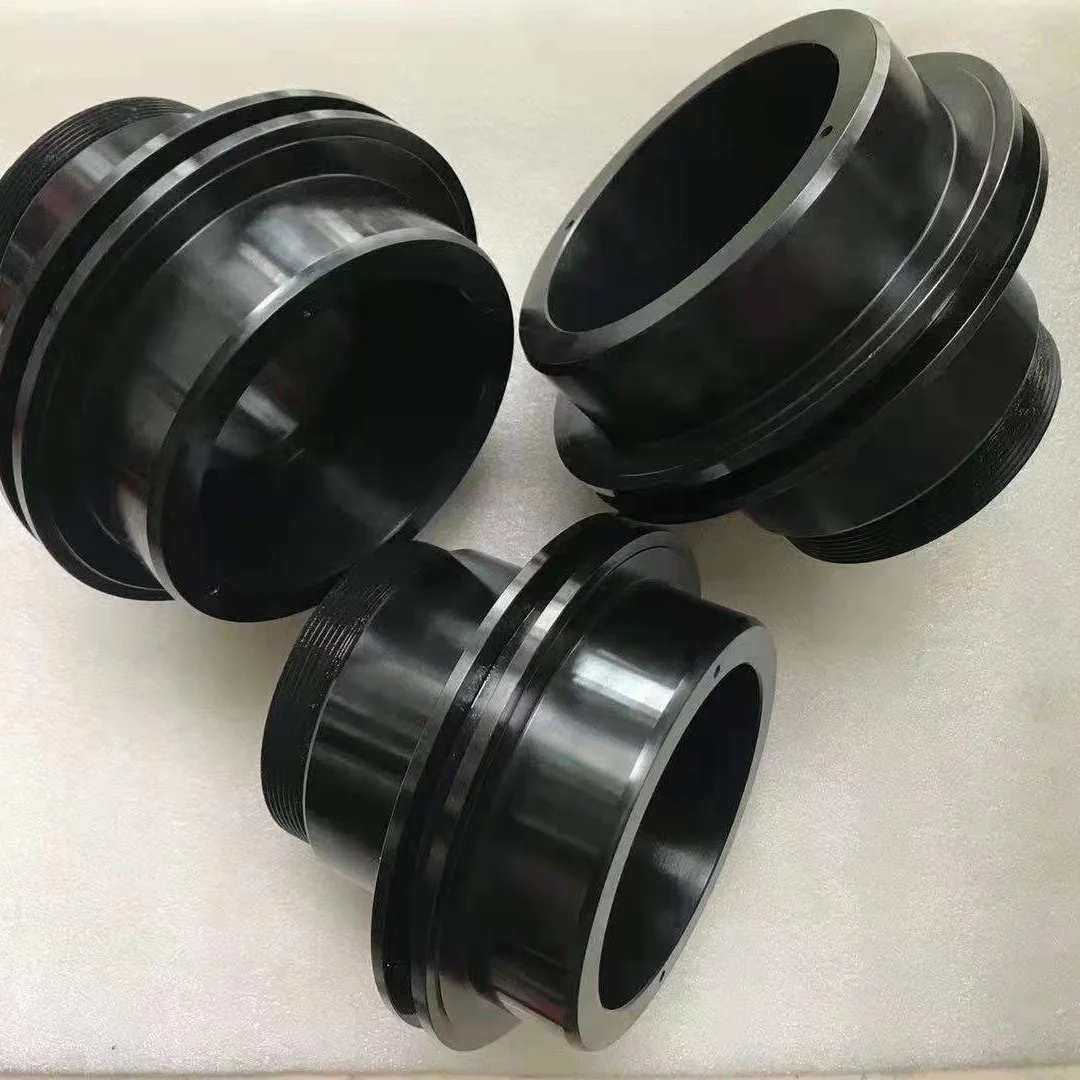
Black oxide is a conversion coating that changes the steel surface rather than covering it, which makes it ideal for parts with threads and fine features and unsuitable as a stand-alone corrosion barrier. Its appearance depends on the process route and the alloy, and its performance depends almost entirely on what is applied afterwards.
The specification that works names four things: the process route, the alloy, the post-treatment and an appearance reference. Adding the service environment, where it is humid or handled, turns the post-treatment from a default into a requirement. The finishing routes that can accompany or replace black oxide are described in the surface finish guides.
FAQ
What are the downsides of black oxide coating?
The main limitation is corrosion protection. The coating is a thin conversion layer and remains slightly porous, so on its own it protects very little; the oil, wax or sealer applied afterwards does most of the work. Its colour also varies with the alloy and the process, so a consistent shade needs an approved reference. And it cannot be used on non-ferrous parts, because the reaction depends on the iron in the substrate.
How much does black oxide coating cost?
It is one of the least expensive finishes available, because the process is a short bath treatment rather than a long deposition or a coating operation. The price is driven by batch size, by how much cleaning the parts need before processing, and by the post-treatment selected. Stating the post-treatment and the appearance requirement makes quotes comparable, since those two items are where the cost differences concentrate.
Does black oxide rub off?
The coating itself does not rub off, because it is a conversion of the surface rather than a layer on top of it. The oil or sealer applied afterwards can be removed by handling, wiping or solvents, and when that happens the surface appears lighter in the affected area and loses protection. On parts that will be handled repeatedly, a wax or lacquer treatment holds up better than a simple oil dip.
Can black oxide be applied to aluminium or stainless steel?
Not by the standard process, because it depends on a reaction with iron. Stainless steel can be blackened by an adapted process with an activation step, producing a different depth of colour and requiring its own specification. Aluminium is finished by anodizing or by a chemical conversion coating instead, and the black oxide process is not applicable to it at all. The standards and materials data referenced in this article are published by ASTM D3359, ASTM committee D20.
If steel parts need a black finish that suits threads and fine features, send the model with the alloy, the service environment and an appearance reference if you have one. 6CProto reviews the part together with the finishing route and returns a DFM report with the quote, so the process and the post-treatment are agreed before the batch runs. Upload the file at the 6CProto quote page or send it to projects@6cproto.com.