

Explore Sheet Metal Processes & Supplier Selection
Anodizing is often added as a last checkbox after the brake programme is frozen. Then threads seize, press-fit pins sit proud, and a brushed face shows mismatched grain across a bend. Specifying anodizing formed aluminum sheet metal early changes the blank: coating thickness, masking scope and cosmetic sequence belong on the drawing before the first nest, not in a rush email after T1.
This page covers why anodize thickness belongs on the drawing before tooling, how coating growth affects threads and press fits, when to mask versus resize, how brushed grain interacts with bend sequence, and how to protect film through forming and finish. Broader finishing context sits on the hub for aluminum sheet metal fabrication.
Why does anodize thickness belong on the drawing before tooling?
Film growth changes fit and must drive blank sizes.
Anodic coatings add thickness on surfaces that see the bath. That growth is small in absolute terms yet enough to bind a class-fit thread, shift a press-fit bore or alter a sliding clearance. If the thickness class is chosen after holes are punched and tapped, the shop must either strip and remake or invent masking that was never quoted.
State the anodic type or class, colour if dyed, and nominal coating thickness range on the same revision that releases forming. Call out which faces are cosmetic and which may show rack marks. Coating and surface-condition practice is organised under bodies such as ASTM International and materials references from ASM International; drawing clarity still follows ASME conventions.
Finishing capacity and process options are described on 6CProto’s surface finishing service page. Pair that intent with alloy and temper on the RFQ so conversion coating is not substituted silently when conductivity is required.
How do threads and press fits behave after coating growth?
Build coating growth into fits, or mask the feature.
Internal threads that are cut to a finished size before anodizing can become undersize after film growth. External threads and male press-fit diameters can grow beyond their mating envelopes. Designers either undersize (or oversize) the feature by the expected coating build-up, mask the feature so it stays bare, or cut threads after coating where the process allows.
Press-fit bushings and PEM-style inserts need the same honesty. If the hole is sized for a bare sheet and then anodized, installation force climbs and the sheet can crack around the hole. Fastener engineering notes from suppliers such as PEM fastening products and assembly component catalogues from Bossard expect the finished hole condition to match the insert specification.
Inspection must know which state is authoritative. A first-article that measures bare holes against a coated-fit drawing will pass and then fail at assembly. Put “dimensions apply after anodize” or “dimensions apply before anodize; mask as noted” in the title block notes.
When should you mask versus resize for anodized features?
Mask critical fits; resize holes when growth is stable.
Masking is a handled cost: plugs, tapes and touch-up labour scale with feature count and racking complexity. It pays when a few precision bores, grounding pads or electrical contacts must stay bare. Resizing pays when many holes see the same growth and the coating class is stable enough to build into the CNC or punch programme.
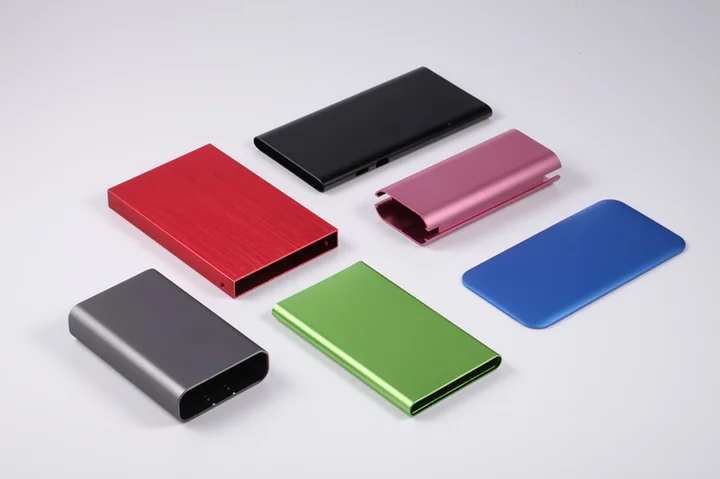
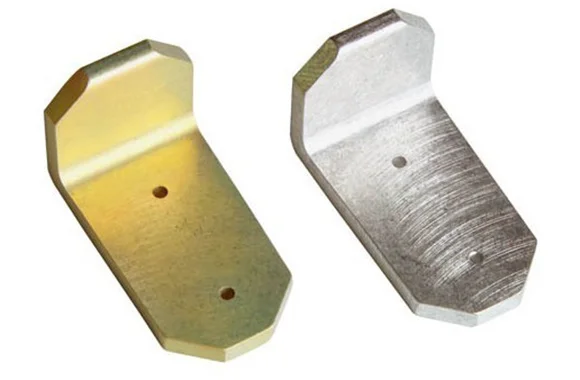
Do not mix strategies silently. A panel that masks six holes and resizes twenty others needs both methods on the drawing and in the quote line items. Chemical conversion coatings (often chosen when electrical continuity matters) change the growth and appearance story; they are not a drop-in substitute for decorative anodize. Conversion examples appear in shop imagery such as alodine-finished parts on the finishing pages.
Environmental controls around coating lines are summarised by the U.S. EPA. Buyers do not need to design the scrubber, but they should expect lead time and lot control when colour-matched anodize is required across multiple blanks.
How should brushed grain interact with bend sequence?
Brush before or after forming only with a stated grain plan.
A brushed or grained cosmetic face has a direction. If the panel is brushed flat and then bent, grain wraps around the flange and may not match adjacent parts. If the panel is formed first and then brushed, inside corners and returns may be unreachable, leaving mixed textures.
Decide the sequence on the drawing: brush direction relative to primary edges, which faces are brushed, and whether grain must continue across bend lines. Nesting for laser cutting should respect that grain callout rather than rotating blanks purely for sheet yield. Forming sequence for flanges that carry cosmetic faces belongs in the same packet as forming and bending notes.
Anodizing after brushing locks the texture visually; scratches from brake shoes become permanent. Protective film and soft jawing are not optional cosmetics — they are process controls.
How do you protect film through forming and finish?
Keep film through brake work; strip before anodize.
Mill or process film protects aluminium from fingerprints and shoe marks. Leave it on through laser cutting when the equipment allows, through forming on non-critical faces, and remove it immediately before cleaning and anodizing so residue does not stain the bath. Name which faces keep film and which must be bare for welding or grounding.
Handling after film removal is the high-risk window. Soft racks, clean gloves and separated layers in transit prevent the marks anodizing will highlight rather than hide. Measurement practice reminders from NIST MEP apply to cosmetic inspection as well as dimensional checks: define what is a rejectable scratch before the lot ships.
When the CAD is ready, include finish class, masking map and grain notes, then request a quote. Contact projects@6cproto.com or WhatsApp +86 180 2219 4001 for DFM on formed-and-finished aluminium parts.
What racking and cosmetic notes prevent anodize surprises on formed parts?
Name rack points, colour targets and reject marks early.
Formed aluminium does not hang like a flat coupon. Returns, hems and pockets create shadow zones and force rack contact on faces you may have assumed were cosmetic. If the drawing never marks allowable rack points, the finisher chooses them, and anodize highlights those marks permanently.
Provide a simple racking map: preferred contact zones on hidden flanges, faces that must remain free of contact marks, and whether matched sets must anodize in the same lot for colour. Dye lots drift; splitting a visible enclosure across two anodize lots without a colour standard invites rejected assemblies even when dimensions pass.
Cleaning after forming must remove brake lubricants and fingerprints without etching cosmetic grain unevenly. Film residue and adhesive from masking tape left too long both stain. Build a cleaning note into the traveler between brake and finish, especially when forming and finishing sit in different shops within a partner network.
Hardcoat versus decorative anodize changes edge behaviour on tight radii and threaded features. State the class explicitly. Chemical conversion coatings remain a different process with different growth, colour and conductivity outcomes — useful for grounding pads, wrong for a consumer-facing brushed bezel. Surface references from ASTM and ASM International help name the finish; your drawing must still pick one.
When quoting, ask for line items that separate masking labour, colour standard samples and any post-anodize machining. Bundled “finish included” prices often assume flat parts and understate formed complexity. 6CProto can review finish class against formed geometry during DFM before blanks are released.
How does finishing fit aluminum fabrication decisions?
Anodizing choices interact with alloy, springback compensation and dissimilar-metal isolation covered on the hub. Keep coating growth, masking and cosmetic sequence here; use alloy, springback and dissimilar metals for the wider aluminium fabrication frame.
Colour standards deserve physical masters, not only Pantone names on an email. Formed returns change how light hits a dyed anodic film; approve masters on geometry that includes at least one representative bend. Store masters away from UV and fingerprint oils, and define how many production lots may ship before a master re-check.
Masked grounding pads should be continuity-tested after finish, not only visually confirmed. Tape that lifted in the bath leaves partially coated pads that fail ESD or grounding checks later. Include a simple ohmmeter step in receiving when electrical faces are critical.
If post-anodize machining is allowed, protect nearby cosmetic faces from chips and fixtures. Soft jaws and film re-application after machining prevent a second handling cycle from undoing anodize yield. State whether machined aluminium cut-through must be touched up, left bare, or is forbidden on visible faces.
Lead time planning should place anodize capacity on the critical path when colour-matched sets are large. Forming may finish in days while dye lots queue. Buyers who only track brake schedules discover the real delay at the finisher. Ask for finishing capacity confirmation when the PO locks the colour class.
Buyers evaluating finish-only suppliers should send formed samples, not flat coupons, when approving anodize. Flat coupons miss rack marks on returns and colour shifts on bent faces. Include torque of any press-fit inserts after coating in the same approval when inserts are part of the design.
Keep a change-control trigger: any change to coating class, dye lot strategy, masking map or alloy/temper reopens fit checks on threads and press fits. Treating anodize as an uncontrolled “same as last time” step is how silent growth returns to the assembly line.
Coordinate laser edge quality with anodize expectations: heavy striations on a cosmetic flange become permanent after dyeing. Deburr standards that are acceptable for hidden returns may be rejectable on a visible bezel. Put cosmetic edge class next to the anodize note so cutting and finishing do not negotiate after scrap appears.
FAQ
Can hardcoat anodize be applied after tight press-brake radii?
Hardcoat is thicker and more brittle in practice at sharp features; tight bends can show micro-cracking or edge chipping after coating. Enlarge radii, mask sharp edges, or reconsider the coating class. Trial coupons on the real geometry beat catalogue assumptions.
Should colour anodize be quoted before or after first-article forming?
Quote colour class with the forming package so racking and dye lots are planned, but approve colour on formed samples when cosmetic faces wrap around bends. Flat colour chips rarely predict how a bent return reads under assembly lighting.
Do conversion coatings avoid the thread-growth problem?
Conversion coatings are typically thinner than decorative or hard anodic films, so growth is smaller, but they still change surface condition and may be specified for conductivity rather than wear. Do not assume “no growth.” Confirm the finish standard and measure critical fits in the finished state.
Who owns masking plugs on a multi-supplier route?
Name the owner in the RFQ: the former, the finisher, or the buyer-furnished kit. Lost plugs and unmasked holes are a common delay when forming and finishing sit in different shops. Include a masking map with hole callouts.