

Colour is often the reason a part is anodized rather than painted, and it is also the requirement most likely to cause a dispute. The colour lives inside the oxide layer rather than on top of it, which makes it durable and, at the same time, dependent on the metal underneath.
How colour gets into an anodized part
Anodizing grows a porous oxide layer from the aluminium surface. While the pores are open, dye can be absorbed into them, and sealing then closes the structure so the colour is locked in. Because the colour sits inside the layer, it does not chip or flake the way a paint film can, but it also cannot be removed without stripping the anodized layer itself. Some colours are also produced without dye, by controlling the alloy and process so the oxide itself takes on a tone.
| Colour route | How it is produced | Practical limit |
|---|---|---|
| Clear | Anodizing with no dye | Final tone follows the alloy, not a colour standard |
| Dyed colours | Dye absorbed into the pores before sealing | Shade depends on layer thickness and dye batch |
| Black | Heavier dye absorption or a dedicated process | Sensitive to thickness; can look grey if the layer is thin |
| Integral or bronze tones | Alloy and process control | Limited palette, tied to the alloy |
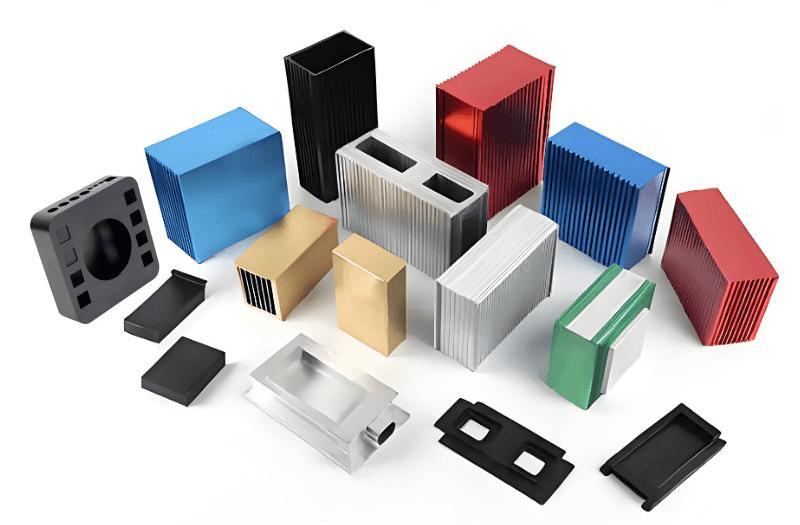
What colours can be anodized on aluminium
A wide dyed range, plus clear and bronze tones.
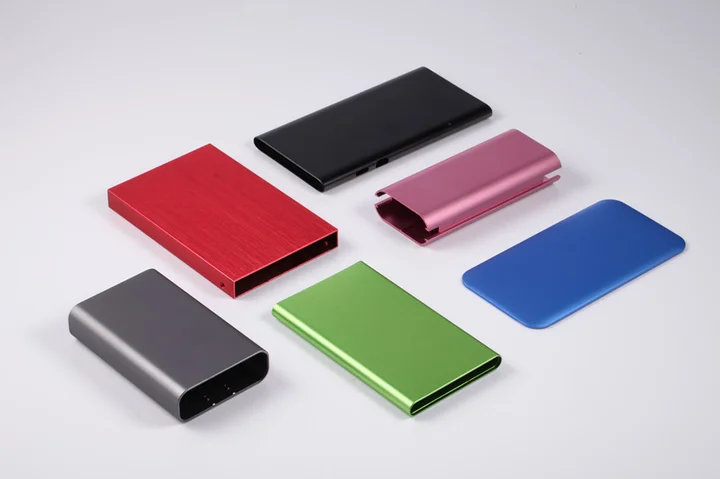
Dyed anodizing covers most of the spectrum, including blacks, blues, reds, greens, golds and greys, in a bright or muted form. Clear and the bronze-to-black family produced by process control sit alongside these. What is not achievable is an exact match to a paint reference: anodized colour is a translucent layer over metal, so the alloy’s own tone and the surface texture show through and shift the result.
Three limits are worth knowing before a colour is specified. Bright, saturated colours need a heavier layer to hold the dye, which changes the part’s dimensions. Dark colours absorb heat and show fingerprints and handling marks more readily. And a colour viewed on a polished surface will look different on a blasted one, because the texture changes how light returns through the layer.
Which metals cannot be anodized
Anodizing is a conversion of the base metal, so it works on metals that form a stable, adherent oxide — which in practice means aluminium, with titanium and magnesium treated by their own variants of the process. Steel, stainless steel, copper, brass and zinc cannot be anodized: there is no equivalent oxide layer to grow, and those materials are protected by plating, passivation or coating instead.
The practical consequence appears in multi-material assemblies. A part that combines aluminium with steel fasteners cannot be anodized as an assembly, because the treatment applies only to the aluminium and the chemicals would attack the rest. The aluminium components are treated separately and assembled afterwards, which is one reason anodizing appears in the process sequence before assembly rather than after.
Does anodized colour fade?
Sealed anodizing is stable; UV shifts bright dyes.
Sealed anodizing is stable in normal indoor and outdoor service, and it does not fade the way an unsealed dye or a thin paint film does. What changes it is ultraviolet exposure over long periods, particularly for bright organic dyes, and contamination or abrasion that alters the surface rather than the colour itself. Anodizing is often chosen for outdoor hardware precisely because it resists the chalking and peeling that painted finishes can suffer.
Where fade matters, three design choices help: choose a darker or more muted tone, since these tend to hold their appearance longer, specify sealing properly because the seal is what protects the dye, and accept that a physical reference sample from the actual alloy is a better long-term standard than a colour code. Coating classifications and test methods are published by ASTM Committee B08.
Specifying colour so the batch passes
A colour specification should include the alloy, the anodizing type and thickness class, the surface preparation — polished, blasted or as-machined — and a physical reference sample produced from the same alloy and the same preparation. Stating the standard as a sample rather than a number removes most of the ambiguity, because the substrate and texture are part of the colour.
Two practical notes reduce disputes. Where several parts must match visually, they should be anodized in the same batch, because dye concentration drifts during a run; and where a re-order follows months later, the previous accepted part becomes the comparison rather than an abstract colour code. Material references are published by ASM International, drawing conventions follow ASME standards, and bath and waste obligations are set out by the US EPA.
How colour affects cost and lead time
Colour adds cost in three places. The dye step itself is an additional process with its own chemistry control. Matching adds risk, because a shade that is difficult to hit may need a trial or a re-run. And darker or heavier colours often require a thicker layer to absorb enough dye, which lengthens the anodizing run and increases the dimensional change.
The lead time effect comes mainly from batching. Parts are processed in racks, so a small quantity may wait to share a run, and a specific colour that is not scheduled frequently may extend the wait. Where a delivery date matters, it is worth asking whether the required colour and class are run routinely. Finishing options and their trade-offs are described under surface finishing and surface finish guides. Production practice around batch scheduling and surface treatment is described by the NIST Manufacturing Extension Partnership.
Send the part with the alloy, the preparation and a colour sample, and request a coloured anodizing quote with the batch arrangement stated.
FAQ
What colors can you anodize aluminum?
Most of the spectrum through dyeing, including black, blue, red, green, gold and grey, plus clear and the bronze tones produced by alloy and process control. The achievable result depends on the alloy, the layer thickness and the surface texture.
What metals cannot be anodized?
Steel, stainless steel, copper, brass and zinc cannot be anodized, because the process converts the base metal into an oxide and those metals do not form a usable anodized layer. They are protected by plating, passivation or coating instead.
Does anodized aluminum colour fade?
Sealed anodizing is stable in normal service and does not chip or peel like paint. Very bright organic dyes can shift under prolonged ultraviolet exposure, so darker or muted tones hold their appearance longer, and proper sealing is what protects the dye.