

Anodizing is not a coating that sits on aluminium; it is a conversion of the aluminium itself into a hard oxide layer. That distinction explains almost everything about how the process behaves, including why it changes dimensions and why it cannot be repaired locally.
What the process does to the part
The part is immersed in an acid electrolyte and becomes the anode of an electrical circuit. Current drives oxygen to the surface, where it combines with the aluminium to form an oxide layer that grows from the base metal. Roughly half the layer grows inward and half outward, which is why an anodized part is slightly larger than it was before treatment and why a tight dimension has to account for the change.
| Type | Where it is used | Why it is chosen |
|---|---|---|
| Decorative anodizing | Visible housings, panels, consumer products | Colour, uniform appearance, moderate corrosion resistance |
| Hard anodizing | Sliding surfaces, wear parts, tooling | Higher surface hardness and abrasion resistance |
| Clear anodizing | Parts where the metal look is required | Protection without changing appearance |
| Dyed anodizing | Colour-coded or branded components | Colour options that survive handling |
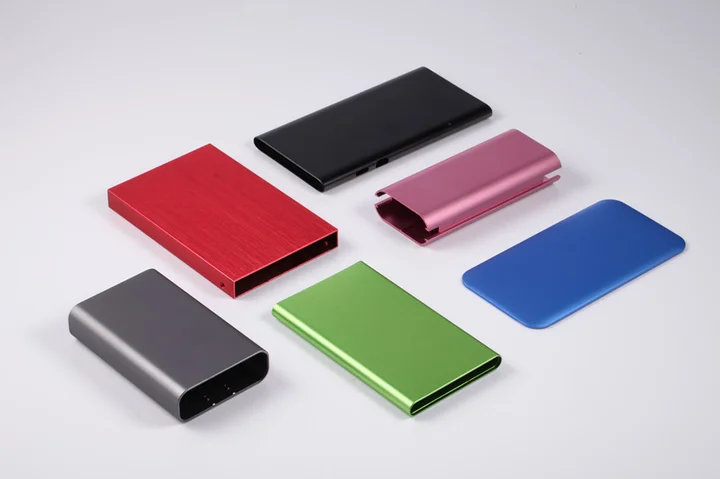
What the 720 rule is used for
Estimating how long to anodize for a target thickness.
The rule is a working relationship used in anodizing to relate current density and time to the thickness of the layer produced, letting an operator plan a run rather than measure repeatedly during it. It is a process aid rather than a specification: the actual thickness achieved depends on the alloy, the bath, the temperature and the current density, and it is verified by measurement after the fact.
For a buyer, the rule explains why anodizing is quoted by thickness class rather than by time. Asking for a heavier layer means a longer run, more energy and a greater effect on the part’s dimensions, which is why hard anodizing is both more expensive and more dimensionally invasive than a decorative finish. Coating classification and test methods are published by ASTM Committee B08.
How much does it cost to get aluminium parts anodized?
Surface area, thickness class, colour and handling.
Cost is driven by four things. The surface area being treated, because the process works on the surface rather than the mass. The thickness class, since a heavier layer takes longer and consumes more energy. The colour, because dyeing adds a step and matching a specific shade adds risk and possible rework. And the handling, including racking, masking of features that must not be coated, and any pre-treatment such as blasting or polishing that changes the surface before anodizing.
The comparison that matters is usually against the alternatives rather than between platers. Anodizing is often the only finish that provides colour and hardness on aluminium without adding a separate layer, and it cannot blister or peel because it is not a coating. Where the requirement is purely corrosion protection on a simple shape, a conversion coating or paint may cost less; where it is wear resistance on an aluminium sliding surface, hard anodizing is the appropriate answer and its price reflects the longer run.
Colour, appearance and how much control is realistic
Colour on anodized aluminium comes from dyes absorbed into the porous oxide layer before it is sealed, or from the alloy and process itself in the case of integral colour. The pleasant consequence is that the colour is part of the surface rather than a film that can chip. The difficult consequence is that shade depends on the alloy, the layer thickness and the dye batch, so matching a colour across different alloys or different production runs is a real constraint rather than an inconvenience.
The practical approach is to agree the standard on a physical sample produced from the actual alloy, and to accept that a re-order may require a comparison against that sample rather than against a colour number. Where parts from several batches must match visually, they should be anodized together or at least from the same alloy lot, since the substrate is part of the colour.
What hard anodizing is used for
Hard anodizing produces a thicker, denser layer than decorative anodizing, which raises surface hardness and abrasion resistance. It is used on sliding surfaces, wear plates, valve bodies, pneumatic components and tooling where an aluminium part has to survive contact without galling or wearing quickly. It is usually left undyed, since the heavier layer takes colour unevenly, and it is often specified on only the surfaces that need it.
The trade-off is dimensional and cosmetic. The heavier layer grows more, so bores and threads need allowance, and the surface becomes darker and less reflective than a decorative finish. Sharp edges may also build a thinner, more brittle layer, which is why radii are preferred on hard anodized parts. Material behaviour references are published by ASM International, and drawing conventions for specifying the finish follow ASME standards.
Specifying and inspecting an anodized batch
A complete specification names the alloy, the anodizing type and thickness class, the colour or finish standard with a reference sample, the surfaces that must remain uncoated, and the condition at which dimensional tolerances apply. That last point is the one most often forgotten: an anodized bore is smaller after treatment than the drawing dimension shows, so the drawing has to say whether the limit applies before or after the process.
Inspection then covers coating thickness, appearance against the agreed sample, and the dimensional result on critical features. Sealing quality matters too, since the process that closes the porous layer determines whether the colour remains stable and whether the corrosion resistance holds. Measurement practice is described by the NIST Manufacturing Extension Partnership, bath and waste obligations are set out by the US EPA, and related finishing routes are described under powder coating and surface finish guides.
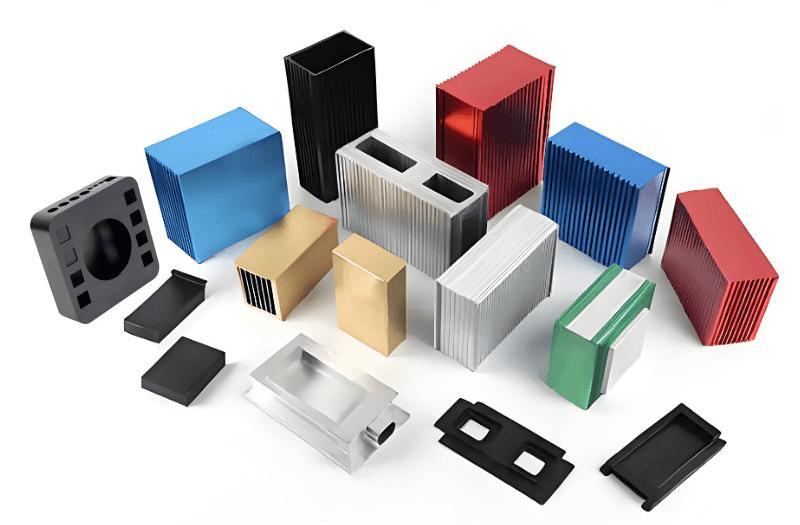
Send the part with the alloy, the anodizing type and the colour standard, and request an anodizing quote with masking and thickness class stated.
FAQ
What is the 720 rule used for in anodizing?
It is a working relationship between current density and time used to plan a run for a target layer thickness. It is a process aid rather than a specification, since the result depends on the alloy, bath, temperature and current, and is verified by measurement.
How much does it cost to get aluminum parts anodized?
Cost follows surface area, thickness class, colour and handling such as racking and masking, plus any pre-treatment. A heavier layer takes longer and consumes more energy, which is why hard anodizing costs more than a decorative finish.
What is hard anodizing used for?
Sliding surfaces, wear plates, valve bodies and tooling where an aluminium part must resist abrasion or galling. It is usually left undyed, and it grows the surface more than decorative anodizing, so bores and threads need allowance.