

Additive manufacturing has been described as a prototyping technology for so long that the transition to production gets less attention than it deserves. The decision that matters is not whether a process is new, but whether it can repeat a part so that every unit behaves like the one that was tested.
The process families, described by what they do
Additive processes differ in how they turn material into a solid, and that difference decides the properties. Resin processes cure a liquid photopolymer, which gives fine detail and a smooth surface. Powder bed processes fuse nylon or metal powder, which gives tough parts with a uniform texture and, for metals, real structural capability. Filament processes extrude melted polymer, which is inexpensive and convenient but leaves the weakest parts between layers. Binder jetting binds powder with an agent and then sinters it, which suits volume production of metal parts at a size where laser systems become slow.
| Family | How it builds | Where it fits |
|---|---|---|
| Vat photopolymerisation | Cures liquid resin with light | Detail, appearance and small functional parts |
| Powder bed fusion (polymer) | Fuses nylon powder with heat or an agent | Functional prototypes and small-batch end-use parts |
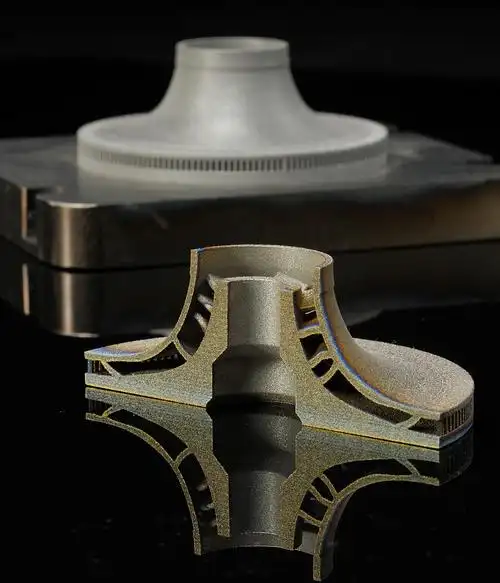
| Powder bed fusion (metal) | Melts metal powder with a laser | Complex metal geometry and consolidated assemblies |
| Material extrusion | Extrudes melted filament | Cheap form checks and jigs where strength is not critical |
Does 3D printing count as additive manufacturing?
Yes, it is one of the process families within it.
Additive manufacturing is the umbrella term for building parts by adding material layer by layer, and the familiar printing processes sit inside it. The distinction that matters commercially is not the vocabulary but the qualification level: the same process can produce a demonstrator or a production part, and what separates the two is control of the variables, records and repeatability rather than the machine itself.
That is why the terminology matters in a purchasing conversation. Asking for a printed prototype describes an outcome with modest requirements. Asking for an additively manufactured production component brings questions about material certification, build parameters, heat treatment and inspection, all of which affect the price before a machine is switched on.
When additive moves from prototyping into production
Three conditions have to hold. The material must deliver the properties the application needs, which is why metal and engineering nylon carry most production work rather than standard resin. The process must repeat, which means frozen build parameters, a consistent material source and a defined post-processing route. And the economics must work, which usually happens either at low volume where tooling cannot be justified or at high geometric complexity where no other process can make the part at all.
Where those conditions hold, production printing is often paired with conventional operations: faces that must be flat, sealing or threaded are machined after printing, and that combination is what makes a printed part usable in a real assembly. For simple brackets and housings, conventional machining or molding still wins on cost and on surface quality.
What changes when a printed part goes into production
The change is mostly documentation. A prototype is judged on whether it demonstrates the concept; a production part is judged on whether a later batch matches the first. That means recording the material batch and its condition, the build parameters and orientation, the post-processing steps in order, and the inspection results for the features that matter. Without those records, a change of material lot or machine becomes an uncontrolled variable.
Two practical consequences follow. Freeze the process once a design is validated and treat any change as a re-qualification, and reduce the inspection scope to the features that carry function so the record stays readable. Process terminology for these conversations is standardised through ASTM Committee F42, qualification guidance is published by UL Solutions, and application guidance by ASME.
Choosing between additive and conventional production
The comparison is rarely like for like, because the two routes produce different geometry. A mold produces a part with draft angles, uniform wall thickness and no internal cavities; a printed part can have conformal channels, lattice interiors and merged features that the molded version cannot. Comparing price per part between them misses that difference, which is why the practical question is whether the geometry is only possible additively.
Where both routes can produce the part, volume decides. Below the point where tooling amortises, printing is competitive; above it, molding and machining win on unit cost and surface finish. The honest way to decide is to quote both routes on the geometry you actually need, not on a version of it simplified to suit one process. Material properties are published by ASM International, measurement practice by the NIST Manufacturing Extension Partnership, and powder and resin handling obligations by the US EPA. Conventional alternatives are described on the CNC machining and injection molding pages.
Where the part will be qualified rather than simply used, the same questions apply as for any production process: which material specification, which build parameters and which inspection records. Answering them at quoting stage prevents a specification being written around a part that has already been made.
Send the model with the production volume and the features that decide the process, and request a quote for both the additive and the conventional route.
FAQ
Does 3D printing count as additive manufacturing?
Yes. Additive manufacturing is the umbrella term for building parts by adding material layer by layer, and printing processes sit inside it. What separates a prototype from a production part is process control and documentation rather than the machine.
What are the main additive manufacturing process families?
Vat photopolymerisation, which cures resin with light; powder bed fusion for polymers and metals; material extrusion, which melts filament; and binder jetting, which binds powder before sintering. Each produces different properties rather than different shapes.
When does additive manufacturing become cheaper than molding?
Below the volume where tooling amortises, and where the geometry is complex enough that no mold could produce it as designed. Above that volume, and for simple geometry, molding and machining usually win on unit cost and surface quality.